How to Clean Your Diamond Ring Safely and Preserve Its Sparkle
Skin oils can dull a diamond's brilliance by up to 40-60% within weeks; here's the 10-minute routine that restores sparkle without loosening a single prong.
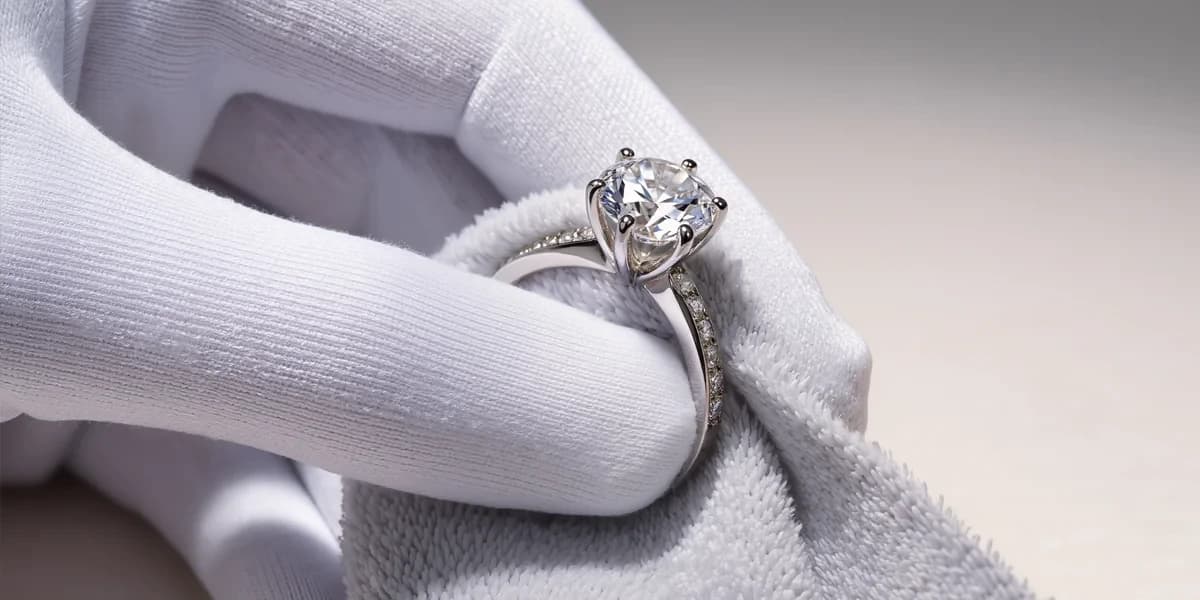
Before you dismiss that slightly cloudy stone as a diamond that has "lost its sparkle," consider this: the gem itself is almost certainly fine. What's killing the light is a thin, invisible film of skin oil, hand lotion, and sunscreen sitting on the facets, and it accumulates faster than most people expect. The Gemological Institute of America notes that everyday handling alone can leave a diamond looking dull within a matter of days. Research from jewelers tracking real-world wear suggests that unaddressed buildup can reduce a diamond's fire and light return by as much as 40 to 60 percent within weeks of daily wear. That is not a stone problem. That is a care problem, and it has a simple, inexpensive fix.
Why Diamonds Attract Grime
Diamonds are lipophilic, meaning they have a natural chemical affinity for grease and oils. Every time you touch your ring, rub in hand cream, or hold a coffee cup, a microscopic layer of fat bonds to the crown facets. Light that should bounce straight back to your eye instead scatters through that film and disappears. The underside of the diamond, the area most people never think to clean, is the worst offender: oils, lotions, and dead skin cells collect in the gallery beneath the stone and block the light that gives the gem its depth and warmth. Regular cleaning is not optional maintenance; it is how you keep the stone you paid for performing the way it was cut to perform.
The 10-Minute At-Home Routine
The GIA endorses a gentle soap-and-water soak as the safest, most effective baseline for at-home diamond care. You do not need commercial jewelry solutions, expensive gadgets, or anything beyond your kitchen.
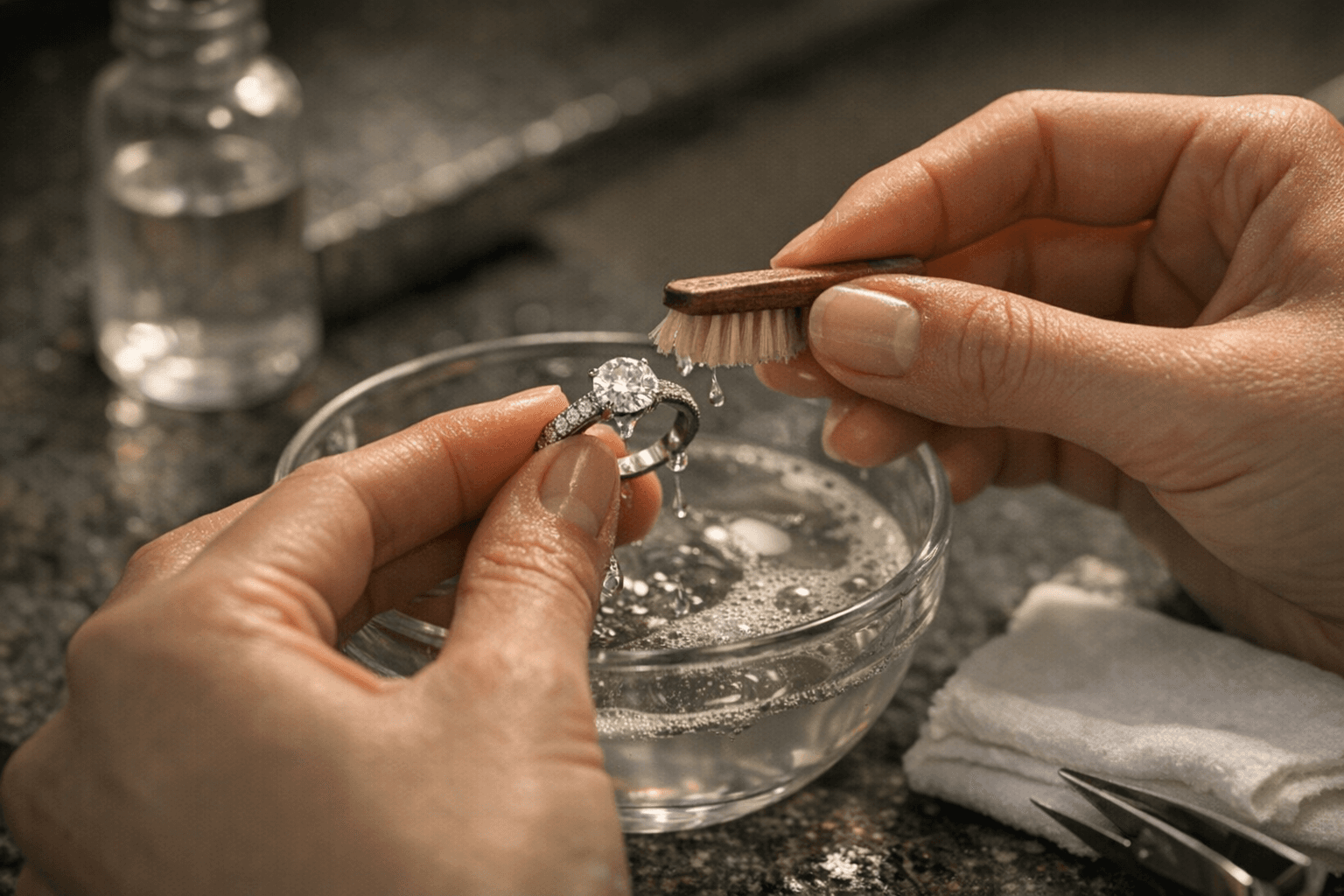
1. Fill a small bowl with warm (not hot) water and add a few drops of mild dish soap. Dawn is a widely recommended option among jewelers for its grease-cutting properties without harsh additives.
2. Submerge your ring and let it soak for 20 to 40 minutes. Longer soaking loosens the lipid film more thoroughly, which means less mechanical scrubbing and less stress on your setting.
3. Using a soft-bristled toothbrush kept specifically for jewelry, gently scrub around the prongs, under the gallery, and across the crown and pavilion of the diamond. The underside of the stone should receive the most focused attention.
4. Rinse the ring under warm running water. If you are working over a sink, plug the drain first.
5. Pat dry with a lint-free microfiber cloth and allow the ring to air-dry completely before storing it.
This routine, done every two weeks for a ring worn daily, is sufficient to prevent the kind of cumulative buildup that requires professional intervention to undo.
The "Never Do This" List
The most common cleaning mistakes come not from neglect but from the instinct to reach for familiar household products. Several of those products are genuinely destructive to diamond settings.
- Chlorine bleach and acetone: Both can erode the metal alloys used in gold and white gold settings. Chlorine in particular can pit and weaken prong structures over time, and a weakened prong is a lost stone waiting to happen. This means pool water and hot tubs are also genuine risks.
- Toothpaste and baking soda: Both are abrasive. While they may not visibly scratch a diamond (rated 10 on the Mohs scale), they will scratch gold, platinum, and the microscopic finishing on your setting, dulling the metal's polish and, over time, marring the ring's overall brilliance.
- Hard-bristled brushes and scrub pads: Even if a bristle cannot scratch a diamond, it can scratch softer metals and, more critically, place lateral force on prongs during scrubbing, gradually bending or loosening them.
- Household glass cleaner and ammonia-based solutions: These can weaken settings and discolor certain metal finishes. Some formulations are marketed as jewelry cleaners but are inappropriate for pieces with treated or fracture-filled stones.
- At-home ultrasonic cleaners: Consumer-grade ultrasonic devices use high-frequency vibrations to shake dirt loose, and they do work on the dirt. They also work on anything else that is not perfectly secure. In pavé and halo settings, the vibrations can displace small accent diamonds. In tension settings or rings with older, worn prongs, they can loosen the center stone. Fracture-filled or clarity-enhanced diamonds should never go near an ultrasonic device: the vibrations can cause the filling material to shift or crack, permanently damaging the stone. This category of cleaner is best left to professionals operating professional-grade equipment with proper inspection protocols.
Cleaning by Setting Type
The architecture of your ring determines how it traps dirt and how aggressively it can be cleaned.
Pavé: The rows of small diamonds set close together with minimal metal between them are a magnet for product buildup. Oils, lotion, and makeup compress into the tiny spaces between stones and beads, and because there is so little metal holding each stone, any mechanical force is a risk. Pavé rings benefit from more frequent home cleaning (every one to two weeks) using an extended soak and very light, short brush strokes working with the grain of the setting rather than across it. Inspect pavé under good light before every cleaning session: a missing stone or a displaced bead means the ring goes straight to the jeweler, not into the bowl.
Halo: The ring of accent diamonds surrounding the center stone creates a secondary trap for debris, particularly in the channel between the halo and the gallery. Pay extra attention to brushing around and beneath the halo border during the soak-and-brush routine. Ultrasonic cleaning at home carries the same risks as with pavé; the interconnected setting geometry amplifies the vibration stress on individual stones.
Solitaire: This is the most forgiving setting to clean at home. With a single stone held by four or six prongs and an open gallery, there are far fewer hiding places for buildup. The standard 20-to-40-minute soak and gentle brush is entirely sufficient. Inspect the prong tips for wear or sharpness after cleaning: a prong that snags on fabric has likely lost its rounded cap and needs professional attention before it loses the stone.
Bezel: A bezel setting encircles the diamond in a continuous rim of metal, which protects the stone's girdle and makes the ring exceptionally durable for active lifestyles. It is also the easiest setting to clean because there are no prongs to navigate. The lip where the bezel meets the diamond's girdle is the only area where buildup concentrates; a soft brush angled along that rim during the soak routine clears it effectively. Because the stone is protected on all sides, bezel rings accumulate grime more slowly, though the cleaning schedule should remain the same.
Daily Habits That Prevent Buildup
Cleaning frequency drops sharply when you build a few simple habits around when you wear the ring. Remove it before applying hand lotion, sunscreen, and hairspray; these products are the primary source of the lipid film that blocks light return. Take it off before exercising, not just because chlorine in pools is destructive to metal alloys but because sweat is another oil source and impact sports carry obvious prong risks. Leave it on your nightstand before washing dishes, which introduces both grease and water temperature extremes. When you are not wearing the ring, resist the instinct to store it face-down on a bathroom countertop, where it collects exactly the residue you are trying to avoid.
When to See a Professional
A professional cleaning and inspection every six to twelve months is the standard recommendation from gemologists and is, notably, a mandatory maintenance requirement for many jewelry insurance policies. Jewelers use professional-grade ultrasonic equipment and high-pressure steam cleaners that restore a level of brilliance not achievable with home methods, and they examine every prong and setting junction under magnification before returning the ring.
Professional service, which typically runs between $25 and $50 at most jewelers, catches problems that are invisible to the naked eye: micro-fractures in prong metal, worn setting walls in pavé, and girdle chips that can expand under pressure. A loose prong detected during a routine inspection costs a fraction of what a lost stone costs to replace. Between professional visits, a simple at-home test can flag urgent problems: hold the ring close to your ear and gently tap the stone. Any rattling means a loose setting and a jeweler visit before the next time you put the ring on.
The ring you wear every day is also the ring you look at for decades. Keeping it clean is not a luxury habit reserved for special occasions; it is the minimum the stone requires to do what it was cut to do.
This article was produced by Prism’s automated news system from verified source data, official records, and press releases, then run through automated quality and moderation checks before publishing. The system is built and supervised by the people who set the standards it runs under. Read our full AI policy.
Did this article answer your question?