Jessica McCormack’s cool-girl diamonds win celebrity fans, grow fast
Jessica McCormack has made diamonds feel young, wearable, and star-approved, turning celebrity pull and sharp design into fast luxury growth.

A diamond house built for now
Jessica McCormack has turned diamond jewelry into something that feels at home on a bare wrist, a tailored jacket, or a red carpet. The brand’s rise comes from a neat but potent formula: celebrity validation, everyday-wear styling, and silhouettes that look modern without losing the weight of luxury pricing. That balance is what makes the label feel culturally current, and it is also what traditional diamond houses can learn from its momentum.
Founded in 2008, the London-based brand was shaped by Jessica McCormack’s childhood in New Zealand, where she was surrounded by art and antiquities collected by her father, an auctioneer. She began her career in Sotheby’s jewelry department, and that background still reads in the line’s antique-meets-contemporary sensibility: pieces that feel considered, collected, and intended to outlast a season.
Celebrity pull, but with a point of view
The brand’s celebrity roster has helped it move from insider favorite to wider cultural shorthand. WWD has cited fans including Zoë Kravitz and Rihanna, and McCormack has gone further than many luxury houses by naming Kravitz its first brand ambassador, collaborator, and muse. That kind of association matters because it is not just about visibility; it signals the exact kind of wearer the brand wants to represent, someone who can make diamonds feel relaxed rather than formal.
This is where the label’s positioning becomes smart rather than merely glamorous. Celebrity approval alone does not explain the brand’s traction. The pieces have to look believable in daily life, and McCormack has built that credibility by designing jewelry meant to be worn every day, not locked away for special occasions. In a diamond market still full of precious but overstyled objects, that restraint feels modern.
The aesthetic: antique references, modern silhouettes
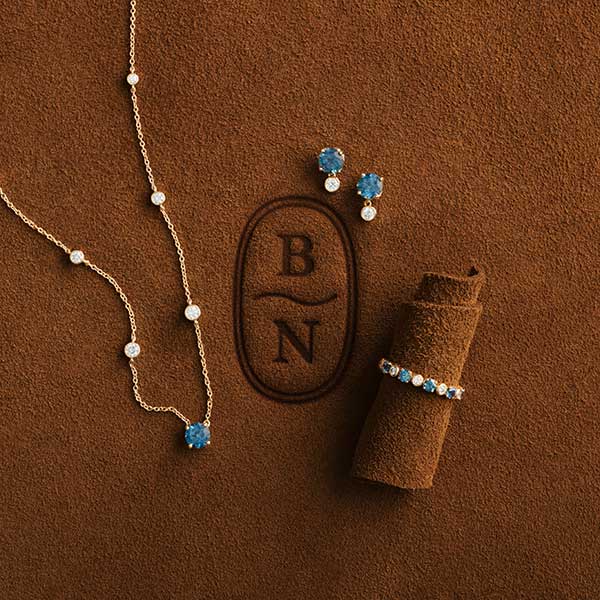
McCormack’s official story is clear about its visual language: contemporary, timeless, heirloom-worthy. Those three words could be generic in weaker hands, but here they map onto a specific point of view that borrows from antique jewelry without becoming costume-like. The brand’s mix of old-world references and cleaner contemporary lines gives its diamonds a more editorial, less bridal-only look.
The house signatures matter because they create recognition. Styles such as Button Back and Georgian cut-down settings give the brand a vocabulary collectors can spot, and that kind of repeatable identity is what turns fine jewelry from beautiful product into a house with codes. For luxury buyers, that matters as much as carat weight, because recognizability is part of what supports long-term value.
Craftsmanship as the luxury signal
Jessica McCormack leans hard on craftsmanship, and that is where the brand can credibly justify its pricing. The company says its workshop has more than 150 years of combined experience, and it runs an in-house apprenticeship scheme, two details that matter in a category where heritage is often claimed more loudly than it is trained. The message is simple: these pieces are not just styled to look antique, they are made in a workshop culture that understands how to build them.

That emphasis on making also gives the brand a stronger footing than vague sustainability rhetoric would. The story here is not a glossy promise about green credentials; it is a tighter, more tangible claim about skill, continuity, and passing techniques down through the bench. In a diamond market crowded with broad claims and little proof, that specificity feels more trustworthy than empty ethics language.
Bridal still powers the business
Even with celebrity-facing fashion jewelry driving the buzz, bridal remains a major engine. A previous WWD report said engagement rings account for 25 percent of annual sales, and that category has helped drive double-digit year-on-year revenue growth. That is a useful reminder that the brand’s cool-girl image is not separate from commercial seriousness; it is helping move one of the most dependable categories in fine jewelry.
The bridal numbers also explain why the label can expand without abandoning its identity. Engagement rings provide the emotional anchor, while the more fashion-forward pieces keep the brand relevant between proposals, anniversaries, and milestones. That mix is especially effective in diamond jewelry, where many houses either lean too hard into ceremony or too hard into trendiness and lose the ability to do both.
A retail strategy that feels like a private club
The stores reinforce the same narrative. In London, McCormack operates a six-storey townhouse at 7 Carlos Place in Mayfair, a setting that feels as much like a private residence or salon as a shop. It also has a Sloane Street townhouse at 140 Sloane Street, spanning 1,300 square feet, extending the brand’s art-filled world into another of London’s most polished luxury corridors.
The U.S. push has been just as deliberate. The brand opened its first American store at 743 Madison Avenue in New York in 2025, later announced a second U.S. location at South Coast Plaza, and said that space will span 1,600 square feet and open in summer 2026. WWD also reported a Rodeo Drive flagship in the pipeline, and it said sales were up 60 percent in 2025, a pace that suggests the retailer strategy is not just decorative theater but part of a larger growth story.
What traditional diamond houses can learn
Jessica McCormack’s success points to a broader shift in how diamond jewelry earns relevance. The old script, heavy formality, coded tradition, and bridal-first merchandising, is no longer enough on its own. Buyers still want quality and permanence, but they also want pieces that look alive in the present, and that means brands need stronger silhouettes, clearer signatures, and a more convincing sense of how jewelry is actually worn.
The clearest lesson is that luxury pricing survives when the product feels socially fluent. McCormack’s diamonds work because they move easily between celebrity wardrobes, everyday dressing, and heirloom ambition. Traditional houses that want the same energy will need to do more than polish their heritage story; they will need to make diamonds feel like part of contemporary life again, without losing the craftsmanship that gives them reason to endure.
This article was produced by Prism’s automated news system from verified source data, official records, and press releases, then run through automated quality and moderation checks before publishing. The system is built and supervised by the people who set the standards it runs under. Read our full AI policy.
Did this article answer your question?