White Diamonds Lead Christie's Jewels Online Sale to $8.5M Total
A Tiffany & Co. emerald-cut sold for $520,700 at Christie's Jewels Online, where white diamonds drove the sale to $8.5M — 131% of its low estimate.
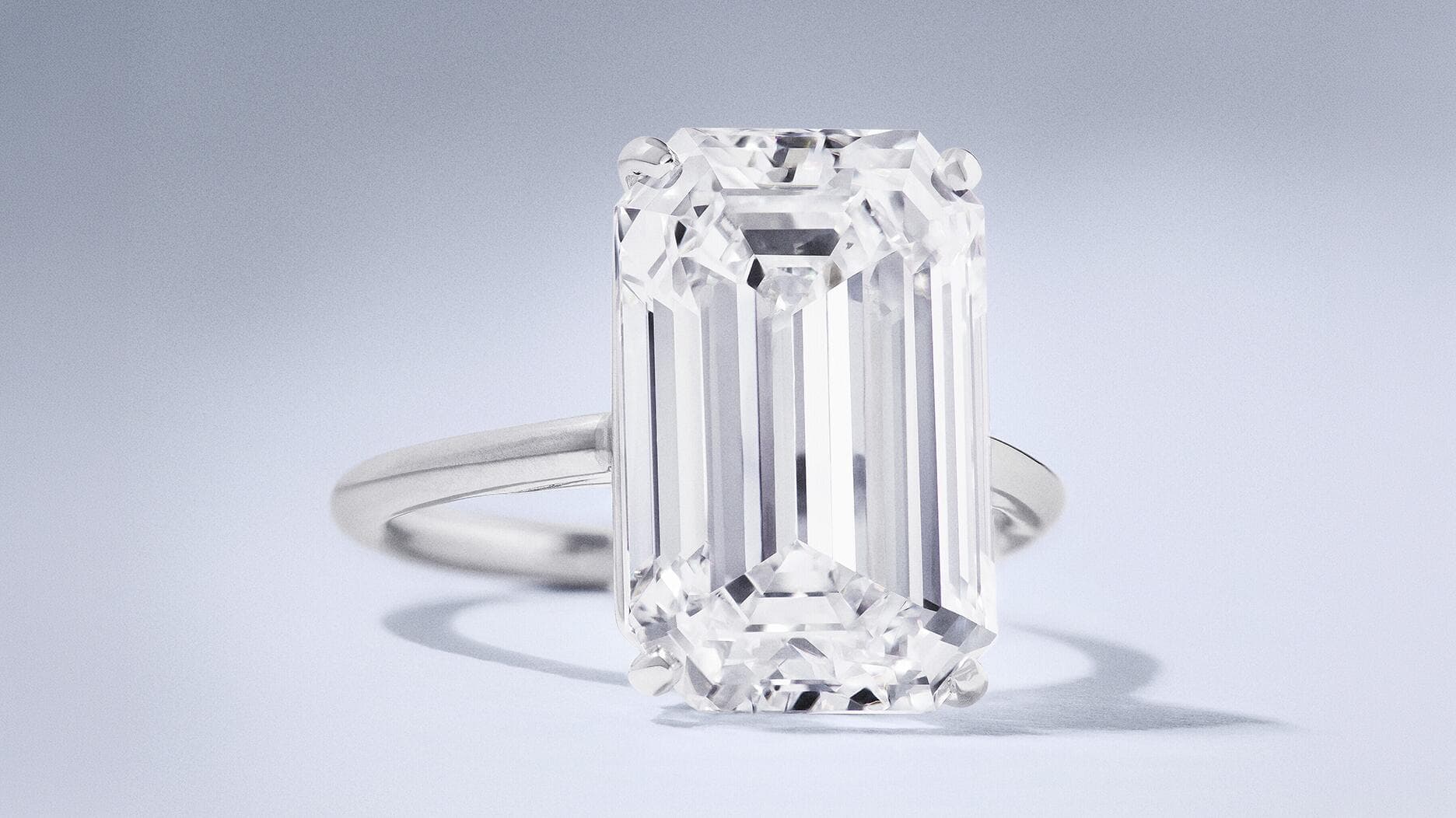
Three white diamond rings, each over 10 carats, each set with no colored accents and no decorative surplus, drove the bidding to its most competitive points when Christie's Jewels Online wrapped its first jewelry sale of 2026. The final tally: $8,526,145, or 131 percent of the sale's low estimate.
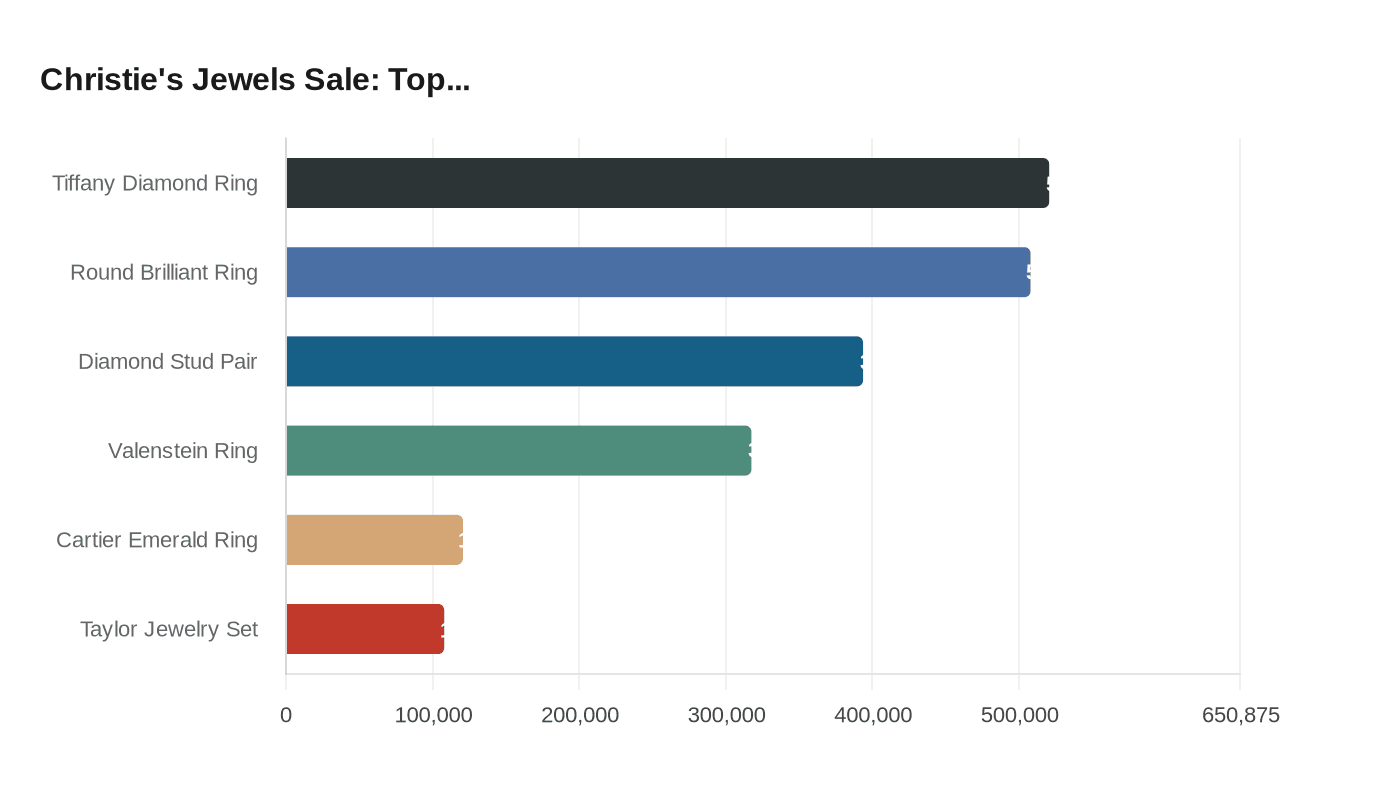
The top lot was a Tiffany & Co. ring centered on a 10.02-carat emerald-cut diamond, graded D color and internally flawless, classified as Type IIa, which sold for $520,700. That Type IIa designation is not marketing language; it identifies diamonds containing virtually no nitrogen impurities, producing the high-transmission, icy white that separates the rarest stones from merely excellent ones. A second large white diamond ring, featuring a 10.03-carat round brilliant cut, achieved $508,000, exceeding its estimate. A pair of round brilliant diamond studs totaling 10.17 carats realized $393,700.
Three different formats, three competitive results. What they shared was restraint: platinum settings, clean geometry, the stone's architecture doing all the visual work.
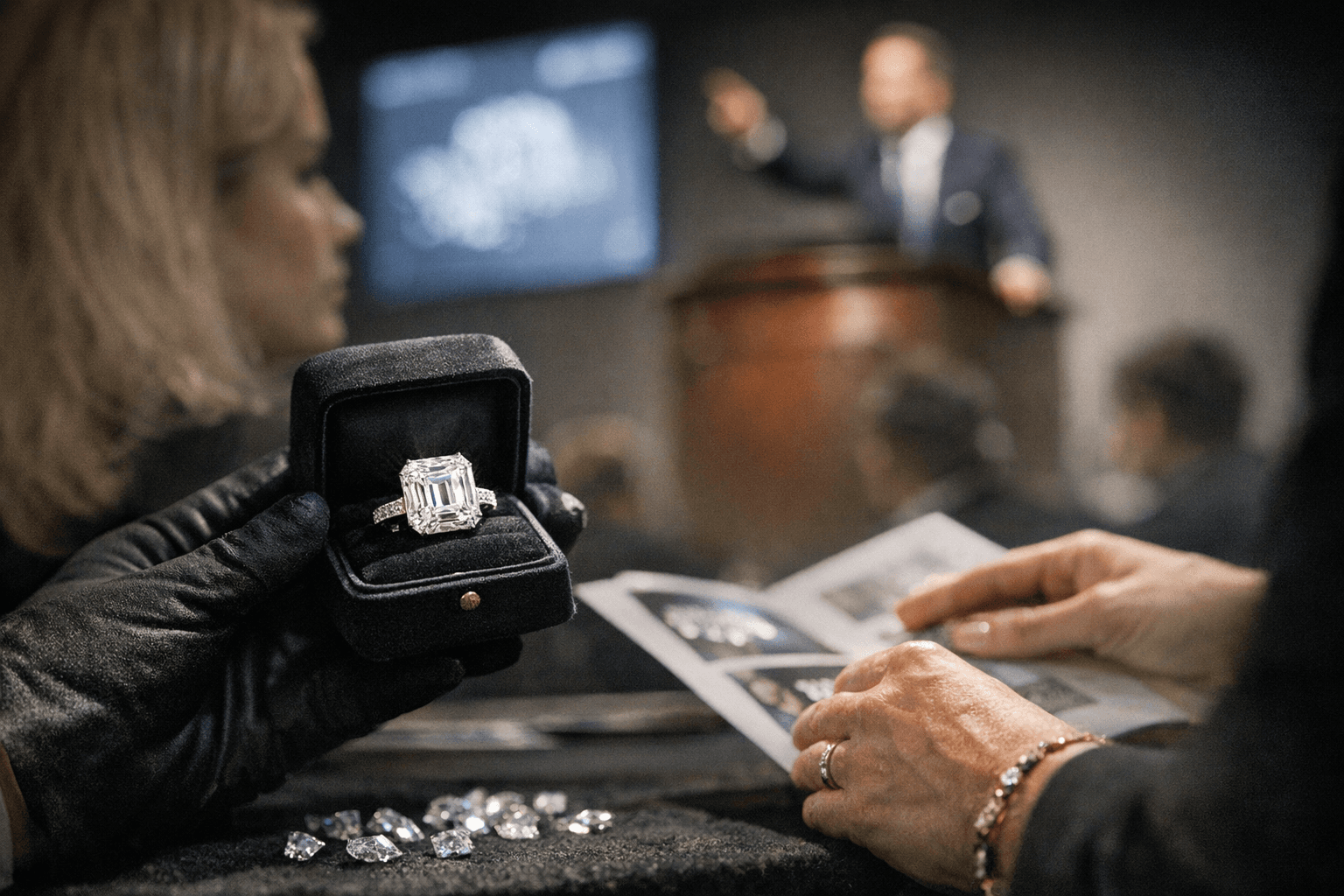
That edit reflects something specific in the current market. Provenanced and signed pieces consistently outperformed, but even unsigned large white diamond lots held strong, suggesting buyers are reading cut quality as its own investment signal. A spinel, ruby, diamond and gold jewelry set formerly owned by Elizabeth Taylor sold for $107,950. A sapphire and diamond ring from the Estate of Suzanne G. Valenstein reached $317,500, nearly quadrupling its high estimate. A Cartier carved emerald and diamond ring achieved $120,650, more than four times its upper pre-sale price. The sale ran from March 9 to 19, with highlights previewed at Christie's Rockefeller Center galleries in New York, drawing bidders from the Americas, Asia Pacific, and Europe, the Middle East and Africa.
The results function as a style decoder, and the message is precise. Emerald cuts reward high clarity because their large open facets amplify any inclusion; the Tiffany lot's internally flawless grade wasn't incidental, it was structurally required by the shape. Round brilliants remain the most liquid cut, which partly explains why that second ring and the stud pair both attracted strong bids. The two shapes carry differently: emerald cuts read architectural and spare, round brilliants classic and versatile. Both work best in plain platinum settings where the stone, not the metal, carries the design.
Recreating the Christie's aesthetic at different price points is about allocation, not compromise. At the highest tier, an emerald-cut diamond at minimum VS1 clarity in E or F color, set in a plain platinum solitaire, captures the silhouette. Clarity matters more in this shape than in round brilliants; the step-cut facet structure conceals nothing. At a mid tier, a round brilliant in G color and VS2 clarity set in a four-prong platinum solitaire delivers the same restraint at lower cost per carat. At entry level, the proportions of the setting become as important as the stone's grade: a simple four-prong or six-prong head in white gold, correctly sized for the stone, reads closer to the auction aesthetic than a pavé-accented alternative at a higher price.
The houses represented at Christie's, Tiffany, Cartier, Van Cleef & Arpels, David Webb, and Seaman Schepps, earned premiums partly for their settings. For buyers not chasing a signature, the lesson holds: plain white metal, correct proportions, and the clarity budget directed at the stone.
This article was produced by Prism’s automated news system from verified source data, official records, and press releases, then run through automated quality and moderation checks before publishing. The system is built and supervised by the people who set the standards it runs under. Read our full AI policy.
Did this article answer your question?