2026 engagement-ring trends embrace bezels, color and maximalism
Taylor Swift’s micro bezel and Dua Lipa’s chunky gold band set the tone for a louder bridal year. The real story is in the settings, cuts and color.

Taylor Swift’s micro bezel and Dua Lipa’s chunky gold band have done more than feed the bridal mood board. They point to a ring moment where the setting itself matters as much as the stone, and where the most compelling designs read clearly from across the room.
Bezel settings: the cleanest way to make a diamond feel modern
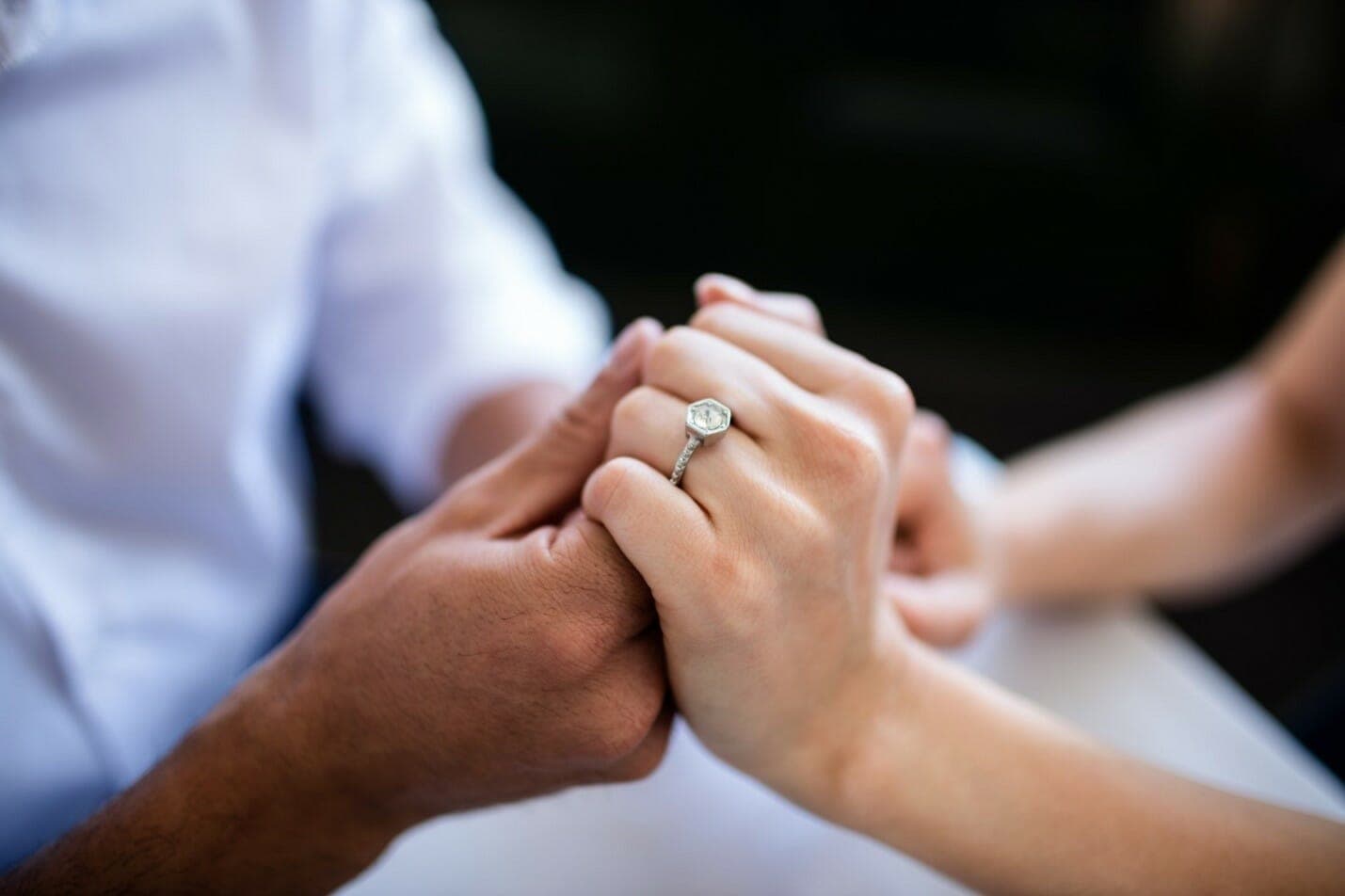
If prongs once defined the default engagement ring, bezels are the quieter, sharper answer now gaining force. Bustle links Taylor Swift’s August 2025 ring to this shift, describing it as vintage-inspired and heirloom-like, with the diamond set in a micro bezel rather than a traditional prong setting.
That small change changes everything on the hand. A bezel wraps the stone in metal, giving the ring a more graphic outline and a slightly more contained, finished look. In micro form, it keeps the profile sleek rather than heavy, which is exactly why it can feel both antique and unmistakably current.
East-west orientations: familiar cuts, new direction
Horizontal settings are having their own resurgence, and they are not a novelty so much as a rediscovery. JCK traces east-west settings back to the 15th century, notes their popularity in the 1920s, and points to a renewed spike after Zendaya’s ring debut in January 2025.
The appeal is easy to see once a stone is turned sideways. An oval, emerald, or marquise cut set east-west looks longer and more graphic, and the ring takes on a more fashion-forward shape without needing a bigger center stone. JCK also reported that eBay searches for east-west rings rose 30% from December 2023 through December 2024, a sign that the look has moved well beyond celebrity orbit.
Toi et moi pairings: two stones, one point of view
Toi et moi rings continue to resonate because they feel intimate and slightly irreverent at the same time. Bustle places them among the 2026 styles gaining momentum, and the design works precisely because it refuses symmetry for symmetry’s sake.
On the hand, the pairing creates a little visual conversation: two stones, often different in shape or size, set beside each other instead of fused into a single classic solitaire. The effect is romantic, but also more editorial than traditional, especially when the stones are mismatched or set with enough space to let each one breathe.
Colored gemstones: the fastest way to change the mood
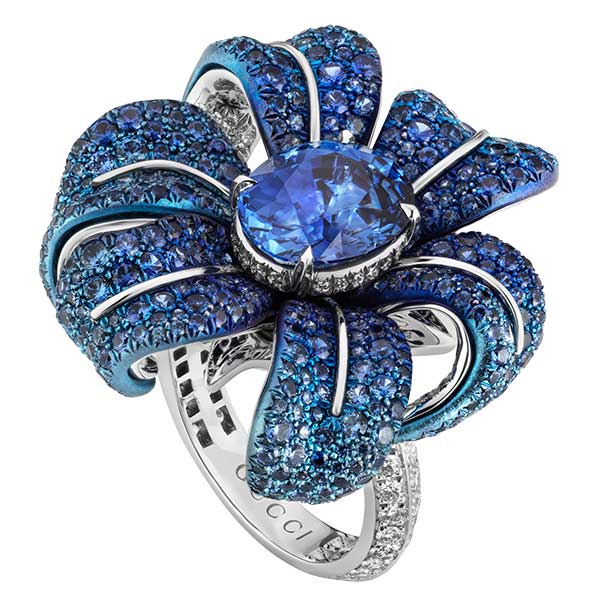
Color is doing more than adding variety. It changes the emotional register of the ring immediately, turning it from a diamond-first statement into something more personal and often more playful. Bustle notes that colored gemstones are gaining fans among celebrity wearers such as Lady Gaga, Anya Taylor-Joy, and Scarlett Johansson.
That matters because color shifts the whole hand story. A sapphire, ruby, or other colored center pulls the eye faster than a white diamond and makes the ring feel less expected, especially when paired with a simple band or a pared-back setting. For shoppers who want a ring to read as theirs, not just as a bridal archetype, color is one of the clearest ways to do it.
Sculptural shanks and chunky gold: when the metal becomes the statement
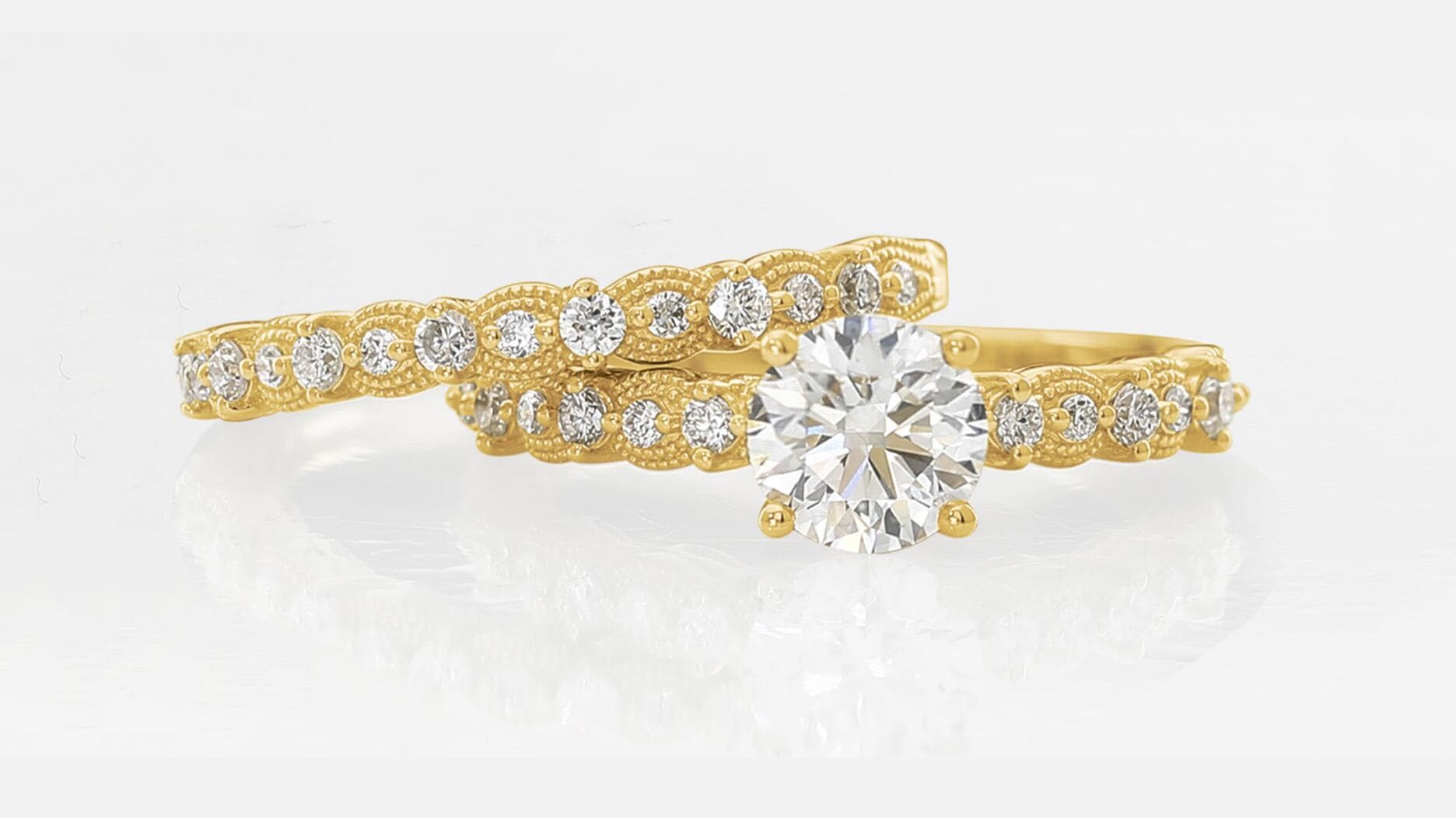
Dua Lipa’s June engagement brought another important cue into focus: the band itself can carry as much attitude as the stone. Bustle describes her ring as a chunky gold band, which fits neatly into the broader maximalist turn it says is defining bridal style.
A sculptural shank changes the whole silhouette. Instead of disappearing behind the center stone, the band becomes part of the visual architecture, adding weight, curve, or volume that makes the ring feel designed rather than merely set. Warm metal, especially in a thicker form, also gives even a modest stone a more confident presence.
What shoppers are actually choosing
The trend story is bolder than the market average, which makes the contrast instructive. The Knot’s 2024 Jewelry & Engagement Study found that 77% of proposees had some involvement in the ring-selection process, which helps explain why rings are getting more specific and more personal.
The numbers also show that the classic center-stone formula still dominates. The Knot found that 51% of engagement rings had a clear diamond center stone with side stones and/or accents, and round solitaires still made up 28% of designs. Even so, the average engagement ring cost fell to $5,200, down from $6,000 in 2021, $5,800 in 2022, and $5,500 in 2023, a reminder that distinctiveness is not always synonymous with higher spend.
Why the celebrity ripple actually sticks
Swift’s ring did what only a few celebrity jewels manage to do: it became the story, not just the accessory. JCK says her engagement announcement was the jewelry story of 2025, and that Swift’s Instagram post drew more than 37 million likes, while the designer, Kindred Lubeck of Artifex Fine Jewelry, saw a flood of interest.
That kind of visibility matters because it translates abstract trend language into something shoppers can picture immediately. JCK also says Lubeck was scheduled to speak at 92nd Street Y on April 15, 2026, about her work and the reaction to Swift’s ring, proof that a single design detail, a micro bezel, can move from a private proposal into the public vocabulary of bridal style. The result is a 2026 engagement-ring landscape defined less by the old solitaire default and more by rings that look intentionally shaped, emotionally specific, and impossible to mistake for anyone else’s.
This article was produced by Prism’s automated news system from verified source data, official records, and press releases, then run through automated quality and moderation checks before publishing. The system is built and supervised by the people who set the standards it runs under. Read our full AI policy.
Did this article answer your question?