Should you buy the engagement ring before the proposal?
The ring is no longer a one-person secret. If fit, budget, or style is likely to miss, buying together often beats guessing alone.
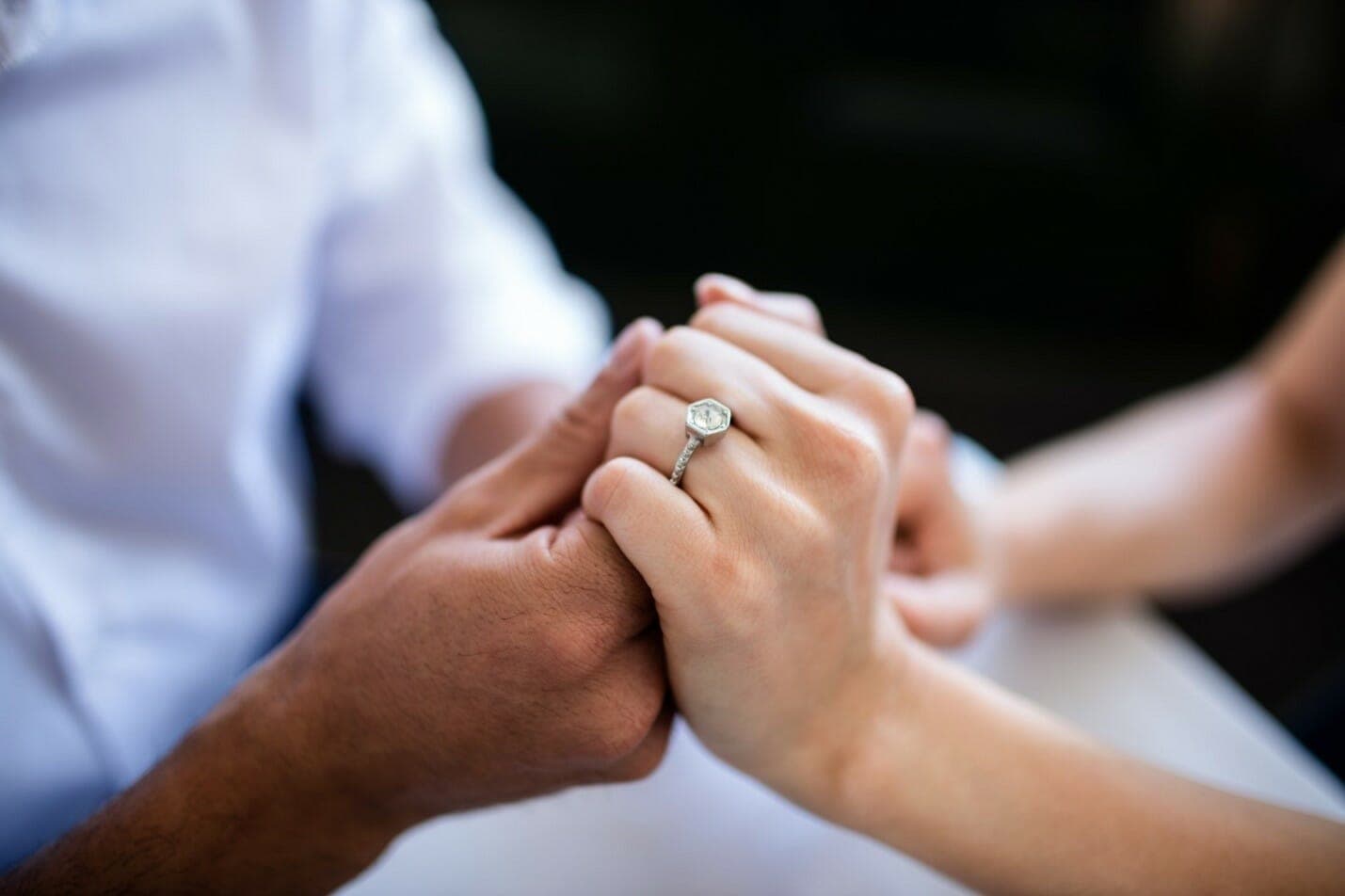
In The Knot’s 2024 Jewelry and Engagement Study, which surveyed more than 7,000 recently engaged couples in the United States, 77% had some involvement in selecting or purchasing the ring, yet 83% of proposees still considered the proposal a surprise. That leaves room for a proposal to stay private in timing and setting while the ring itself becomes a shared decision.
The modern proposal is usually planned in layers
The same study found that 29% shopped together and 9% were present when the ring was purchased. Many couples are blending advance ring decisions with a reveal that still feels personal.
That split makes ring shopping before the proposal practical in more cases than it once did, especially when the stone, metal, and setting have to work with a daily wardrobe and a long-term budget.
When buying before the proposal is the better move
Buying before the proposal works best when the ring itself is the point of the surprise and the buyer already knows the wearer’s taste well enough to make a clean, specific choice. The Knot found that proposers spent about four months or less on ring selection and visited about five stores on average, which suggests that pre-proposal shopping is often a focused project rather than a prolonged treasure hunt. If the plan is to preserve the reveal, a short, intentional buying window can still leave room for a polished surprise.
This path also reduces the most common technical mistakes. Ring size is only the start. A buyer who already knows whether the wearer leans toward white gold or rose gold, a low-profile or raised setting, a mined diamond or lab-grown stone, can narrow the field quickly and avoid a remake. Custom, personalized, engraved, or resized rings are often non-returnable, and VRAI’s returns policy excludes custom-designed jewelry, personalized or engraved pieces, and rings that have been resized or otherwise modified at the customer’s request.
Budget alignment is another reason to buy first. Jewelers Mutual’s 2024 Engagement Ring Trends Study placed the average engagement-ring value among respondents between $2,500 and $5,000. That range is wide enough to cover very different styles but tight enough that a misread can be expensive. If the ring is bought ahead of time, the buyer can calibrate the spend to the proposal plan instead of discovering after the fact that the stone size, setting, or metal choice pushed the ring beyond what the couple would have chosen together.

When shopping together after the proposal is the wiser route
Shopping together usually wins when the wearer has a clear point of view about craftsmanship, stone shape, or metal color, or when the buyer is not confident about the size and finish details. That is especially true now that the average center-stone weight range among Jewelers Mutual respondents landed between 1 and 2 carats, with white gold the most popular metal at 35% and rose gold close behind at 33%. Those preferences shape how a ring looks on the hand, how much maintenance it requires, and how contemporary or traditional it feels in daily wear.
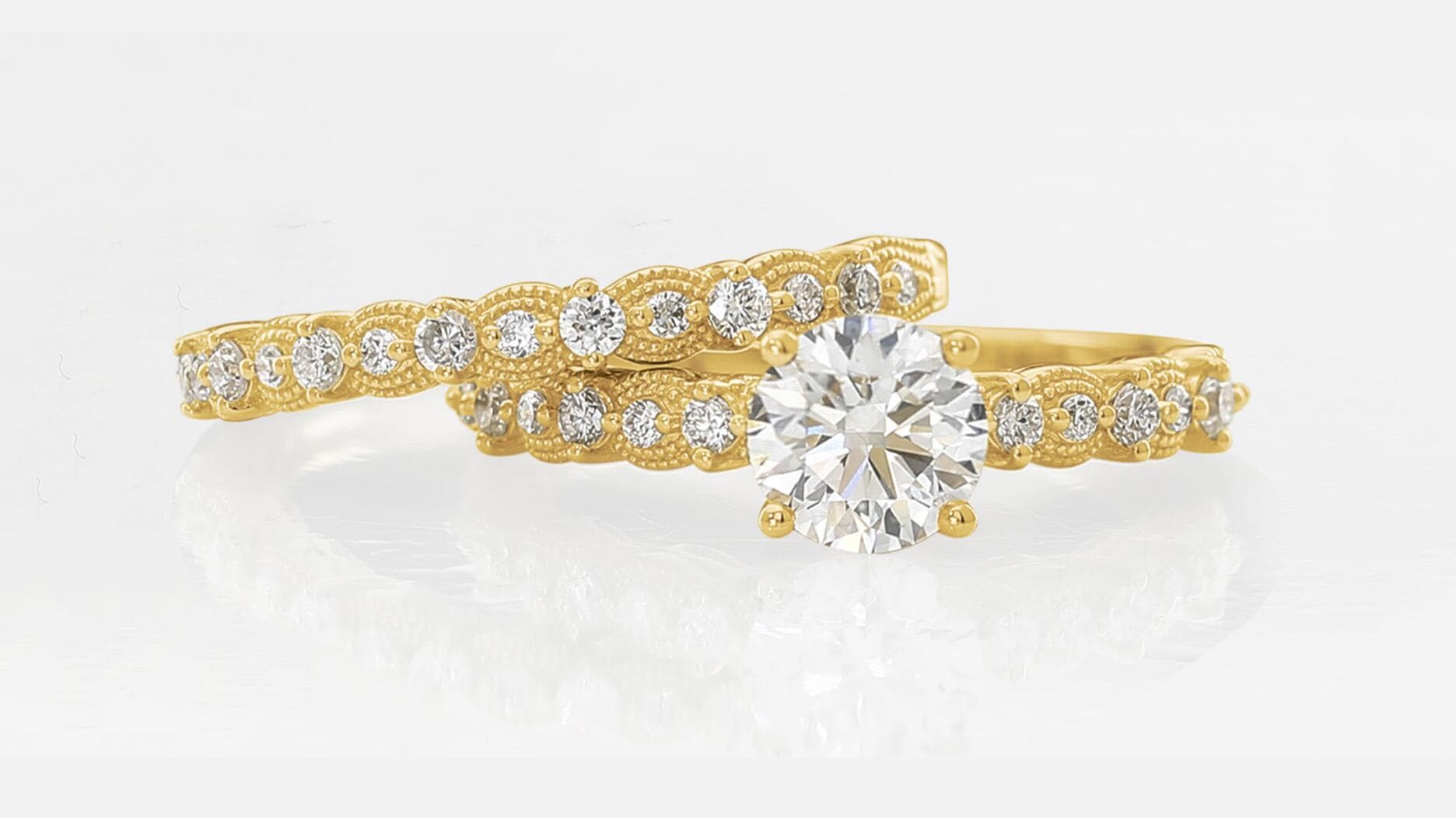
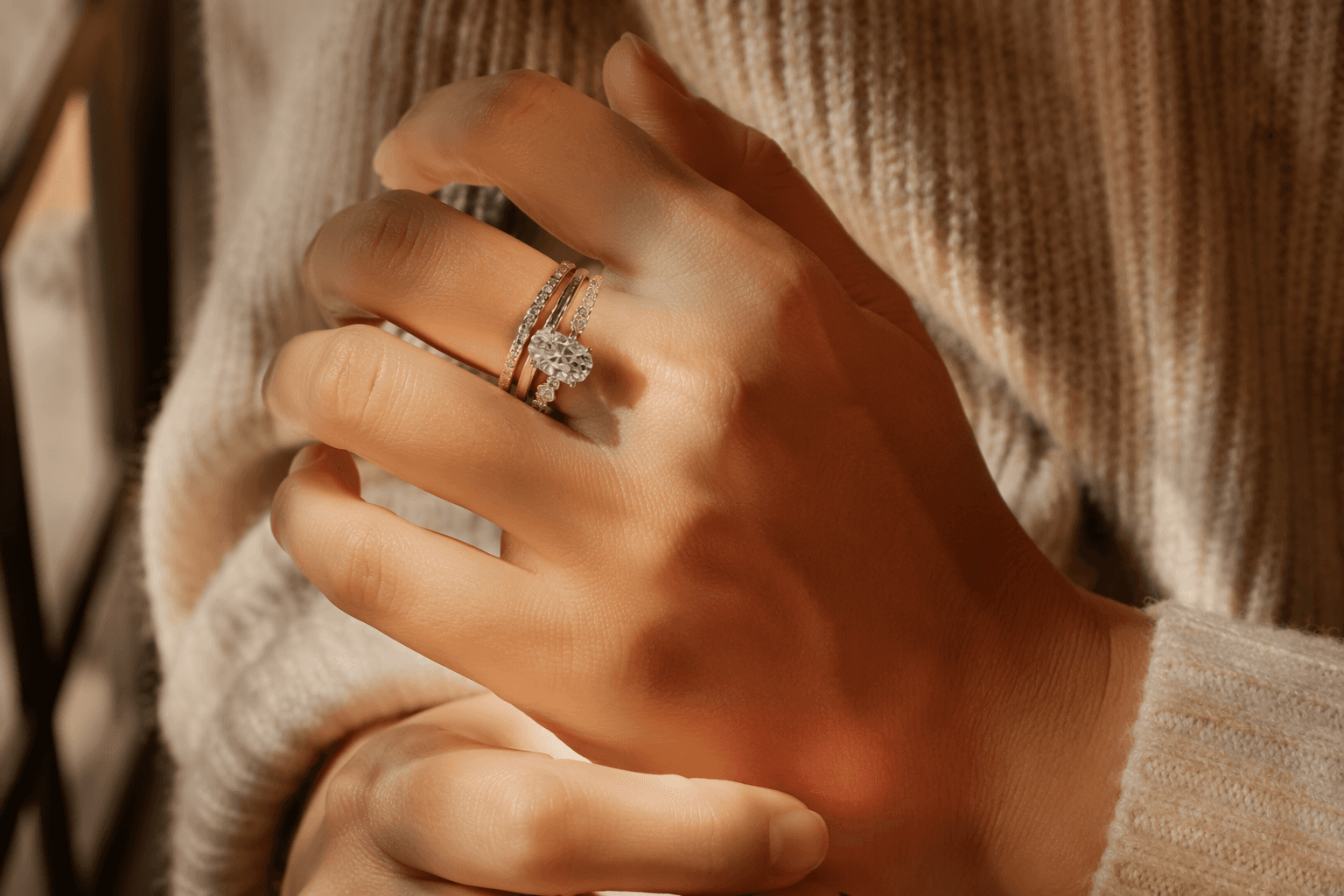
Shopping together also helps when the ring is expected to do more than symbolize the moment. A setting has to sit comfortably against another band if a wedding stack is already part of the plan. A prong count, halo, bezel, or solitaire changes not only the silhouette but also how secure the center stone feels in everyday use. The more specific the taste, the less sense it makes to gamble on a solo purchase and hope the exchange policy can save it.
The relationship timeline matters too. The Knot found that 57% of couples began discussing engagement more than a year before the proposal.
What the data says about style, stone, and symbolism
The ring itself has become a design decision rather than a single diamond default. In Jewelers Mutual’s study, 68% of respondents chose mined-diamond settings and 18% chose lab-grown diamonds, a split that puts material preference squarely into the conversation before purchase. The center stone weight range of 1 to 2 carats also shows that many buyers are balancing presence with practicality instead of aiming only for maximum size.
Sotheby’s traces that shift to De Beers’ 1947 “A Diamond Is Forever” campaign, which helped standardize the solitaire diamond as the emotional default for proposals. Before that, betrothal rings could feature colored gems, miniature diamonds, or pearls.
A practical decision framework
The cleanest way to decide is to ask three questions before you buy:
- Do you know the wearer’s metal, stone, and setting preferences well enough to make a confident one-shot purchase?
- Is the ring likely to need sizing, engraving, or customization that could make it non-returnable?
- Is the budget easiest to manage alone, or does it need to be agreed in advance?
If the answer to the first question is yes and the others are under control, buying before the proposal can preserve surprise without much risk. If the answer to any of them is no, shopping together after the proposal usually protects both the investment and the long-term wearability of the ring.
Three realistic scenarios
A buyer who knows the wearer wants a white-gold solitaire, has already seen the preferred shape, and is comfortable working within the $2,500 to $5,000 average engagement-ring value range in Jewelers Mutual’s 2024 study can confidently buy first and keep the ring hidden until the proposal. A couple that has already discussed engagement for more than a year, wants to compare mined and lab-grown stones side by side, and cares about matching the ring to a future wedding band is better served by shopping together. A buyer considering an engraved band, a resized antique mount, or a fully custom design should treat the purchase like a final design appointment, not a surprise gamble, because return options may disappear once the ring is altered.
This article was produced by Prism’s automated news system from verified source data, official records, and press releases, then run through automated quality and moderation checks before publishing. The system is built and supervised by the people who set the standards it runs under. Read our full AI policy.
Did this article answer your question?