2026 Engagement Rings Embrace Gold, Color and Personalization
Proposal rings are warming up in yellow gold, leaning into colored stones and getting more sculptural. The new look is personal, heavier and far less cautious.
Gold takes the lead
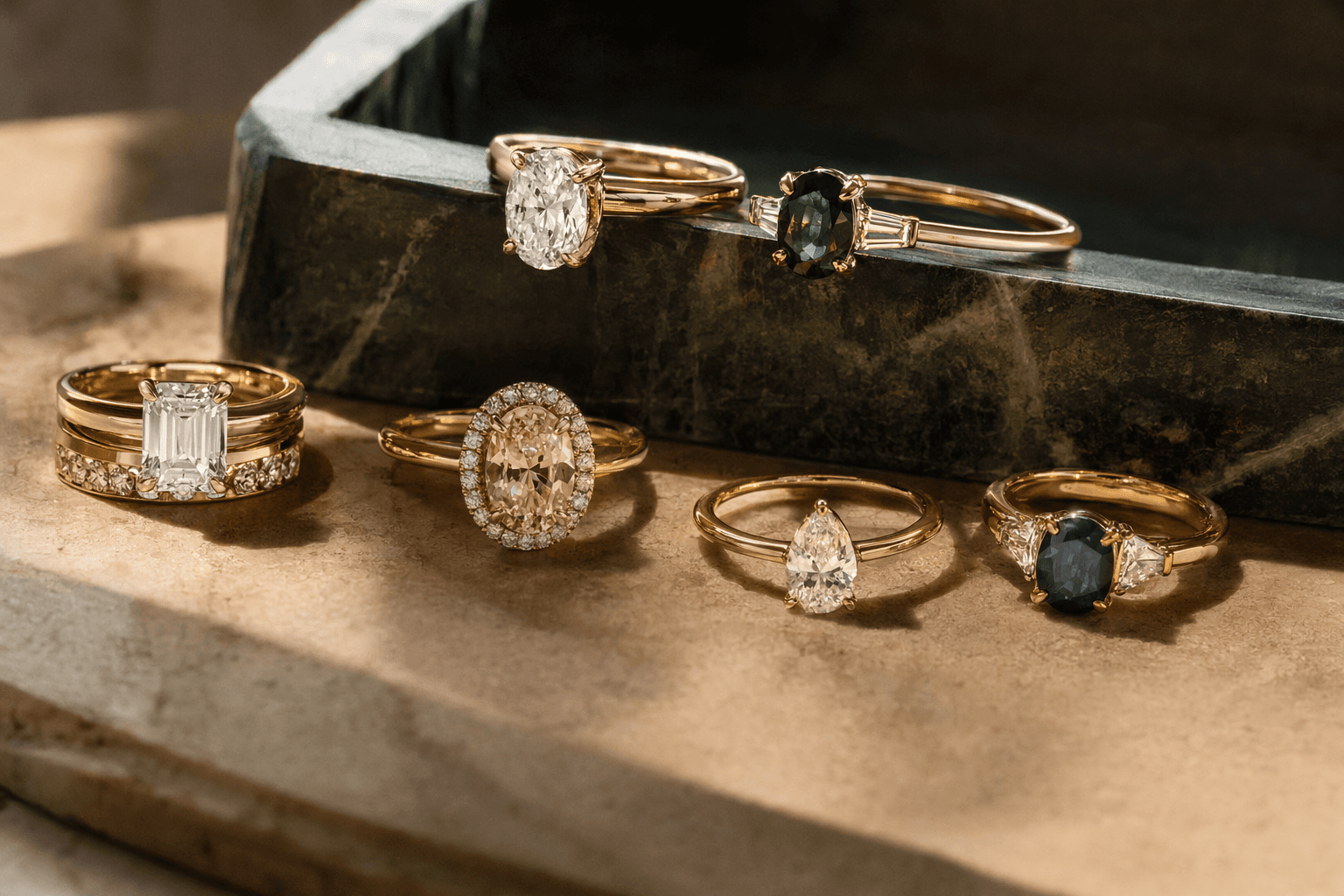
The clearest engagement-ring shift is not a new cut or a flashier carat count. It is metal. Chunky yellow gold is back in a serious way, and it changes the whole mood of a ring: a solitaire feels richer, a bezel feels more modern, and even a familiar oval diamond reads with more presence when it sits in warm gold instead of bright white metal.
That turn is not just aesthetic. JCK’s January 2026 predictions flagged colored stones and gold as defining forces, with gold prices pushing designers to rethink materials. In other words, the resurgence of yellow gold is both visual and practical. The metal is doing the work of trend, status and construction all at once.
You can see the appeal in the kind of ring people are talking about most: a substantial gold band holding a diamond with enough weight that the ring looks deliberately made, not merely assembled. The effect is less delicate and more architectural, which is exactly why it is showing up as the antidote to the ultra-slim solitaire.
What yellow gold changes on the hand
Yellow gold is not just a color choice. It alters the proportions of the ring itself. A thicker shank makes even a modest center stone look more grounded, while a high-polish finish can turn the band into part of the design rather than background support.
That is why the current yellow-gold revival is tied to bolder silhouettes. In February 2026, JCK described bold, hefty yellow gold as definitive of the era, alongside a strong appetite for personalized rings. Designer Melanie Bardet went further, saying she is seeing a "huge focus on heirloom resets and chunkier, bold, nontraditional engagement rings." The message is clear: the band is no longer an afterthought. It is part of the statement.
Color is no longer a side note
The second major shift is color, but not in a playful, costume-jewelry way. The colors trending now are more nuanced: blue sapphires, lighter-hued diamonds, antique stones and warm, off-color center stones that feel candlelit rather than icy.
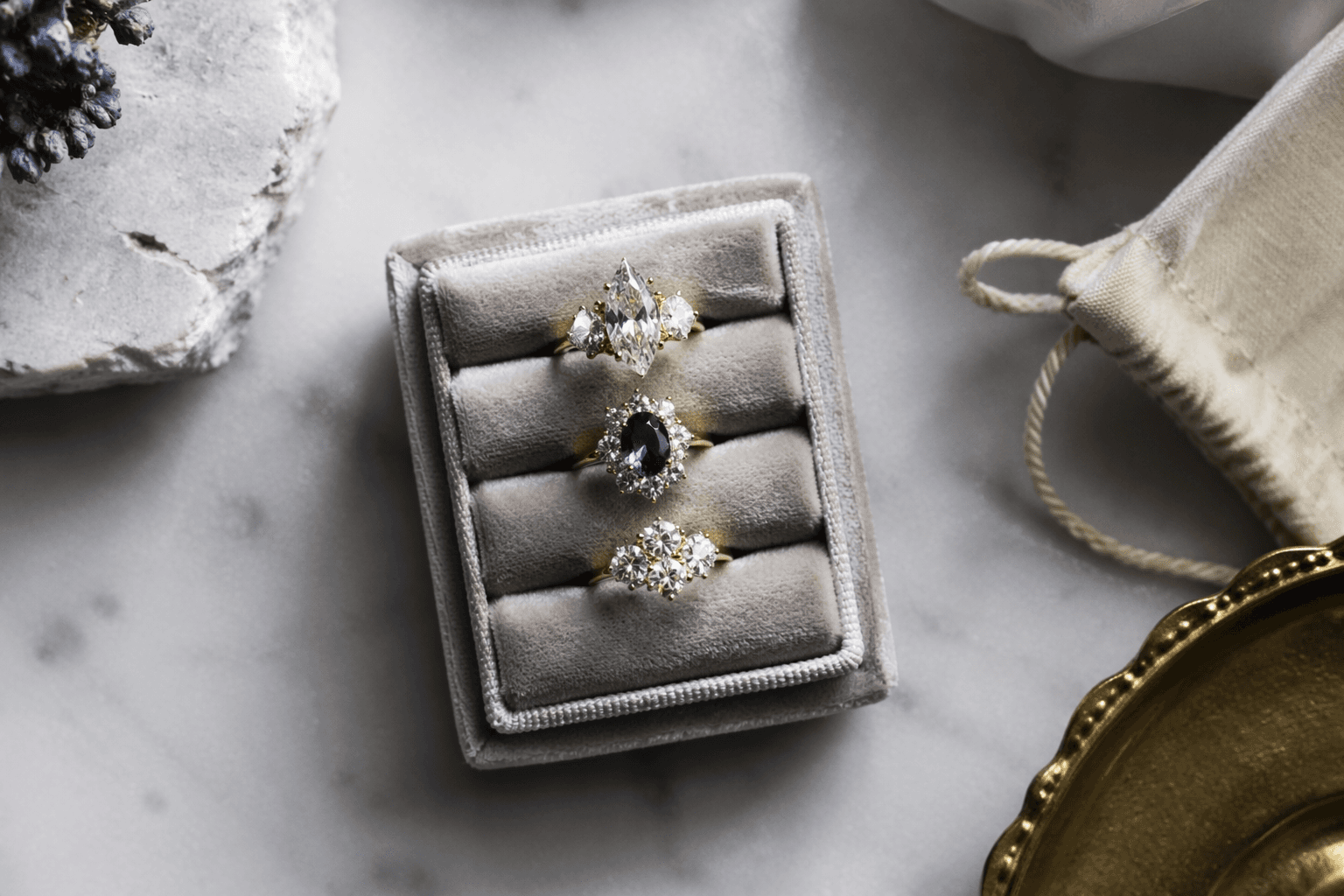
Halle Berry’s yellow-gold and blue-sapphire engagement ring is the kind of reference point that makes the trend easy to picture. It shows how rich metal and a colored center stone can work together without looking fussy. The ring has visual authority because the stone and setting are speaking the same language.
Taylor Swift’s engagement ring has also entered the conversation as a cultural touchstone for warm diamond tones. De Beers has said that ring became a reference point for consumers drawn to candlelight-colored diamonds, which says something important about where taste is headed. The market is not rejecting diamonds. It is broadening the palette around them.
The new color story is about warmth, not novelty
The strongest color trend in bridal jewelry is not necessarily a saturated gem at the center. It is a shift toward diamonds with personality, including off-color and antique stones that feel less chemically polished and more storied. That gives a ring dimension before it is even worn.
De Beers has leaned into that direction commercially. In 2026, it extended Desert Diamonds into bridal with lighter-hued diamonds and collaborations with more than 60 designers, including Kindred Lubeck, who designed Taylor Swift’s ring. That matters because it shows color and customization are not just editorial talking points. They are part of how major players are thinking about bridal demand.
Personalization is the real headline
The most useful word for reading 2026 engagement rings is individuality. The trend is not about every ring looking wildly different. It is about small but decisive choices that make a ring feel specific to one person: an elongated oval instead of a round brilliant, a reset family stone, a bolder gold mount, or a mixed, unexpected combination of old and new.
JCK’s February coverage captured that mood with a list of elements that keep resurfacing: chunky yellow gold, off-color and antique diamonds, elongated shapes and heirloom resets. None of those ideas exists in isolation. They often appear together in rings that look collected rather than catalogued.
That is a major shift from the highly standardized bridal shorthand that dominated for years. The classic white-gold diamond solitaire is still present, but it is no longer the only ring that reads as desirable or serious. Instead, the new prestige is tied to a ring that feels edited.
What this looks like in a proposal ring
The ring most likely to feel current on a hand in 2026 is not a maximalist piece covered in details. It is a ring with one or two strong design decisions made very clearly.
- a solitaire oval diamond in a heavy yellow-gold bezel
- a warm, antique-style center stone on a broad gold band
- a sapphire flanked by clean metal lines rather than delicate pave
- an heirloom diamond reset into a chunkier mount that gives the stone more presence
- an elongated shape set low and sculptural, so the ring feels tailored rather than ornate
Think of:
These are the rings that photograph well, read instantly and feel immediately shareable. They also explain why gold, color and personalization are moving together. The look is not precious in the fragile sense. It is precious in the sense of being unmistakably chosen.
The old baseline still matters
Even with all this change, the familiar bridal formula has not disappeared. A 2020 WeddingWire survey of nearly 20,000 recently engaged people found that 87 percent chose a diamond center stone and 54 percent chose white gold for the ring metal. That baseline still shapes the market, especially for buyers who want a ring that feels safe, bright and classically bridal.
But the newer data points show how far the center of gravity has moved. Bridal demand remains central to diamond-jewelry sales, and De Beers has said US jewelers reported bridal sales as their primary source of diamond demand in recent months. When the core of the market stays strong, designers have room to push style forward at the edges. That is exactly what is happening now.
The result is a bridal landscape where a ring can still be unmistakably an engagement ring while looking far less uniform than it did a few years ago. Yellow gold brings warmth and weight. Color adds emotional texture. Personalization turns the piece into a story. Together, they are defining what proposal rings will start to look like on more hands this year.
This article was produced by Prism’s automated news system from verified source data, official records, and press releases, then run through automated quality and moderation checks before publishing. The system is built and supervised by the people who set the standards it runs under. Read our full AI policy.
Know something we missed? Have a correction or additional information?
Submit a Tip