Celebrity Engagement Rings Embrace Bold Cuts, Vintage Settings, Unique Style
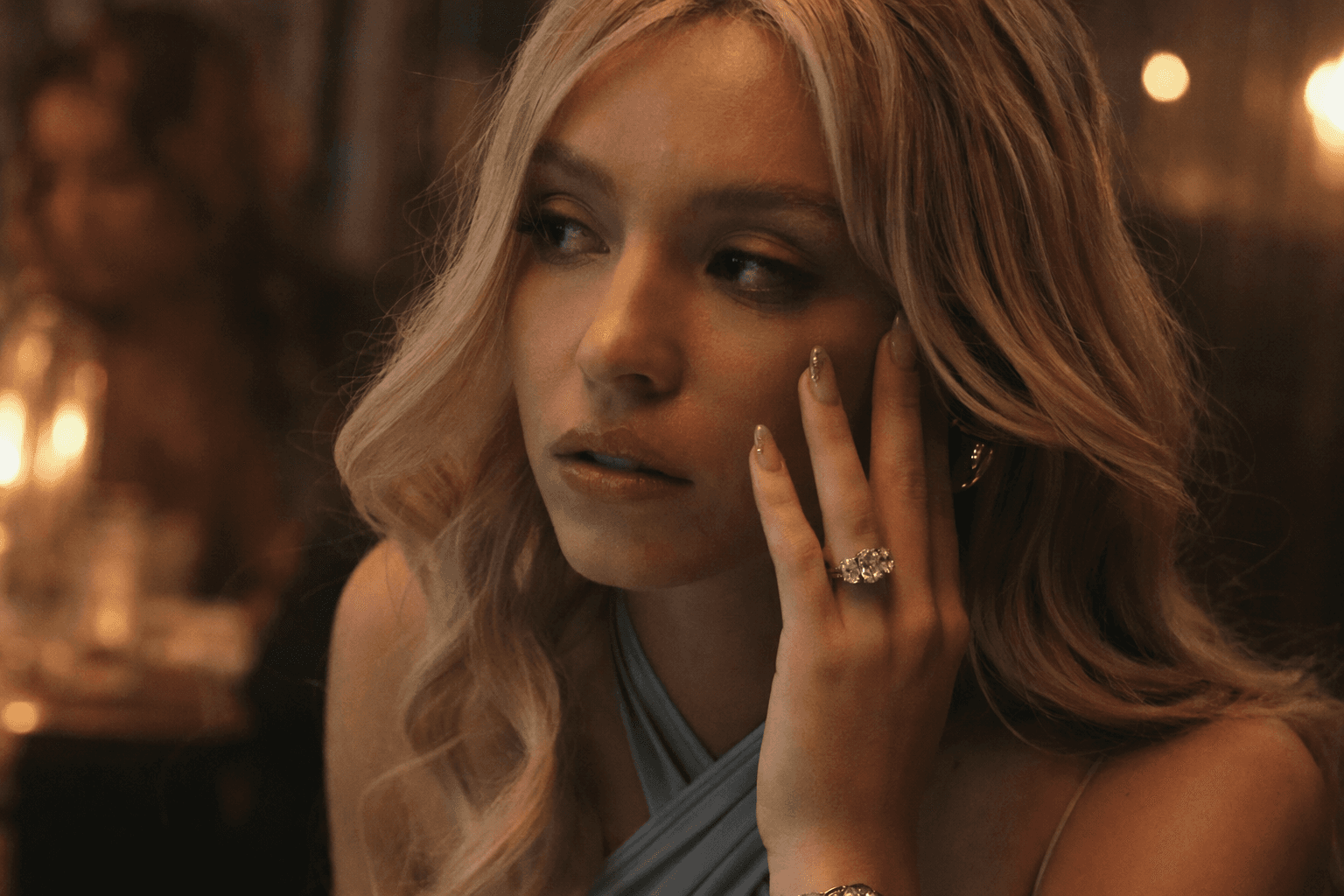
Celebrity rings are pushing engagement taste toward bolder cuts, vintage settings, and more personal silhouettes. The new standout look is less perfect symmetry, more character.
Boldness is replacing polish-for-polish’s-sake
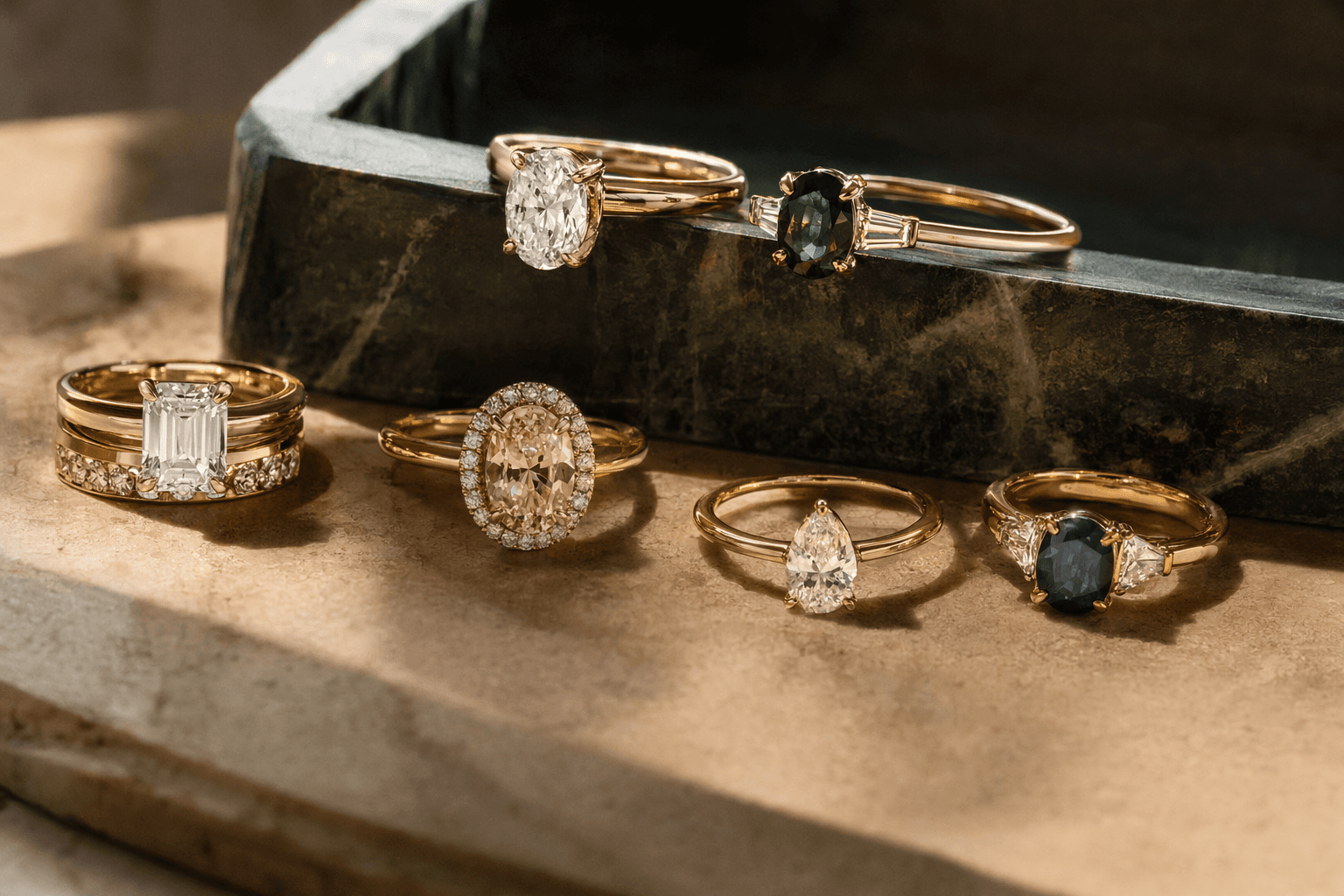
The most interesting celebrity engagement rings now feel less like status symbols and more like signatures. Instead of defaulting to the round solitaire that defined modern bridal jewelry for decades, the rings getting the most attention favor old mine cuts, elongated cushion shapes, east-west settings, bezel frames, and two-stone compositions that look chosen, not prescribed.
That shift matters because the modern diamond engagement ring was built on repetition. Diamonds became widely linked to engagement in the late 19th and early 20th centuries, and De Beers’ 1938 “A Diamond is Forever” campaign cemented the round-diamond ideal in the public imagination. Today’s celebrity rings are pushing back against that script, making individuality the new luxury cue.
The cut is the new calling card
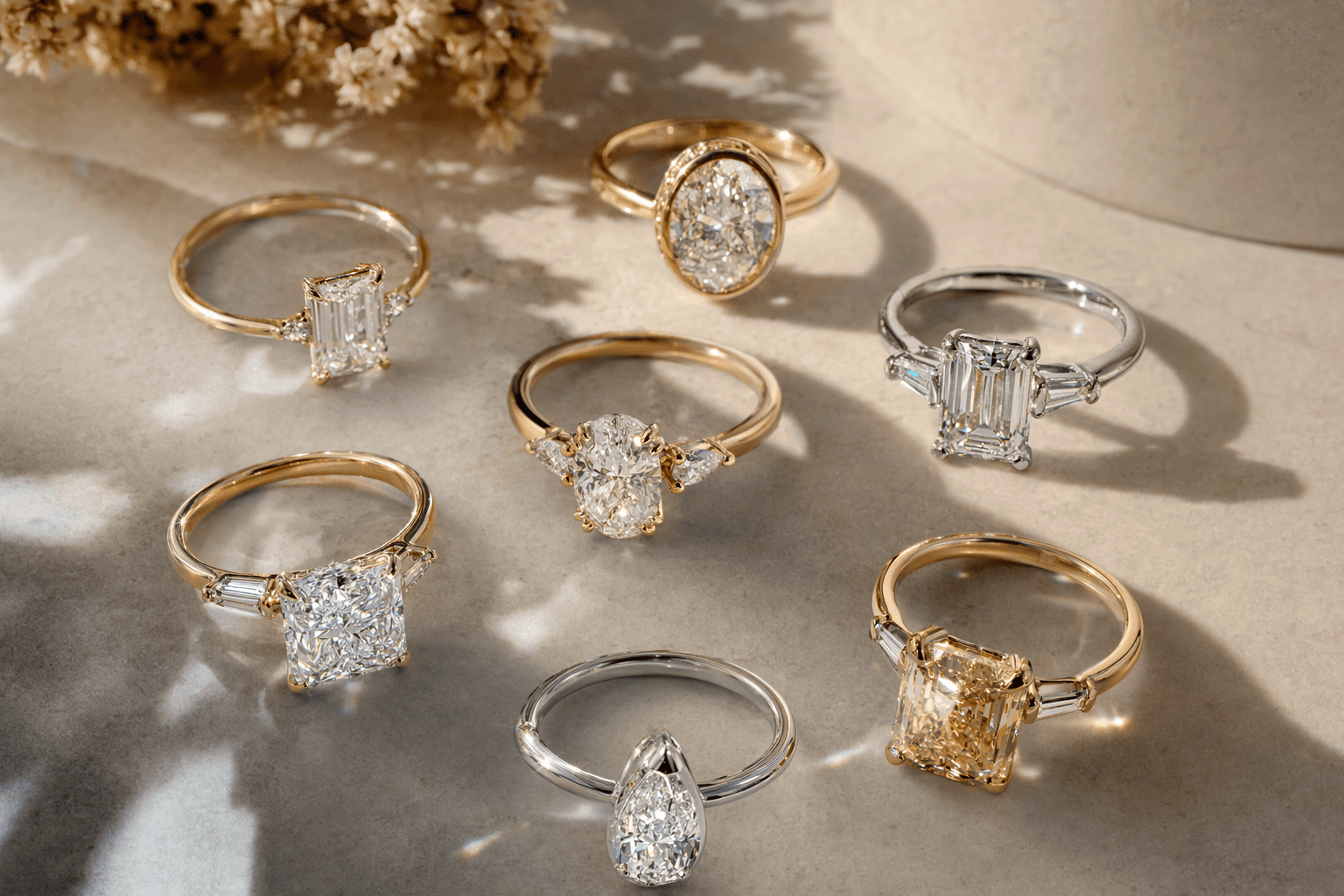
The clearest trend is a move toward shapes that read instantly, even before the setting is considered. The Gemological Institute of America notes that round brilliant diamonds are the only shape with standardized cut grading, while fancy shapes such as marquise, pear, oval, heart, emerald, asscher, cushion, and triangle are evaluated differently. That distinction helps explain why unusual shapes feel so editorial: they look less standardized and more intentionally chosen.
Elongated silhouettes, especially oval and elongated cushion cuts, are at the center of this shift. They lengthen the finger, catch light differently from a round stone, and create a softer, more fashion-forward profile. Taylor Swift’s reported engagement in August 2025 helped reignite interest in vintage cuts, especially old-cut diamonds and elongated cushion shapes, and the ripple effect has kept antique-looking stones in the conversation.
Old mine cuts and antique sparkle
Old mine cuts have become especially compelling because they carry visible handcraft. GIA describes them as vintage diamonds shaped by hand and designed to sparkle in candlelight, which gives them a warmer, more romantic flash than the crisp, high-precision brilliance of modern cuts. That candlelit glow is exactly what makes them feel both historical and current.
For readers drawn to character, this is one of the most persuasive design shifts in the market. The appeal is not perfection but personality. A stone that looks slightly less uniform can feel more intimate, more collected, and more like a piece with a past.
Settings are doing as much storytelling as the stones
The other major change is in how the stone is mounted. Only Natural Diamonds reported in 2025 that celebrity engagement rings were moving toward east-west orientations, vintage filigree, and bezel settings, and that direction has only intensified. In 2026 coverage, the same trend line was described as antique-cut diamonds and unique settings that turn the traditional solitaire on its head.
East-west settings are especially distinctive because they rotate the stone horizontally, giving familiar shapes like ovals, emerald cuts, or marquise stones a fresh profile. Bezel settings, which frame the stone in metal, add a clean, modern edge and can make a ring feel more architectural. Vintage filigree brings the opposite mood: lace-like detail, softness, and the sense that the ring was inherited from another era.
Why bezel settings feel so current
Bezel settings are gaining traction because they read as both protective and graphic. They remove some of the exposed sparkle of prong settings in favor of a smoother silhouette, which suits anyone who wants a ring that feels more designed than delicate. In celebrity jewelry, that can be especially powerful because the setting becomes part of the statement rather than a hidden support system.
That same instinct explains the popularity of chunky, sculptural mounts. Heavier gold shoulders, thicker halos, and broader bands give rings visual weight. They signal confidence and are easier to read from a distance, which is part of why they photograph so well and travel so quickly through celebrity coverage.
Mixed metals and asymmetry are making rings look less expected
Another important direction is the use of mixed metals, which breaks the old rule that an engagement ring must be one-note. Yellow gold with white-metal details, or a platinum head set against a warmer shank, can make even a classic stone feel more contemporary. The contrast also creates a layered look that gives the ring more depth without requiring a larger diamond.
Asymmetry is working for similar reasons. A ring that is slightly off-center, side-stone heavy, or built with an unconventional balance feels more personal than one built on mirror-image symmetry. In the current celebrity moment, that kind of irregularity reads as taste, not compromise.
Two-stone and heirloom-style rings are normalizing sentiment
Some of the most influential celebrity rings are the ones that carry symbolic structure. Only Natural Diamonds has noted that celebrity rings have helped normalize two-stone designs and family-sentiment pieces, and that matters because these rings shift attention away from carat size alone. A two-stone ring can suggest partnership, duality, or a merging of histories, while a family-heirloom stone carries the weight of inheritance and memory.
This is where celebrity influence is doing something more interesting than pure trendsetting. It is broadening the definition of what an engagement ring is allowed to say. The ring can be romantic, but it can also be archival, private, or intentionally nontraditional.
Why personalization is beating uniformity
Forbes reported in 2026 that celebrity influence continues to shape engagement-ring taste, with individuality, vintage cuts, and elongated cushion shapes drawing the most attention. That aligns with the broader movement away from one dominant look and toward rings that reveal something about the wearer. The more a ring feels tied to a specific story, the more modern it appears.
This is also why celebrity departures from the norm land so strongly. The farther a ring moves from the round solitaire that defined 20th-century bridal marketing, the more it feels like a cultural signal. Readers are no longer just looking for sparkle. They are looking for a point of view.
The industry backdrop still matters
The modern engagement-ring market was shaped as much by marketing as by gemology. De Beers built much of that language in the late 19th century and later expanded its diamond promotion and research efforts, then brought back “A Diamond is Forever” in 2023 with an additional $20 million investment in natural-diamond marketing for the US and China. That return to a classic slogan underscores how durable the old ideal remains, even as celebrity rings push taste in a different direction.
GIA’s 4Cs framework, established in the 1950s, still provides the standard language for diamond quality, but style is where the new energy lives. Cut remains the technical foundation, yet the visual story is increasingly being told through shape, orientation, metal, and setting. In other words, the ring’s meaning now comes as much from design language as from grading language.
What bold engagement-ring taste looks like now
- elongated cushion and oval shapes over hard symmetry
- old mine cuts and other antique stones with visible character
- east-west orientations that make familiar shapes feel new
- bezel settings and filigree that add architecture or vintage texture
- mixed metals and thicker bands that give the ring more presence
- two-stone and heirloom-driven designs that make symbolism visible
The strongest celebrity influence is not a single look but a set of visual rules that keep repeating:
Together, those choices point to a clear shift. The rings making the biggest impression are no longer the most conventional ones. They are the ones that look slightly unusual, deeply considered, and unmistakably tied to the person wearing them.
Know something we missed? Have a correction or additional information?
Submit a Tip