Anna Kournikova’s pink engagement ring still dazzles after 2004 debut
Anna Kournikova’s pink pear-shaped diamond helped turn nontraditional engagement rings into status objects, and her later yellow stone pushed the idea even further.
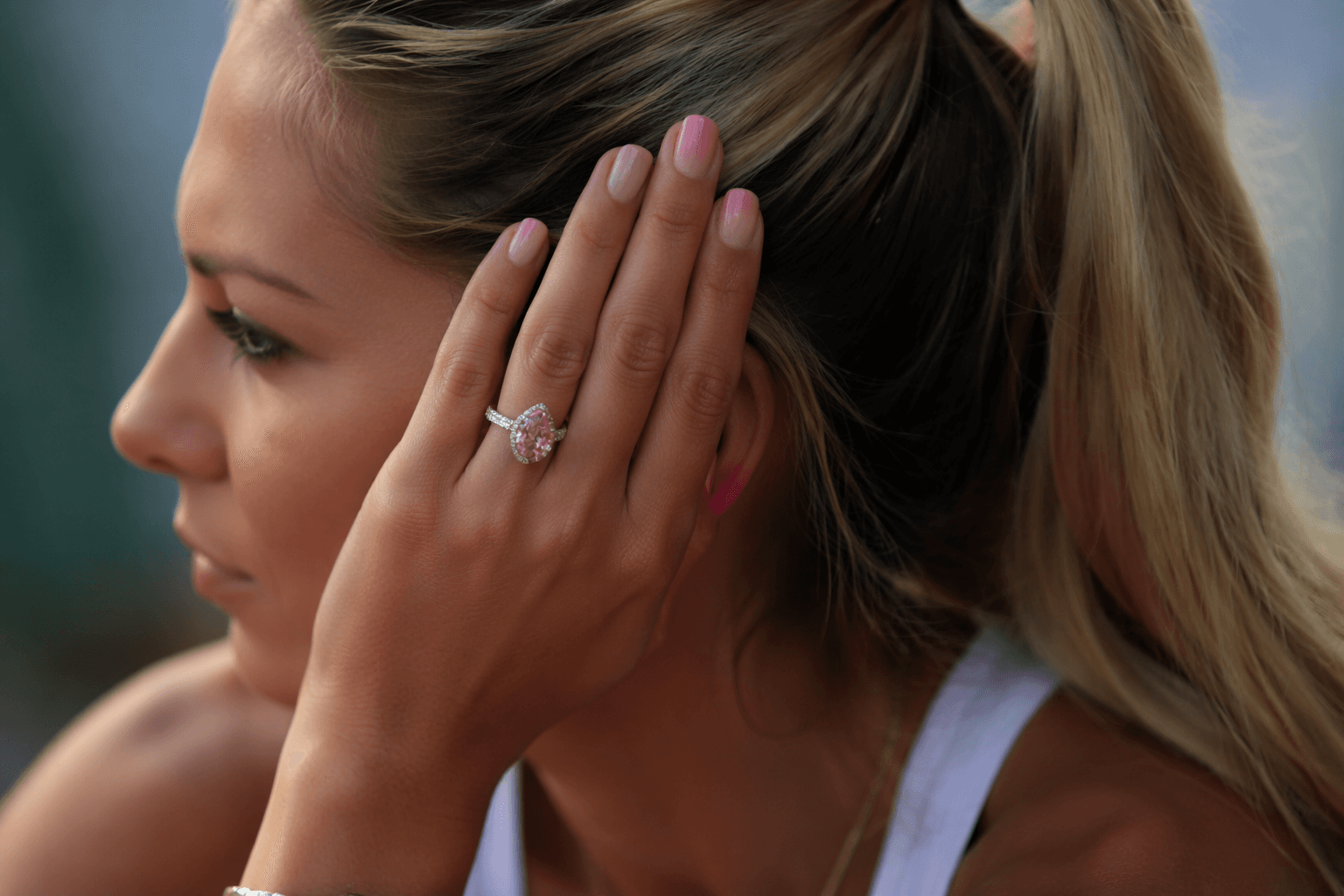
A pink pear-shaped diamond that flashed from the stands at a World Team Tennis match turned Anna Kournikova’s engagement jewelry into a lasting reference point for modern celebrity rings. The 11-carat center stone, flanked by two trillion-cut white diamonds and valued at about $2.5 million, still reads as the kind of ring that changed the script: color first, size second, and spectacle always part of the point.
The ring that made color the headline
Kournikova’s first widely noticed engagement ring appeared in public in 2004, when she wore it at a World Team Tennis match in Kansas City, Missouri, and instantly set off engagement rumors. That timing mattered as much as the design. The ring did not hide in a private ceremony photograph or a polished campaign image; it entered the conversation in a sporty, unscripted setting, which made the vivid pink center stone feel even more brazen.
The shape gave the ring its tension. A pear cut stretches the eye, and in this case the elongated pink diamond was sharpened by two bright trillion-cut side stones, a combination that made the center stone look larger and more sculptural than its carat weight alone would suggest. The result was not merely expensive; it was legible from a distance, the kind of ring that can be identified before it is fully seen.
That visibility is part of why the piece still matters in engagement-ring culture. Long before today’s appetite for colored centers, hidden halos, and dramatic silhouettes became mainstream in bridal jewelry, Kournikova’s ring showed how a single unusual stone could carry both romance and social currency.
Why the Argyle name still carries weight
The pink diamond is often linked to the Argyle mine in Western Australia, a source that became synonymous with the rarest blush-toned stones in the market. Edward Westnedge of Westnedge London has said that Argyle was once the world’s biggest producer of coloured diamonds, but that "less than 0.1% were pink." That scarcity is the real engine behind the ring’s legend.
Argyle’s reputation explains why Kournikova’s ring feels so much larger than the sum of its specifications. An 11-carat pink diamond is not just a big center stone; it is a near-improbable one, especially in a saturated, flattering hue. The value estimate, about $2.5 million, reflects not only size and color, but also the fact that pink diamonds sit at the intersection of geology and desirability, where rarity becomes part of the aesthetic.
For readers, that distinction matters. A pink stone can look romantic in a small size, but a natural pink diamond of this caliber carries a very different market logic. The Argyle connection helps explain why the ring still gets discussed as a milestone rather than just a flashy accessory: it represents a category of stone that is finite, scarce, and culturally charged.
From first ring to second ring: upgrade as status marker
Kournikova’s later ring pushed the story into a different register. Coverage generally describes it as a yellow diamond ring, with values ranging from $5.4 million to $5.5 million, and some later roundups suggest its current value could be higher. That shift from pink to yellow is more than a change in color; it is a lesson in how engagement rings can become escalating symbols of taste, wealth, and permanence.
The second ring also reflects a broader celebrity pattern that now feels familiar. The first ring creates the visual signature, while the second ring becomes the upgrade, proof that the original headline was only the beginning. In Kournikova’s case, the move from a pink diamond to a yellow one widened the palette while keeping the scale emphatic, reinforcing the idea that nontraditional stones can function as status markers just as powerfully as a classic white solitaire.
Their relationship only deepens the image. Kournikova and Enrique Iglesias met in 2001, when she appeared in his "Escape" music video. They made a red-carpet appearance together at the 2002 MTV Video Music Awards, then remained notably private even as the rings became public obsession. Reports say they share four children, which gives the jewelry a second layer of meaning: these were never rings built for constant display, but they became public icons anyway.
What this ring teaches about buying color without chasing a headline price
The enduring appeal of Kournikova’s ring is that it shows how much visual power can live in a single colored center stone. The lesson for today’s buyer is straightforward: you do not need Argyle rarity, or a seven-figure appraisal, to borrow the effect. You need the right proportions, a clear point of view, and enough contrast to let the stone speak.
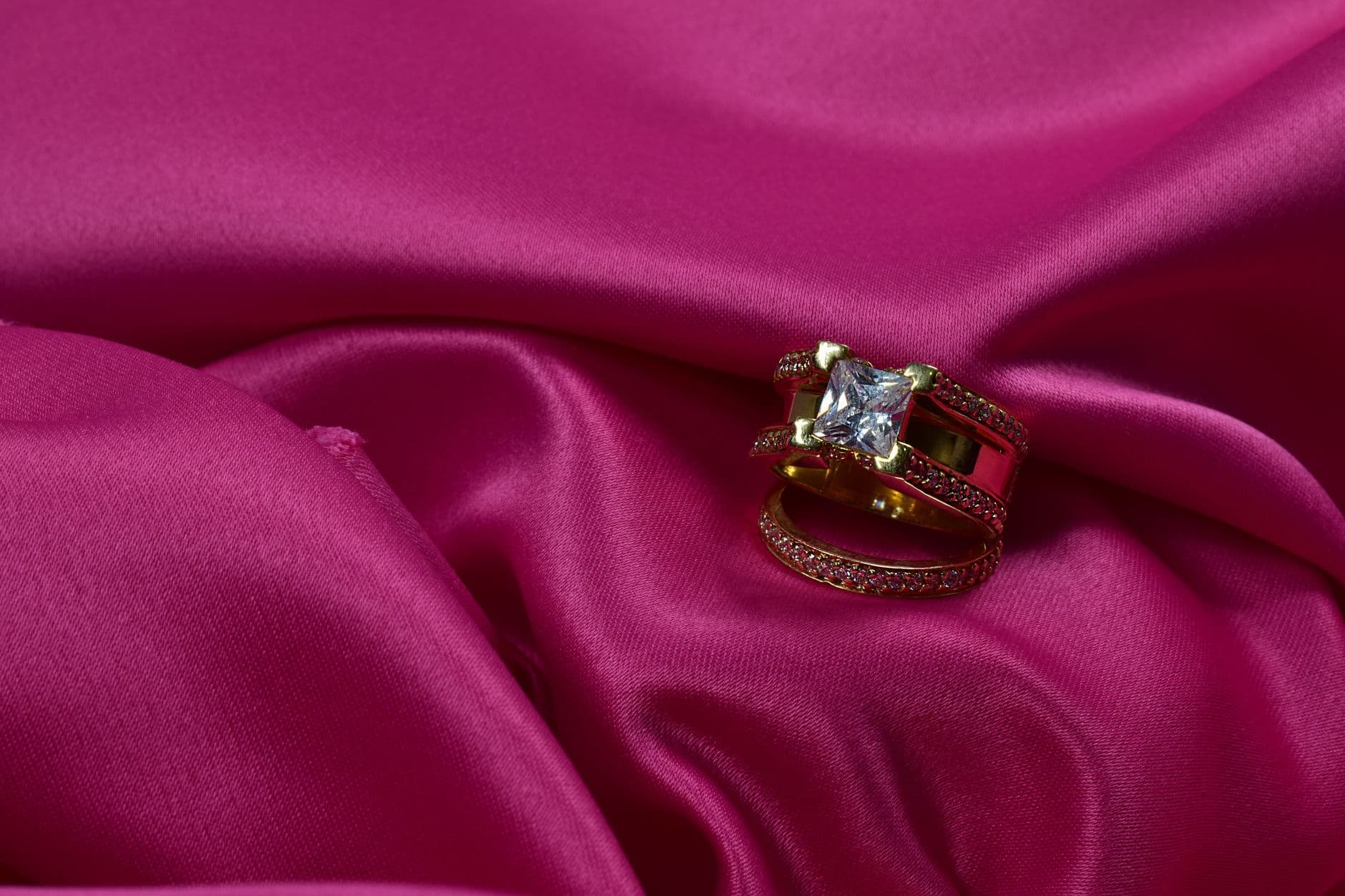
If the goal is a statement ring with presence, the architecture matters as much as the gem:
- An elongated center, such as a pear, oval, or emerald cut, creates more visual length than a square profile.
- Side stones, especially tapered shapes like trillions, can make the center read larger and more dramatic.
- Color does not have to come only from the rarest stone on earth. A vivid colored gemstone can deliver the mood while keeping the budget in a different universe.
- The most expensive look is not always the smartest one. In this case, rarity drove the millions; the idea can be translated far more affordably.
That is why Kournikova’s ring continues to resonate. It was never just about a celebrity and a diamond. It was an early, unmistakable proof that colored stones, unusual cuts, and oversized settings could become the new language of engagement, and that language has only grown louder since her first public appearance in Kansas City.
This article was produced by Prism’s automated news system from verified source data, official records, and press releases, then run through automated quality and moderation checks before publishing. The system is built and supervised by the people who set the standards it runs under. Read our full AI policy.
Did this article answer your question?