Couples turn engagement-ring shopping into part of the proposal story
Couples are choosing rings together, then saving the surprise for the proposal itself, with budgets, lab-grown stones and certification decisions made in the store.
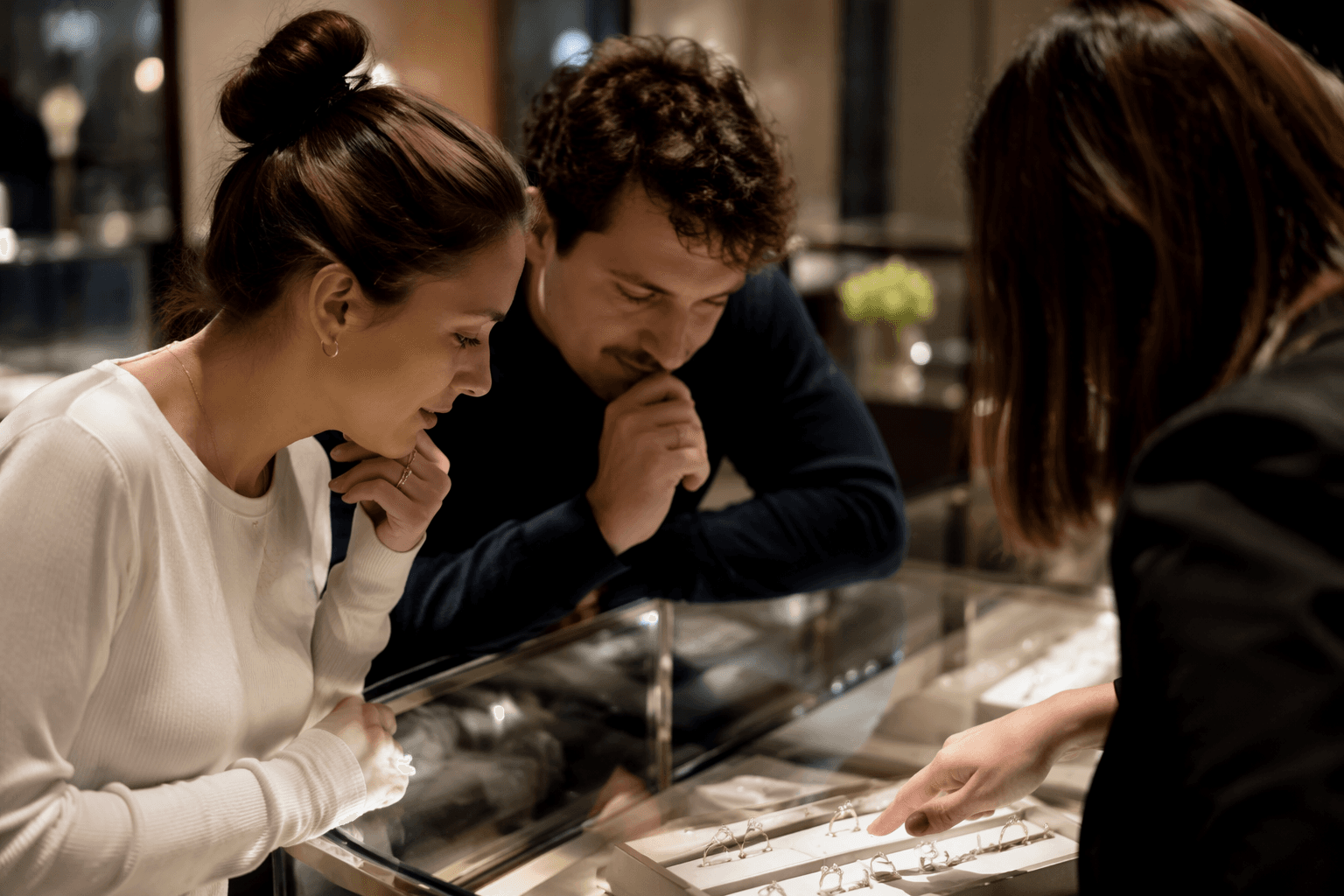
Nearly 9 in 10 proposers now pop the question with a ring in hand in The Knot’s 2026 Real Weddings Study. Professional Jeweller found shared ring shopping among 50% of couples. The ring may be bought before the question is asked, but that no longer kills the surprise.
The new proposal script
Going engagement ring shopping together is no longer weird, and The Knot explicitly encourages it. That shift reflects a practical tension couples have long felt: one person wants the romance of a surprise, while both people want the ring to fit the hand, the budget and the life they actually live. Jewelers Mutual’s 2024 engagement ring trends study centers more personalized, collaborative and informed buying.
A stop at a jeweler can become the moment when the couple decides whether the center stone should be a lab-grown diamond, what shape feels best on the hand, and how high the setting should sit for everyday wear, leaving the setting, the timing or the words for the surprise.
Set the budget before the sparkle takes over
The Knot’s shopping guidance found 71% of proposers set a budget for ring shopping, and more than half said the economy affected their ring decisions. That makes the first shared conversation less about fantasy and more about guardrails: what amount feels comfortable, whether the ring should prioritize carat weight or design detail, and how much room there is for upgrades later. The Knot tracks average ring spending by state as well as overall, giving couples a way to compare their expectations with real local spending patterns.
For The Knot’s 2025 average engagement ring cost coverage, it surveyed over 7,000 couples who got engaged last year. The Knot also found 82% of proposers purchased the ring four months or more before proposing.
Choose the stone with the paperwork that matters
Lab-grown stones are no longer a niche compromise. In The Knot’s 2026 study, lab-grown center stones make up 61% of all engagement-ring center stones. In 2025, NBC New York, NBC10 Philadelphia and CNBC all covered more couples choosing lab-grown diamonds over natural stones for engagement rings. For many buyers, that choice is about cost, size and clarity of sourcing all at once, but it also means the paperwork matters more than the marketing.

A lab-grown diamond should come with a grading report that clearly identifies what it is. GIA’s laboratory-grown diamond services use a distinct format from natural diamond reports, and the girdle is laser inscribed with “Laboratory-Grown”; GIA’s redesigned lab-grown report is digital-only, includes a QR code, and presents the stone through the 4Cs color and clarity specifications. IGI also provides lab-grown diamond reports and a verification tool that gives couples a second way to confirm that the document matches the stone in the ring.
Ask where the value comes from, not just where the diamond came from
For couples who care about provenance, the ethical conversation does not stop at the center stone. The Responsible Jewellery Council is a not-for-profit standard-setting and certification organization founded in 2005, and its Code of Practices requires certified members to follow responsible ethical, human rights, social and environmental practices across the supply chain. That certification is about company behavior, not the grading of a single gem, which makes it useful when a jeweler makes broad sustainability claims that need more than a vague promise.
That distinction is where greenwashing can creep in. A jeweler can say a ring is “ethical” without explaining whether the gold is recycled, whether the supplier is RJC certified, or whether the diamond has a grading report that can be verified. Ask for the stone’s report, ask what standard covers the supplier, and separate a gem certificate from a supply-chain certification before the purchase is final.
Preserve the surprise without hiding the ring
Shopping together does not mean giving up the proposal moment. The surprise can shift to the proposal location, the speech, or the timing, while the ring itself is chosen with open eyes. That approach solves the most common source of post-proposal regret, which is not a lack of romance but a ring that is too tall, too small, too flashy or too far from what the wearer actually wanted.
The couple can decide on a stone shape that suits the hand, settle on a setting that fits daily wear, and keep a budget that does not unravel under pressure from economy or tradition.
This article was produced by Prism’s automated news system from verified source data, official records, and press releases, then run through automated quality and moderation checks before publishing. The system is built and supervised by the people who set the standards it runs under. Read our full AI policy.
Did this article answer your question?