Antique-inspired engagement rings grow bolder with larger stones and chunky settings
Taylor Swift’s ring reset the antique-inspired look, pushing old-mine cuts, thicker gold and bigger stones into a more sculptural bridal silhouette.
A vintage look with more volume
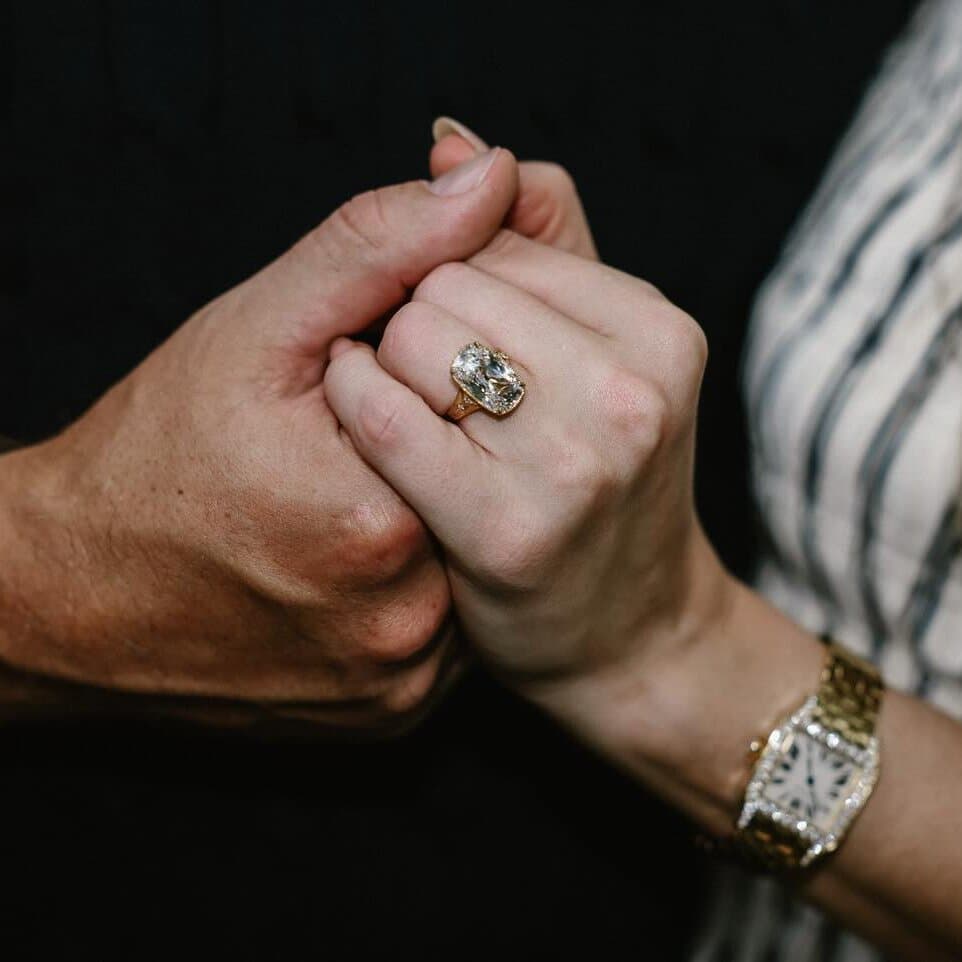
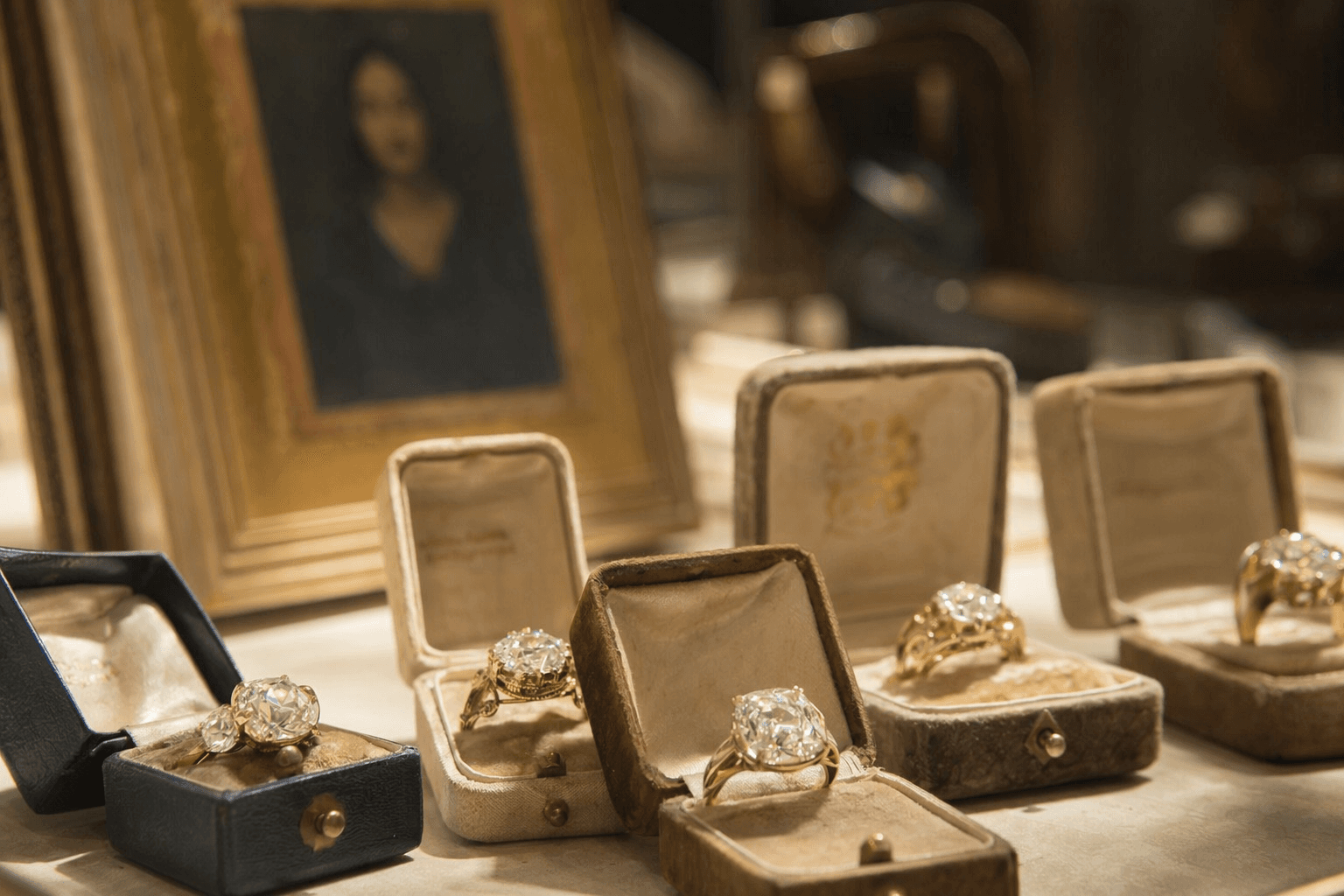
Taylor Swift’s engagement ring sharpened the language around antique-inspired bridal jewelry. The look is still rooted in old-world cuts and heirloom romance, but the new version is far less dainty: bigger center stones, chunkier settings, wider bands and more sculptural proportions are giving the style real visual weight.
That shift matters because it changes what “vintage-inspired” means. Instead of delicate filigree and whisper-thin shanks, the strongest rings in this moment borrow the romance of antique stones and pair it with a bolder frame, often in yellow gold, with handwork that feels deliberate rather than fragile.
Why the style moved beyond delicate heirlooms
The appetite for this look was building before any single celebrity engagement took over the conversation. By early 2025, National Jeweler was already flagging chunky bands, vintage diamond cuts and bezel settings as styles set to take over the bridal market, while The Knot’s engagement-ring forecast pointed to vintage cuts, east-west settings, marquise shapes, bold color and architectural designs as major directions.
What ties those ideas together is not nostalgia alone, but presence. Buyers still want the softness and story of an heirloom ring, yet they want it to read clearly from across the room. That is why the current interpretation feels more substantial: thicker metal, larger stones and settings that look engineered rather than merely decorative.
The celebrity rings that accelerated the look
Taylor Swift and Travis Kelce’s engagement put antique cuts back in the spotlight in a very visible way. National Jeweler identified Swift’s ring as an elongated old-mine brilliant-cut diamond, while Rapaport described it as roughly 7 to 10 carats, set in a hand-engraved yellow-gold band created with New York designer Kindred Lubeck of Artifex Fine Jewelry. That combination matters: the cut has period character, but the scale and engraving give it contemporary force.
Tallulah Willis offered another example of the same shift. Her ring, reported by National Jeweler, centers on a 4-carat old mine brilliant-cut diamond co-designed with Karina Noel. It is antique in language, but not shy in proportion. Together, these rings helped normalize a look that feels more substantial than the fine, lace-like antique styles that once dominated the category.
Other celebrity rings, including those associated with Dua Lipa, Zendaya and Miley Cyrus, added momentum by keeping vintage-leaning stones and chunkier silhouettes in circulation. The result is a very specific bridal mood: less miniature treasure, more statement jewel.
What antique-inspired rings look like now
The cuts leading this shift are period styles, not new inventions. Old mine cuts, old European cuts and elongated cushion shapes all carry a handcrafted feel, with faceting patterns that read softer and less uniform than a modern brilliant cut. Their irregularity is part of the appeal, especially when buyers want a ring that feels personal rather than standardized.
The settings, however, are where the update becomes obvious. Beige, fragile mountings are giving way to:
- Chunky bands that make the center stone feel anchored
- Bezel settings that create a clean, protective rim around the stone
- East-west placements that stretch familiar shapes sideways for a fresher silhouette
- Architectural details that add structure instead of lace-like ornament
- Wider, heavier shanks in yellow gold or mixed-metal combinations
This is why the trend feels design-led rather than merely nostalgic. The antique reference is still there, but it is being edited through modern proportion.
Why buyers are responding
Rapaport had already noted in 2024 that antique and vintage engagement rings were among the best-selling categories for some jewelers, especially those featuring old mine and old European-cut diamonds. That kind of demand suggests the look is not dependent on celebrity coverage alone. It also reflects a broader shift in what buyers value: artistry, individuality and a stronger personal story.
One dealer quoted by Rapaport put the change bluntly, saying younger customers are tired of big brands and want artistry and individuality instead. That is the heart of the trend. A hand-engraved band, a slightly irregular antique cut, or a setting that breaks from the standard solitaire can signal something more intimate than a logo or a preset bridal formula.
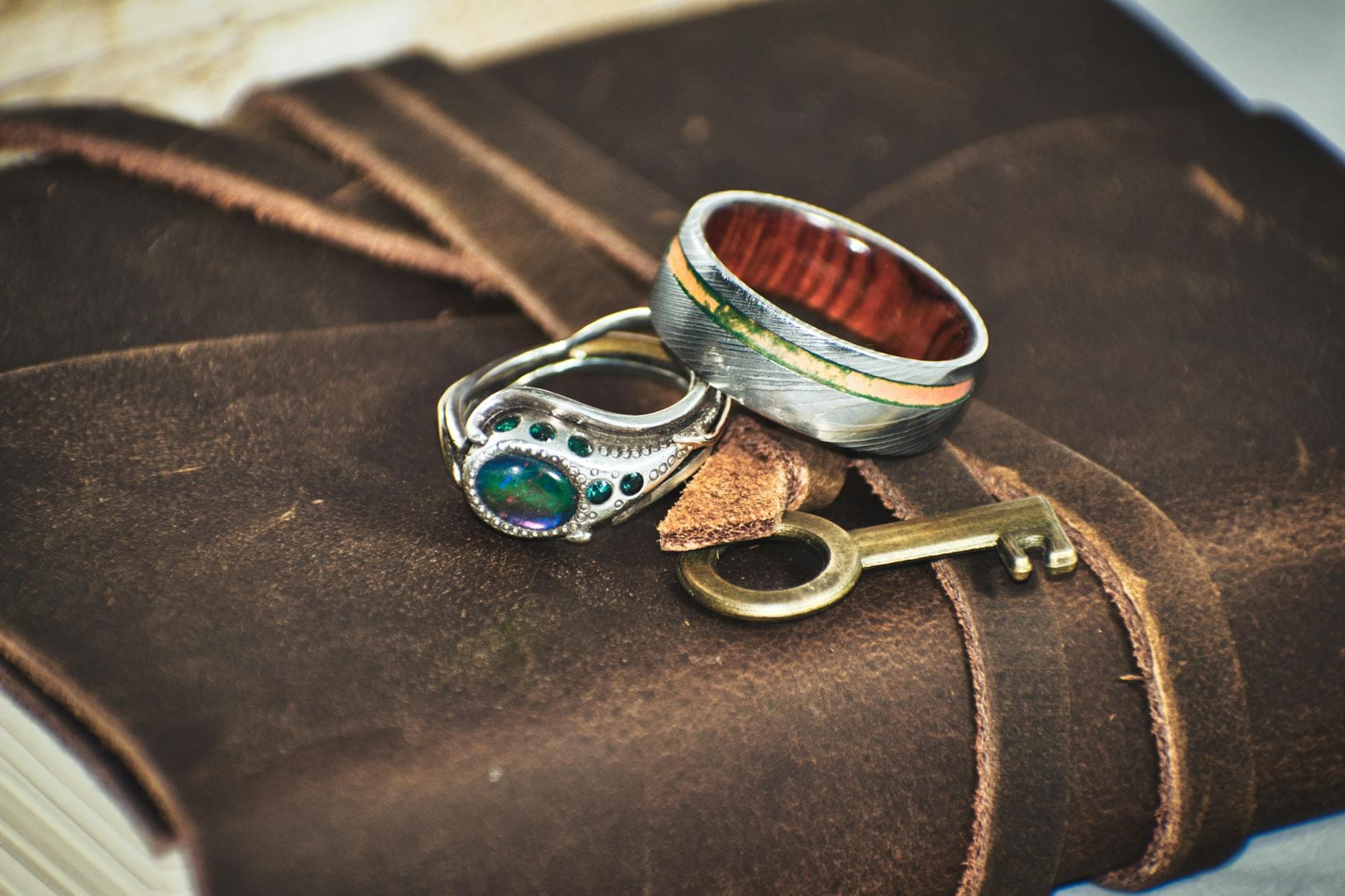
The sustainability angle also plays a role. Antique-inspired rings speak to heirloom aesthetics and one-of-a-kind sourcing, which naturally appeals to buyers who want beauty with less of the disposable feel that can cling to fast-fashion jewelry language. Even when the stone is newly cut, the design borrows from a vocabulary that feels more enduring and less mass-produced.
How to read the trend when you are choosing a ring
If you are drawn to this direction, look past the label “vintage-inspired” and study the proportions. The strongest rings in this category are not tiny replicas of antique pieces. They use antique cues to create a ring with more presence, more texture and better visual balance.
- The cut, especially old mine, old European and elongated cushion shapes
- The band width, since a thicker shank changes the whole mood of the ring
- The setting style, whether bezel, prong or architectural
- The metal finish, especially hand-engraved or softly worked yellow gold
- The scale of the stone relative to the mount, which determines whether the ring feels delicate or assertive
Pay attention to:
The most successful versions do not flatten antique style into costume. They let the old cut show, then give it a frame that feels current.
A bridal look with stronger lines
What is emerging now is less about recreating the past than rebalancing it. Antique-inspired rings are still romantic, but the romance has grown more confident. Bigger stones, chunkier settings and wider bands have turned a once-fine-boned aesthetic into something with sharper definition, and that is exactly why it is resonating.
The heirloom cue remains, but the new ideal is not frailty. It is a ring that feels collected, sculptural and unmistakably lived-in from the first glance.
Know something we missed? Have a correction or additional information?
Submit a Tip