How to care for an engagement ring, from daily wear to annual checks
The safest habit is surprisingly simple: remove the ring before gym time, showers, lotions, and cleaning products, then give it the kind of care that protects prongs, pavé, and the center stone.
The moments that matter most
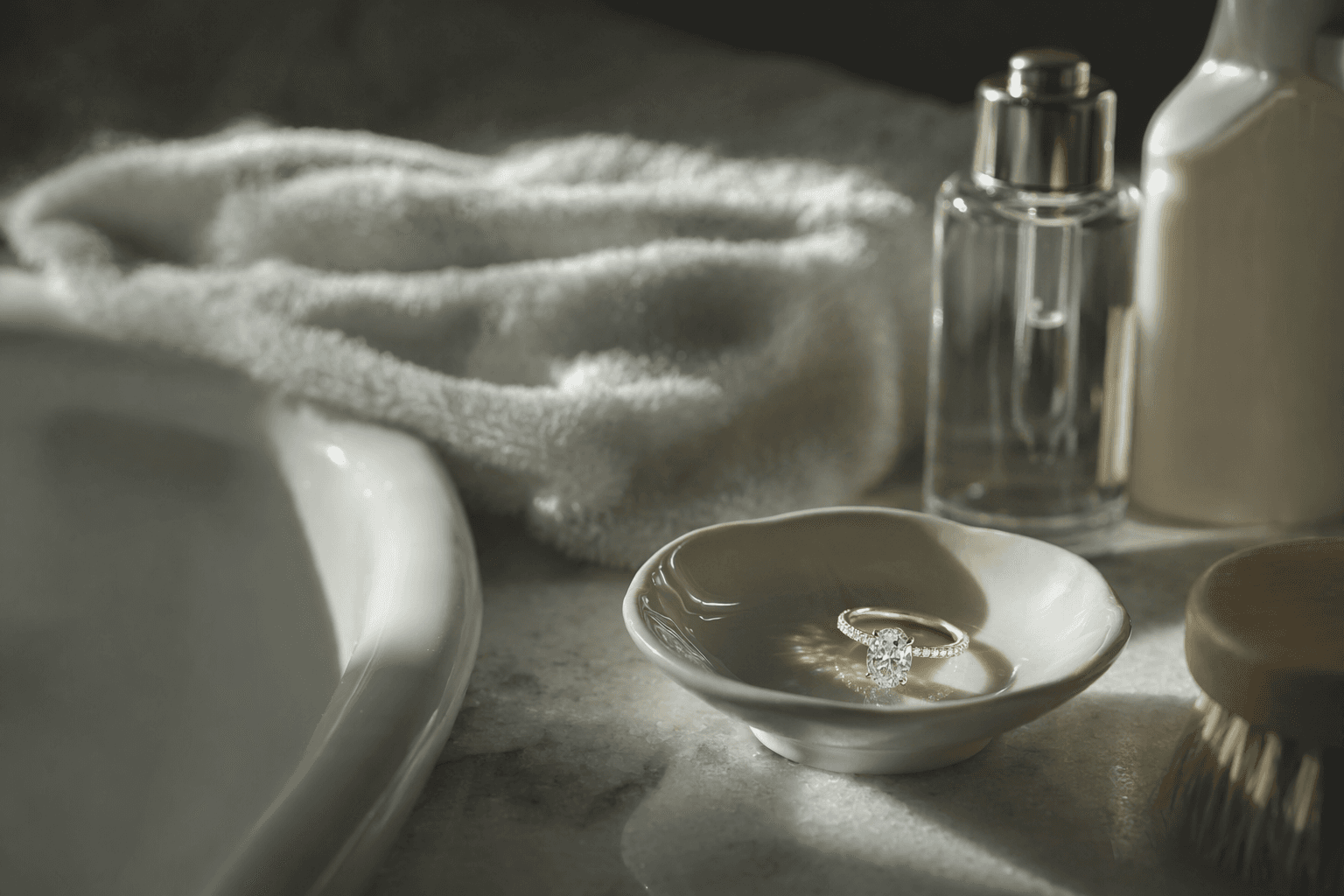
The ring is usually most vulnerable in the ordinary moments you barely notice: a workout, a hot shower, a quick swipe of lotion, a sink full of dishwater, the airport tray before security, or the weekend clean-up that sends dust and detergent into every crevice. Daily wear is fine for an engagement ring, but not all daily life is kind to one. The difference between a piece that ages beautifully and one that slowly loosens, dulls, or chips often comes down to when you remove it.
When to take it off
The safest rule is to remove the ring before any activity that brings chemicals, impact, or grime into play. The Knot advises taking it off for exercising, showering, and sleeping, and says those routines can lead to loosened prongs, scratched metal, chipped diamonds, and oil or dirt buildup. Add to that lotion, soap, cleaning products, cooking grease, and dishwashing, which can cloud brilliance and work at the setting over time. Travelers should also think ahead: tuck the ring away before packing, airport security, beach days, pool time, or long stretches in transit when a small stone or a crowded tray can turn a luxury into a loss.
The cleanest habit is often the simplest one. Put the ring on last in the morning, after hairspray, lotion, perfumes, and sunscreen have already dried. Take it off first at night, especially if you sleep with your hands curled under pillows or wear textured fabric that can catch prongs and antique-style edges.
What daily wear does to each part of the ring
An engagement ring is not one object in the abstract. It is a cluster of vulnerable parts, each affected differently by life on the hand. Prongs are the first line of defense for the center stone, and they are also among the most exposed. If they bend, thin, or wear down, a diamond can loosen long before you notice the problem.
Pavé settings are exquisitely bright, but they ask for patience. Their tiny beads and small stones can trap lotion, soap, and everyday grit, muting sparkle and making the surface look tired even when the ring itself is structurally sound. Antique-style details, from milgrain to filigree, are similarly unforgiving of heavy-handed cleaning. Their beauty lies in the miniature architecture, and that same intricacy can hold onto residue or catch on knits and sleeves.
Mixed metals bring a different kind of complexity. The contrast is part of the appeal, but different metals can reveal wear differently, with one surface showing scratches or polish loss before the other. A mixed-metal ring deserves the same routine as any fine jewel, but it benefits from a more observant eye, since uneven wear can change the visual balance that made the design compelling in the first place.
The center stone, whether diamond or another hard gem, is not immune simply because it is durable. GIA notes that diamond durability is about more than hardness alone, it also includes toughness and stability. That matters because a loose diamond can wear through a prong over time, and diamonds can scratch precious-metal settings. In other words, even the hardest stone can become part of the problem if the mounting is neglected.
A jeweler-backed care rhythm
The most practical care routine is a layered one: daily awareness, weekly cleaning, and annual professional attention. Jewelers Mutual recommends storing the ring separately, wiping it with a jewelry cloth, cleaning it weekly with warm soapy water and a soft toothbrush, and scheduling professional cleaning and inspection every year. That routine works because it addresses both surface grime and hidden structural stress.
Here is the rhythm worth remembering:
- Daily: remove the ring for showers, workouts, sleep, lotions, soaps, and cleaning products. Store it separately when it is off your hand, and give it a quick wipe with a jewelry cloth if it has picked up oils or residue.
- Weekly: soak it briefly in warm soapy water, then use a soft toothbrush to clean around the setting, under the center stone, and through pavé or openwork details. Rinse carefully and dry with a lint-free cloth.
- Yearly: bring it in for professional cleaning, inspection, and an insurance review. Jewelers Mutual recommends renewing jewelry insurance and updating appraisals at least once a year, because a ring’s value can shift enough to leave it underinsured or overinsured.
Why prongs deserve special attention
Prongs are small, but they carry an outsized responsibility. They hold the stone in place, preserve the ring’s silhouette, and absorb the shocks of daily life. The American Gem Society says that routine professional visits can catch worn prongs, damaged stones, and other problems before they turn into losses, and recommends professional cleaning at least twice a year depending on wear. That is especially important for rings that are worn constantly, since the hand brushes against desks, gym equipment, steering wheels, countertops, and sleeves thousands of times a week.
A prong check is not just about security. It is also about the integrity of the design. Once a prong thins or bends, the setting can look less crisp, the stone may sit unevenly, and the whole ring loses the tension that makes it feel finished. This is where expertise matters: the American Gem Society says its members have protected the jewelry-buying public since 1934, and only one in 20 jewelers, designers, and appraisers meet its membership requirements.
What professional care should never be skipped
Some problems are too small to see and too costly to ignore. Professional inspection becomes non-negotiable when the ring has taken a knock, the center stone shifts, a prong catches on fabric, or any part of the setting starts to look asymmetrical. The same is true if pavé stones seem less secure, antique-style details have snagged, or mixed metals show unusual wear patterns that suggest the ring is rubbing unevenly.
A skilled jeweler can test stone security, examine prong wear, clean the ring more thoroughly than home care allows, and flag whether the mounting needs repair before a stone is lost. In the world of engagement rings, that visit is not maintenance theater. It is preservation.
The most beautiful rings are rarely the ones left to fend for themselves. They are the ones that are worn with intention, cleaned with restraint, and checked before a tiny problem becomes an irreversible one.
Know something we missed? Have a correction or additional information?
Submit a Tip