Birthstone florals and signet rings refresh bridal personalization
Birth flowers and signet motifs are giving bridal jewelry a more intimate code, turning personalization into a design language for rings, bands and wedding-party gifts.

Birthstone florals and signet rings are giving bridal jewelry a richer vocabulary than initials ever could. Instead of a predictable engraving tucked inside a shank, the new language of personalization shows up in a bloom, a seal, a color story or a hidden detail that feels privately understood.
A more personal kind of bridal code
JCK’s latest read on the trend points to a clear shift: couples want jewelry that carries identity without looking overtly customized. That is why birth flowers and signet motifs feel so persuasive right now. They signal meaning, but they do it through form, not just text, which gives an engagement ring or wedding-day jewel a more considered, less literal finish.
That distinction matters. A name or date inside the band says something, but a floral motif in the gallery, a tiny birthstone tucked under the center stone, or a signet-inspired face on a companion ring lets the piece carry memory in its architecture. The result is jewelry that feels personal from every angle, not just the one the wearer sees before sliding it on.
Why birth flowers feel fresher than engraving
Corvo Jewelry’s Birth Flower Collection shows how much nuance there is in this idea. Lily Raven turned the Victorian language of flowers into 14k gold and diamond coin necklaces, with 12 hand-sketched flowers, each one linked to a month’s meaning. It is a smart reminder that sentiment can be drawn, not only inscribed, and that floral symbolism does not have to read antique to feel intimate.
Emily Warden Designs takes a similar impulse and gives it a more jewel-box, ring-forward form. The Birthstone Signet Ring collection is made in 10k gold and sterling silver, and it is made-to-order, which keeps the work accessible without stripping away the sense of intention. Warden has said she wanted to challenge the idea that traditional birthstone jewelry is outdated, and that is exactly why the collection feels relevant: it treats month stones as design material, not costume shorthand.
For bridal, that opens up a subtler path than a fully bespoke commission. A birth flower can be translated into a carved gallery motif, a tiny hidden blossom beneath the setting, or a matching companion band etched with a month bloom. It feels custom, but not precious in the sense of being too fragile to wear every day.
Signet rings bring history back into the conversation
Signet rings are especially well suited to this moment because they already carry authority. Britannica traces them back to ancient Egypt, where engraved seals authenticated documents, and notes that they remained important in religious, legal and commercial life across medieval Europe. The form has always been about identity and trust, which makes it a surprisingly natural partner for bridal personalization.
There is also a deeper link to the engagement ring itself. Britannica notes that the Romans are generally credited with originating engagement rings as betrothal symbols, which gives today’s signet revival a pleasing historical loop. In other words, the modern couple is not inventing a new ritual so much as revisiting two old ones and combining them with a cleaner, more personal hand.
That helps explain why younger shoppers are leaning toward heritage jewelry more broadly. WWD reported that brands including Ring Concierge, Brilliant Earth, Material Good and With Clarity have seen Gen Z and younger Millennials gravitate toward classic signet styles, while Lyst data showed signet-ring searches up 53% month to month. The appeal is not nostalgia for its own sake. It is the appeal of a shape that can hold meaning without shouting for attention.
How to bring the look into an engagement ring
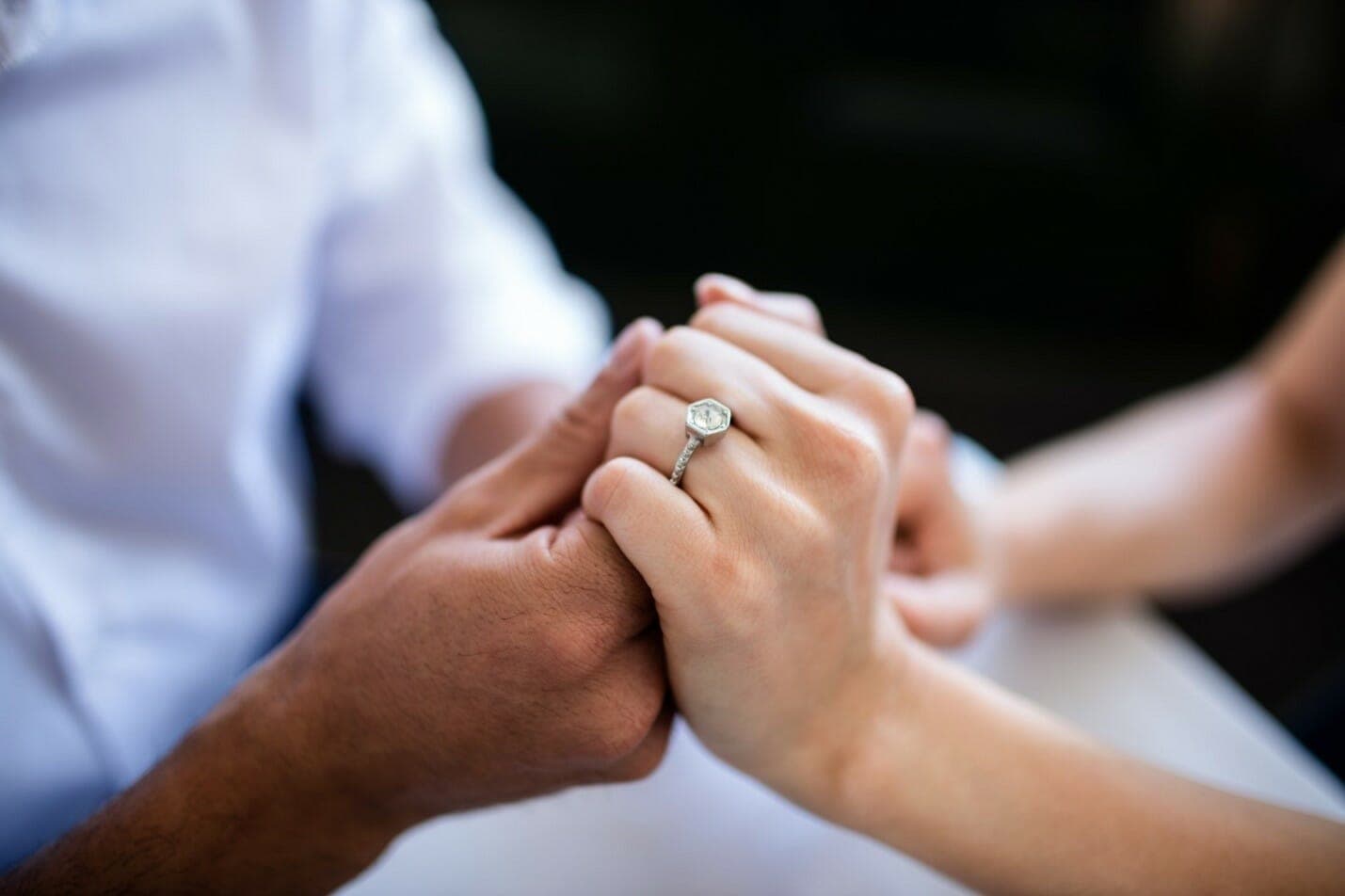
The easiest way to make this trend feel current is to think beyond the center stone. A birth flower can live in the gallery, where it becomes a secret architectural detail, or as an engraved motif on the bridge, where it catches light only when the ring moves. A signet influence can come through in a flatter top profile, a shield-like silhouette, or a bold, clean bezel that gives the ring a sense of seal-like permanence.
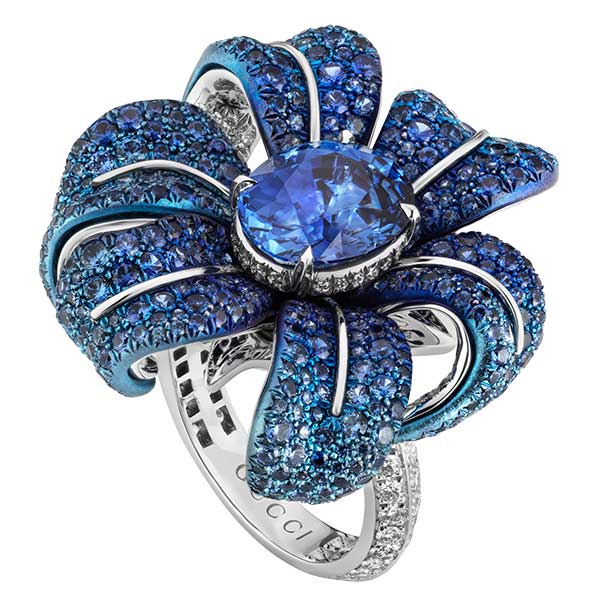
Hidden halos are especially useful here because they let color and sentiment stay intimate. A circle of month-colored stones beneath a center diamond, or a companion band set with a family birthstone palette, gives the ring visual depth without making the main stone feel crowded. This is where personalization gets sophisticated: the detail should feel discovered, not advertised.
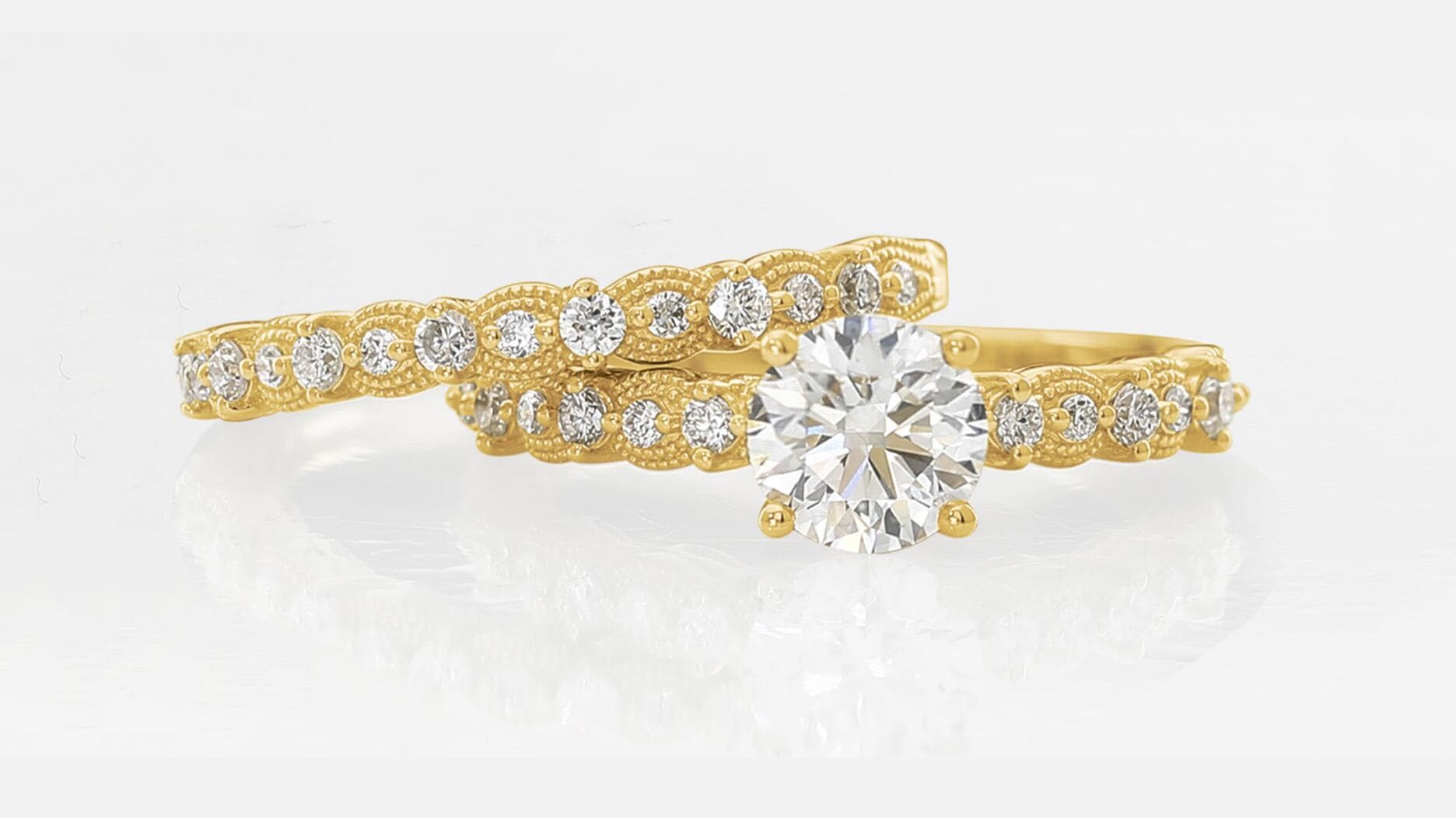
The strongest versions of this look also understand proportion. A round brilliant center stone still reads as the classic choice, and The Knot’s 2024 Jewelry and Engagement Study found round shapes remained the most common at 28 percent, with oval close behind at 25 percent. That balance matters, because the most compelling personalized ring often starts with a familiar silhouette and then introduces a private twist in the side profile, the under-gallery, or the band.
Why the bridal market is ready for it
The commercial case for all of this is already visible. Abbott Lyon says TikTok searches for “birthstone dresses” are up 1,833 percent this year and has named the bridal styling idea the Birthstone Bridal Party, with matching month-color jewelry and bridesmaid gift sets for all 12 months, including emerald for May and aquamarine for March. That bridal-party angle matters because it shows personalization migrating outward from the couple to the entire celebration.
De Beers has been reading the mood in a different but related way. The company launched Desert diamonds in 2025 as its first new beacon in more than a decade, built around natural, warm-toned diamonds and personal expression in bridal jewelry. In 2026, it extended the concept into bridal after reporting increased retailer foot traffic and bridal inquiries, which suggests that consumers are not only responding to the idea of individuality, they are buying it.
The broader message is clear: personalization no longer has to mean custom from scratch. A birth flower, a signet face, a hidden halo or a month-color companion band can make an engagement ring feel singular while preserving the discipline of a well-made design. That is what gives this trend its staying power, and why it feels less like a passing flourish than a new standard for how bridal jewelry tells a story.
This article was produced by Prism’s automated news system from verified source data, official records, and press releases, then run through automated quality and moderation checks before publishing. The system is built and supervised by the people who set the standards it runs under. Read our full AI policy.
Did this article answer your question?