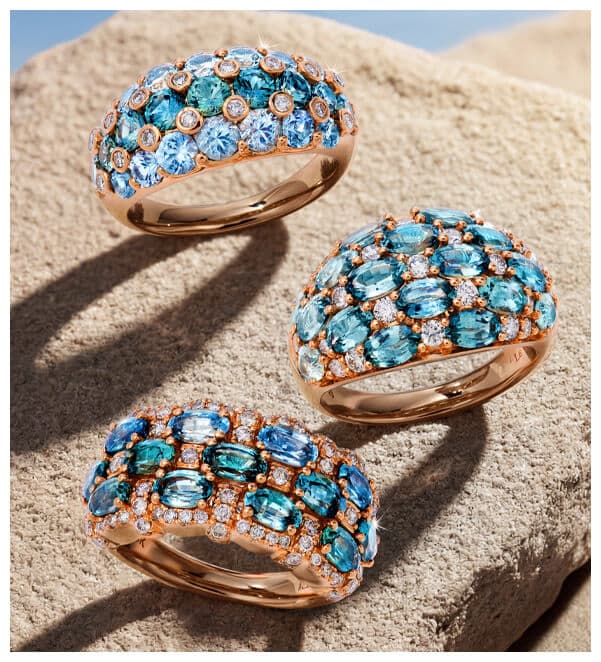
Colored gemstones gain traction as bridal center stones
Bridal buyers are moving past the diamond solitaire, choosing sapphires, emeralds, rubies and tourmalines for rings that look more personal and more exacting.
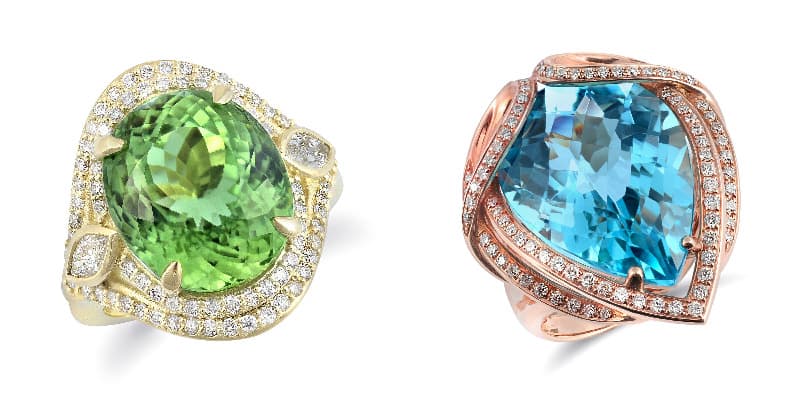
A colored center stone changes the entire mood of a bridal ring. A sapphire reads cool and deliberate, an emerald lush and almost architectural, a ruby vivid enough to feel declarative, and a bicolor tourmaline can look like a tiny watercolor at the center of the hand. That shift is no longer confined to niche collectors or social feeds. It is showing up in the mainstream bridal conversation as couples look for rings that feel more distinctive than a large, conventional diamond solitaire.
Why the center stone is getting more personal
The move toward color sits inside a bigger customization story. Signet Jewelers has said 80% of bridal customers express interest in some customization for their bridal or wedding rings, and 36% of retail consumers say they want customization in jewelry overall. Signet also found that 20% were willing to pay a premium for customized products, which helps explain why couples are increasingly asking not just for a one-of-a-kind diamond, but for a one-of-a-kind ring and shopping experience.
That appetite is visible in engagement-ring behavior too. The Knot’s 2024 Jewelry & Engagement Study found that 83% of engagement-ring center stones in the United States were diamonds, which means 17% were something else. The same study said 77% of proposees had some involvement in the ring selection process, and 51% of 2024 rings featured a clear diamond center stone with side stones and or accents rather than a plain solitaire. In other words, diamond is still dominant, but the frame around it, and the idea of what can sit at the center, are changing fast.
What colored center stones do that diamonds do not
Color changes the visual identity of the ring before size or price ever enters the conversation. A diamond solitaire signals familiarity and immediate recognition. A colored gemstone says the wearer made a choice with intent, and that message is especially strong in styles like bezel settings, east-west orientations and toi-et-moi designs, where the setting itself becomes part of the statement. Warm metals and sculptural shanks intensify that effect, making the ring feel less generic and more like a piece of personal design.
Sapphire: the disciplined classic
Sapphires are the easiest colored stone to imagine as a daily bridal center stone because they carry both polish and practicality. Their color range is broader than blue alone, but blue still delivers the strongest visual shorthand: cool, saturated and crisp against platinum or softened by yellow gold. A sapphire center stone can feel regal without becoming fussy, which is part of why it has long been one of the most persuasive alternatives to a diamond.
Emerald: the lush romantic
Emerald has a different energy altogether. It reads green in a way that feels rich and slightly mysterious, with a depth that makes even a simple ring look considered. The tradeoff is wearability: emeralds are generally less forgiving than sapphire, so they reward careful setting choices, especially when the ring is meant for everyday wear. That is why emeralds often look best when the design protects the stone rather than forcing it to carry all the visual weight alone.
Ruby: the boldest signal
Ruby is the stone that makes the fewest compromises on presence. Its red is immediate and emotional, which gives the ring a stronger sense of declaration than a white diamond usually can. In bridal, that intensity can be incredibly persuasive, especially for buyers who want the ring to feel unmistakable from across a room. Ruby also sits comfortably within the long history of colored-stone engagement rings, so while it feels striking, it does not feel experimental in the same way as some newer alternatives.
Bicolor tourmaline: the most individual
Bicolor tourmaline has become the clearest visual proof that bridal color is not just about swapping one gemstone for another. Its split tones or soft gradients can make a ring look painterly, modern and unusually personal. It is the sort of stone that benefits from thoughtful setting design, because the color zoning is the point, and the ring should frame it rather than overpower it. For couples who want a center stone that feels singular rather than canonical, bicolor tourmaline can be the most expressive choice in the group.
Provenance is now part of the romance
The appetite for color is also tied to a newer demand: traceability. The Gemological Institute of America has said fine colored gemstones have been objects of desire throughout human history, and that rubies, sapphires and emeralds remain the core of the modern fine jewelry market. It also notes that consumer taste is widening beyond those traditional three into stones such as tourmaline and garnet, which is exactly where bridal is opening up.
Just as important, GIA says demand for transparency and traceability is rising for colored gemstones, with geographic-origin determination available for ruby, sapphire, emerald, alexandrite, copper-bearing Paraiba tourmaline and red spinel. That matters because the story of a stone, whether it is linked to Mogok in Burma, Colombia, Mozambique, Madagascar, Zambia, Sri Lanka or Egypt, can shape how a buyer understands its value. If a seller cannot explain origin, treatments or what makes a stone special, the sustainability language around it is too vague to trust.
Why this feels like a real shift, not just trend talk
Lab-grown diamonds have changed the backdrop too. GIA said industry analysts projected lab-grown diamonds could reach 20% of all diamonds on the market by 2025, and that kind of saturation helps explain why some buyers want an option that does not simply look like another version of the same thing. JCK has also described colored-stone centers as increasingly in demand for engagement rings, including among influencers who have made them feel de rigueur. That does not replace diamond, but it does widen the field.
The Knot’s 2025 trend forecast points in the same direction, with bold color and maximalist multi-stone rings set to keep rising. The market is not abandoning diamonds, especially with round solitaires still making up 28% of all designs in 2024. It is, however, making room for rings that are more particular, more expressive and more attentive to craft. In bridal, that is often the clearest sign that a trend has become a buying habit.
This article was produced by Prism’s automated news system from verified source data, official records, and press releases, then run through automated quality and moderation checks before publishing. The system is built and supervised by the people who set the standards it runs under. Read our full AI policy.
Know something we missed? Have a correction or additional information?
Submit a Tip