Couture 2026 signals a bolder, more personal engagement-ring shift
Couture’s clearest bridal signal is a move toward bold, personal rings: east-west, bezel, toi-et-moi and yellow gold are moving from niche to next.

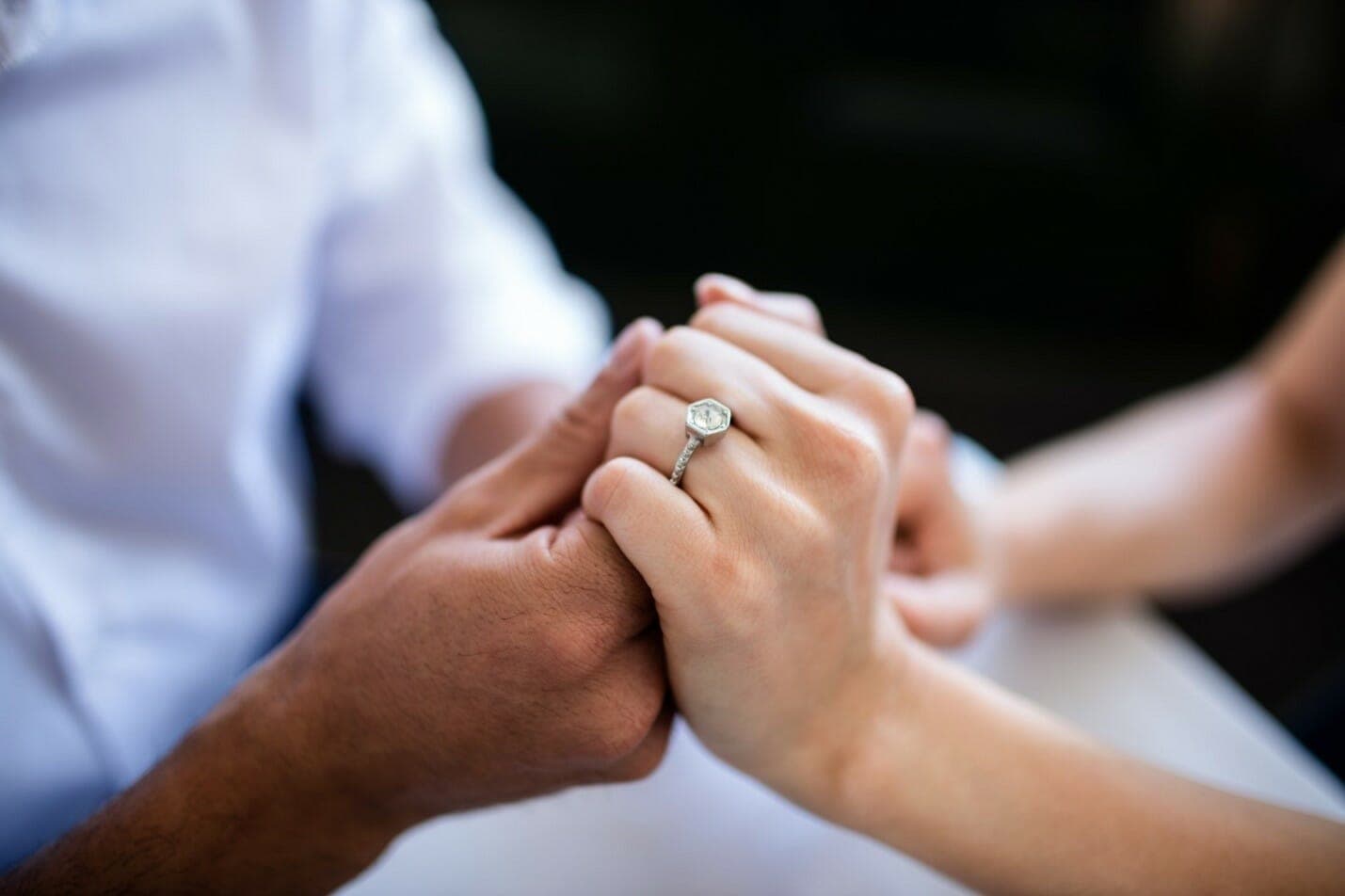
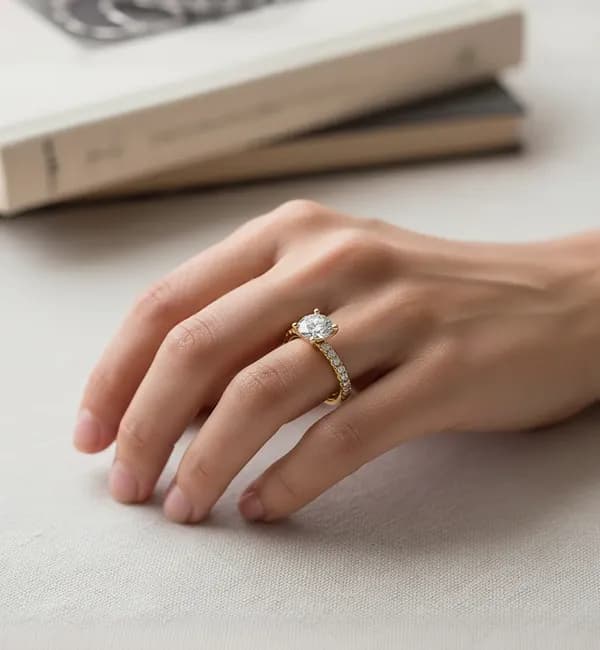
The strongest bridal signal at Couture was not a classic solitaire. It was the spread of rings that felt authored rather than assembled: east-west mounts, bezel and semi-bezel settings, mismatched toi-et-moi stones, and gold-heavy silhouettes that read more like personal jewelry than formula. That shift matters because it is no longer confined to runway fantasy. It is already changing what couples want on their hands and how they think about wedding-band pairing.
The new bridal language is shape, texture and contrast
The most telling change is how engagement rings are influencing the rest of the set. WWD’s Couture recap showed designers leaning into color, storytelling, whimsy, vintage revival and alternative materials, and those cues are now filtering directly into bridal. Jillian Sassone of Marrow Fine Jewelry said couples are thinking more intentionally about how engagement rings and wedding bands work together through contrast, shape and texture, which is why chunky dome bands, sculptural profiles and floating diamonds are moving into the conversation alongside the ring itself.
That has practical consequences for buying. Some brides are choosing to forgo a separate wedding band altogether, while others are building a stack over time. The old assumption, that the engagement ring must be matched immediately with a perfectly aligned band, is giving way to a more fluid approach where the center ring sets the tone and the rest of the stack follows later. East-west settings and bezel frames are especially suited to that change because they look finished on their own, even before a band enters the picture.
Yellow gold is no longer a sidebar
The other clear signal is metal choice. National Jeweler’s 2026 engagement-ring coverage, informed by The Knot’s 2026 Real Weddings study of more than 10,000 U.S. couples who married in 2025, found that 48% wore white-metal engagement rings, with 35% in white gold and 13% in platinum. White metal still leads, but the story underneath is more interesting: yellow gold continues to gain ground, and round diamonds remain reliably popular even as more unconventional shapes and settings rise around them.
That mix tells you where the market is headed. Couples are not abandoning familiarity altogether. They are keeping the enduring round diamond in play, but surrounding it with warmer metals and more assertive design choices. Yellow gold’s rise also fits Couture’s broader mood, where statement gold jewelry and pieces with strong storytelling remained especially strong categories. The metal itself has become part of the message, not just a neutral frame.
Vintage revival is coming through the side door
The vintage revival at Couture was not about recreating antique rings piece for piece. It was about borrowing the feeling of heirloom jewelry: weight, intimacy, and a sense that the piece could have a past as well as a future. That is where semi-bezel settings, sculptural mounts and softer, more enveloping forms feel especially relevant. They echo old-world craftsmanship without locking the wearer into a single historical style.
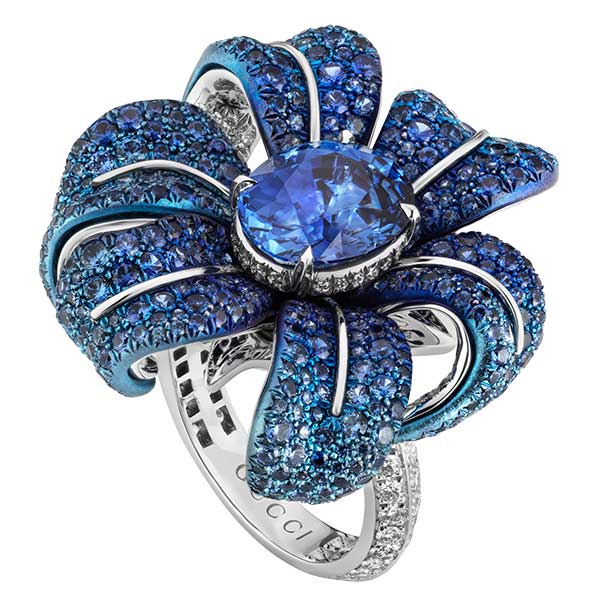
This is also why color is gaining traction. In the Couture context, colorful gemstones and expressive materials did not read as novelty for novelty’s sake. They read as a way to make a ring feel singular. For engagement jewelry, that translates into stones and settings that carry a point of view, whether through a colored center stone, a contrasting accent, or a metal choice that changes the mood of the whole ring. The category is moving away from strict uniformity and toward jewelry that feels inherited from the wearer’s own life.
The market is split, and that split favors conviction
Retailers at Couture described a K-shaped consumer, with strong demand at both the high and low ends of the market and less strength in the middle. That split helps explain why ring design is getting more decisive. At the top, buyers want rarity, craftsmanship and pieces with distinction. At the more accessible end, they still want a clear visual identity and a ring that does not look interchangeable with everyone else’s.
That appetite for specificity is why one-of-a-kind pieces, statement gold jewelry and rare pieces with strong storytelling continue to perform. Consumers are increasingly selective, and they are looking for longevity, craftsmanship, rarity and personal significance rather than trend-driven purchases. In bridal, that means a ring has to do more than signal status. It has to feel like an object worth living with for decades.
Why Couture’s scale matters
Couture’s structure amplifies these shifts. Gannon Brousseau said the show is smaller than other trade shows by design and focused on curation, intimacy and community. That matters because it creates room for jewelry with a distinct point of view, rather than simply the biggest commercial hit. The show’s more intimate scale makes it easier for designers to present pieces that feel authored, which is exactly the kind of environment where bridal trends are nudged toward personality over standardization.

That same environment also explains why alternative materials and more experimental silhouettes gained traction. When the room rewards originality, bezel settings, floating stones and asymmetric pairings stop feeling fringe. They start looking like the next normal. For engagement rings, that is often how change happens: first in a curated trade setting, then in the cases and appointment books of retail.
The emerging names matter too
Couture’s third year of Belonging @ Couture added another layer to the story. Seven designers exhibited as The Iridescence by Couture in the Cristal ballroom at Wynn Las Vegas, and that platform matters because emerging and underrepresented voices tend to push categories toward fresher forms and more personal narratives. Their presence underscored how the next wave of bridal design is being shaped not just by heritage houses, but by younger talents working with color, symbolism and unconventional construction.
That is where the forecast becomes clear. The couture signals most likely to reach engagement rings next are not broad fashion moods, but two concrete shifts: the rise of east-west, bezel-forward, stack-aware settings, and the continued move toward yellow gold and heirloom-like individuality. In 2026, the winning ring is not the most obedient one. It is the one that looks as if it was made for one person, and one life, from the start.
This article was produced by Prism’s automated news system from verified source data, official records, and press releases, then run through automated quality and moderation checks before publishing. The system is built and supervised by the people who set the standards it runs under. Read our full AI policy.
Did this article answer your question?