Duchess Sophie’s engagement ring carries a sentimental royal symbol, says former butler
Sophie’s ring turns a classic three-stone design into a love story in miniature, with heart-shaped side diamonds and a royal jeweller’s unmistakable hand.
How to read Duchess Sophie’s ring
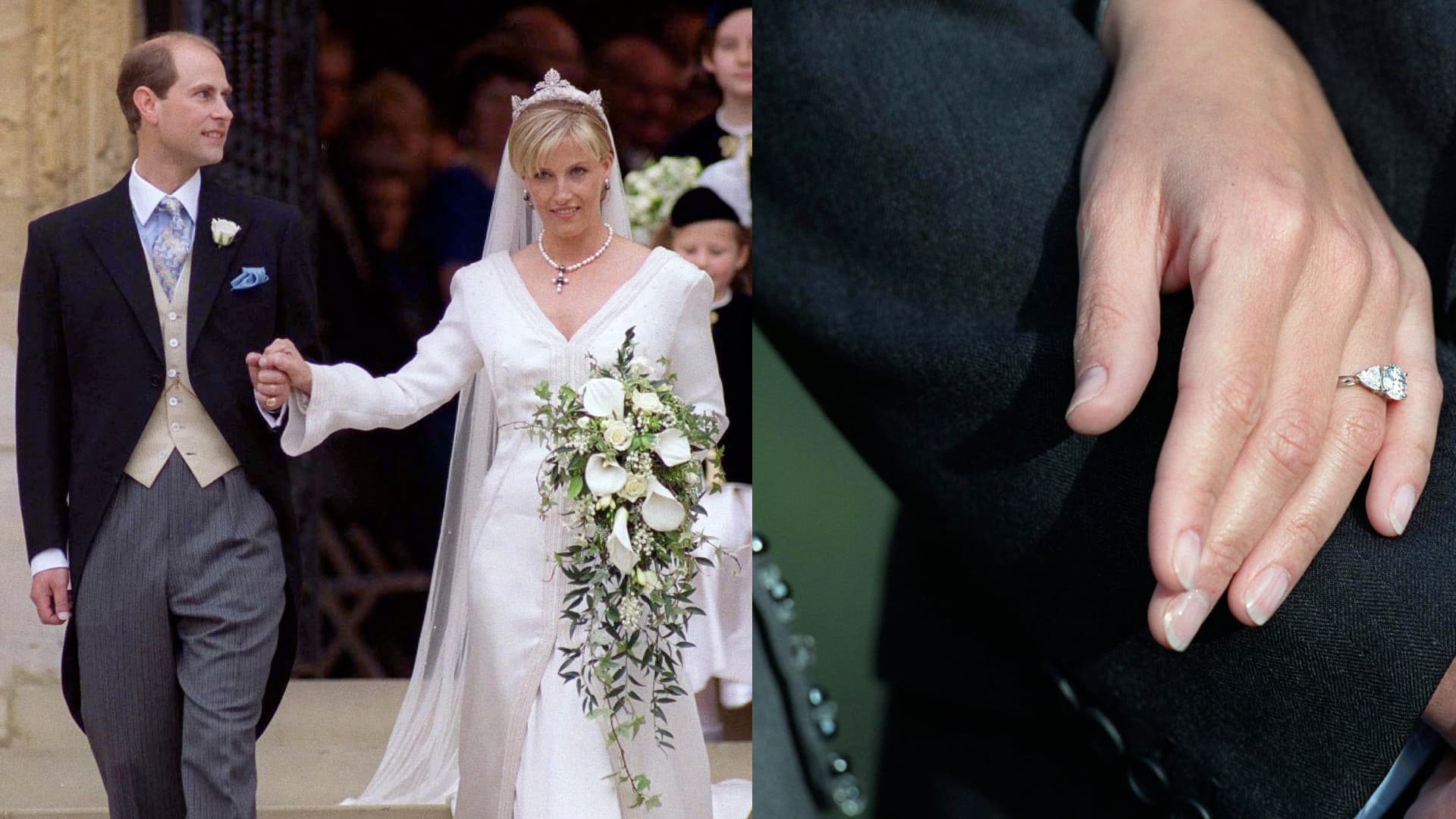
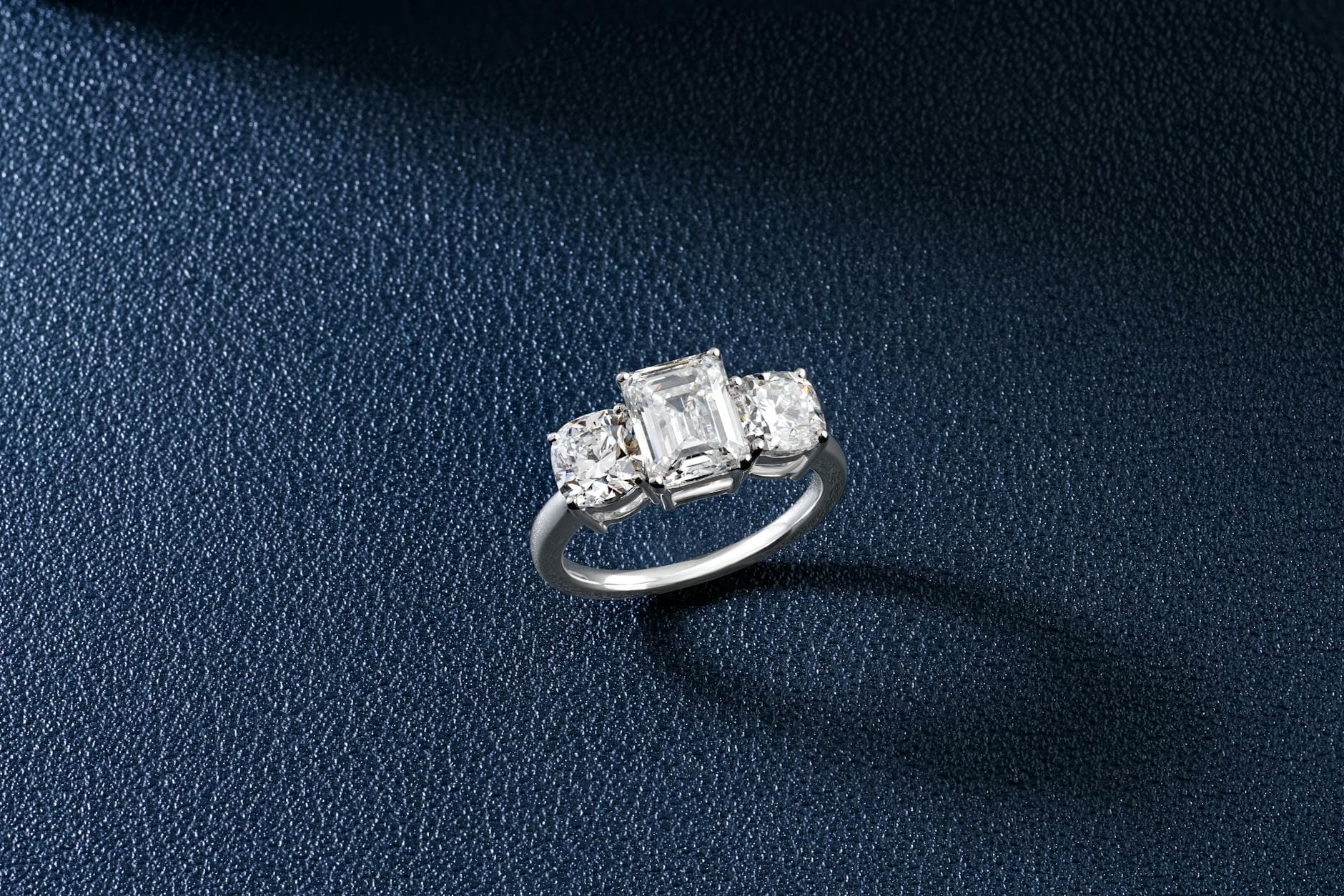
Duchess Sophie’s engagement ring is not loud, but it is eloquent. A two-carat oval diamond sits at the center, flanked by two smaller heart-shaped stones in 18-carat white gold, and the whole composition feels less like ornament than sentence structure: one stone leading to the next, each element carrying part of the meaning. In royal jewelry, symbolism is often hidden in plain sight, and this ring makes the code beautifully legible.
The design is a trilogy ring, also known as a three-stone ring, and that matters because it is one of the most narrative-heavy forms in engagement jewelry. Former royal butler Grant Harrold called the style “very romantic” because the three stones represent the past, present, and future of the couple’s relationship. That reading gives the ring a quiet emotional architecture, one that feels especially apt for a royal engagement where every public detail is scrutinized and every object acquires a story.
The stone arrangement is the message
The center stone is the visual anchor: a two-carat oval diamond, cut to elongate the finger and catch the light with a softer, more romantic silhouette than a round brilliant. On either side sit two heart-shaped diamonds, a choice that makes the symbolism unusually direct. Where many engagement rings rely on subtlety, Sophie’s ring wears its sentiment in the open, turning the shoulders of the setting into a pair of miniature declarations.
That heart-shaped detail is what separates the ring from the more familiar royal solitaire, and from many modern engagement rings that lean on novelty rather than meaning. Today’s trends often favor sculptural forms, mixed metals, or unconventional center stones; Sophie’s ring is more disciplined than that. Its language is classical, but not generic, because the trilogy setting gives the design a built-in chronology and the heart-shaped side stones sharpen the emotional tone.
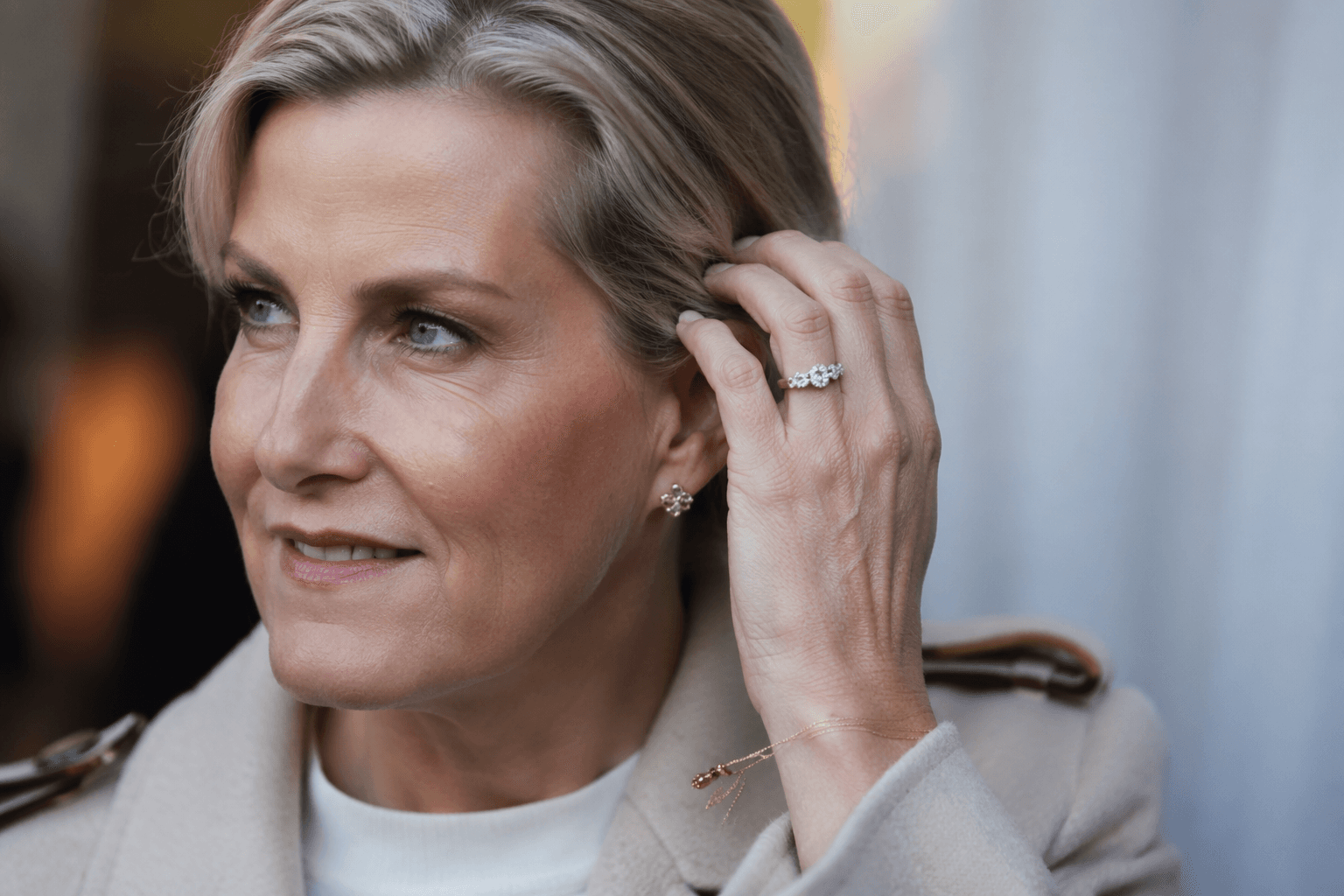
The effect is not merely decorative. The three-stone format invites interpretation, and in this case the interpretation is almost unavoidable: the ring reads like a compressed biography of a relationship, with the central diamond suggesting the present moment and the side stones framing what came before and what comes next. In that sense, the ring is less about display than about continuity.
The maker places it inside royal jewelry history
The ring was made by Garrard & Co., a name that carries serious weight in royal jewelry. That heritage matters because Garrard is not simply a luxury house attached to a famous client list; it is one of the makers that helped define the visual vocabulary of modern British royal jewels. The same jeweller is associated with Princess Diana’s engagement ring, now worn by Catherine, Princess of Wales, which places Sophie’s ring in a lineage of pieces that are instantly recognizable and culturally loaded.
That connection gives the ring a second layer of meaning. It is not only an engagement ring for one royal bride, but also part of a broader story about how the royal family has used jewelry to encode memory, status, and sentiment across generations. In that context, Sophie’s ring feels especially refined: it is classic enough to belong to the house style, but personal enough to stand apart from a simple one-stone tradition.
The choice of 18-carat white gold deepens that effect. White gold has a cooler, more contemporary cast than yellow gold, and it allows the diamonds to dominate visually without visual interruption. The setting does not compete with the stones; it frames them with a clean brightness that makes the trilogy design read as crisp rather than ornate.
A public reveal with a touch of royal wit
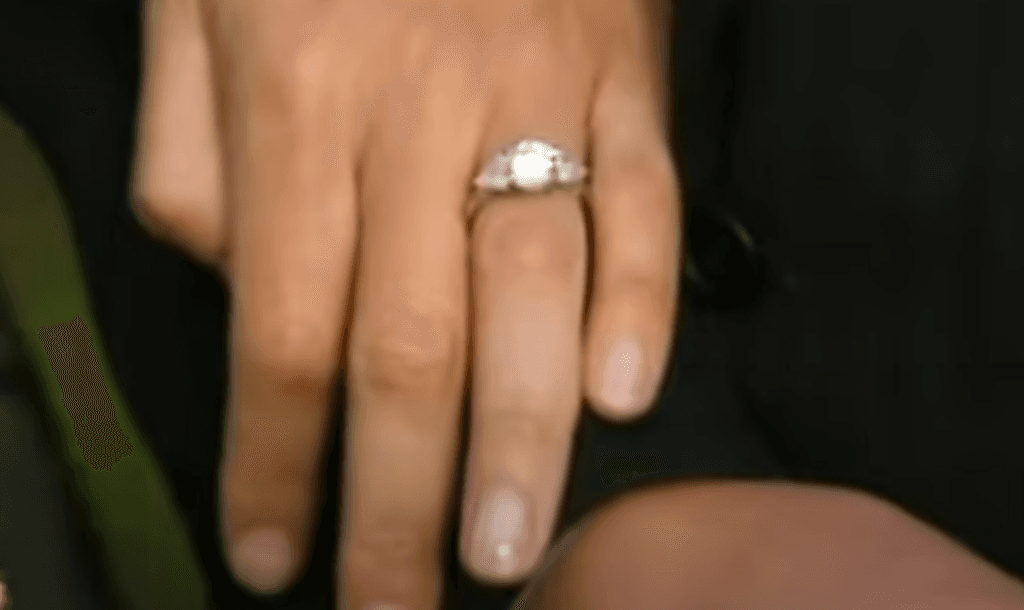
The ring entered public view at the engagement photocall, where Prince Edward reportedly joked, “Have you got your dark glasses on? If it catches the sun, you’ll be blinded.” It is the kind of line that says as much about the stone as any formal description: the ring was sparkly enough to command attention, but its brilliance was part of the story from the start.
That moment also helps explain why the ring has endured in public memory. The best royal jewels are never merely shown; they are staged, discussed, and remembered through gesture as much as through design. Edward’s remark gave the ring a small theatrical flourish, but the jewel itself did the heavier lifting. It was elegant, legible, and rich with symbolism, exactly the kind of object that invites people to look twice.
From 1993 courtship to 1999 ceremony
Prince Edward and Sophie Rhys-Jones met at a Real Tennis event in 1993, and their engagement was announced on January 6, 1999. They married on June 19, 1999, at St George’s Chapel, Windsor Castle, a setting that gave their union the formal gravity expected of a royal wedding while leaving the ring to carry the intimacy of the personal story. Sophie later became Duchess of Edinburgh after Edward was elevated within the royal titles, but the engagement ring remains one of the most intimate records of that earlier moment.
That timeline matters because the ring belongs to a specific emotional arc, not a generic romance. It was chosen before the wedding, before the title changes, before the couple’s public life settled into its current form. Seen that way, the ring is not just an accessory from an engagement announcement; it is a preserved point in time, still speaking in the vocabulary of 1990s royal courtship.
Why this ring still reads as modern
Sophie's engagement ring feels contemporary not because it follows trend cycles, but because it understands the power of design clarity. The oval center stone gives it shape, the heart-shaped side diamonds give it meaning, and the white-gold mounting gives it polish without excess. In an era of engagement rings that often chase size or novelty, this one proves that symbolism can be more compelling than spectacle.
Coverage has commonly placed the ring at about £105,000, with some estimates translating that to roughly $149,000. That valuation is part of its intrigue, but the deeper value lies in the coherence of the piece: every detail is doing narrative work. Sophie’s ring endures because it is both jewel and emblem, a royal engagement ring that reads like a private message made public.
Know something we missed? Have a correction or additional information?
Submit a Tip