Engagement ring costs fall as couples plan budgets together
The ring is getting cheaper, but the budget stakes are higher. Couples are planning together, and that shift can protect the venue, honeymoon, and savings from wedding debt.

The engagement ring is no longer just a romantic prelude, it is often the first serious test of a couple’s wedding budget discipline. That matters because the ring is now being weighed against everything that follows, from the venue deposit to the honeymoon airfare, and the newest numbers show more couples are choosing to think that way before they spend.
The ring is becoming a shared budget decision
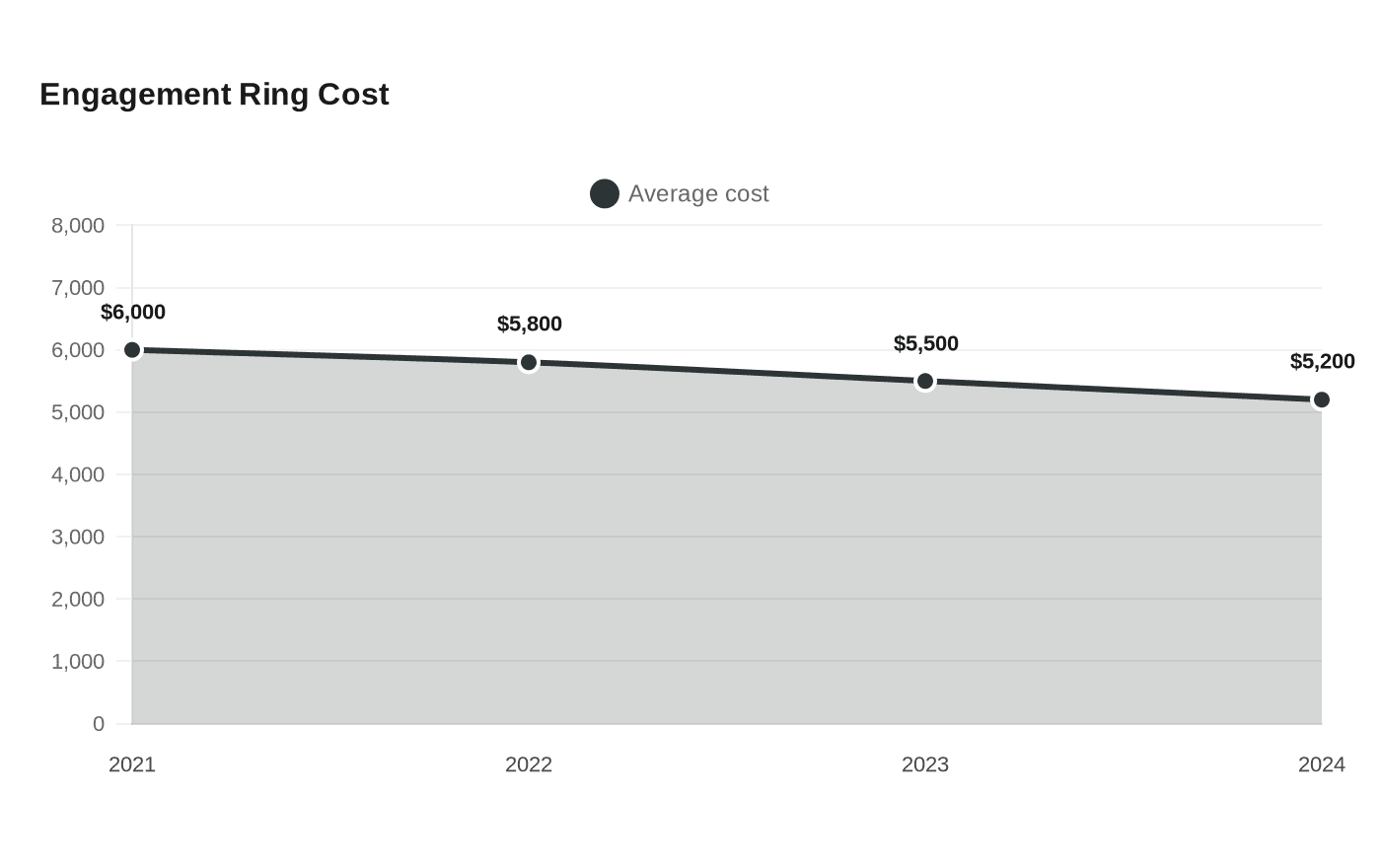
The Knot’s 2024 Jewelry & Engagement Study puts the average engagement ring cost at $5,200, a noticeable drop from $5,500 in 2023, $5,800 in 2022, and $6,000 in 2021. The study surveyed more than 7,800 couples in the United States, and its findings point to a clear change in behavior: many couples are now tackling proposal and ring decisions together instead of treating the purchase as one partner’s surprise expense.
That shift is practical as much as emotional. When the ring is chosen in isolation, it can quietly consume the money meant for the rest of the wedding. When it is planned alongside the full budget, the couple can decide whether a larger center stone, a more elaborate setting, or a higher-grade metal is worth trimming elsewhere. The ring becomes part of the wedding architecture, not a separate financial event.
Debt is the hidden cost behind the romance
The urgency around budget planning is easy to understand when you look at what happens after the wedding. U.S. News reported in February 2024 that 56% of newlyweds went into debt to pay for their wedding. LendingTree’s separate 2024 survey found an even higher figure, with 67% of newlyweds saying they took on wedding-related debt.
Those numbers matter beyond the ceremony itself. LendingTree also found that 24% were still paying off that debt, and 41% of those borrowers said repayment would take at least a year. That means a ring bought too aggressively can echo far past the proposal, shaping whether the couple can fund a honeymoon, save for a home, or simply start married life without a monthly reminder of the celebration.
The cleanest rule is also the least glamorous: decide what the entire wedding can realistically cost, then let the ring take a proportionate share. A ring that leaves room for travel, vendor deposits, and a cushion for surprises is more attractive than one that forces later compromises.
The old two-month rule has lost its grip
For generations, jewelry marketing turned ring buying into a measuring contest. De Beers says the phrase “A Diamond is Forever” was created in 1947 by copywriter Frances Gerety, and that slogan helped harden the idea that an engagement ring should represent a grand, fixed standard of devotion. But in practice, that standard has loosened considerably.
WeddingWire previously reported that only 32% of ring purchasers spent approximately “two months’ salary” on an engagement ring. That figure is a strong reminder that the old rule is more cultural script than universal spending guide. In real life, couples are now more likely to treat the ring as one line item among many, rather than as an obligation with a legacy price tag attached.
That matters because marketing can make extravagance feel like tradition. It is not. A ring budget should reflect cash flow, savings, and the couple’s larger goals, not a slogan invented to make diamond spending feel inevitable.
What to check before you buy
The Federal Trade Commission’s Jewelry Guides exist to help shoppers get accurate information when they are buying gemstones, laboratory-created substitutes, imitation substitutes, and precious-metal jewelry. That is the right place to start if you want to avoid vague sales language and greenwashed claims.
- Whether the center stone is a natural gemstone, a laboratory-created stone, or an imitation
- What metal the setting is made from, and whether it is being described precisely
- Whether any stones have treatments or enhancements that change their appearance or value
- How the seller is naming the product, because labels should match the material, not the marketing
Ask for clear, written answers about:
This is where responsible buying gets more interesting. If a ring is marketed as sustainable, that should mean something concrete, not just a soft-focus promise. In practice, the seller should be able to explain what the stone is, where it came from, and how the materials were described in the sale. The FTC framework exists because jewelry language can blur very quickly, especially when diamonds, lab-grown stones, and simulants are all competing for attention in the same case.
Use the tools that keep the budget honest
The fastest way to overspend is to guess. WeddingWire offers a wedding budget planner and cost guide to help couples track expenses and payments, which is useful precisely because ring spending does not happen in a vacuum. The Knot also offers an engagement ring calculator, a sensible counterweight to impulse buying when the pressure to “pick something beautiful” starts to overwhelm the math.
Used together, those tools reinforce the same point: the ring should be sized to the wedding, not the other way around. A well-chosen ring can still feel meaningful at $5,200 or less, especially when it is chosen with intention, with full disclosure about materials, and with an eye toward what comes after the proposal.
The healthiest engagement budget is the one that lets the couple celebrate without borrowing their way into the marriage. In that sense, the smartest ring is not the biggest one, but the one that still leaves room for the life the ring is meant to begin.
This article was produced by Prism’s automated news system from verified source data, official records, and press releases, then run through automated quality and moderation checks before publishing. The system is built and supervised by the people who set the standards it runs under. Read our full AI policy.
Did this article answer your question?