Engagement-ring insurance becomes a standard first step for buyers
Buyers are folding ring insurance into the purchase itself as standard policies leave gaps and a $7,364 average ring now demands real asset protection.
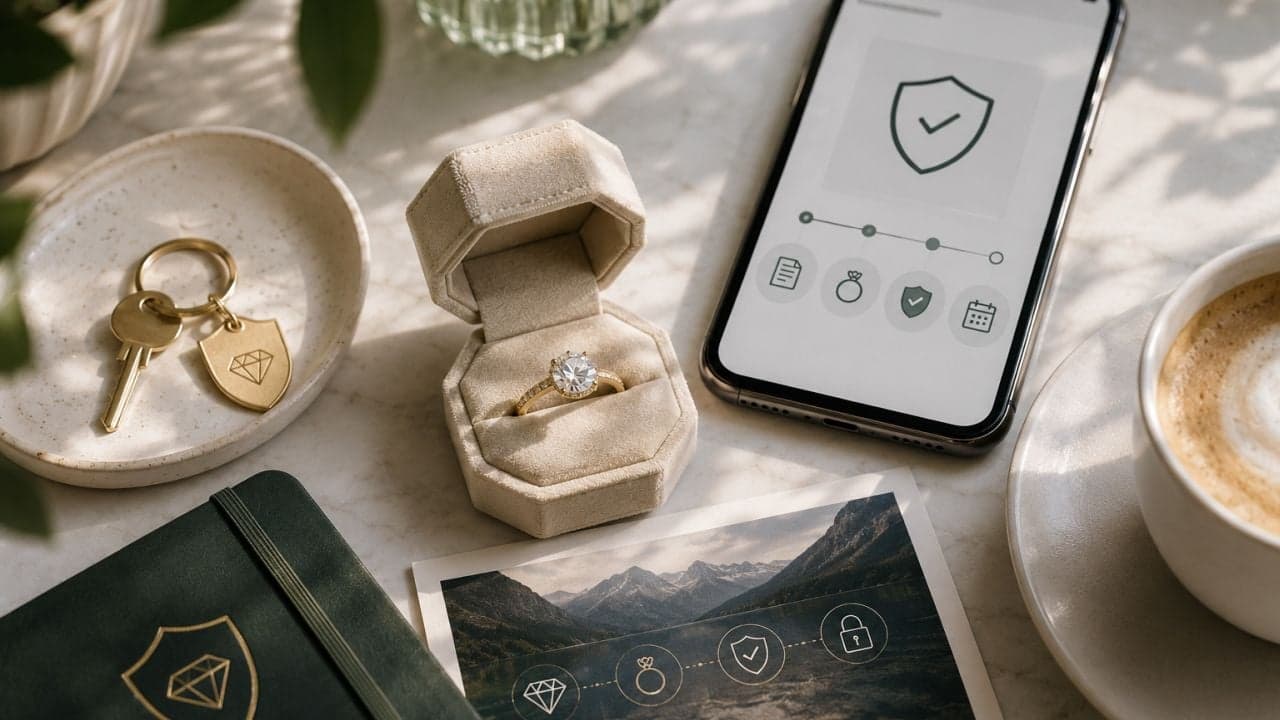
The first serious accessory many buyers now purchase with an engagement ring is not a box or a cleaning cloth, but insurance. That shift says a lot about how people are shopping today: with ring prices rising and policies on ordinary homes and rentals often falling short, buyers are treating protection as part of the jewel’s true cost.
The new first step
Rapaport says engagement-ring insurance is moving earlier in the buying process, and that change is easy to understand. The average U.S. engagement-ring price rose 9% in 2025 to $7,364, according to the Natural Diamond Council, which means more buyers are walking out with pieces that deserve the same attention as any other significant asset. When the purchase is measured in thousands, not hundreds, coverage stops feeling optional and starts looking like basic stewardship.
GEICO pushes that logic even further: buyers should secure coverage as soon as they have the ring, not wait until after the proposal. That advice reflects a subtle but important reality of modern ring buying. The moment the ring leaves the jeweler, it is vulnerable to the ordinary hazards of daily life, from a missed clasp to a cab ride to a moment of panic at a gym locker.
Why standard homeowners and renters coverage often falls short
The protection gap is the real story. Homeowners and renters policies may include jewelry, but usually only under limited circumstances and often with jewelry sublimits that leave a high-value ring underinsured. In practice, that means a policy may not come close to replacing what was actually lost, especially when the stone, setting, and metal together push the value far beyond what a general personal property clause was designed to handle.
That is why specialty engagement-ring insurance has become so compelling. These policies are designed to cover theft, accidental damage, loss, stone loss, and mysterious disappearance, with broader replacement protection than many standard household policies provide. The language matters because engagement rings live hard lives: prongs snag, pavé stones loosen, and a ring can vanish in ways no one can neatly explain. A policy built for ordinary furniture or electronics is not always built for a one-carat diamond on a delicate setting.
State Farm makes the same point from a different angle, saying a personal articles policy can provide broader protection than a homeowners or renters policy and can include worldwide coverage. That detail is especially important for jewelry, because rings do not stay home. They travel to restaurants, airports, vacations, and reunions, which is exactly where a broader policy can prove its worth.

What specialty coverage actually protects
The appeal of specialty insurance is not just that it exists, but that it is tailored to the way fine jewelry is worn. Theft is the obvious risk, but accidental damage is just as relevant. A ring can be chipped, bent, or loosened during perfectly ordinary activity, and a policy that recognizes those failures is far more useful than one that only responds to a burglary.
Stone loss is another critical distinction. In a high-set solitaire or a diamond ring with multiple smaller stones, the loss of even one component can turn a cherished piece into a repair case. Mysterious disappearance is the most telling phrase of all, because it captures the most frustrating kind of loss: the ring that is simply gone, with no clean explanation and no easy recovery.
For that reason, buyers increasingly need to think like conservators rather than just consumers. The ring is wearable art, but it is also an asset whose value depends on the integrity of its stone, setting, and paperwork. A lost receipt is inconvenient; a lost appraised piece without coverage is expensive.
Why appraisals are part of the deal
GEICO notes that appraisals are often required to determine full replacement value and keep the policy accurate. That is not just administrative fine print. Jewelry can vary widely in value depending on diamond quality, setting style, metal weight, and craftsmanship, and an insurer cannot protect what it cannot properly price.
This is where many buyers underestimate the process. A ring is not insured at the emotional value attached to the proposal; it is insured at its documented replacement value. If the ring features a finely made mounting, a particularly well-matched stone, or a setting that would be difficult to reproduce, the appraisal is what keeps that nuance from disappearing into a generic figure.

What the cost really looks like
Specialized engagement-ring insurance is usually more affordable than buyers expect. The coverage often runs about 0.5% to 1.5% of the ring’s appraised value per year, and in many cases it comes in under $10 a month. On the Natural Diamond Council’s 2025 average engagement-ring price of $7,364, that would roughly translate to about $37 to $110 a year, or around $3 to $9 a month.
That range is modest when measured against the emotional and financial cost of replacing a ring out of pocket. It also helps explain why insurance is becoming a first-step purchase instead of a later correction. When the annual premium is small relative to the value at risk, waiting until after the proposal starts to look like a gamble rather than a savings.
How jewelers are adapting
Rapaport also notes that jewelers are responding to this shift by improving point-of-sale education and helping buyers complete documentation promptly after purchase. That matters because the best insurance in the world still depends on the paperwork being in order. Receipts, appraisals, and other documentation make the policy cleaner from the beginning and make replacement smoother if something goes wrong.
This is a meaningful change in the retail experience. In the past, the insurance conversation often happened as an afterthought, after the champagne, after the proposal, after the ring was already in use. Now it is becoming part of the purchase ritual itself, as integral as choosing between a prong setting and a bezel, or deciding how much risk a buyer is willing to carry on their hand.
The smartest engagement-ring budgets now include protection from the start. In a market where the average ring costs $7,364 and standard household policies often leave jewelry exposed, insurance is no longer a luxury add-on. It is the quiet, practical layer that keeps a beautiful object from becoming a costly regret.
This article was produced by Prism’s automated news system from verified source data, official records, and press releases, then run through automated quality and moderation checks before publishing. The system is built and supervised by the people who set the standards it runs under. Read our full AI policy.
Did this article answer your question?