Engagement ring shopping shifts toward couples, lab-grown diamonds and data-driven picks
Couples are shopping together, lab-grown stones are normalizing, and the smartest first step is still the 4 Cs plus a grading report.
The Knot’s 2024 Jewelry & Engagement Study puts the average engagement ring in the United States at $5,200. More couples are shopping together now, which turns the purchase into a shared design decision long before a proposal is planned.
The new first conversation
Once the decision becomes collaborative, the most important questions move to the front of the table: shape, metal, setting, and budget. The ring becomes both an object and a plan for the proposal itself. The old lone-wolf shopping model still has romance, but the modern version puts shape, metal, setting, and budget on the table before the proposal.
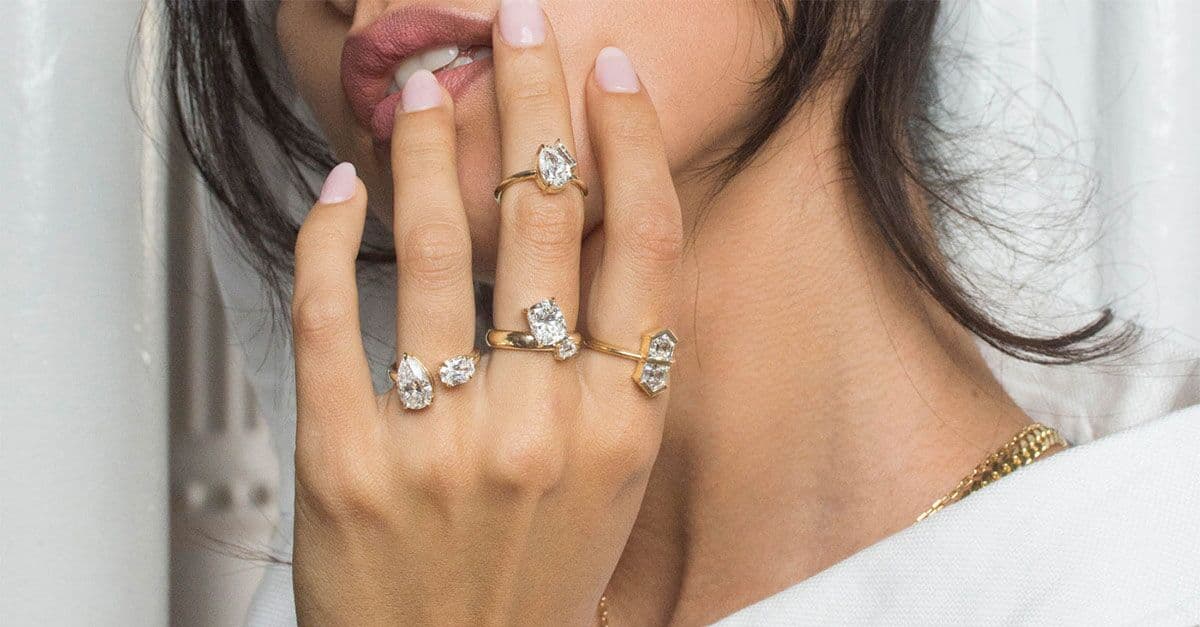
The Knot tracks which ring shapes, stones, settings, and metals are most popular across the country. A cushion-cut center in yellow gold tells a different story from an oval in platinum, even before the stone size enters the conversation.
What the $5,200 benchmark really means
The $5,200 average is useful as a reference point, not a rule. It tells you where the center of the market sits, but it does not tell you where your priorities should land. If the budget is lower, the design has to work harder. If it is higher, the temptation is to buy size before substance, which is often the wrong trade.
A smart buyer uses that number to decide what to protect first. In one ring, the priority may be a better-cut center stone. In another, it may be a more substantial mounting or a metal that will wear well every day.
The 4 Cs still do the heavy lifting
No matter how modern the shopping process feels, the diamond conversation still begins with the 4 Cs: cut, color, clarity, and carat. The Gemological Institute of America calls them the industry standard for evaluating diamond quality. They remain the cleanest way to compare one stone with another. Carat alone is never the whole story; a larger diamond with a weak cut can look flatter than a smaller one with sharper proportions.
A diamond grading report matters before anything else. An accurate grading report should be the starting point, because it tells you exactly what you are buying. For shoppers trying to balance beauty and value, the report is not paperwork to skim past. It is the document that separates a polished sales pitch from a real comparison.
A ring can be beautiful and still be badly chosen if the numbers are wrong. Cut affects brightness and life in the stone. Color and clarity affect how clean and bright it looks once it is set. Carat affects presence, but only within the larger architecture of the ring.
Lab-grown diamonds are now part of the main decision
Lab-grown stones are no longer a side conversation. They are available in a range of qualities and price points, which is the key point for buyers who still think of them as a single category. They are not one fixed product. They are a broad field, and quality still depends on how the stone was made and how it performs under the same 4 Cs framework.
The American Gem Society also designed its lab-grown diamond reports to help consumers understand those qualities more clearly. That makes the reports especially useful for shoppers trying to compare lab-grown stones across different price bands, or weighing a larger lab-grown center against a smaller natural diamond. In practical terms, lab-grown stones can free up budget for a more refined setting or a more distinctive design, but only if you approach them with the same rigor you would apply to a mined diamond.
The most common mistake is treating lab-grown as if the label alone settles the question. It does not. The best comparison is still between cut, color, clarity, carat, and the report that documents them.
Why the old diamond story still shapes the new one
The diamond ring was manufactured as a cultural ideal. De Beers dates itself to 1888, and its famous “A Diamond Is Forever” slogan was created in 1947 by Frances Gerety for N. W. Ayer & Son, during a period of slumping postwar sales. That campaign did more than sell stones. It helped turn the diamond engagement ring into a default symbol of commitment.
How to shop with clarity
The engagement-ring decision now comes down to a sequence.
- Set the budget first, using the $5,200 national average as a reference point rather than a target.
- Learn the 4 Cs and insist on a diamond grading report before comparing stones.
- Decide whether a lab-grown diamond fits the design, the budget, and the values behind the purchase.
- Choose the shape, setting, and metal last, because those are the details that turn a stone into a ring with a point of view.
This article was produced by Prism’s automated news system from verified source data, official records, and press releases, then run through automated quality and moderation checks before publishing. The system is built and supervised by the people who set the standards it runs under. Read our full AI policy.
Did this article answer your question?