Engagement rings turn bolder in 2026, with sculptural shapes and mixed metals
Taylor Swift and Travis Kelce helped reset the ring conversation, and 2026 proposals are answering with bolder shapes, mixed metals, and more personal settings.
The solitaire is still present, but it is no longer playing solo
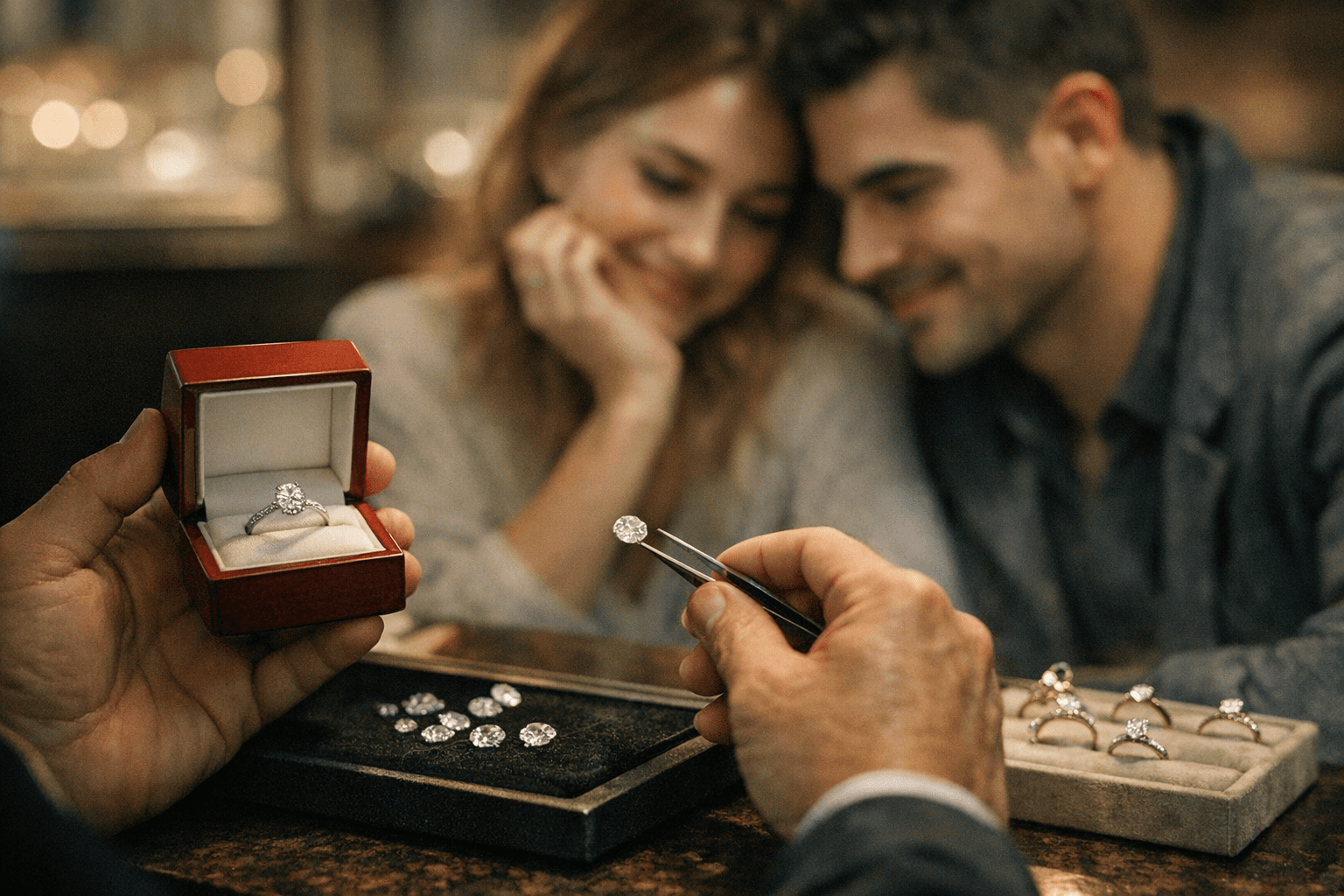
Taylor Swift and Travis Kelce turned antique-cut diamonds back into a pop-culture obsession, and the ripple effect is still visible in the rings people want to wear to a proposal. The new mood is less about quiet uniformity and more about jewelry that feels chosen, not simply purchased, with sculptural silhouettes, mixed metals, texture, and details that tell a story.
That shift matters because engagement rings sit at the intersection of symbolism and daily wear. A ring now has to feel intimate on a hand, but also distinct in a room full of screenshots, close-ups, and comparisons. The result is a category moving away from ultra-minimal styling and toward pieces that look more considered, more tactile, and more personal.
The shape conversation is widening
The numbers show that the classic diamond ring still has a strong hold, but it no longer has a monopoly. The Knot’s 2024 Jewelry and Engagement Study found round center stones at 28 percent, with oval stones close behind at 25 percent. Even more telling, oval engagement rings were up 23 percent from 2015, when they accounted for just 2 percent of designs, while the popularity of round diamond engagement rings was down 21 percent over the same period.
That is the clearest sign that couples are not abandoning tradition so much as loosening its grip. A round solitaire still reads as familiar and elegant, but the rise of ovals, elongated cushions, and other fancy shapes gives the ring a more directional line, something that feels a little less expected the moment it catches light. In practice, that often means a classic center stone is being reworked into a longer profile, a more substantial mounting, or a setting that makes the stone feel architectural rather than delicate.
Metal is no longer background
One of the biggest changes in 2026 is that the metal itself is part of the design argument. The Knot’s 2026 Real Weddings study found that 48 percent of respondents wore a white-metal engagement ring, including 35 percent white gold and 13 percent platinum, so white metals still lead overall. Even so, yellow gold continues to gain ground, and that widening taste has loosened the old assumption that engagement rings must default to a white-metal band.
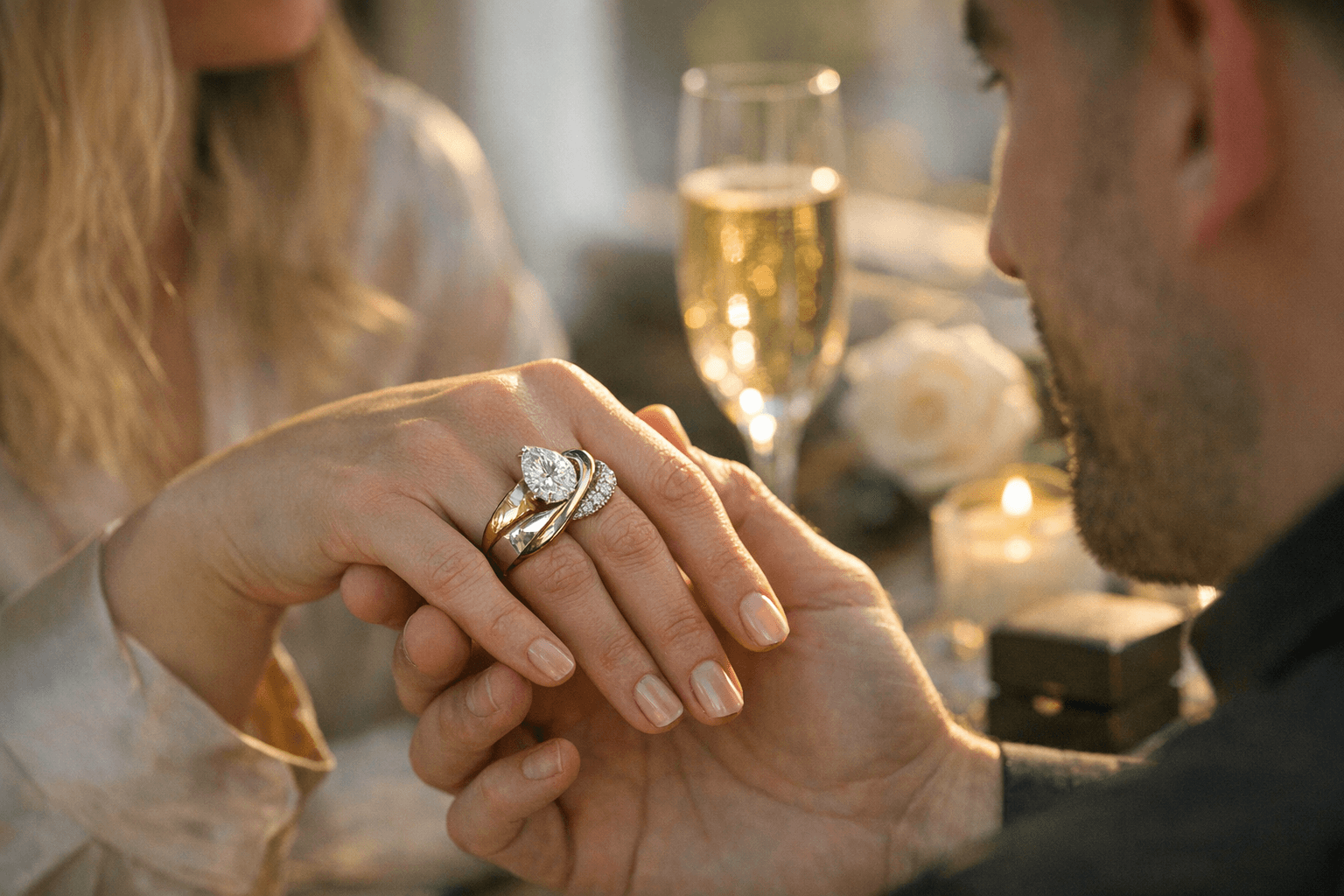
National Jeweler described the shift plainly in March 2026: consumers are increasingly choosing yellow gold, fancy-shape diamonds, and more substantial settings, with the gold itself carrying as much visual weight as the stone. That means the band is no longer just a support system. It can be chunky, sculptural, warm-toned, or even mixed with a second metal, so that a familiar solitaire or halo reads less like a template and more like a finished object.
For the bride or groom who wants distinction without losing wearability, that change is crucial. A ring in yellow gold immediately softens the severity of a white diamond, while a two-tone design can make an otherwise classic center stone feel current without pushing it into novelty.
Texture and personalization are becoming the point
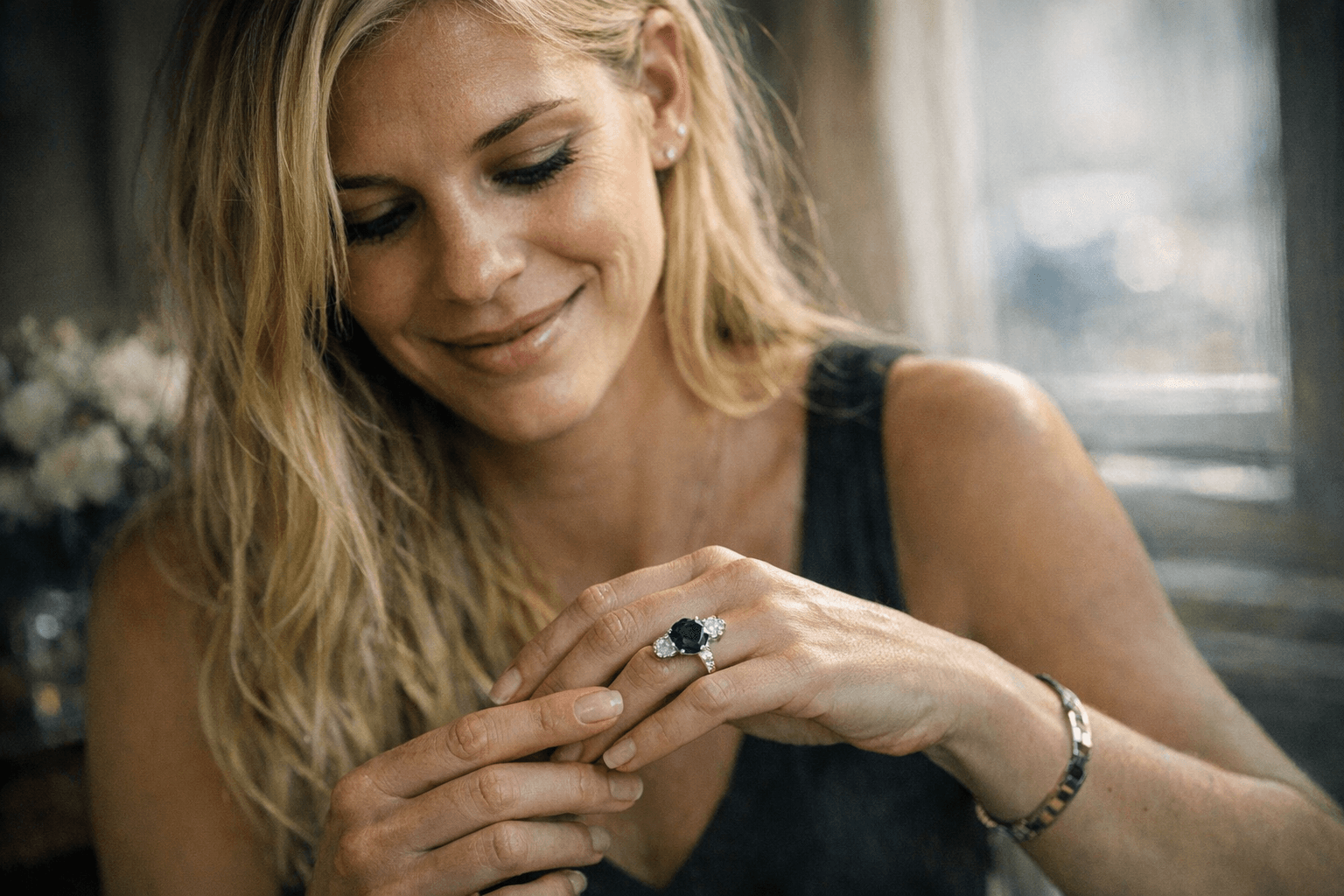
Parade’s trend coverage picked up the broader mood among celebrity stylists: the biggest shift is toward jewelry that tells a story instead of jewelry that simply signals excess. That idea is showing up in engagement rings through visible texture, custom engraving, symbolic motifs, and even birthstone alternatives woven into the design. The ring becomes less of a one-note status object and more of a keepsake with a narrative.
For buyers, the most compelling personalization is often the one that is legible only when the ring is looked at closely. An engraved date inside the band, a motif echoed from another heirloom, or a subtle colored stone in the design can make a ring feel deeply specific without making it loud. That balance is exactly why these rings are succeeding now: they are expressive, but they still live comfortably in everyday life.
Vintage influence is still powering the modern bridal case
The renewed fascination with antique diamonds has not faded since the celebrity engagement news around Taylor Swift and Travis Kelce. Forbes linked that moment to revived interest in old-cut diamonds and elongated cushion shapes, and the broader market supports the same direction. Forbes also projects the global engagement-ring market to grow at a compound annual rate of 6.65 percent between 2025 and 2033, with personalization, symbolism, and vintage cuts all gaining momentum.
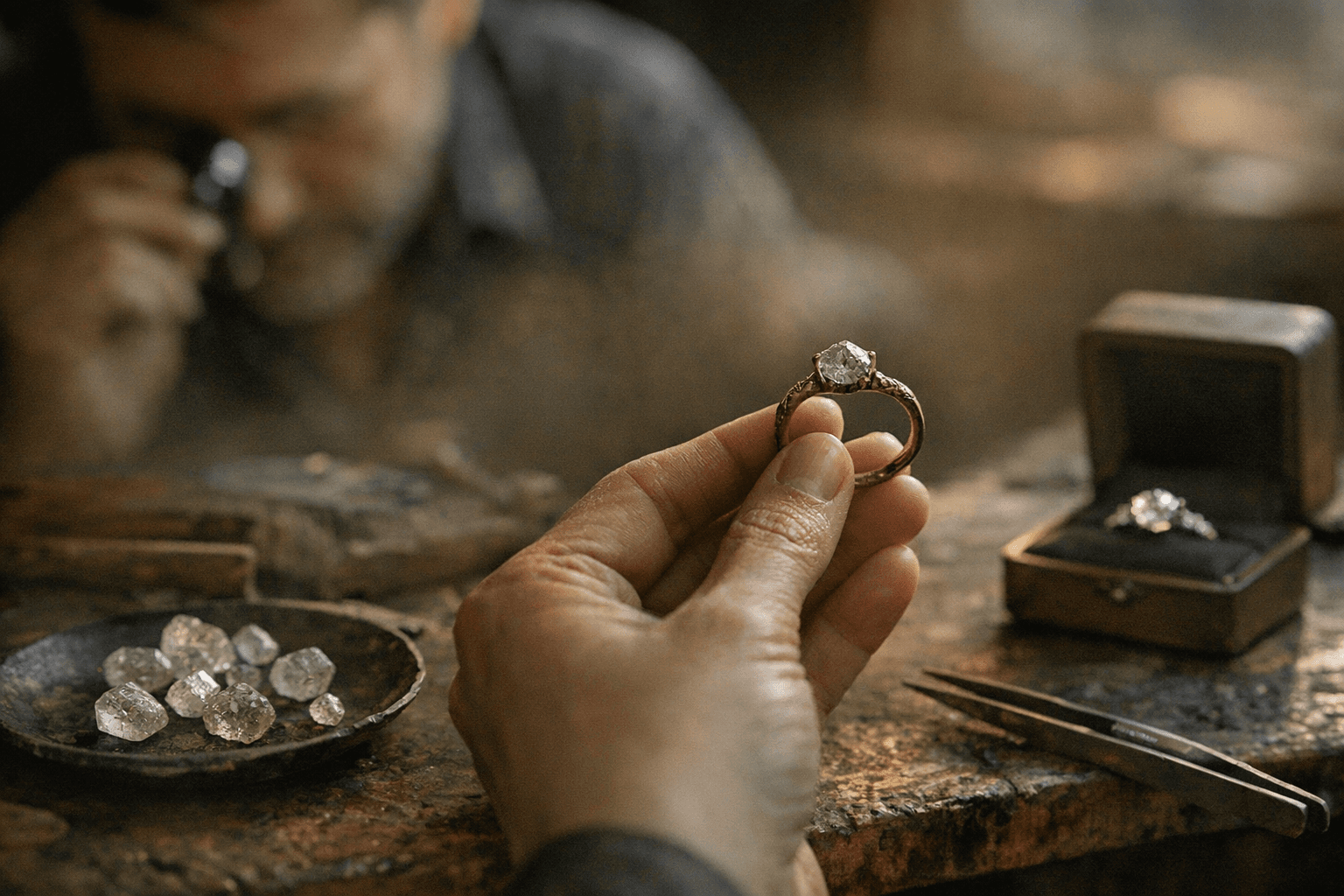
That is why the best modern interpretations of a halo or solitaire often borrow from older eras without becoming costume. A halo can feel fresher when the proportions are heavier and the center stone is less predictably round. A solitaire can look more distinctive when the stone is antique in character, the mounting is wider, or the metal finish has a stronger presence on the hand.
Provenance and lab-grown reality now shape the buying decision too
The conversation around beauty is now inseparable from the question of origin. GIA has cited analyst projections that laboratory-grown diamonds would account for 20 percent of all diamonds on the market by 2025, while De Beers has estimated the value of lab-grown diamonds sold at $4.5 billion and said their impact on the natural-diamond market reached $7 billion. Those figures explain why buyers are asking harder questions about what exactly they are buying and why.
That scrutiny is healthy. If a ring is marketed as ethical or sustainable, the details should be clear: whether the stone is natural, lab-grown, or antique; whether the metal is white gold, yellow gold, or platinum; and whether the design relies on new material or repurposed elements. Vague claims are not enough, especially in a category where provenance is part of the emotional value.
- Ask whether the center stone is natural, lab-grown, or vintage.
- Confirm the metal, since white gold, platinum, and yellow gold age and wear differently.
- Look at the setting as closely as the stone, because a substantial mount can change the entire character of the ring.
- Treat engravings, motifs, and alternative stones as design decisions, not afterthoughts.
A few practical touchpoints matter most:
The biggest engagement-ring story of 2026 is not that people have stopped wanting diamonds. It is that they want diamonds, and everything around them, to feel more individual, more tactile, and more honest about where beauty comes from.
Know something we missed? Have a correction or additional information?
Submit a Tip