England’s Evesham Diamond Ring heads to auction at £20,000
A 16th-century cluster ring with a floral bezel and eight hogback diamonds is set to reach £20,000, a relic that reads like a blueprint for today’s bridal clusters.
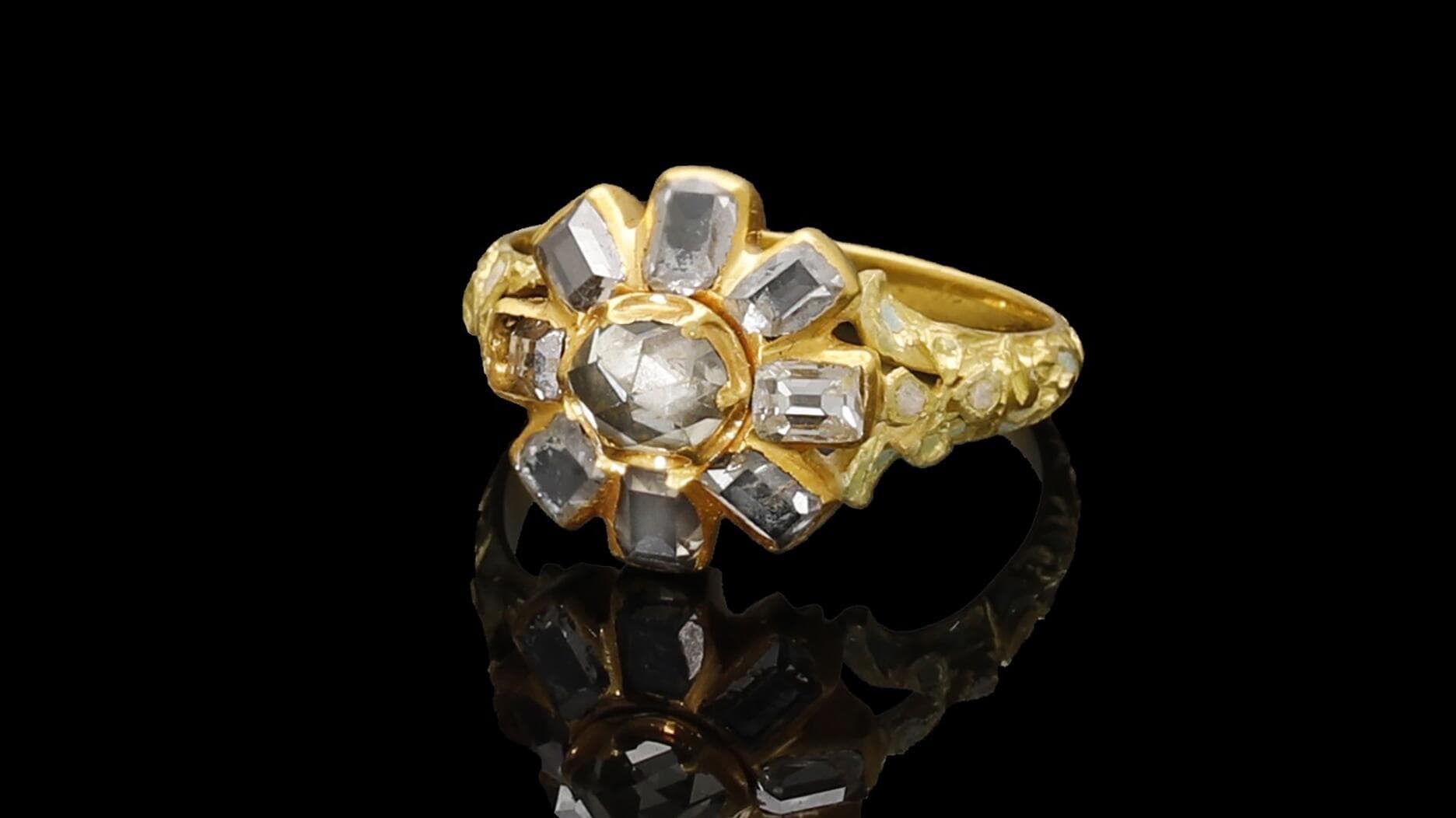
A late-16th- or early-17th-century diamond ring with a flowerhead bezel and eight hogback diamonds is heading to the saleroom with a price tag that places it firmly in collectible territory. The Evesham Diamond Ring, found in Wormington, Gloucestershire, is estimated at £15,000 to £20,000 and will be offered as Lot 106 in Noonans Mayfair’s Jewellery, Silver & Objects of Vertu sale in London on June 23-24.
Found in November 2024 by 42-year-old Stuart Jones of Solihull, the ring was discovered in a patch of Worcestershire-border countryside about four miles from Broadway and near Evesham, a detail that gives the jewel both its name and a strong sense of place. It has since been disclaimed as Treasure, clearing the way for auction after examination by the British Museum. The sale proceeds are set to be shared equally with the landowner.

What makes the ring so compelling is not simply its age, but its design language. Noonans describes it as a diamond and enamel ring with a cluster of eight stones surrounding a central rose-cut diamond, all gathered into a flowerhead bezel. Turquoise and white enamel decorate the underside of the setting, while applied quatrefoil flowerheads animate the shoulders. Seen in profile, it is less a solitary jewel than a miniature composition, closer to a botanical medallion than the pared-back engagement styles that dominate much of the modern market.

That distinction is exactly what makes the ring feel newly relevant. Frances Noble, Noonans’ jewellery specialist, has pointed to the early 17th century’s baroque appetite for bold rings and decorative diamond groupings, when stones were arranged not only as statements of wealth but as symbols, often in rosettes, pansies, crosses and fleur-de-lys. The Evesham ring sits squarely in that tradition, and its cluster format echoes the same visual instincts that now drive interest in halo settings, floral bezels and antique-cut centers.

For contemporary bridal taste, the lesson is clear: what looks current often has deep roots. The rose-cut center, the clustered stones and the sculpted bezel all anticipate the renewed appetite for rings that feel collected, ornamental and distinct from the single-stone default. In a market where antique references continue to shape what couples choose, the Evesham Diamond Ring is not a curiosity from England’s past. It is a precise argument for why the language of the old cluster still sells.
This article was produced by Prism’s automated news system from verified source data, official records, and press releases, then run through automated quality and moderation checks before publishing. The system is built and supervised by the people who set the standards it runs under. Read our full AI policy.
Did this article answer your question?