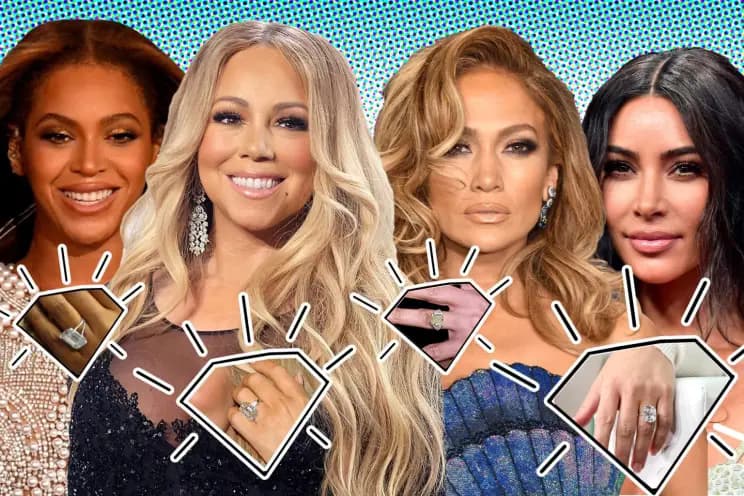
GIA guide explains engagement ring stone shapes and their style impact
Shape changes everything: how large a ring reads, how it flatters the hand, and why round still leads even as oval closes the gap.
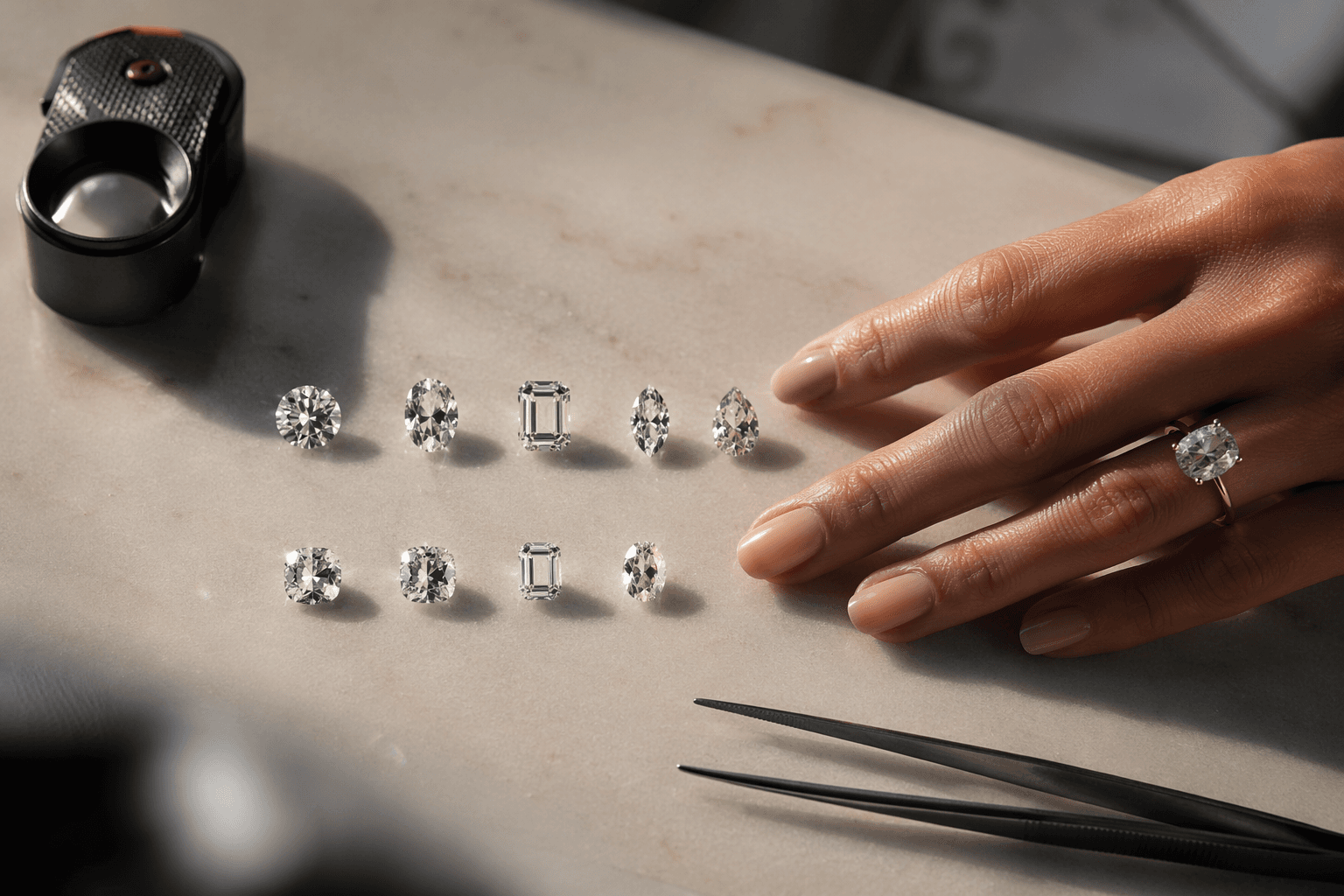
Lab-grown center stones now account for 61% of engagement-ring purchases, and the average diamond size has risen, pushing shoppers to compare how much presence a stone delivers for its carat weight. Diamond shape is one of the first decisions that changes how an engagement ring reads on the hand, long before metal, halo, or setting enter the picture. Shape is a style choice with practical consequences: it alters perceived size, light behavior, and how a stone sits in a ring’s design.
Shape is not cut, and that distinction matters
Shape is the face-up outline, while cut is the arrangement and proportion of facets that governs how a stone handles light; only round brilliant diamonds receive a formal cut grade because they are the only shape with standardized facets. Round brilliant diamonds carry 57 or 58 facets, while all other outlines are treated as fancy shapes, a category that includes marquise, pear, oval, emerald, radiant, Asscher, cushion and heart.
The right outline should suit taste, lifestyle and budget, because two stones with the same outline can still look different depending on facet style and proportions.
Round and oval: the two shapes shoppers keep comparing
Round remains the market’s reference point. It is the most common diamond shape used in jewelry, and GIA estimates that 75% of all diamonds sold are round-shaped; The Knot’s 2024 Jewelry and Engagement Study puts round center stones at 28% of engagement rings, with oval close behind at 25%.
Oval is the closest challenger because it combines the fire and brilliance of round with a longer outline. An oval can make fingers appear longer and more slender and can create the illusion of a larger stone per carat, which is why it feels especially strong for buyers who want impact without moving up dramatically in weight.
Elongated shapes: marquise and pear lean into length
Marquise and pear are the shapes most overtly linked to elongation. Marquise diamonds can look larger face-up than a round stone of the same weight and can make fingers look longer and more slender, which is why the shape drew attention in the 1970s and remains a strong choice for shoppers who want maximum surface presence. Marquise, oval, rectangular and pear are elongated styles that create a longer look because of their north-south axis.
Pear works in a similar way, with the added drama of a tapered point and rounded end. Pear is among the shapes that suit a lengthening effect on the hand, while brilliant-cut shapes like round and princess can flatter without emphasizing finger length when they are paired with smaller side stones and narrow bands.
Princess, cushion and heart: square, soft square and symbolic
Princess cut brings a sharper, more geometric edge. The shape was created in 1981 by Betzalel Ambar and Israel Itskowitz and is a square modified brilliant, a younger profile than the older step cuts that gives a ring a modern, angular feel.
Cushion sits at the opposite emotional register. It is one of the oldest diamond shapes and cutting styles and the modern heir to the old mine cut, with curved sides and rounded corners that soften the geometry. It was the third most popular diamond shape in a 2013 Knot survey.
Heart is the most declarative of the bunch. Heart-shaped diamonds are relatively uncommon in engagement rings and work best in stones of at least half a carat, where the outline has enough room to read clearly. The two lobes, cleft and point have to balance cleanly for the outline to read clearly.
Emerald, radiant and Asscher: choosing between quiet and bright
Emerald, radiant and Asscher all reward buyers who like structure, but they do not deliver it the same way. Emerald and Asscher are in the step-cut family, while radiant is a mixed cut with step-cut facets on the crown and brilliant-cut facets on the pavilion. Radiant borrows the rectangular or square outline of a more architectural stone while giving more sparkle than a pure step cut.
Emerald’s appeal is clean and deliberate, but it is also unforgiving. Color and clarity matter especially in emerald cuts because the large, long facets make inclusions easier to see, while radiant is more forgiving of inclusions and can even shift the apparent color lighter or darker when viewed from above. Asscher has 58 facets that are larger and wide-set, giving it a quieter aesthetic than a modern brilliant style while keeping better scintillation than a similar emerald cut.
Why the setting still decides the final read
Shape does not exist in isolation. Each outline requires thoughtful consideration with the setting, and the right mounting can either amplify a shape’s length or keep it compact and balanced. Halo, three-stone, narrow-band and side-stone arrangements all change how the eye reads the center stone, which is why a round brilliant can feel different in a delicate solitaire than in a halo, and why a marquise or oval can look especially long in a clean east-west or north-south presentation.
Finger coverage, perceived size, brilliance, durability and snag risk all pull in different directions. A more angular shape can sharpen the profile but may feel less protected in a setting with exposed corners; a softer outline can be easier to wear daily, but may not deliver the same architectural presence. The broader buying advice built on the 4Cs system GIA introduced in the 1950s follows the same logic: choose with accurate information, then let taste and wearability narrow the field.
This article was produced by Prism’s automated news system from verified source data, official records, and press releases, then run through automated quality and moderation checks before publishing. The system is built and supervised by the people who set the standards it runs under. Read our full AI policy.
Did this article answer your question?