GIA guide shows how to make an engagement ring look larger
A slim shank, halo frame, and elongated shape can make a center stone read larger than its carat weight. GIA’s long view turns size into a design choice.
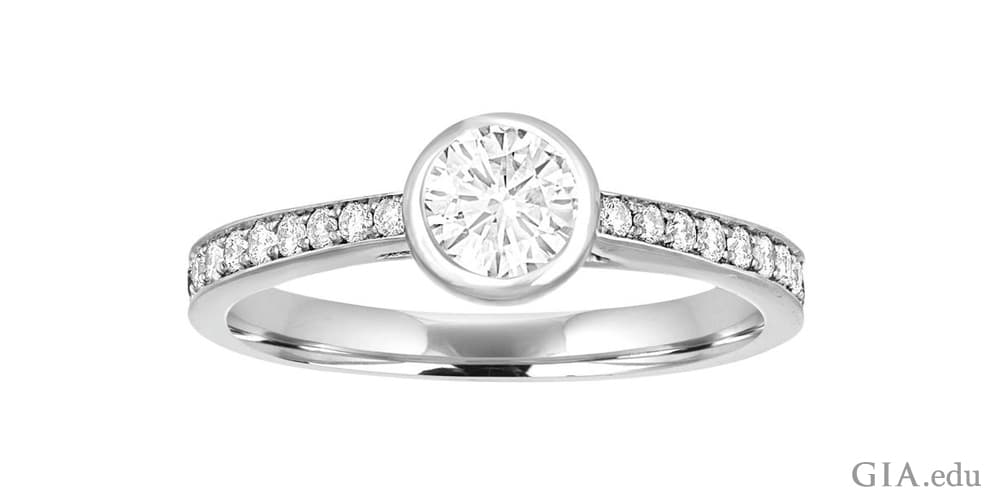
A diamond can be heavy without looking especially large from above. Carat weight tells you what a diamond weighs, but the mount, the outline, and the amount of metal around it decide how large it looks once it reaches the hand.
Carat weight is only the starting point
GIA, established in 1931, has long stressed that visual size is not a single measurement. A diamond can be heavy without reading especially large from above, while a slimmer, better-proportioned stone can dominate the finger with far less weight.
GIA’s 2022 “10 Tips for Buying an Engagement Ring” and its 2018 “Semi-Mount Rings: How to Build Your Engagement Ring” make the same point: you do not have to solve the ring by buying up in carat. You can shape the look through the setting, the profile, and the way the stone sits in the mounting.
Halos create the fastest visual lift
If the goal is maximum finger presence, the halo remains the most obvious visual shortcut. A halo surrounds the center diamond with a ring of smaller stones, which expands the apparent footprint and gives the center stone a brighter edge. Lauren B Jewelry says a diamond halo can make the center stone appear up to a full carat size larger, depending on the center stone’s carat size, while Brilliant Earth says a halo setting can instantly increase a center diamond’s visual size on the hand.
The effect works because the eye reads the full outline, not just the center stone alone. A neat halo can make a modest center look more substantial, but the scale matters. If the halo overwhelms the middle stone, the ring can start to look crowded rather than larger, so the best examples keep the halo delicate and proportionate.
Bezels, solitaires, and the way metal changes the silhouette
A bezel helps protect the center stone from falling out and protects the girdle against bumps and accidents. That protection comes with a crisp outline around the stone, which can sharpen the ring’s profile and make the center read as a clean, defined shape.
A bezel is especially useful when you want the center stone to feel modern and secure, but it is not the most aggressive way to maximize apparent size. A prong setting leaves more of the diamond exposed from above, while a bezel wraps more metal around the edge. That means the choice is as much about silhouette and durability as it is about visual spread.
A slimmer band usually makes the center look bigger
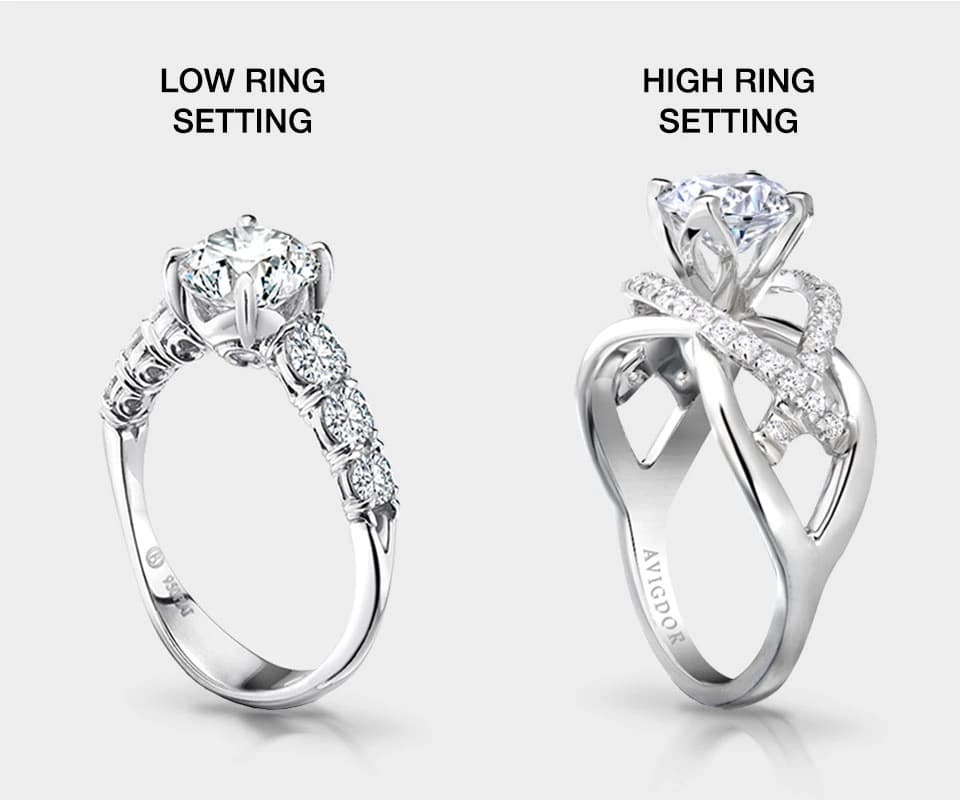
Band width matters more than many shoppers realize. A thin shank gives the center stone more room to breathe, while a wide band competes with it for attention. The result is not subtle: a slim band makes the center appear more dominant, even when the diamond itself has not changed.
Split-shank designs work on the same visual principle. By parting the band before it reaches the center, they pull the eye inward and create a frame that makes the middle look more prominent. Side stones can help too, but only when they are carefully scaled to the center stone; too much volume on the shoulders can flatten the look instead of amplifying it.
GIA’s 2015 buying guide included sidestone settings such as prong, channel, and bar-channel in its engagement-ring guidance. The way the side stones are mounted changes how much metal you see and how the light travels across the ring.
Shape can do more work than carat weight
Elongated shapes often look larger face-up than a round diamond of the same weight because they spread their mass across more visible surface area. Oval, pear, and marquise shapes are the clearest examples. On the hand, they can stretch the visual line of the ring and make the center stone feel bigger than its carat weight suggests.
GIA’s separate guide to diamond shapes for engagement rings follows the same shape-by-shape logic. The “biggest-looking” option is not universal. A shape that flatters one finger can read differently on another, and the same diamond can appear more or less substantial depending on finger size, hand shape, cut proportions, and how much of the stone is visible from above.
How to shop the look, not just the number
The smartest way to browse is to look for the design cues that increase spread before you fall in love with a carat number. A few details matter most:
- A slim shank, which keeps the center stone visually dominant
- A halo, which adds a bright border and expands the outline
- An elongated shape, especially oval, pear, or marquise
- A setting that exposes more of the stone from above
- Side stones that support the center instead of crowding it
- A mounting whose metal color does not overpower the diamond’s face-up size
Semi-mounts let the setting do part of the work before the center stone is even finalized, which gives a shopper room to build for presence instead of simply paying for more weight.
Romantic love drives diamond demand
De Beers Group says romantic love drives about half the value of diamond jewelry demand in the main markets of the United States, China, and Japan.
This article was produced by Prism’s automated news system from verified source data, official records, and press releases, then run through automated quality and moderation checks before publishing. The system is built and supervised by the people who set the standards it runs under. Read our full AI policy.
Did this article answer your question?