Why pear-shaped engagement rings are trending in 2025
Pear-shaped engagement rings are back in 2025 because they lengthen the hand, photograph with drama, and feel more personal than the oval-heavy bridal wave.

A rare heirloom ring in a “fat pear” shape, valued at $55,000 to $65,000, stands apart from the oval rings that have dominated bridal cases. Pear-shaped engagement rings were one of Brides’ most popular jewelry trends of 2025, and Business Insider, The Knot, and Morin Jewelers folded pear into a broader appetite for elongated stones. The appeal is visual first. A pear gives you length, movement, and a pointed finish that reads clearly in a photograph, even before the rest of the ring details come into focus.
Why pear feels especially right in 2025
The 2025 ring mood is less about one universal “it” cut and more about shape-driven personality. Business Insider’s December 2024 trend coverage pointed to elongated rings as popular in 2025, and The Knot grouped pear with other elongated silhouettes like oval and marquise, the shapes most likely to stretch the hand and soften the old round-solitaire default. Morin Jewelers’ May 14, 2025 trend roundup put pear in the same conversation as the season’s most sought-after diamond forms.
Rêve Diamonds’ November 2025 trend coverage showed average spend down while custom design demand was up, a combination that points toward more individualized ring decisions rather than bigger-and-better one-upmanship. Pear fits that mood neatly: it has enough presence to feel distinctive, but it is still easy to personalize through orientation, setting, and metal choice.
Celebrity visibility has kept the cut in circulation too. Kylie Jenner’s pear-shaped diamond jewelry rotation has been widely noticed, and 2025 celebrity-ring roundups helped sustain attention on unusual stone shapes.
How pear changes the look of the hand
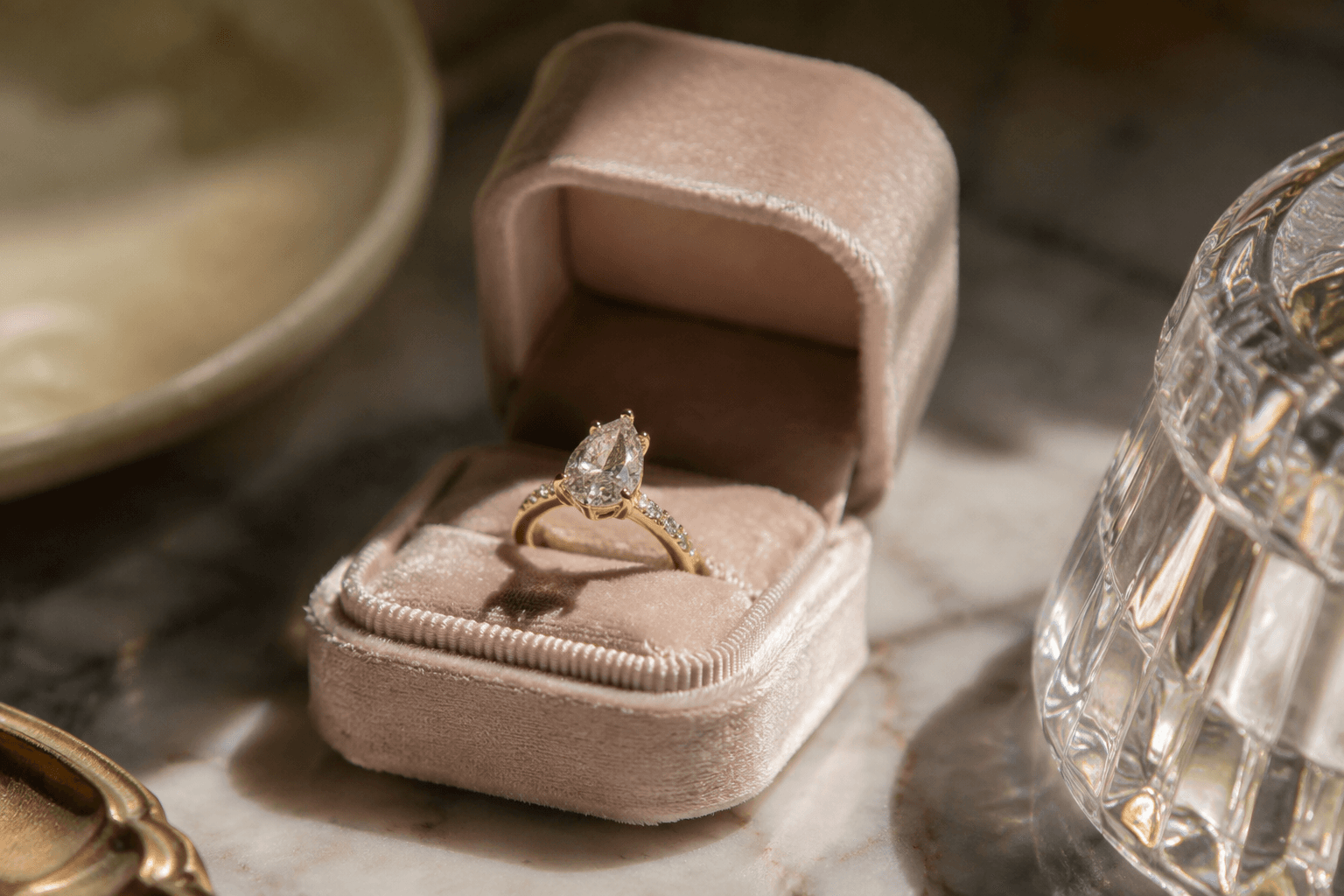
Pear is not just an oval with a point. It has a directional tilt that creates motion across the hand, which is why it tends to feel more fashion-led than the smoother oval and less architectural than an emerald cut. The rounded end softens the look while the point creates a visual arrow, so the whole ring feels elongated, expressive, and slightly asymmetric in a way that catches the eye immediately.
That asymmetry is a big part of the shape’s flattering effect. A pear often makes the finger look longer because the silhouette runs vertically and narrows as it reaches the point, which can give the stone a larger visual footprint without forcing you into a higher carat weight. In photos, that length reads cleanly from a distance, which is part of why ring-reveal posts and celebrity close-ups keep circling back to it.
Compared with the oval, pear feels less expected and a touch more dramatic. Compared with emerald, it feels softer and less formal, with none of the hard-edged geometry that makes emerald cuts so architectural.
The settings that make pear feel modern
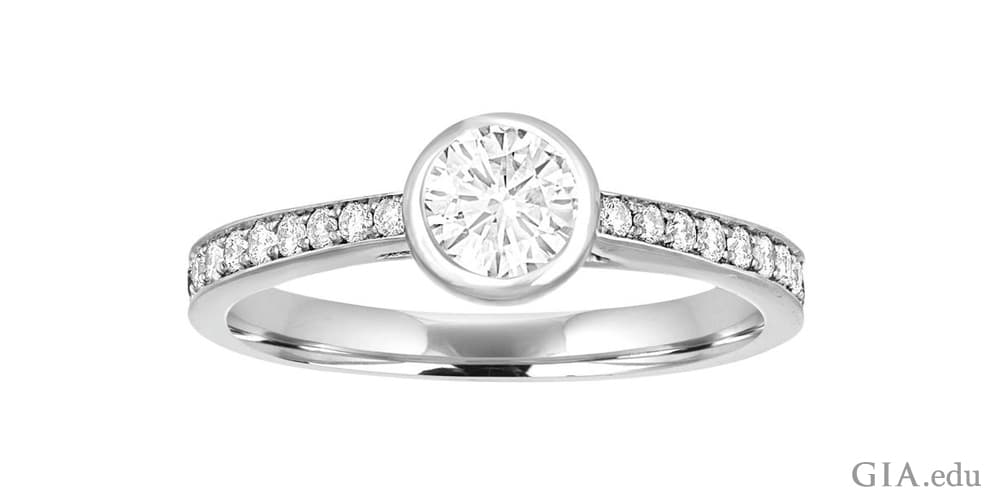
The setting can make a pear ring look sharply contemporary or a little too familiar. Bezels, a focus of Wove’s podcast on 2025 ring settings, suit pear especially well because the pointed tip is the cut’s most vulnerable spot. A bezel also tightens the outline, which gives the stone a cleaner graphic presence and helps the shape feel intentional rather than delicate for its own sake.
Boston 25 News’s 2025 ring-trend coverage included east-west settings and thicker bands, and both can shift a pear away from traditional bridal code. An east-west orientation turns the shape into a little more of a fashion statement, while a thicker band grounds the ring and makes the stone feel less floaty. A slim solitaire keeps the eye on the pear itself and can be the cleanest choice if the goal is to let the cut do all the talking.
Hidden halos still have a place, but they change the story. They add sparkle and can enlarge the center visually, yet they also blur some of the pear’s crisp outline, which is the very thing making the shape feel fresh right now.
What to know before you fall for the silhouette
The one practical drawback is straightforward: pear-shaped stones are more fragile than other cuts because the sharp pointed tip is more prone to breakage. That does not make the shape impractical, but it does mean the setting matters more than it might with a round or cushion stone, especially if the ring is meant for daily wear. The right mounting should guard the point, not leave it exposed as a tiny liability.
Pear-shaped diamonds have a long design history, and Brides’ engagement-ring history coverage traces engagement rings to a surprisingly dark origin story, far removed from the soft romance narratives attached to them now.
This article was produced by Prism’s automated news system from verified source data, official records, and press releases, then run through automated quality and moderation checks before publishing. The system is built and supervised by the people who set the standards it runs under. Read our full AI policy.
Did this article answer your question?