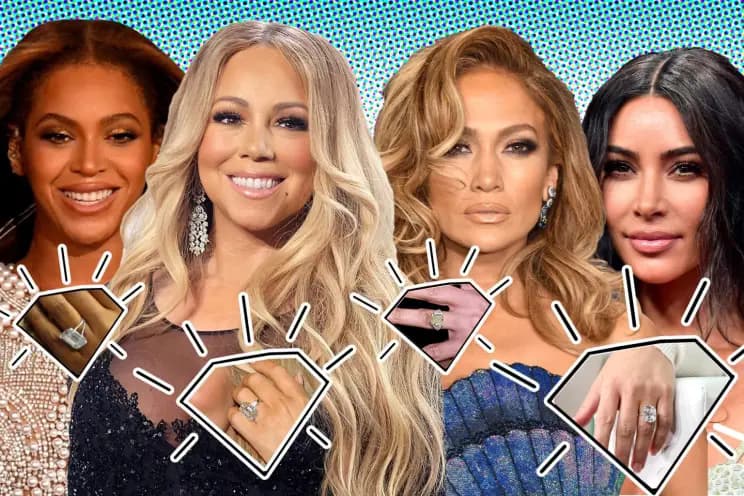
How much should you spend on an engagement ring? The answer varies
The old salary rule has lost its grip. With average spend at $5,200 and carat size rising, the better question is what your budget actually changes.
The ring lands on the left hand and suddenly every detail has a price tag: the size you can see across a room, the setting that keeps the stone close to the finger, the metal that frames the whole thing. That is why the old three-month-salary rule now reads more like folklore than a shopping plan. The more useful question is not how much you are supposed to spend, but what each budget level can actually buy.
The salary rule is fading
The Knot’s 2024 Jewelry & Engagement Study, based on more than 7,000 recently engaged or married couples, put the average engagement ring cost at $5,200. That was down from $6,000 in 2021, $5,800 in 2022, and $5,500 in 2023, a steady drift lower even as expectations about the ring itself have grown more ambitious. The Knot also found that the average engagement ring carat size reached 1.7 carats in 2024, up from 1.6 in 2023 and 1.5 in 2021, with many rings adding side stones or extra gems to create more visual scale.
The old benchmark has also lost authority in practice. WeddingWire’s Newlywed Report found that only 32% of ring purchasers spent approximately two months’ salary on an engagement ring. That is not a collapse of romance, just a sign that buyers have started treating the budget as a personal decision instead of a fixed rite.
What common budgets really buy
A useful engagement-ring budget starts with the range that real shoppers are already living in. The Knot’s engagement-ring calculator puts the 2025 average at $4,600, and it treats that figure as a data point rather than a mandate. De Beers, which says it has been “the home of diamonds since 1888,” shows how wide the market can stretch, with engagement rings spanning roughly $2,400 to $39,000 and beyond.
That spread matters because each tier changes a different part of the ring. At the lower end, the money usually goes toward a smaller center stone, a leaner setting, and less metal around the diamond. Around the current average, shoppers can begin to balance size with polish, choosing either a slightly larger center stone or a more elaborate setting with accent stones. Once the budget climbs sharply, the money often buys rarity, greater scale, or a more elaborate design language rather than simply a better version of the same ring.
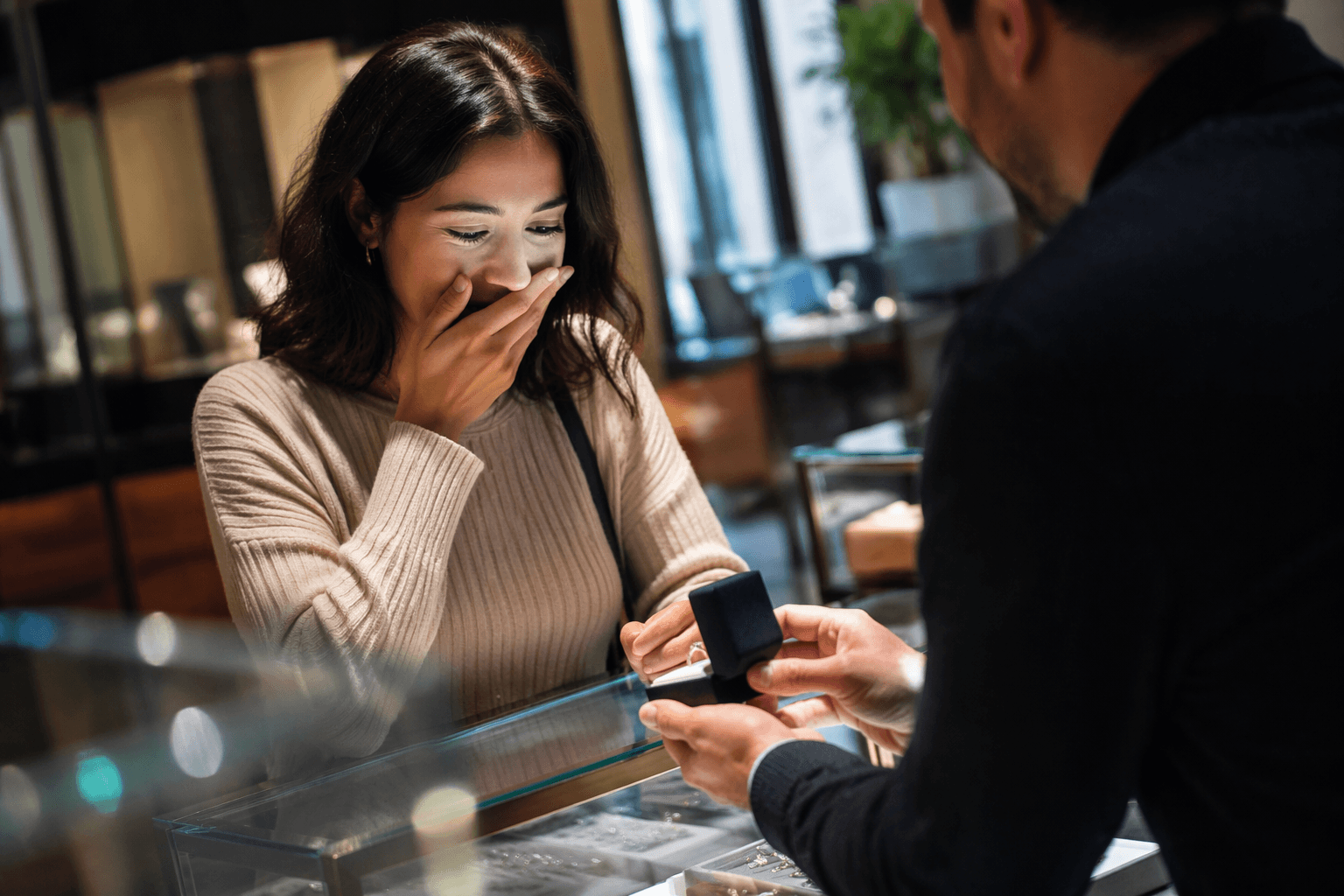
A practical way to think about it:
- If the center stone matters most, protect the budget there and keep the setting simple.
- If the ring must feel substantial from a distance, side stones, a halo, or an elongated shape can make the face-up look larger.
- If durability matters most, let the setting and metal do the work, even if that means a slightly smaller stone.
The setting changes the story
The setting can alter the ring as much as the diamond itself. A prong setting exposes more of the stone, lets in more light, and usually creates a lighter, more elevated look on the hand. A bezel setting wraps metal around the edge of the stone, which gives the ring a sleeker profile and more protection in daily wear. If the ring is meant to be worn hard and often, that difference is not cosmetic; it changes how the piece lives.
The Knot’s carat data makes another point clear: size on paper is not the same as size in the hand. A ring with side stones or additional gems can read larger than a single-stone ring of the same center carat weight. Vintage designs can also stretch a budget because they often concentrate visual drama in details, proportions, and craftsmanship rather than only in raw carat weight.
Buy for the life of the ring, not just the proposal
The smartest budget is one that leaves room for both the proposal and the years after it. De Beers offers ring resizing and remounting, a reminder that an engagement ring does not have to be a final, frozen object. It can be adjusted, reset, and rethought as tastes or circumstances change.
That flexibility matters when the purchase is expensive enough to invite second thoughts. A ring that starts at about $2,400 can still be made carefully and beautifully if the buyer understands where the money is going. A ring at $5,200, close to the current market average, may feel more substantial because the center stone, setting, and metal are all being balanced with intent. And a ring at $39,000 and above is no longer just about the promise it symbolizes, but about rarity, scale, and the degree of craftsmanship the budget can command.
Protect the budget with the paperwork
The Gemological Institute of America, established in 1931, remains one of the clearest tools a buyer has for separating appearance from quality. Its grading and report services for natural diamonds assess the 4Cs, and some formats include a face-up image for loose natural stones, which helps a buyer understand how a diamond actually presents, not just how it reads on paper.
The Federal Trade Commission adds an essential warning: gemstones, diamonds, and pearls may be natural, manufactured, or treated to change their appearance. That means the smartest money is not just the money spent on the ring, but the money spent understanding exactly what is being bought. Clear terminology, explicit disclosure, and independent grading matter most when the budget is tight and every compromise has to be deliberate.
There is no universal number that makes an engagement ring meaningful. The better measure is whether the budget is aligned with the parts of the ring that will matter most after the proposal, because the strongest ring is the one whose cost, construction, and character all make sense together.
This article was produced by Prism’s automated news system from verified source data, official records, and press releases, then run through automated quality and moderation checks before publishing. The system is built and supervised by the people who set the standards it runs under. Read our full AI policy.
Did this article answer your question?