How to buy an engagement ring online with confidence
The safest online ring buys start with proof, not promises: grading reports, clear return windows, and a careful read of the stone from every angle.

An engagement ring bought online should feel exciting, not hazardous. The best purchases are the ones you can verify before they ever reach your hand: a stone seen in real light, a setting that suits the wearer’s life, a size that does not require guesswork, and policies that give you room to reconsider. In a category this emotional, confidence comes from evidence.
Start with the paper trail
The Federal Trade Commission’s Jewelry Guides exist for one reason: to help you get accurate information when you are shopping for gemstones, laboratory-created and imitation substitutes, pearls and their imitations, and precious-metal jewelry. That matters online, where a polished product page can flatter a ring far more than a display case ever could. If a listing is vague about what the center stone is, what the metal contains, or whether a gem is natural or lab-created, treat that as a warning sign rather than a minor omission.
GIA, established in 1931 as an independent nonprofit that protects the gem and jewelry buying public through research, education and laboratory services, makes the same point from a gemological angle: credibility begins with documentation. Insist on a diamond grading report, not just a sales description, and make sure the seller is reputable enough to stand behind what it sells. If the ring includes a GIA report, Report Check lets you confirm that the report details match the GIA database, which adds a useful layer of verification when you cannot inspect the stone in person.
Read the diamond as carefully as the photograph
Online diamond buying should never begin and end with a polished hero shot. GIA advises consumers to know the 4Cs, compare diamonds under different lighting, choose a metal and setting carefully, measure ring size, select a reputable jeweler and insist on a grading report. That is the right order of operations because brilliance can change dramatically once a stone moves from studio light to a living room, a restaurant, or daylight by a window.
This is where 360-degree video earns its place. Look for a video that lets you see the diamond turn, tilt and flash, then compare it in bright light, softer light and neutral light if the retailer offers multiple views. The goal is not perfection, because no diamond behaves identically in every setting. The goal is consistency: the stone should still look lively, proportionate and well-cut when the lights shift.
Treat the setting as design, not just support
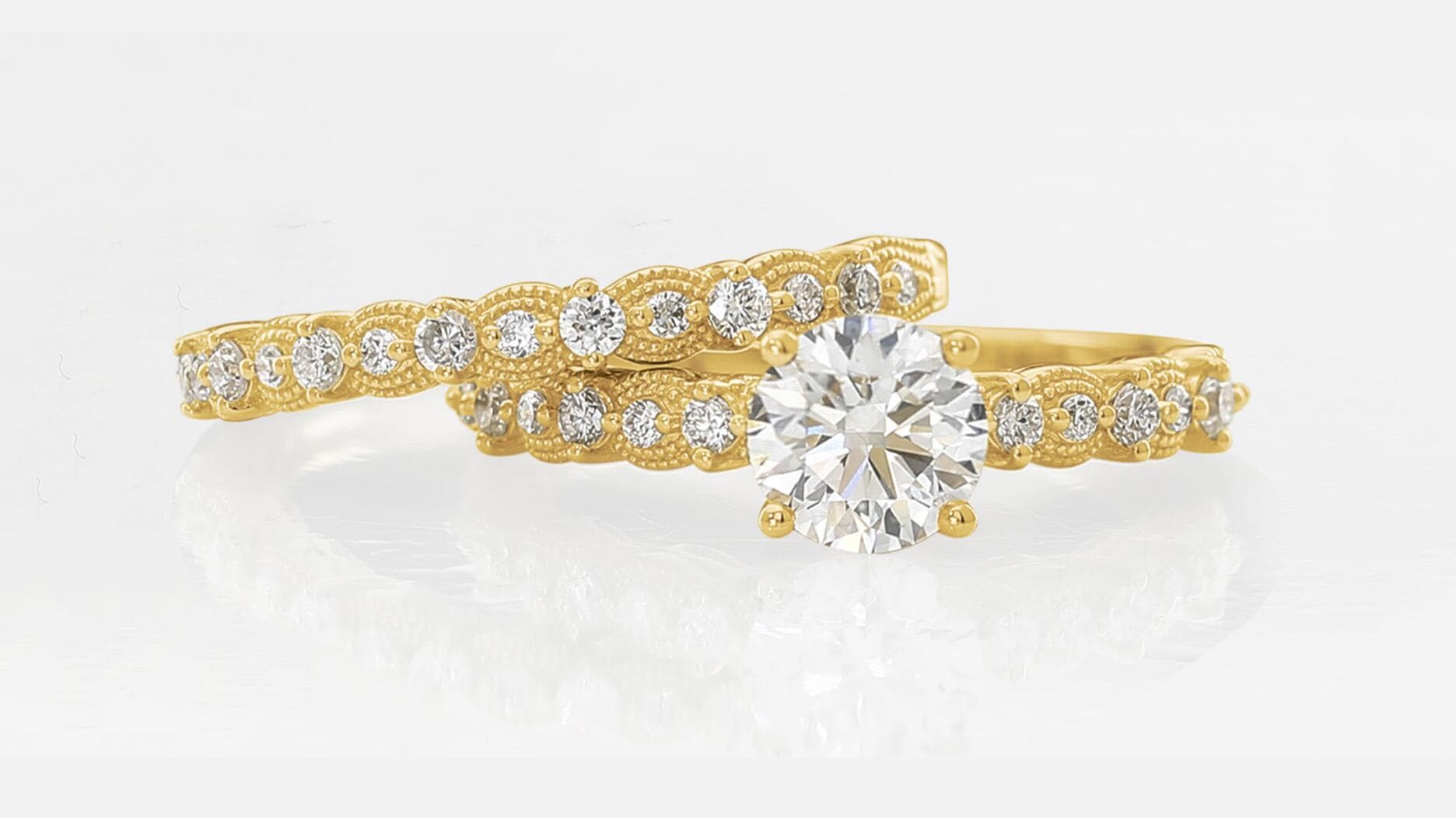
The setting determines how the ring wears, how secure the stone feels, and how much of the diamond’s face is visible. A bezel setting gives a clean architectural frame and excellent protection; a prong setting opens the stone to more light and can make the center look larger. Neither is inherently better, but they create very different lives for the ring, especially online where the details can be easy to miss.
Design language is widening too. The Knot’s 2025 trend coverage says the majority of people are shopping together now, which reflects a more collaborative approach to a purchase that once arrived as a surprise. That same coverage points to rising interest in nontraditional shapes and designs, including double-band settings, cluster rings and east-west center stones. Those styles reward close viewing, because proportion and profile matter as much as the first impression.
Confirm size, resizing and returns before you fall in love
Ring size should be measured early, not after checkout. A beautiful ring that needs repeated resizing can become a logistical headache, particularly if the design includes pavé, delicate shoulders or an east-west layout that complicates the fit. Ask whether the band can be resized, how many sizes are possible, and whether the work affects the warranty or the setting itself.
Return and exchange policies deserve the same scrutiny. A generous return window is not a luxury feature, it is a safeguard for a purchase you cannot physically try on before buying. If the retailer offers an exchange period, read it as carefully as you read the stone’s grading report, because the right policy can save you from an expensive mismatch.
Understand the timeline before you order custom
Custom work is where patience becomes part of the price. VRAI says a custom-designed engagement ring can take 4 to 6 weeks or more, depending on complexity and approval stages. Brilliant Earth gives a similar estimate, saying custom designs generally take 4 to 6 weeks to complete from start to finish, and that custom designs start at $2,000. Those numbers are useful because they show that personalization is neither instant nor inexpensive, even before you move into higher carat weights or more elaborate settings.
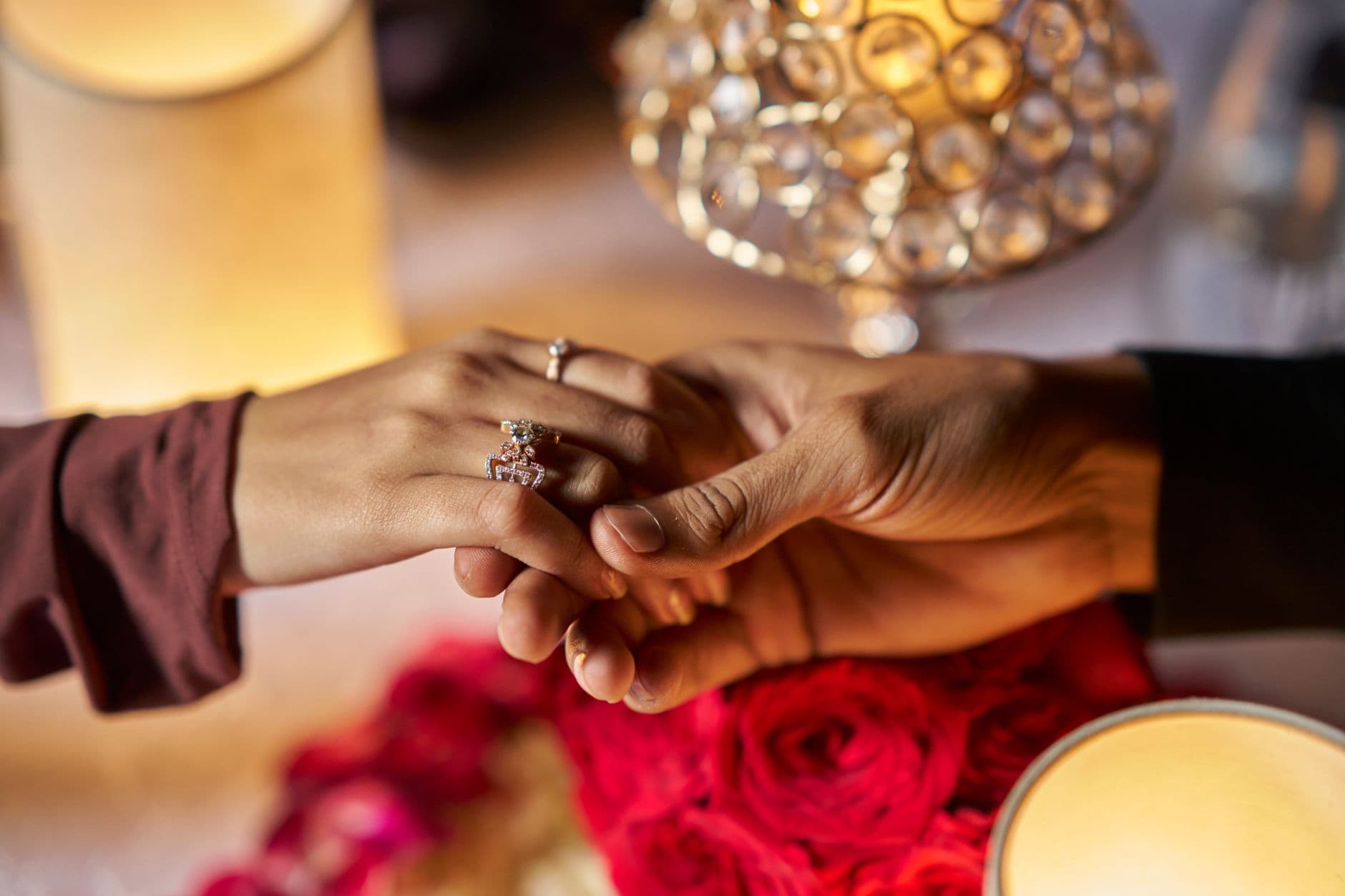
That timeline also explains why couples who shop together can make better decisions. If you are choosing a custom stone or a nontraditional silhouette, each approval stage becomes part of the design story. The ring may feel more personal precisely because you had to slow down and confirm the details at every turn.
Put the budget in context
WeddingWire’s 2021 Newlywed Report says the average proposer spent $5,500 on an engagement ring, while roughly half of couples spent under $5,000 and 18 percent spent more than $10,000. Those numbers are less a prescription than a reminder that the market is wide, and that online browsing can make it easier to compare quality across a range of budgets without the pressure of a showroom appointment.
What matters is value, not spectacle. A well-cut diamond with a trustworthy report, a setting that suits the stone, and policies that protect you after purchase will usually serve you better than a larger ring that arrives with unclear documentation or inflexible terms.
Your pre-purchase checklist
- Verify the stone type, metal and any substitutes are described clearly and truthfully.
- Look for 360-degree video and compare the ring in different lighting, not just in one polished image.
- Confirm the 4Cs, and insist on a grading report for the diamond.
- Check the ring size before ordering, then read the resizing policy carefully.
- Study the return and exchange window as closely as you study the setting.
- If the ring is custom, factor in the 4 to 6 week timeline, or longer if approval stages or complexity are involved.
- Compare the price against the design, not against an abstract idea of what an engagement ring “should” cost.
The most reassuring online purchase is the one that leaves no mystery behind it. When a ring is backed by clear documentation, honest photography, a sensible timeline and policies that give you breathing room, romance and prudence finally meet in the same box.
This article was produced by Prism’s automated news system from verified source data, official records, and press releases, then run through automated quality and moderation checks before publishing. The system is built and supervised by the people who set the standards it runs under. Read our full AI policy.
Did this article answer your question?