How to choose between low-profile and raised engagement ring settings
The most wearable engagement ring is often the least dramatic one: low-profile bezels and close-set prongs trade a little height for far more daily ease.

The first question is not how much the ring sparkles, but how it survives
If you never take your ring off, the design has to earn its place in daily life. A setting that looks airy and elevated in a showcase can become a snagging, knocking liability at a keyboard, in a weight room, under gardening gloves, or while fastening a child’s coat. That is why the real choice is not simply low-profile versus raised, but how much brilliance you are willing to trade for security, comfort, and ease.
Low-profile settings sit closer to the finger and usually feel more integrated with the hand. Raised settings lift the stone higher, which can amplify sparkle and presence, but they also expose the center stone and any surrounding details to more contact. For someone who wants a ring that lives through desk work, gym sessions, parenting, and glove-wearing without constant vigilance, the setting matters as much as the diamond.
Low-profile settings are built for a quieter kind of luxury
A low-profile ring keeps the center stone closer to the band, reducing the chance that it will catch on knit sleeves, pockets, tote straps, or hair. That lower silhouette often feels more comfortable for long wear because the ring does not sit up and press against neighboring fingers as much as a higher mount might. It also tends to read as more practical and more modern, especially in a life where hands are always busy.
The visual tradeoff is real. Lower placement can make a stone look slightly more contained, and depending on the design, it may allow less light into the pavilion than a taller setting. But that is not a flaw so much as a design choice. A well-made low setting can still look luminous, only with a more deliberate, grounded profile.
Bezel: the most secure-looking silhouette
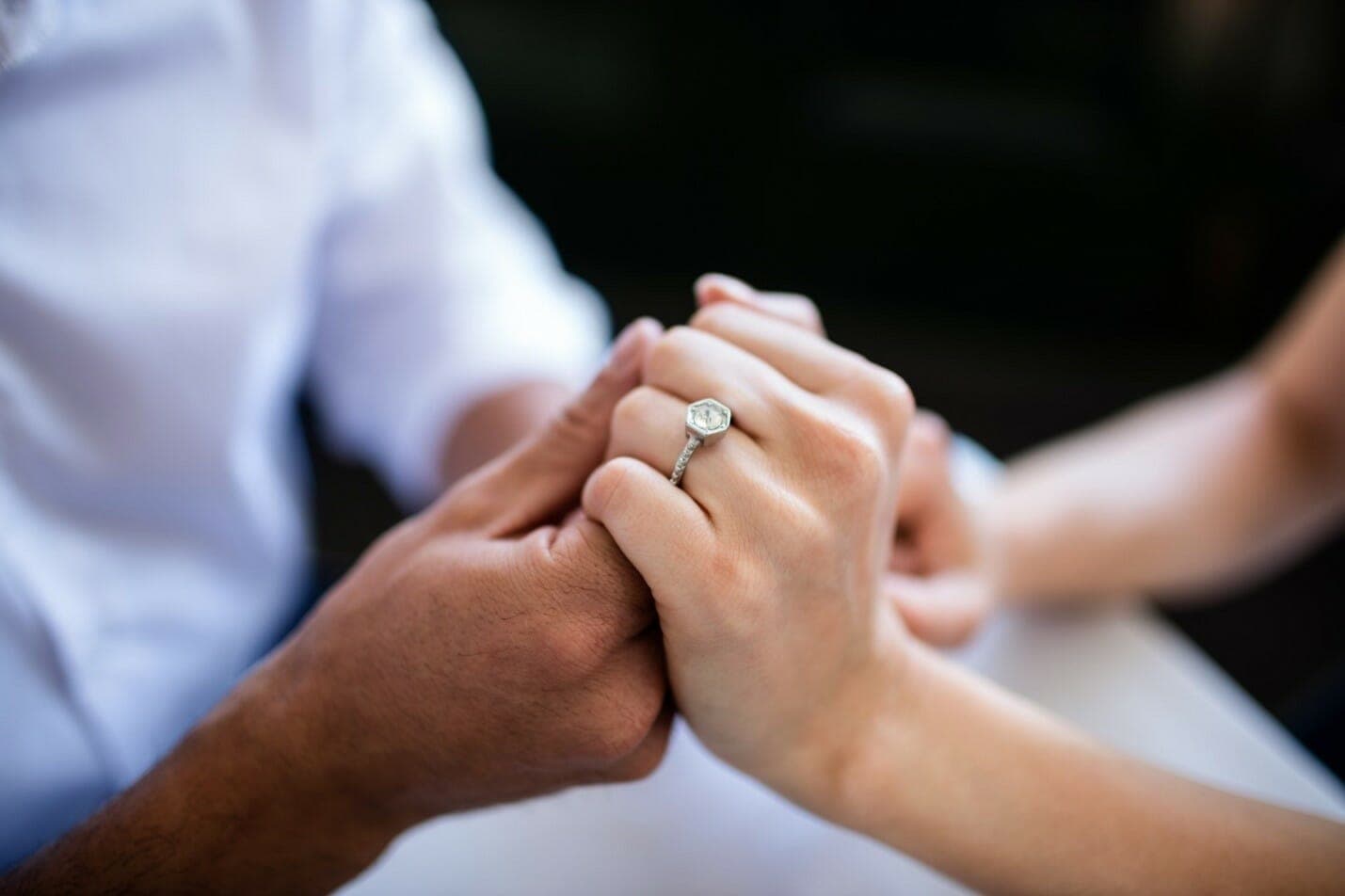
A bezel setting surrounds the stone with a metal rim, either fully or partially, and that rim is the reason it is often the most forgiving choice for everyday wear. It protects the girdle, softens sharp edges, and dramatically reduces snagging. If your days involve typing, lifting, washing, packing, pushing strollers, or sliding your hands into gloves, a bezel behaves better than an open, high-reaching setting.
Style-wise, a bezel is not timid. It gives the ring a clean, architectural line and can make a stone feel more graphic and modern. The tradeoff is that a bezel covers more of the diamond or gem than prongs do, so it may slightly mute the stone’s perimeter light return compared with a more open mounting. Even so, for hands that are rarely idle, that extra metal is often not a compromise but a virtue.
Low-profile prong settings keep the classic sparkle, but ask for maintenance
Prongs remain the most familiar way to hold a center stone, and they usually allow more of the diamond to breathe visually. That openness can create a brighter, more expansive look because light reaches the stone from more angles. When prongs are kept low, close to the finger, the ring retains much of that classic sparkle without sitting so high that it feels precarious.
Still, prongs are not the most protective option. They can catch on sweater cuffs, seat belts, and delicate fabrics, and over years of wear they may need inspection to make sure nothing has loosened or worn thin. For someone who loves the traditional look of a solitaire but wants to avoid a tall, precarious profile, a low-set prong ring is often the middle path: elegant, wearable, and familiar, but not invulnerable.
Raised settings deliver height, light, and presence, but they ask more of the wearer
A raised setting lifts the stone above the band, which can make the center diamond appear larger and more prominent. That height can also improve light exposure, especially when the stone is held high on open prongs. The result is a ring that can feel unmistakably bridal, with a strong visual statement from across the room.
The cost of that drama is daily friction. Raised stones are more likely to bump against laptop edges, catch on gloves, or knock into hard surfaces during exercise or chores. They can also feel less comfortable if you are constantly placing your hand flat on a desk or carrying children, because the highest point of the ring is exposed to repeated contact. For a ring that is meant to stay on at all times, a tall mount is often the least forgiving option.
Halo settings can look low, but they are not always low-maintenance
Halo designs wrap the center stone in a border of smaller diamonds, creating the illusion of a larger top view and adding extra sparkle around the center. When set close to the finger, a halo can be one of the most beautiful ways to maximize presence without choosing an oversized center stone. It gives visual spread, which is why it remains so appealing for buyers who want impact from a relatively modest diamond.
But halos come with more surface area, more tiny pavé stones, and more edges to think about. Even a low-set halo can collect lint, brush against fabrics, or require more careful cleaning than a simpler solitaire or bezel. A raised halo increases the risk again because it lifts the entire composition higher off the hand. In practical terms, halo rings offer more shimmer, but they also bring more maintenance.
Match the setting to the life you actually live
The best setting is the one that fits your hand habits, not just your taste in jewelry. The most useful way to choose is to picture ordinary moments, because those are the moments that reveal whether a ring will be a pleasure or a nuisance.
- Desk work: A low-profile bezel or low-set prong tends to be the most comfortable. It is less likely to tap against a laptop, snag on a blazer cuff, or feel distracting when your hand rests on a desk.
- Gym and workouts: A bezel is usually the safest choice. A low prong can work if the stone is secure and the profile is restrained, but raised settings invite more contact with equipment, straps, and weights.
- Parenting: Anything that keeps the ring close to the finger is easier to live with. Bezel and low-profile prong settings are kinder around clothing, car seats, toys, and the general chaos of hands-on caregiving.
- Glove-wearing: Low matters here more than almost anywhere else. A tall prong or halo can make gloves awkward to pull on and uncomfortable to wear, while a close-fitting bezel slips into daily routines with less resistance.
If your ring must function like a second skin, the design should have a smooth outer contour, a secure stone seat, and as little exposed height as possible. That does not mean giving up beauty. It means choosing a ring that can handle the small collisions of real life without constantly asking for protection.
The most enduring ring is often the one with the least visual drama and the most structural intelligence
There is a reason low-profile bezels and close-set prongs have such lasting appeal: they respect the fact that jewelry lives on the body, not in a velvet tray. A raised setting can be breathtaking, and a halo can multiply sparkle with undeniable romance, but the ring that survives daily knocks, snagging, and long-term wear is usually the one that stays closest to the hand.
For someone who never plans to remove an engagement ring, durability is not the enemy of elegance. It is what lets the ring stay beautiful long after the proposal, through work, weather, travel, and the thousand ordinary motions that make a life.
This article was produced by Prism’s automated news system from verified source data, official records, and press releases, then run through automated quality and moderation checks before publishing. The system is built and supervised by the people who set the standards it runs under. Read our full AI policy.
Did this article answer your question?