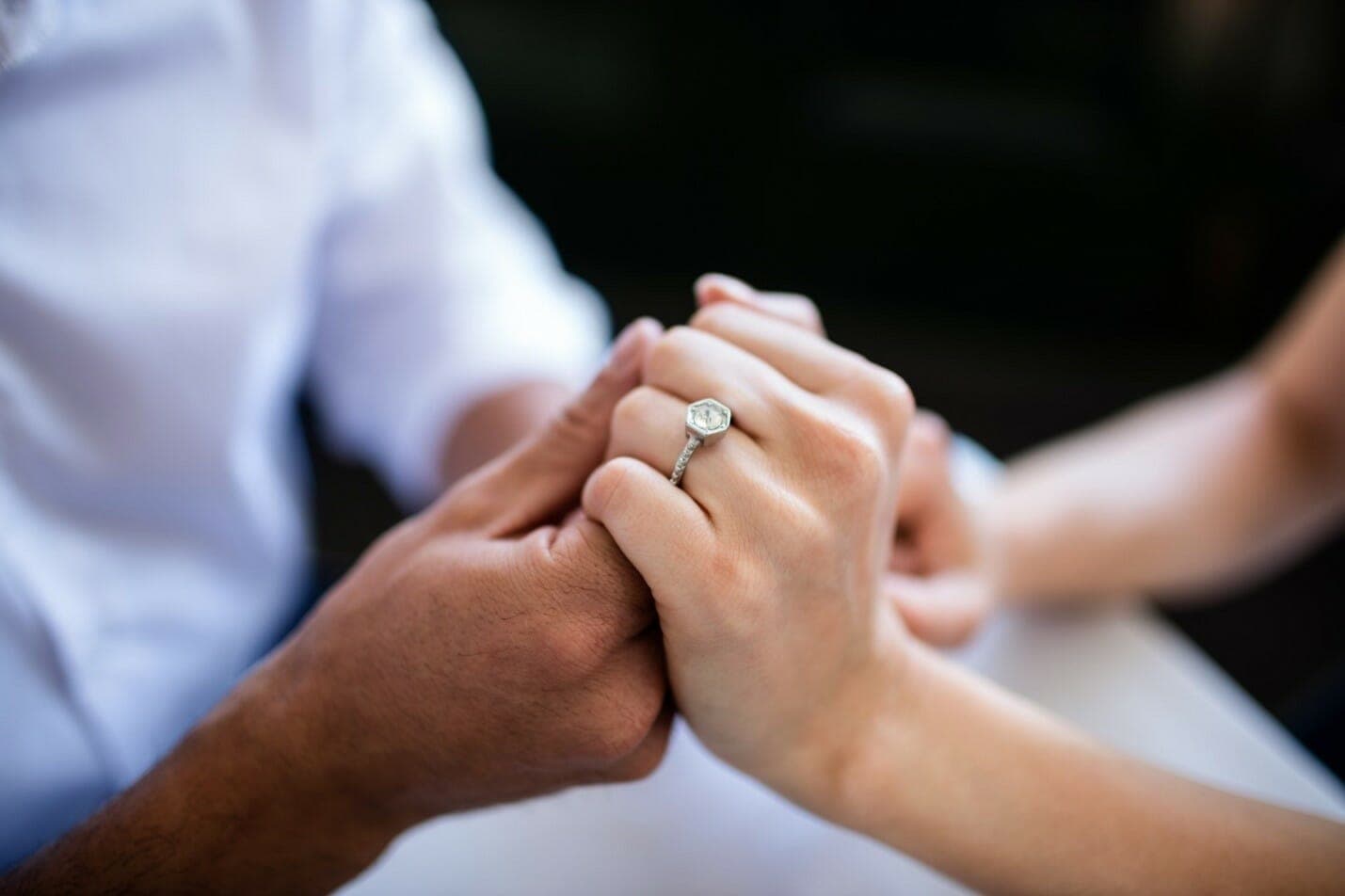
Kite-cut diamonds bring architectural edge to engagement rings
Kite-cut diamonds turn engagement rings into small pieces of architecture, with strong lines, bigger-looking spread, and settings that must protect the tips.

A kite-cut diamond makes an immediate statement. Its elongated silhouette and angular edges read like a miniature façade on the hand, giving an engagement ring a sharper, more graphic presence than a round or oval stone. For couples who want a ring that feels distinctive but still wearable every day, this shape sits at the intersection of design and practicality.
Why the kite cut feels so different
The kite cut belongs to the family of fancy shapes, which matters more than it might sound. GIA only assigns formal cut grades to round brilliant diamonds because those stones have standardized facets; the rest are evaluated differently, and there is no internationally accepted cut-grading system for fancy shapes at this time. That leaves room for judgment, taste, and a designer’s eye, which is part of why kite cuts feel especially personal.
That lack of a universal grade is also why the shape thrives in custom work. Instead of shopping a chart, buyers tend to respond to proportion, outline, and symmetry in the actual stone. In a market crowded with round, oval, and emerald-cut rings, the kite cut offers something more architectural: a shape that can look deliberate, modern, and slightly unexpected without abandoning the language of fine bridal jewelry.
A shape with real history
Kite-shaped diamonds are not a new idea dressed up as a trend. Multiple jewelry sources trace them to the Art Deco era of the 1920s and 1930s, when geometric lines and bold silhouettes dominated design in Europe and Paris. Another trade source points to the 1970s, when experimental diamond cutting pushed more unusual forms into circulation. JCK even featured kite-shape jewelry as far back as 2015, showing that the cut has had a life beyond bridal before its current moment.
That history helps explain the cut’s appeal now. It carries the crispness of Art Deco design, but it also feels contemporary because the eye rarely sees it in an engagement setting. The result is a ring that feels both grounded in jewelry history and refreshingly offbeat, which is a rare combination in a category that often repeats the same few silhouettes.
Why the shape can look larger than its carat weight
Part of the kite cut’s appeal is optical. Its elongated geometry can create a broader visual footprint than the number on the certificate suggests, especially when the stone is oriented to emphasize length. That spread gives the ring presence on the hand, making it feel more substantial without necessarily increasing carat weight.
This is one reason the cut works so well for buyers who want distinction without overbuilding the ring. The stone does not need to be oversized to command attention; its outline does some of the work. In bespoke settings, that elongated profile can also make the center stone feel more sculptural, especially when it is paired with clean metalwork rather than ornate extras.
Natural Diamonds has positioned the kite shape as a strong choice for brides looking for an unusual, fancy-shaped engagement ring, and that framing makes sense. The cut is bold, but it is not loud for the sake of it. It gives you drama through proportion and line, which often reads as more refined than a ring that relies only on sparkle.
Stone choice: natural, lab-grown, and colored material
Kite-cut diamonds are discussed more often in natural stones than in lab-grown ones, which adds to their sense of rarity in the bridal market. That does not make lab-grown versions impossible, and designers are already using them in custom work, but the shape still feels more closely tied to one-of-a-kind natural stones and special-order pieces. Grown Brilliance, for example, created a custom 18k gold ring featuring a 2.8 ct Dutch marquise lab-grown center stone with 0.66 ct t.w. kite-shape lab-grown diamonds, a clear sign that the shape is already finding a place in bespoke bridal design.

The kite outline can be especially striking in colored or included stones. The Diamond Reserve notes that gray, black, yellow, and salt-and-pepper kite-shaped diamonds can create a celestial or vintage look, and they may be more affordable than traditional colorless stones. That makes the shape especially appealing if you want personality to come from the material itself, not just from the cut.
Alexis Russell is also offering custom kite-shaped diamond engagement rings, which reinforces the sense that this is a choice for individualized design rather than mass-market repetition. The best versions of the shape often lean into that bespoke spirit, letting the stone’s proportions and character do the visual heavy lifting.
Settings that protect the drama
Kite-cut diamonds bring one practical warning with them: sharp tips. Levys Fine Jewelry notes that the steep cuts and pointed ends can be vulnerable to chipping, which means the setting matters as much as the stone. Prongs should protect those corners, and bezel or semi-bezel approaches can make sense for buyers who want a cleaner, more guarded frame.
That practical detail changes how the ring should be designed from the start. A setting that leaves the points exposed may look sleek in a photo, but daily wear asks more of the metalwork. For an engagement ring, the goal is to preserve the shape’s architecture without leaving its most delicate edges unprotected.
How to pair a kite-cut ring with a wedding band
The elongated silhouette also affects band pairing. Because the stone has a directional shape, it often looks best with a band that either curves gently around the center or sits flush in a carefully planned custom fit. Straight bands can work, but the geometry of the kite may create a visual gap if the setting is high or the points extend beyond the band’s line.
This is where bespoke design becomes especially useful. The kite cut invites asymmetry, nesting, and custom metalwork, so the wedding band does not have to fight the engagement ring. A well-designed pairing should make the ring look intentional from every angle, not just from above.
A cut for collectors, not just trend followers
The kite shape already has high-jewelry pedigree. Christie’s sold a 10.38-carat fancy purple-pink kite-shaped brilliant-cut diamond in a JAR ring tied to Marie Antoinette lore for $14 million, a reminder that this is a shape with serious symbolic and collector appeal. That pedigree matters because it places the kite cut in the same conversation as the most coveted, story-rich jewels in the market.
For buyers, that story is part of the value. The kite cut is not trying to imitate a classic; it is trying to be its own classic. In engagement rings, that makes it a compelling choice for anyone who wants visual distinction, a more architectural profile, and a design that rewards both careful craftsmanship and a clear point of view.
This article was produced by Prism’s automated news system from verified source data, official records, and press releases, then run through automated quality and moderation checks before publishing. The system is built and supervised by the people who set the standards it runs under. Read our full AI policy.
Did this article answer your question?