Lab-Grown Diamond Prices Keep Falling as Inventory Surges, Retailers Squeeze
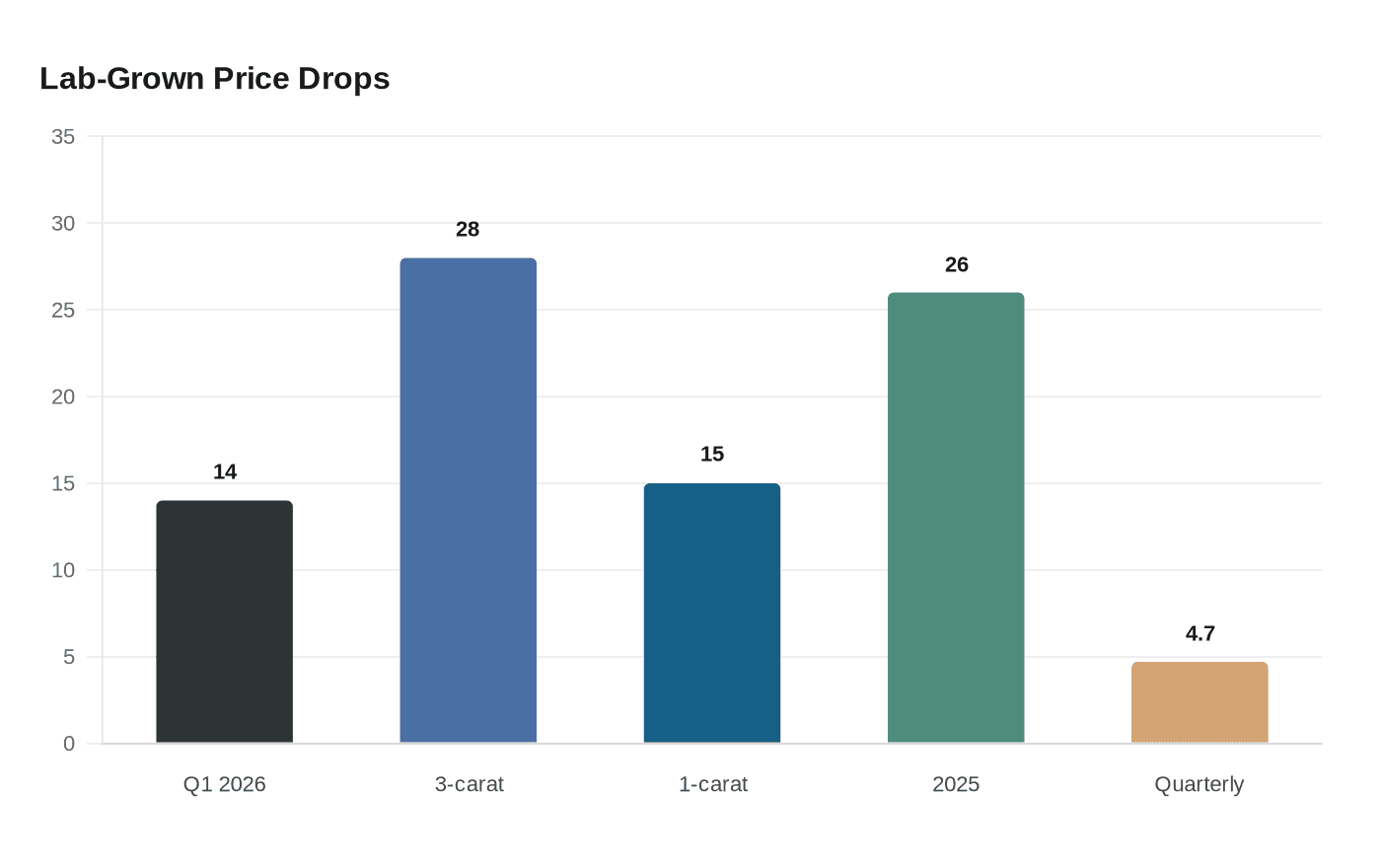
Lab-grown diamond prices fell 14% in early 2026, and the steepest cuts hit larger stones, making bigger center diamonds and better settings more attainable.
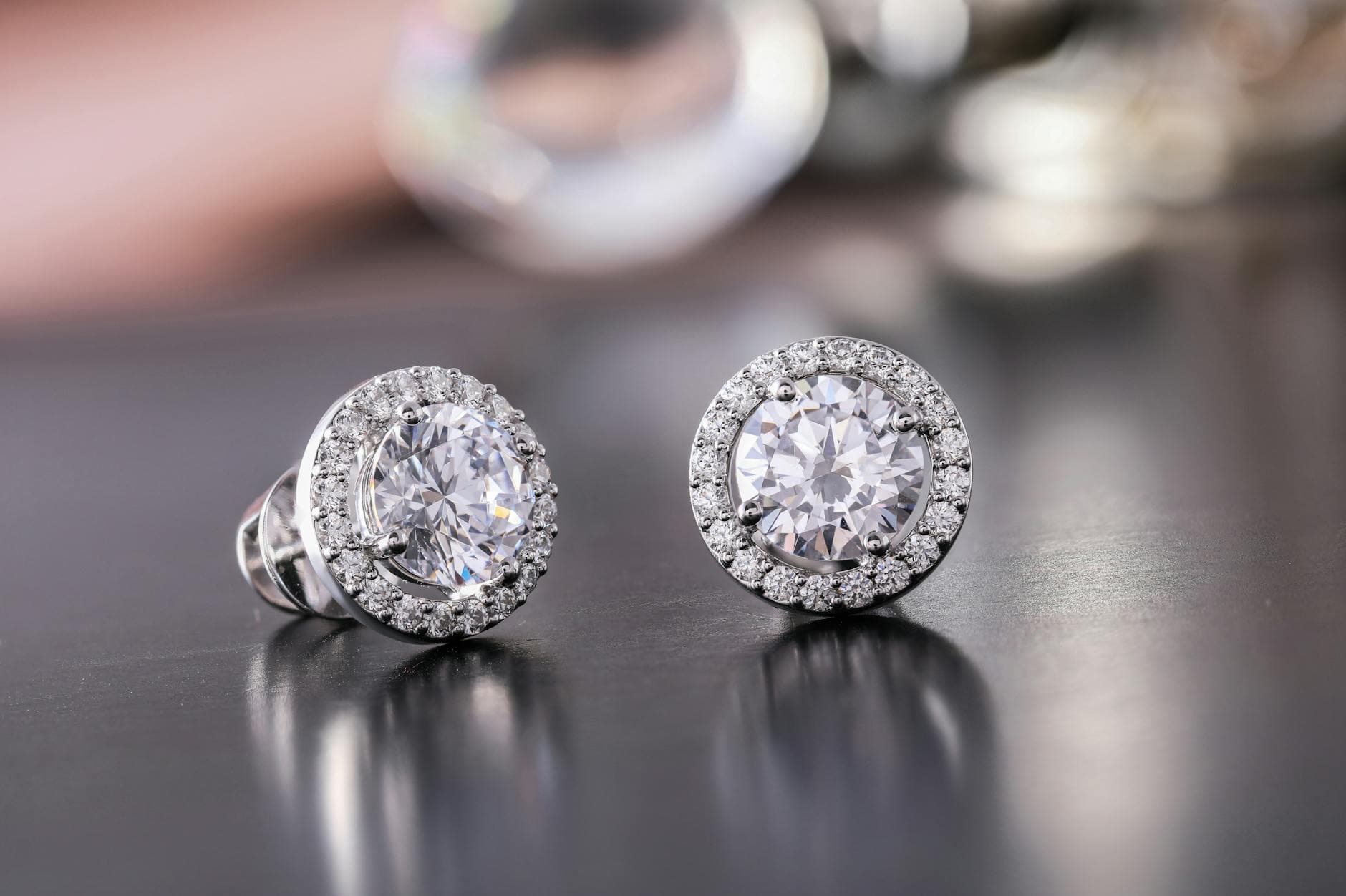
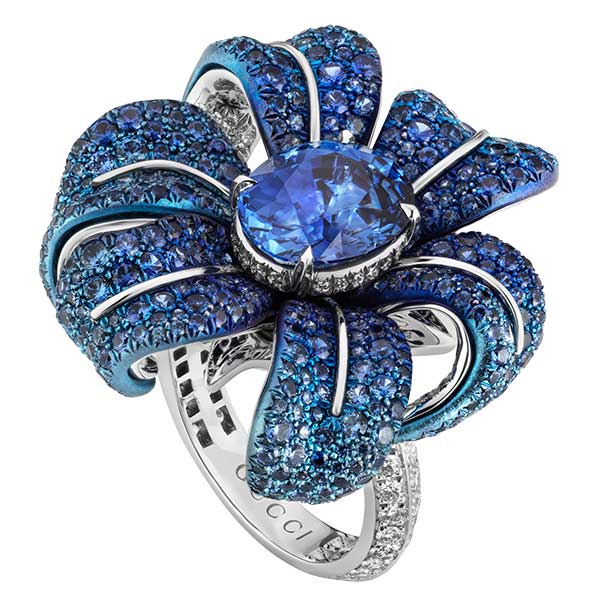
Falling lab-grown diamond prices are no longer just a wholesale headache. They are changing the look of the ring itself, giving shoppers room to trade up to a larger center stone, move from a simple prong setting to a more architectural mount, or put more of the budget into the metalwork that makes a ring feel finished.
Wholesale prices for lab-grown diamonds fell 14% in the first quarter of 2026, and the pressure was sharpest at the top end. Edahn Golan said 3-carat round stones dropped 28% year over year, versus a 15% decline for 1-carat rounds. That spread matters because it makes size one of the clearest places for buyers to gain value. A ring that once pushed a budget toward a modest center stone can now support a larger, more commanding gem, or leave room for details such as a heavier basket, a finer pavé shank or a bezel that gives the stone a cleaner, more modern frame.
The problem for sellers is that inventory is rising faster than demand. Tenoris said the inventory-to-sales ratio in lab-grown diamonds has climbed from the high single digits in 2020 to nearly 50% now, a sign that stones are sitting longer before they move. Tenoris also found that March 2026 jewelry sales rose 5% year over year even as unit sales fell 10%, a split that suggests retailers are leaning on higher price points rather than brisker turnover. For a category built on velocity, that is a difficult balance to sustain.
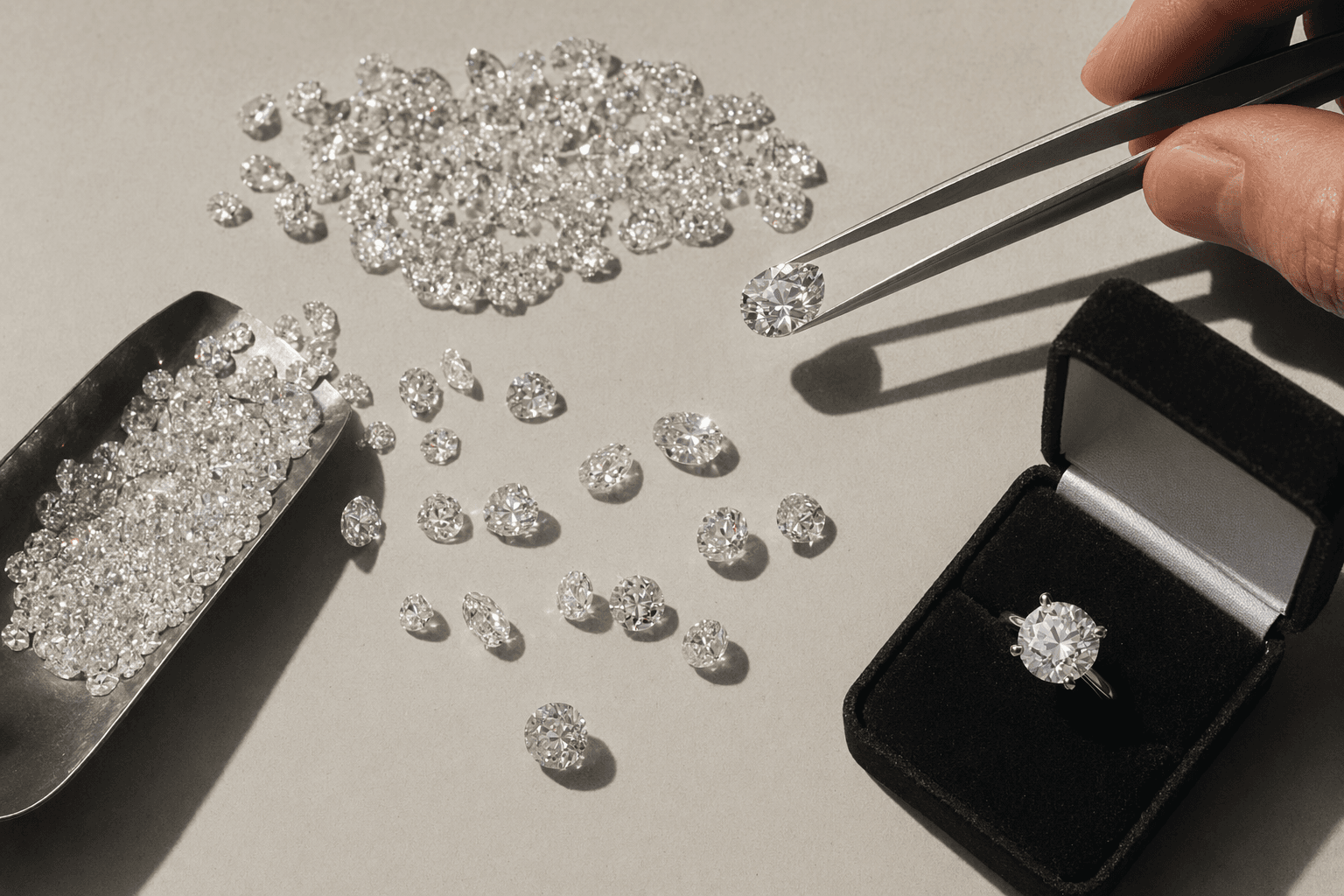
The price slide has been building for some time. Edahn Golan said lab-grown wholesale prices fell 26% in 2025, while quarterly declines slowed to 4.7%, the smallest quarterly drop since the category emerged. That combination of falling annual prices and softer quarterly erosion points to a market that is still adjusting to its own scale, even as consumers keep embracing the stones.
The numbers at the counter tell the same story. The Knot’s 2025 Real Weddings Study found that 52% of couples who married in 2024 had an engagement ring with a lab-grown stone, up 6 percentage points from the prior year and 40% from 2019. BriteCo said lab-grown diamonds accounted for more than 45% of U.S. engagement-ring purchases in 2025, while the average lab-grown center stone grew from 1.31 carats in 2019 to 2.45 carats in 2025. Rapaport projected that under-$1,000 lab-grown center stones could become normal in 2026.
That is the real shift now underway. Lab-grown diamonds are not only getting cheaper; they are making design ambition easier to reach. In a market this crowded, the winners may be the rings that look more considered, not merely more affordable.
This article was produced by Prism’s automated news system from verified source data, official records, and press releases, then run through automated quality and moderation checks before publishing. The system is built and supervised by the people who set the standards it runs under. Read our full AI policy.
Did this article answer your question?