Lab-grown or natural? What engagement ring buyers should ask first
The first ring question is still the simplest: natural or lab-grown. That answer changes the paper trail, the price, and what you should expect at resale.
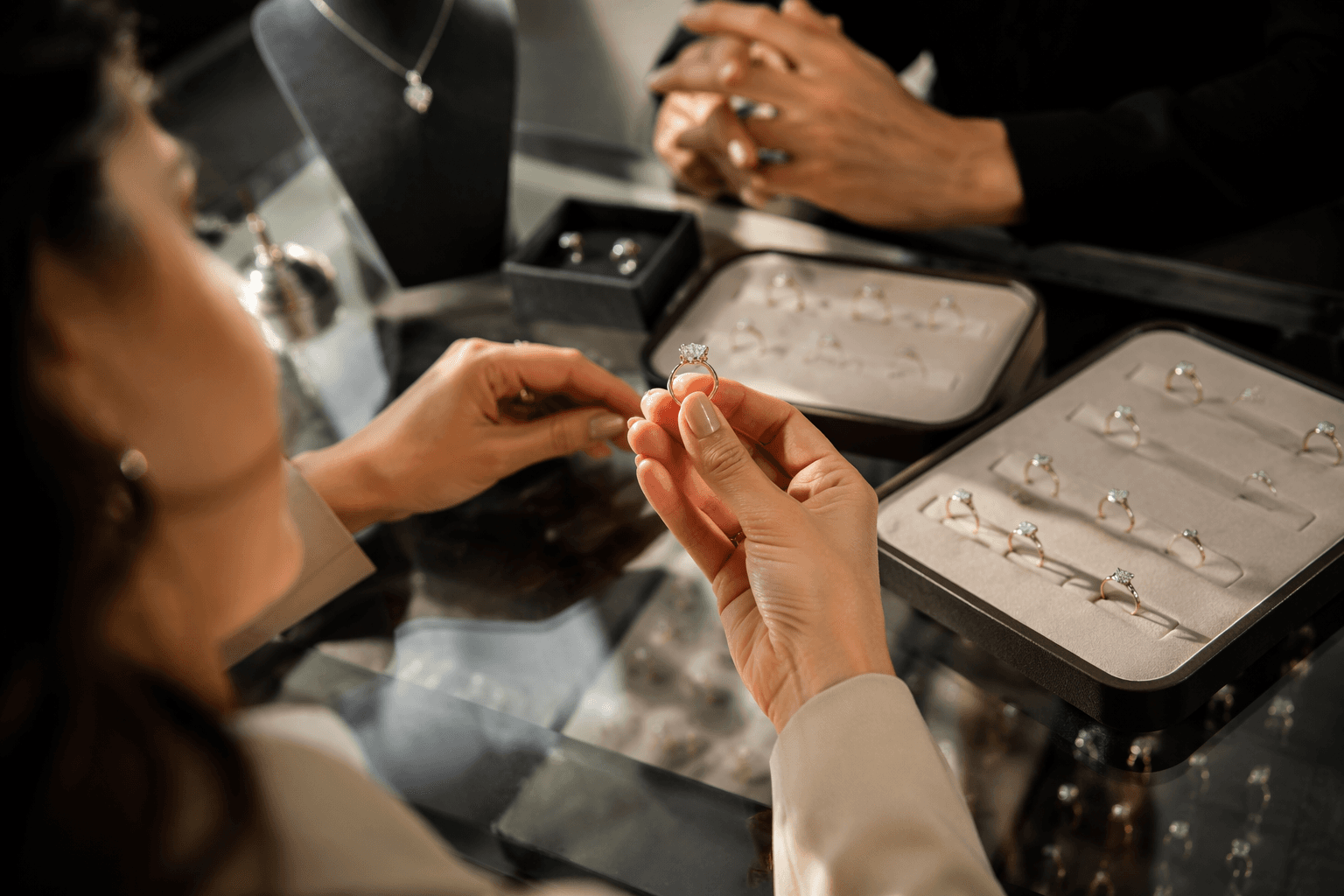
Natural and lab-grown diamonds can look nearly identical, but the label changes what you are buying, what you should pay, and how the ring will be documented later.
Start with the origin question
The first thing to ask, before cut, carat, or setting, is whether the center stone is natural or laboratory-grown. Under Federal Trade Commission guidance, lab-created gemstones have the same chemical, physical, and visual properties as natural gemstones, but they are manufactured, and the difference can be hard to detect. Origin disclosure belongs at the top of any conversation, whether you are browsing online or standing in a showroom.
The FTC’s labeling standard is clear: sellers should use terms like laboratory-grown or laboratory-created only when the stone truly has essentially the same optical, physical, and chemical properties as the named gem. It has enforced that principle for years, including warning letters in 2019 aimed at sellers whose wording blurred mined and manufactured diamonds.
Translate the exact words on the tag
A ring page that says “lab-grown,” “laboratory-created,” or “laboratory-grown” is telling you something specific about origin, not just marketing style. In FTC language, that disclosure should be clear and conspicuous, because a buyer should not have to decode fine print to know whether the stone came from the earth or from a controlled manufacturing process.
Descriptions that drift toward imitation language raise a different problem. The FTC has warned that simulated or imitation diamond materials cannot be casually described as laboratory-created diamonds if that wording would mislead a shopper. If the wording feels vague, ask for the exact stone type in writing before you compare price.
Read the report, not just the sparkle
The Gemological Institute of America draws a hard line between natural diamond grading reports and laboratory-grown diamond services. Its natural diamond grading report is for loose natural diamonds only, and only for stones weighing 0.15 carats or more. Its laboratory-grown diamond report is a separate product entirely, and that difference in paperwork helps explain why two similar-looking rings may be handled differently.
A GIA laboratory-grown diamond report includes a full quality assessment, a plotted clarity diagram, an assessment of growth type, and a note on post-growth treatment. GIA also laser inscribes laboratory-grown diamonds with the term Laboratory-Grown and the report number on the girdle, which gives the stone a visible identifier tied to its paperwork. GIA’s sample service page also classifies laboratory-grown stones as Premium or Standard, a reminder that lab-grown is not a single quality tier.
Once GIA identifies a diamond as laboratory-grown, it still examines it with the same careful attention used for natural stones, including inclusions, graining, and UV reactions to determine origin. Similar-looking rings can carry different origin stories, different reports, and different identifying marks.
What the label changes in practice
Price is the easiest difference to see. Lab-created gemstones are often less expensive than natural ones, and De Beers’ Lightbox brand in 2024 priced a two-carat lab-grown diamond at around 10% of the price of an equivalent natural diamond. Lab-grown stones have become such a force in bridal jewelry, not just fashion pieces.
Speed and supply also shape the market. Statista says lab-grown diamonds can be grown in one to four weeks depending on size, and it expects lab-grown stones to exceed 21% of the overall diamond market in 2025. That quick production cycle often lets shoppers buy larger-looking stones for less money, especially if visual size is the top priority.
Durability is where the language can get slippery, but the FTC’s definition cuts through the fog: if a stone is truly lab-created diamond, it has the same chemical, physical, and visual properties as the natural version. The label changes origin and price, not the basic mineral identity of the stone.
Resale expectations are the part many buyers gloss over at the counter. Signet has warned that the relative abundance of lab-created diamonds may not ensure their value will hold over time, while De Beers has argued that the growing price gap makes lab-grown stones better suited to fashion jewelry than bridal. Buyers who care about long-term value should ask different questions than buyers focused on size.
Use a checkout framework that fits your priorities
The cleanest way to shop is to start with your own priority, then force every ring to answer it.
- If budget is the priority, compare natural and lab-grown stones at the same carat weight and ask for the exact report type. The lower sticker price of lab-grown can free up room for a better setting or a larger center stone.
- If long-term value matters most, ask how the seller describes resale, trade-in, or upgrade terms, then get those policies in writing along with the FTC’s recommended refund and return terms. A written policy is far more useful than a promise made across the counter.
- If origin concerns drive the decision, make the seller state the stone type plainly. Natural and laboratory-grown are different origin stories, and the paperwork should match the story you want to tell later.
- If visual size is the goal, compare stones side by side with their reports in hand. A lab-grown diamond may buy you more visible surface area for the same spend, but the report should still tell you exactly what you are getting.
The script to use at the counter
A smart buyer does not need gemological jargon, just a short sequence of questions that forces clarity:
1. Is the center stone natural or laboratory-grown?
2. Which report comes with it, a natural diamond grading report or a laboratory-grown diamond report?
3. Does the report note growth type, post-growth treatment, and, if applicable, a girdle inscription?
4. What are the refund, return, and any upgrade terms, and can I have them in writing?
This article was produced by Prism’s automated news system from verified source data, official records, and press releases, then run through automated quality and moderation checks before publishing. The system is built and supervised by the people who set the standards it runs under. Read our full AI policy.
Did this article answer your question?