Marie Claire rounds up engagement ring brands as lab-grown stones surge
Lab-grown stones are no longer the alternative. Marie Claire’s ring-brand roundup lands in a market that wants sharper design, clearer value and more personal settings.
The new engagement-ring brief
The modern engagement ring is asking to do more than sparkle. Marie Claire’s editor-approved roundup spans luxury and more accessible brands, but the real story is the design language underneath it: sculptural solitaires, custom settings, and lab-grown stones that let buyers push shape and size without abandoning budget discipline.

That shift matters because the ring itself has become a style statement as much as a symbol. A crisp solitaire, a mixed-metal mount, or a custom setting built around a personal detail now says as much about taste as the center stone does. The most compelling brands are the ones that understand the ring as wearable architecture.

Lab-grown is now the center of the conversation
The most striking market change is how thoroughly lab-grown stones have moved into the mainstream. The Knot’s 2026 Real Weddings Study, based on more than 10,000 U.S. couples married in 2025, found that lab-grown center stones accounted for 61% of all engagement ring purchases. That was a 239% jump since 2020, a scale of change that leaves little doubt about where the market is headed.
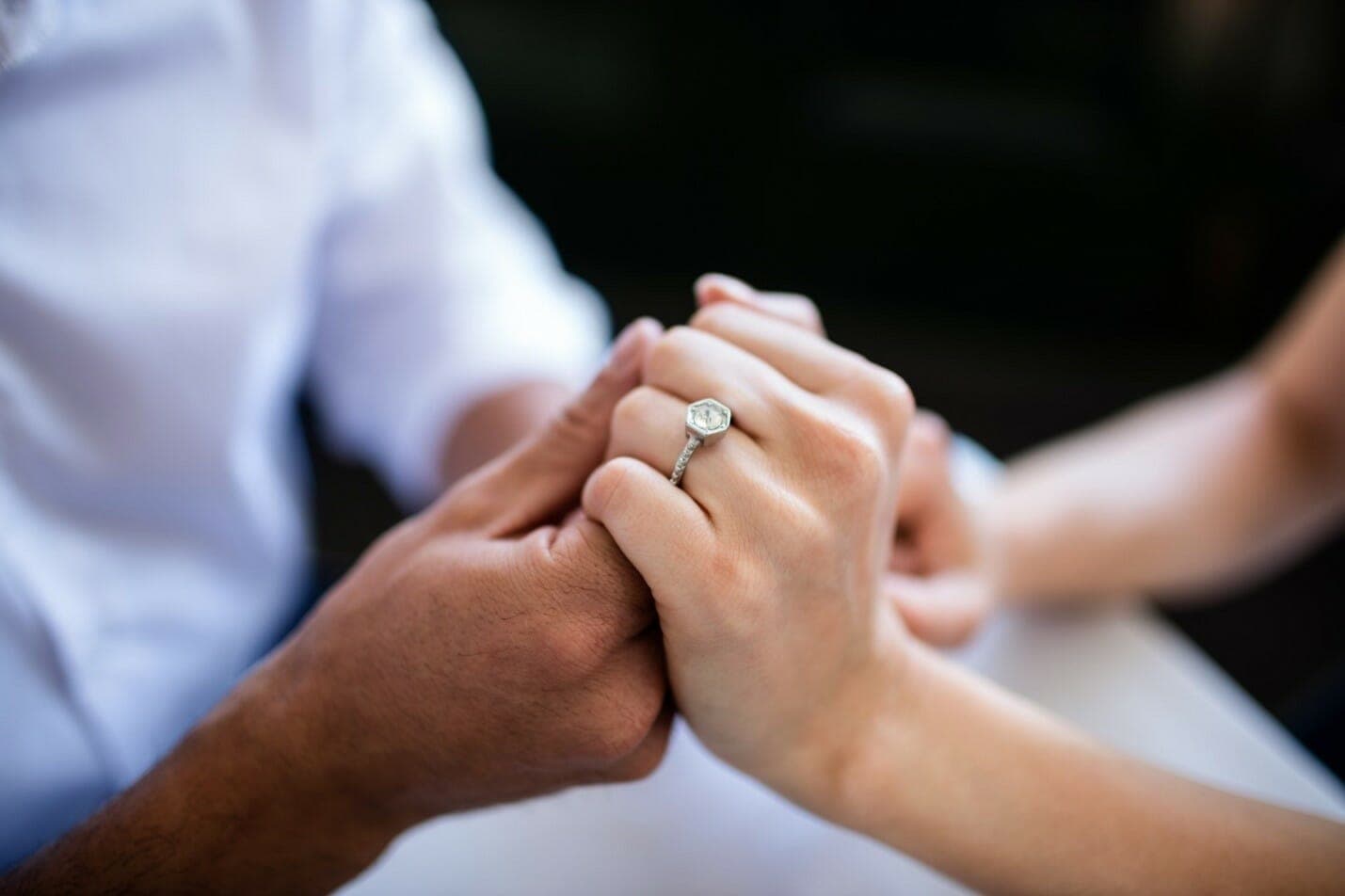
Even so, the ritual itself remains intact. Nearly 9 in 10 proposers still pop the question with a ring in hand, which means the object has not disappeared into abstraction. It has simply become more flexible, more self-aware, and more responsive to what buyers want from their money, their ethics, and their aesthetic.
The numbers point to a bigger, sharper stone
What makes the current moment especially interesting is that average spending has softened while ring size has grown. The Knot’s 2024 Jewelry & Engagement Study put the average engagement ring cost at $5,200, down from $6,000 in 2021, $5,800 in 2022, and $5,500 in 2023. At the same time, the average ring size rose to 1.7 carats in 2024 from 1.6 carats in 2023.
That combination explains so much of the appeal of lab-grown diamonds: the buyer gets more visible presence for a lower average outlay. In one The Knot and JCK summary, the average lab-grown engagement-ring center stone was 1.9 carats, and BriteCo reported an even steeper rise in the average lab-grown center diamond, from 1.31 carats in 2019 to 2.45 carats in 2025. The message is clear: the market is not simply buying bigger; it is buying bolder.
What the ring designs are signaling
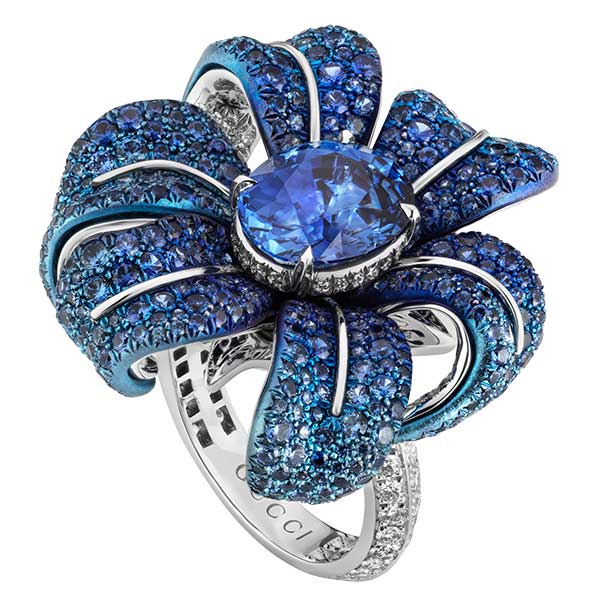
The strongest engagement-ring brands today are not just selling stones. They are selling a point of view. Some lean into sculptural solitaires, where the drama comes from proportion, prong placement, and the clean geometry of a single stone. Others favor custom work, where the mounting can be tailored around a hidden detail, an east-west orientation, or a mixed-metal palette that feels more personal than precious in the old sense.
Sculptural solitaires
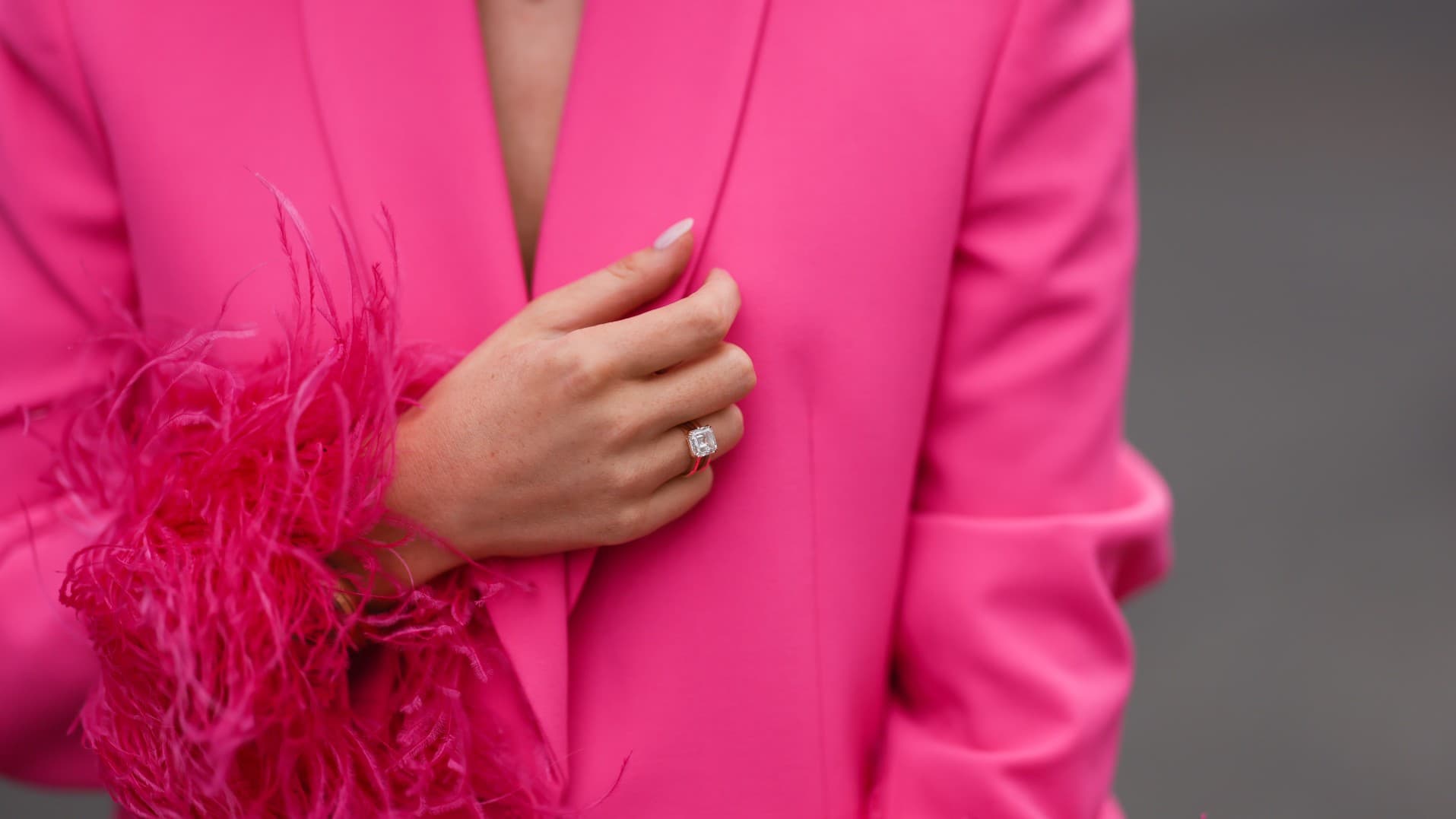
A well-made solitaire is never plain. It relies on proportion, not excess, and the setting does the visual editing. A bezel, which wraps the stone in metal, reads more architectural and contemporary; prongs lift the stone and allow more light through, which creates a brighter, more classic effect. For buyers who want a ring that feels clean, confident, and less fussy, this remains the most elegant language.
Custom settings
Custom design is where the market’s sentimental side becomes visible. This is the lane for the ring that echoes a date, a place, a family stone, or a very specific silhouette the wearer will recognize instantly. It also suits shoppers who want a mixed-metal finish, a low-profile build, or a setting that gives the center stone a more individual frame than a stock mount ever could.
Lab-grown specialists
Brands strong in lab-grown diamonds are serving a different kind of confidence: the buyer who wants scale, clarity, and a modern value proposition. With lab-grown stones now accounting for 45% of engagement rings sold in 2024 in one industry report, and 14% of the U.S. jewelry market in Tenoris’ 2024 data, the category is no longer fringe. Oval remains especially influential, with BriteCo naming it the most popular lab-grown shape in 2025, which helps explain why many of these rings look more elongated, more luminous, and often more flattering on the hand.
Alternative-stone options
Not every engagement ring now starts and ends with diamond. Nearly 3 in 10 couples who chose a non-diamond stone went with moissanite, according to a JCK report, which tells you how normalized the alternative-stone conversation has become. Moissanite fits the buyer who wants high brilliance, a lower price point, and a more obvious departure from convention, while still keeping the proposal ring polished and unmistakably engaged.
The buyer has become more self-directed
One of the quietest but most meaningful shifts in the category is who is buying. De Beers reported in 2019 that the share of U.S. women buying their own engagement ring had doubled from 7% to 14% in five years, and that women who bought their own diamond ring spent 33% more on average than men in that study. That changes the psychology of the purchase: the ring is no longer only a surprise to be received, but a choice to be made.
It also explains why editor-vetted brand roundups have gained so much traction. Shoppers want trusted guidance on who does the best custom work, who uses recycled metals well, who handles online ordering gracefully, and who offers alternative stones without making them feel secondary. In that sense, Marie Claire’s guide reflects a more sophisticated market, one that is asking for style literacy as much as shopping advice.
Why this brand landscape feels different now
The best engagement-ring brands are reading the room correctly. Luxury still matters, but so does restraint. Traditional diamond work still carries prestige, but lab-grown stones have made larger, cleaner-looking rings feel accessible enough to become the default for many buyers. The result is a category that feels less like a hierarchy and more like a set of design codes.
That is why this moment belongs to brands that can translate materials into mood. The strongest rings are no longer just expensive or sparkly. They are precise about what they want to say, whether that means a knife-edge solitaire, a custom bezel, a mixed-metal mount, or an oval lab-grown stone that looks decisively contemporary. The ring market has not gotten simpler; it has gotten sharper.
This article was produced by Prism’s automated news system from verified source data, official records, and press releases, then run through automated quality and moderation checks before publishing. The system is built and supervised by the people who set the standards it runs under. Read our full AI policy.
Did this article answer your question?