Morganite Engagement Rings, Color, Durability, Best Settings and Care
Choose design and metal to protect the blush: morganite is a beryl with Mohs 7.5-8, often heat-treated, and lives best in protective settings and warm metals that keep its pink intact.
Header: A moment with a blush stone
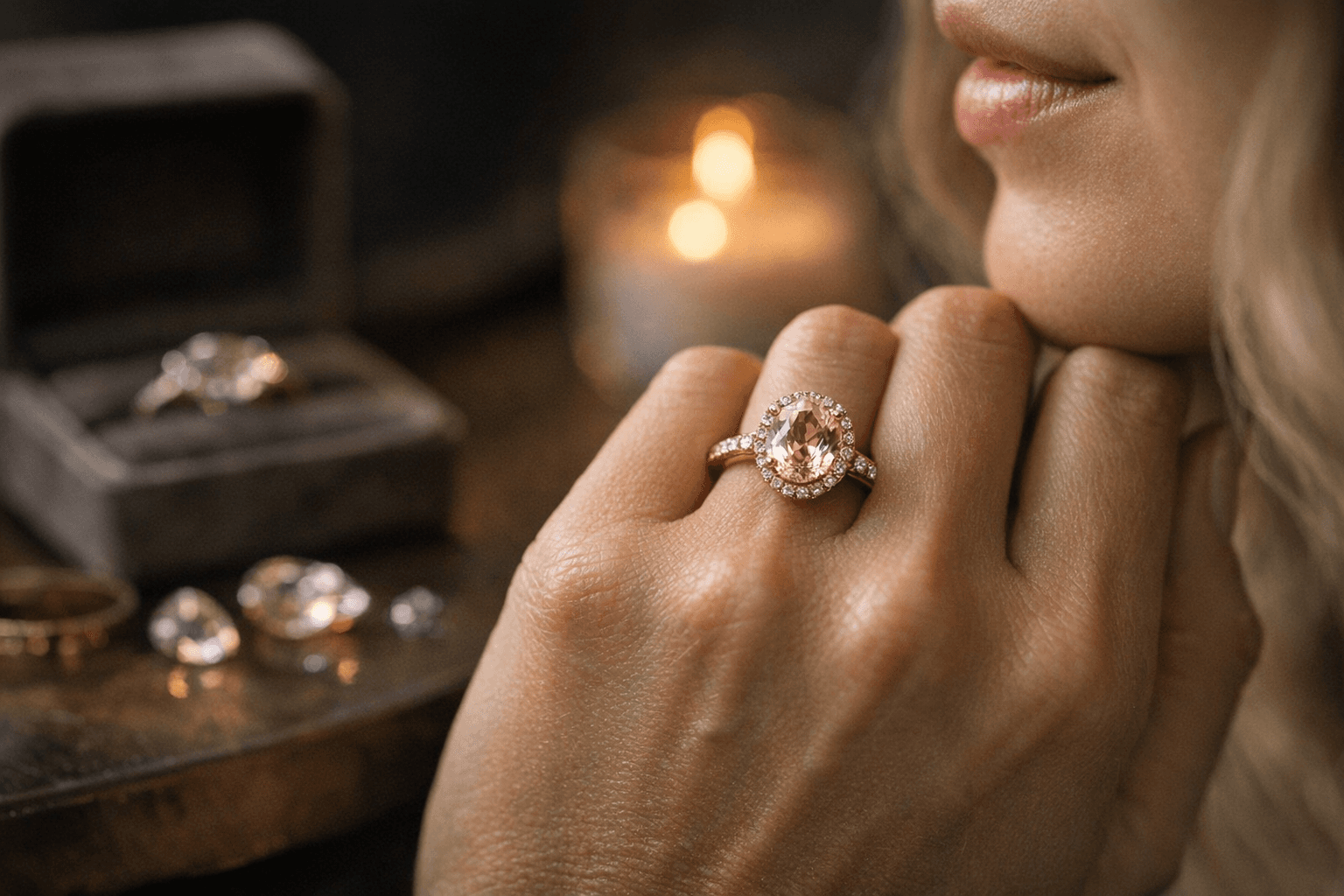
At a kitchen-table proposal, you slide a 1.5-carat cushion morganite set in rose gold across your finger and the room shifts color. The stone reads soft and deliberate, not flashy; it communicates warmth and intimacy more than high shine. That first impression is exactly why couples choose morganite, and it is also why design decisions made now determine whether the ring still reads as thoughtful in year five.
Header: What morganite is, scientifically and historically
Morganite is the pink to peach-pink variety of beryl, the same mineral family that includes emerald and aquamarine, with chemical formula Be3Al2(Si6O18). Its pink hues are widely attributed to trace manganese in the crystal lattice. Mohs hardness is typically listed as 7.5 to 8, which places morganite above many common gems yet softer than corundum and diamond. The name morganite dates to a New York Academy of Sciences meeting on December 5, 1910, when George Frederick Kunz proposed the tribute to J. P. Morgan after specimens from Madagascar were studied.
Header: Color, light, and why the blush shifts
How manganese and light produce the blush
Trace manganese creates the pink and peach range you see in morganite. Those tones interact with surrounding metal and light: rose and yellow gold add visual warmth, making the stone read more saturated, while white metal settings can strip away warmth and emphasize paler tones.
The practical tradeoffs you did not expect
Morganite’s color is subtle, and small changes in lighting or mounting will shift perceived saturation. A pale stone set in platinum under cool LED light can look washed out; the same stone in rose gold under incandescent light will read richly peach-pink. If you want a durable-looking blush over time, favor metal and setting choices that visually deepen color without hiding the stone.
Header: Treatments and what to assume
Most commercial morganite undergoes heat treatment to remove yellow or orange overtones and push the tone toward purer pink; trade references cite relatively low temperatures around 400 degrees Celsius for this process. Heat-treatment of morganite is common and accepted in the trade, so plan on asking for disclosure but assume a heat-treated stone is the market norm. Because the color alteration is permanent, treatment is not a sign of defect but of standard color optimization.
Header: Durability and daily wear, with nuance
Morganite is harder than many fashion gems yet softer than sapphire and ruby. At Mohs 7.5 to 8, it can withstand daily wear if you design to protect it and accept sensible limitations: do not treat it like a ring you use for heavy chores, and be mindful with pocketed activities. Design choices and maintenance define whether a morganite ring is a daily companion or an occasional heirloom.
Header: Protective design choices that matter
A morganite’s long-term beauty depends more on setting than on carat weight. Favor constructions that keep edges and table safe from knocks.
- Bezel settings, especially low-profile bezels, protect the girdle and prevent chips while reducing dirt accumulation at prong bases.
- Halo settings raise apparent color saturation and mask surface wear; a fine diamond halo can make a pale morganite read warmer.
- Cathedral and split-shank settings lift the stone and add structural strength, but higher profiles increase exposure to knocks.
- Prongs should be substantial rather than knife-edge; thicker, rounded prongs hold the stone securely and reduce the risk of abrasion at contact points.
Header: Four ring formulas and what each communicates
1. Oval morganite, diamond halo, rose gold
This is the signature “romantic classic.” The oval shape elongates the finger, rose gold warms the pink, and a tight pavé halo reads luminous without stealing color. On the hand this formula says considered romance and vintage-inflected elegance.
2. Cushion morganite, low-profile bezel, yellow gold
A cushion cut in a snug bezel reads modern heirloom. Yellow gold enhances peach undertones and the bezel protects the girdle for active wearers. This look communicates quiet confidence and practicality without sacrificing softness.
3. Emerald or step-cut morganite, cathedral setting, open gallery, white metal accents
A step cut emphasizes clarity and broad color fields; use a cathedral to give presence and small white-metal accents to add contrast. This combination reads sleek and architectural, the kind of ring someone chooses for its clean lines and refined understatement.
4. Three-stone configuration: morganite center flanked by colorless diamonds
A central morganite bordered by calibrated, colorless side diamonds reads sentimental and dressy. The colorless diamonds act as a visual frame that sharpens the pink, making the center appear more saturated while preserving a classic engagement-ring silhouette.
Header: Care, cleaning, and inspection
Routine care is straightforward but important.
1. For weekly cleaning, soak the ring for a few minutes in warm water with a mild dish soap, then gently brush with a soft toothbrush and dry with a lint-free cloth.
2. Avoid ultrasonic cleaners and steamers unless a bench jeweler or gemologist confirms your specific stone and setting are safe.
3. Keep the ring away from harsh chemicals and cosmetics that can dull the surface or lodge in prong settings.
- Schedule a professional inspection at least every six to twelve months to check prongs and the setting’s integrity.
- If surface scratches accumulate over time, a trusted jeweler can re-polish or re-facet edges; good craftsmanship makes this a routine refresh rather than a crisis.
Header: Where morganite comes from and what to expect in the market
Morganite finds include Brazil, Afghanistan, Mozambique, Namibia, the United States, and Madagascar, the latter being the locality tied to the gem’s early 20th century identification. Beryl’s Type 1 clarity expectations mean many morganites are eye clean; you will often see stones that appear pristine to the naked eye. Because color and cut are the primary value drivers, prioritize hue and saturation over small differences in clarity when choosing a center stone.
Header: Final judgment
If you want a ring that reads like a personal story rather than a commodity, morganite rewards thoughtful design. Choose metal and mounting to enhance and protect the blush, assume the stone has likely been heat-treated to improve color, and accept modest maintenance to keep the finish bright. A well-chosen morganite ring will be not only a distinctive alternative to diamond, but a wearable piece of wearable art that looks intentional on day one and still intimate in year five.
This article was produced by Prism’s automated news system from verified source data, official records, and press releases, then run through automated quality and moderation checks before publishing. The system is built and supervised by the people who set the standards it runs under. Read our full AI policy.
Did this article answer your question?