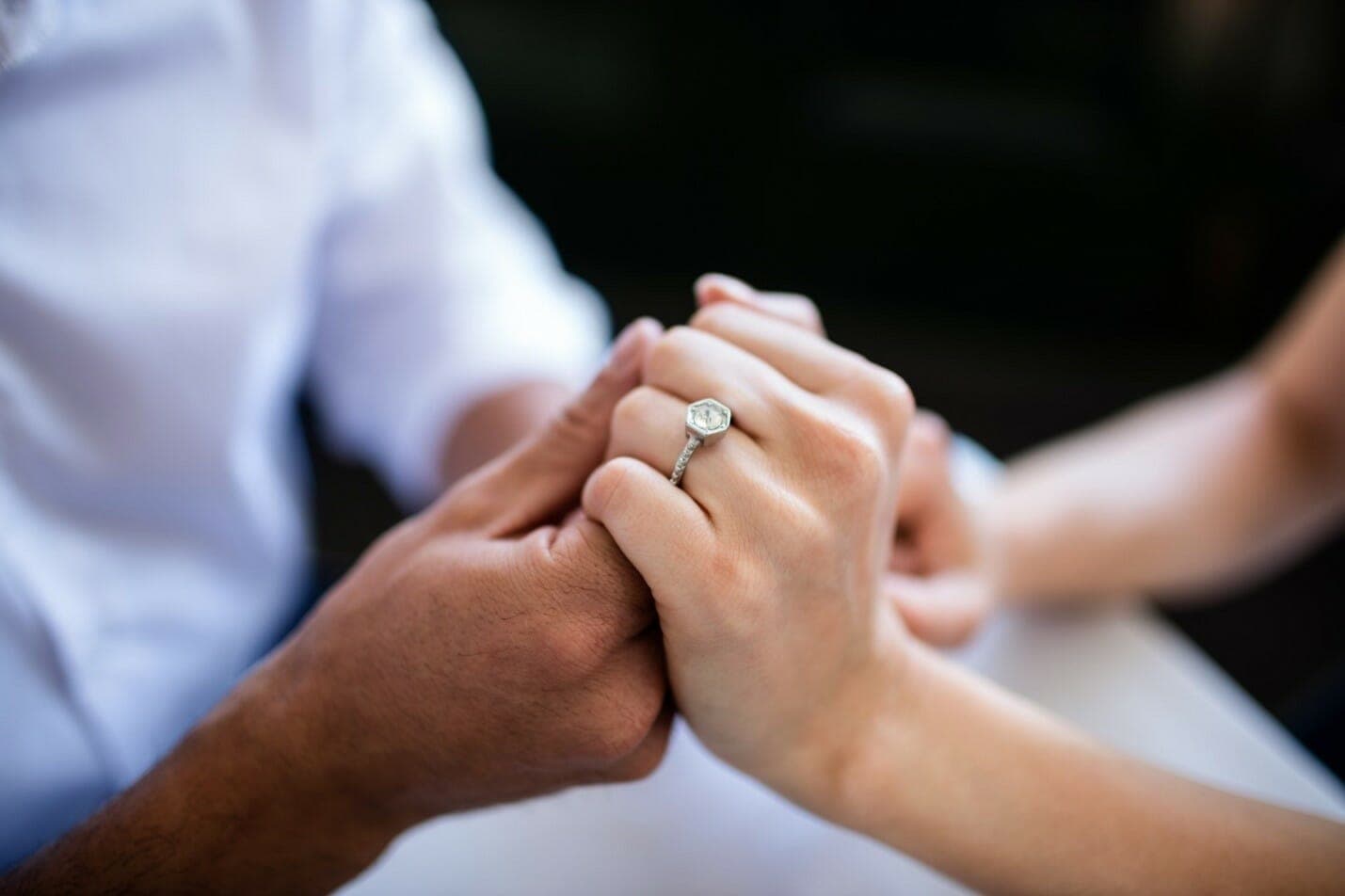
Personalized engagement rings drive a shift toward color and stacks
The newest engagement rings are less about one perfect solitaire and more about color, texture, and stacks that can evolve with the relationship.
Personalization is no longer the finishing touch on an engagement ring, it is the point. Couples are asking for pieces that can hold a private message, a harder-to-copy silhouette, or a second ring that changes the story over time, and that shift is pulling color, mixed metals, and stackable settings into the center of bridal design.
Personalization takes the lead
The modern engagement ring is being treated less like a fixed symbol and more like a living object. Brides are gravitating toward details that make a ring feel intimate and story-driven, from hidden inscriptions and fingerprint engravings to celestial motifs, artisan finishes, and mixed metals. Anniversary-style additions are part of the same impulse: instead of buying one ring and stopping there, couples are building a look that can grow over time.
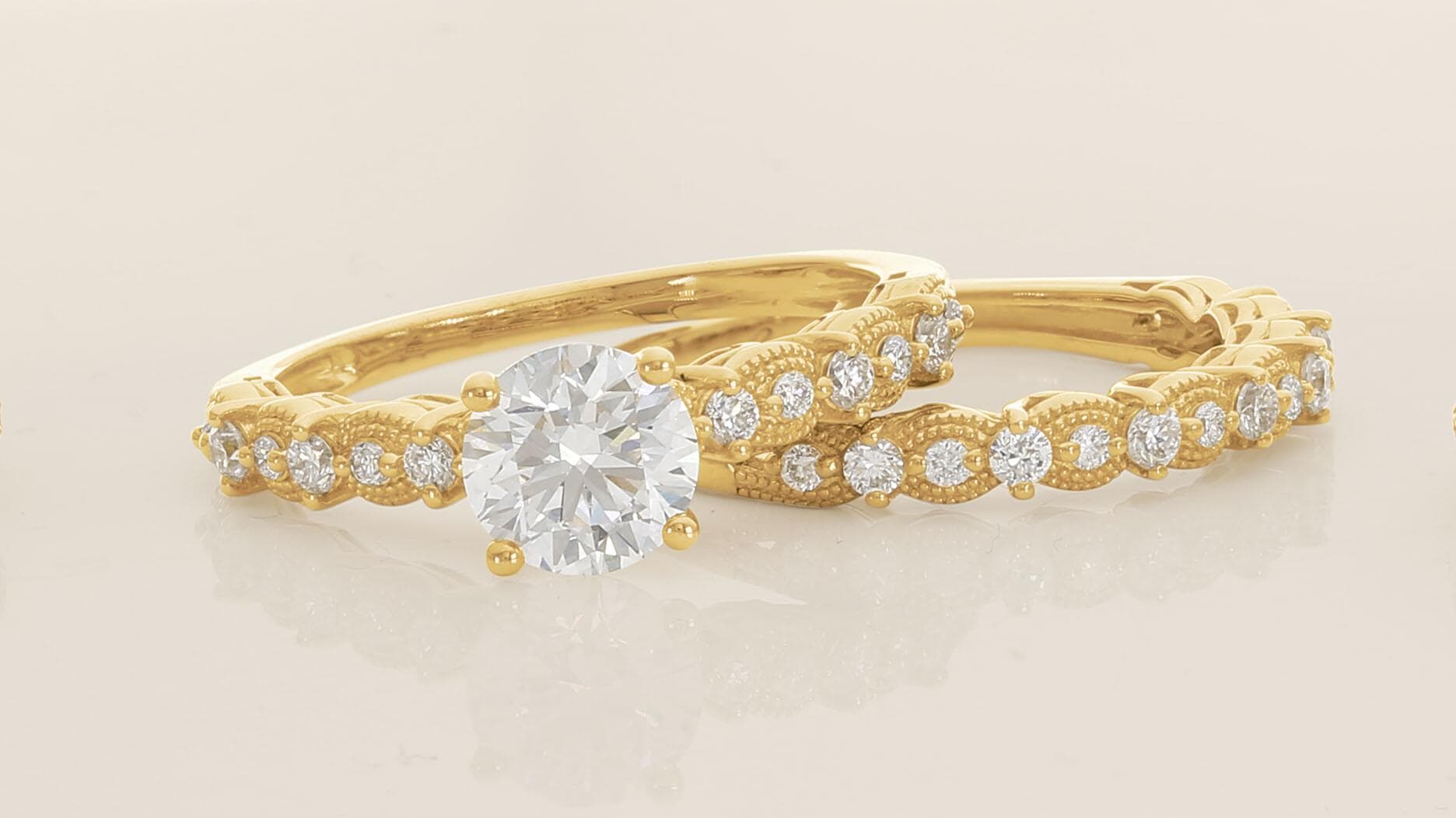
That change is visible in the way designers and retailers describe the category. Marrow Fine Jewelry founder Jillian Sassone says couples are thinking more intentionally about how engagement rings and wedding bands work together through contrast, shape, and texture. The old assumption that a band simply mirrors a center ring is giving way to a more editorial approach, where the two rings can echo one another or deliberately play against each other.
The ring itself is getting bolder
Statement engagement rings are pushing the bridal conversation beyond the classic round solitaire. WWD noted that chunky dome styles, east-west settings, floating diamonds, bezel settings, mismatched toi-et-moi stones, and sculptural silhouettes are all shaping what couples expect from a wedding band. The result is not just a shift in fashion, but a shift in function, because a band now has to complement more unusual ring architecture.
Those bolder designs also explain why some couples are moving away from the idea that a wedding band must be purchased as a one-time match. A single ring can stand alone, or it can be joined later by a band, a guard, or an anniversary stack that adds height, texture, and contrast. If the engagement ring already has a strong profile, the band should feel intentional rather than invisible.
Color has moved from accent to headline
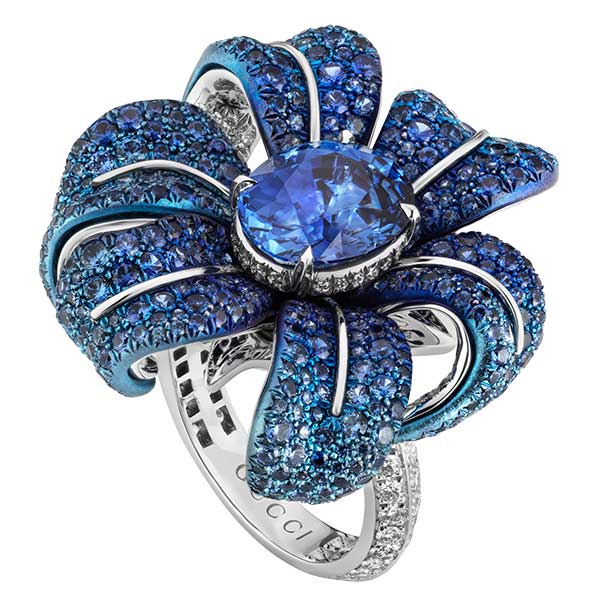
Color is the most obvious sign that bridal jewelry is changing. At a recent JCK panel in Las Vegas, Kimberly Collins said, “Color has never been more hot in my 30-year career.” That enthusiasm is not limited to one shade or one customer type. Collins said the trend is spreading across greens, reds, pinks, and purples, while dealer Danny Shaftel pointed to sapphires, emeralds, bicolor tourmaline, and rubies as stones gaining real traction in bridal settings.
The appeal is partly visual and partly psychological. Colored stones offer a way to differentiate a ring from the flood of lab-grown diamond looks now competing for attention. Shaftel said high-end clients are increasingly considering colored stones for exactly that reason. A sapphire center in a clean bezel, an emerald flanked by diamonds, or a bicolor tourmaline set in warm gold all read as personal choices rather than template choices.
How stacks are replacing the single-band rule
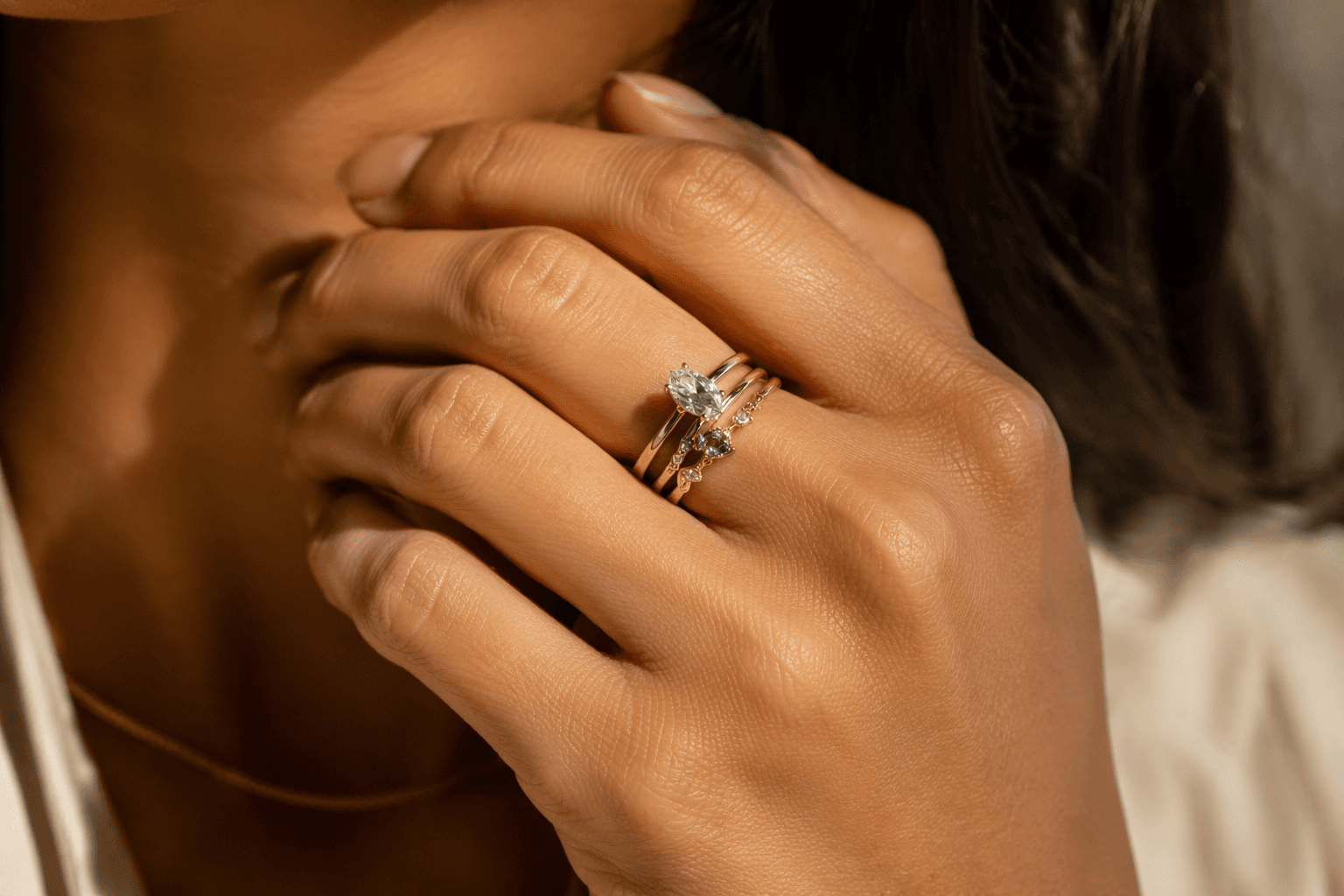
Stacking is becoming the practical language of personalization. Tiffany & Co. frames personalized rings around engraving initials, special dates, symbols, or messages, then extends the idea into stackable rings in mixed metals and gemstones. That approach reflects what many couples already want: a ring that can change as milestones accumulate, whether that means an anniversary band, a slim diamond enhancer, or a second metal that shifts the overall tone.
Stuller has leaned into the same behavior at scale. Its Bridal 2025-2026 catalog includes more than 700 new styles, expanded customization options, a ring sizing guide, styling tips for bridal stacks, and setting-method references. The breadth matters, because stacking only works when proportions are considered carefully. A narrow pavé band can sharpen a large center stone; a wider cigar-band profile can ground a petite solitaire; a curved contour band can solve a difficult profile without forcing a compromise.
What feels timeless, and what feels more trend-driven
Some personalization choices age more gracefully than others. Hidden engraving, mixed metals, and a well-balanced stack are likely to remain appealing because they add meaning without overwhelming the ring. Bezel settings also have staying power because they protect the stone and create a clean outline, while a simple east-west orientation can make a familiar shape feel fresh without becoming decorative for decoration’s sake.
Other choices lean more strongly into the moment. Highly specific celestial motifs, extreme sculptural forms, and very saturated colored-stone pairings can feel tied to a particular aesthetic wave. That does not make them less beautiful, but it does mean they require more confidence. If the goal is longevity, look for details that can age with your wardrobe, not just with the current bridal mood.
What to ask for before you commit
Personalization works best when the details are specific. Ask how the ring will sit with a future band, whether the center stone can be reset later if tastes change, and whether the finish will hold up if you want an artisanal texture rather than a high-polish surface. If color matters, ask how the chosen stone performs in daily wear, and whether the setting protects the girdle and corners from impact.
A few questions are especially worth asking:

- Can the ring be stacked cleanly now and later?
- Does the mixed metal choice feel balanced against skin tone and wardrobe, or is it being used only as a novelty?
- Is the colored stone being chosen for durability as well as appearance?
- If there is engraving, is it visible enough to matter but discreet enough to feel private?
Those are the details that separate a custom ring from a crowded one.
Why the market keeps moving this way
The broader diamond market helps explain the appetite for personalization. De Beers’ U.S. Diamond Acquisition Study surveyed 18,500 women ages 18 to 74 and found that average purchase prices for natural diamond jewelry rose 25% in 2025. It also found that Gen Z is now the second-largest generation buying diamonds and that self-expression is especially important to that group, which sees diamonds as a symbol of identity more than any other generation.
De Beers has clearly read the same signal in product form. It launched Desert diamonds in 2025 and extended the concept into bridal in April 2026, pushing warm, nature-made hues as part of its largest category marketing investment in more than ten years. The direction is telling: even one of the category’s biggest names is betting that distinctiveness, not conformity, is what brides want to wear every day.
The ring that lasts now is often the one that can evolve. In this market, the most convincing engagement rings are the ones that leave room for another band, another stone, another story, and a future that was designed into the setting from the start.
This article was produced by Prism’s automated news system from verified source data, official records, and press releases, then run through automated quality and moderation checks before publishing. The system is built and supervised by the people who set the standards it runs under. Read our full AI policy.
Did this article answer your question?