Queer jewelers reshape engagement rings beyond the classic solitaire
Queer jewelers pushed east-west settings, chunky gold, and salt-and-pepper stones into bridal fashion. What began as a rejection of the solitaire now reads as the new mainstream.

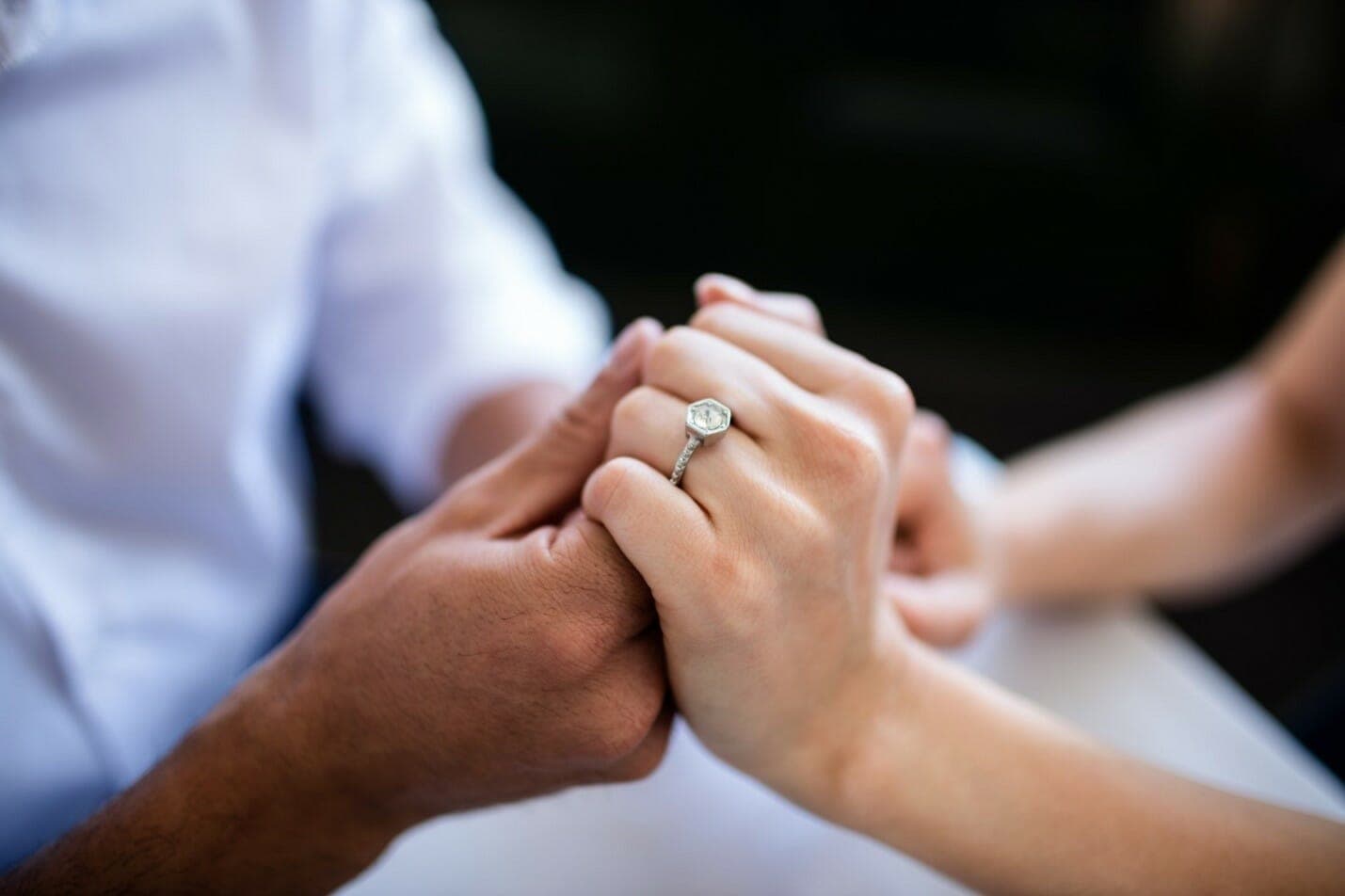
East-west diamonds, chunky gold bands, and salt-and-pepper stones are no longer fringe signals from an indie bridal scene. They now sit beside the classic solitaire as recognizable engagement-ring choices, and that shift was pushed forward by queer-owned jewelers who treated the ring as an identity object, not a mass-market formula.
How the solitaire became the default
The modern diamond solitaire owes its cultural power to De Beers’ 1947 campaign, “A Diamond is Forever,” written by copywriter Frances Gerety. Before that marketing push, betrothal rings in the United States were more likely to feature colored gems, pearls, and smaller stones, which makes today’s diamond-centered bridal norm look less ancient than it feels.
De Beers has kept that slogan at the center of its brand identity. In September 2023, the company said it would invest an additional $20 million to relaunch its natural-diamond category campaign and bring “A Diamond is Forever” back into active use. Then, in May 2025, it said it intended to close Lightbox, its lab-grown-diamond jewelry brand, after wholesale lab-grown diamond prices in jewelry had fallen 90% from Lightbox’s launch context. That sequence captures the tension around modern bridal jewelry: the old diamond story still has reach, but the market is also under pressure from cheaper lab-grown stones and from consumers who want something more personal than a single white diamond on a plain band.
The queer-owned labels that widened the vocabulary
Queer-owned jewelers helped make that personal turn look polished rather than rebellious. Automic Gold describes itself as queer, trans-owned, queer Indigenous-owned, and size-inclusive, and it makes handmade jewelry in recycled solid 14k gold and platinum with reclaimed or ethically sourced diamonds and gemstones. Those material choices matter because they give the brand a clear sourcing language instead of the vague sustainability talk that can blur together in bridal advertising.
VENVS pushes the design side even further. The brand says it specializes in alternative engagement rings and works with “misfit” and non-traditional stones such as salt-and-pepper diamonds, black diamonds, moissanite, and moss agate. Earlier reporting on its clientele noted that queer buyers often favored moissanite, which makes sense in a market where couples are looking for stones that feel different from the standard diamond script and do not carry the same assumption of a one-size-fits-all romance.
Fashion press has also highlighted Elliot Gaskin Jewelry and Darius Khonsary’s Darius for bespoke, story-driven pieces. Their appeal is not just that the rings look unusual. It is that they read as made for a specific person or partnership, with design details that signal intention rather than default.
Why these rings resonated beyond aesthetics
The broader draw of these styles is not only visual. Many queer couples have used engagement rings to reject the gendered assumptions built into traditional bridal marketing, where the diamond solitaire was often sold as the natural endpoint of a very narrow romantic story. Personalized rings, including salt-and-pepper stones, moissanite, east-west settings, and sculptural gold silhouettes, let the ring carry a different kind of message: this is a commitment, but it does not have to look like everyone else’s.
That is why the category has expanded so quickly. Chunkier gold bands read as architectural and durable. East-west settings change the way an oval or marquise sits on the hand, flattening the profile and making the stone feel less expected. Salt-and-pepper diamonds and moss agate bring texture and irregularity into a market that once prized uniform sparkle above all else. The common thread is not novelty for its own sake. It is a refusal of the bridal hierarchy that put the solitary white diamond at the center of everything.
How the mainstream caught up
What began in queer-owned and indie jewelry circles is now visible across the broader engagement-ring market. WWD has recently pointed to celebrity engagement rings as a driver of new bridal standards, especially east-west diamonds and chunky gold designs. That matters because celebrity exposure turns a niche silhouette into a reference point for shoppers who may never have heard of a queer-owned atelier, but can recognize a setting that looks current.
The shift is also visible in what counts as a “bridal” ring at all. East-west settings and sculptural bands no longer read as the province of people trying to avoid tradition. They now sit comfortably in the same conversation as classic solitaires, which is a major change in a category that spent decades telling couples there was one right answer.
What to look for if you want individuality without gimmickry
The strongest non-solitaire rings share one trait: their materials and construction are specific. Recycled gold, platinum, reclaimed stones, and clearly named alternatives like moissanite or moss agate make a ring easier to understand than a vague promise of ethical luxury.
A few details separate a thoughtful ring from a trend-chasing one:
- Recycled solid 14k gold or platinum is a clearer material story than an unspecified precious-metal blend.
- Reclaimed or ethically sourced diamonds and gemstones give the buyer something concrete to ask about.
- Salt-and-pepper diamonds, black diamonds, moissanite, and moss agate each behave differently in light and wear, so the stone should be named, not just described as “unique.”
- An east-west setting changes both the look and the feel of the stone, especially on oval and marquise cuts.
- Handmade construction, especially in bespoke work, usually means the setting is built around the ring’s actual proportions instead of a stock template.
The old solitaire still has cultural power because De Beers spent generations making it feel inevitable. But the current bridal field is broader, more legible, and more personal because queer jewelers proved there was room for rings that tell a different story, one that starts with the couple and not with the campaign.
This article was produced by Prism’s automated news system from verified source data, official records, and press releases, then run through automated quality and moderation checks before publishing. The system is built and supervised by the people who set the standards it runs under. Read our full AI policy.
Did this article answer your question?