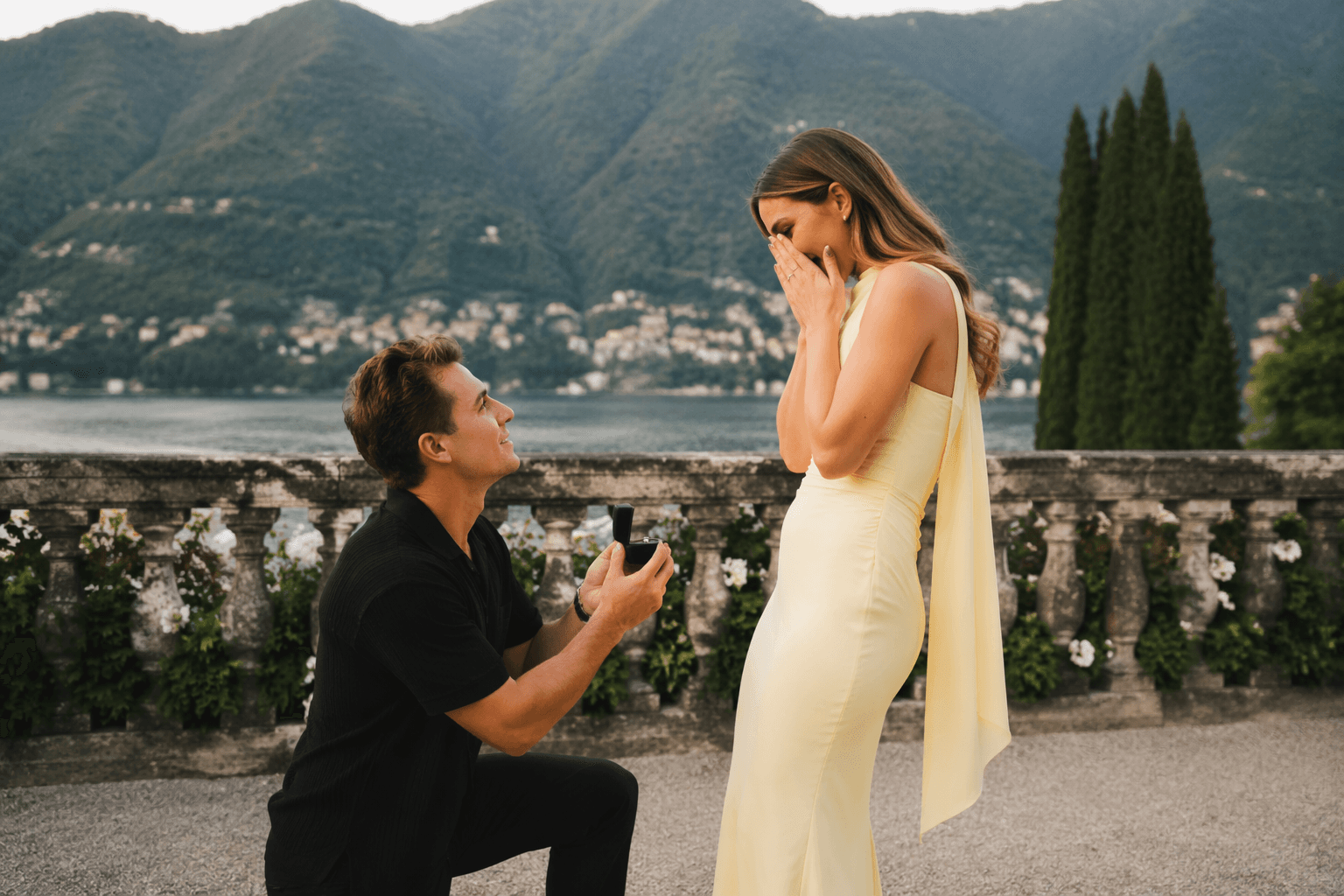
Quince’s $2,900 lab-grown emerald-cut engagement ring feels on trend
Quince’s three-carat emerald-cut lab-grown ring is priced like a disruptor, but the real story is how much of that value sits in the stone, not the setting.

Quince’s $2,900 three-carat emerald-cut ring lands at the intersection of two forces now shaping engagement-ring shopping: bigger lab-grown stones and a taste for cleaner, more architectural cuts. Gabrielle Chase’s hands-on review described the piece as a colorless 3.05-carat emerald-cut diamond with a VS1 clarity grade on a simple gold band, which is exactly the kind of pared-back mounting that lets the center stone carry the whole composition.
The price tells you what Quince is prioritizing
Quince lists its Lab Grown Diamond Emerald Comfort Fit Engagement Ring in 3 carats at $2,900, with a 2-carat version at $1,700 and a 2.5-carat version at $2,100. The same category also includes a 3-carat emerald pavé cathedral version at $3,200, a useful reminder that the company is keeping the diamond itself fairly accessible while charging more when the setting gains visual weight. Its engagement-ring assortment says lab-grown styles start from $2,900 and spans more than 100 designs, including solitaire, halo and pavé settings in 14K gold with free shipping.
That pricing ladder is the key to the ring’s appeal. At $2,900, the message is not luxury excess but efficient allocation: more of the budget goes into carat weight and clarity, less into ornamental metalwork. For a shopper who wants a substantial finger presence without drifting into the cost of a traditional high-jewelry setting, that is the point of the piece.
Why the emerald cut feels current rather than merely classic
The emerald cut has returned with unusual force because it does something a round brilliant cannot. The Knot describes emerald-cut diamonds as square-faced step-cut stones that prioritize depth and drama over maximum sparkle, and that quality gives a three-carat stone an almost mirror-like calm. Instead of glittering from every angle, it opens and closes with long flashes of light, which reads especially well when the stone is elongated and set on a narrow band.
That visual language suits the current appetite for cleaner silhouettes. The ring feels on trend not because it shouts, but because it has restraint: a large center stone, a geometric outline and a setting that avoids clutter. In a market crowded with halos, hidden halos and ornate pavé, the spare emerald-cut solitaire has become its own kind of statement.
The market has already moved toward lab-grown
The Knot’s 2026 Real Weddings Study makes the category shift hard to ignore. It says 61% of U.S. couples who married in 2025 chose a lab-grown diamond center stone, up 239% since 2020. It also found that 40% of respondents said macroeconomic conditions mattered in that choice, which helps explain why a three-carat lab-grown ring now feels less like a fringe alternative and more like a mainstream purchase with strategic value behind it.
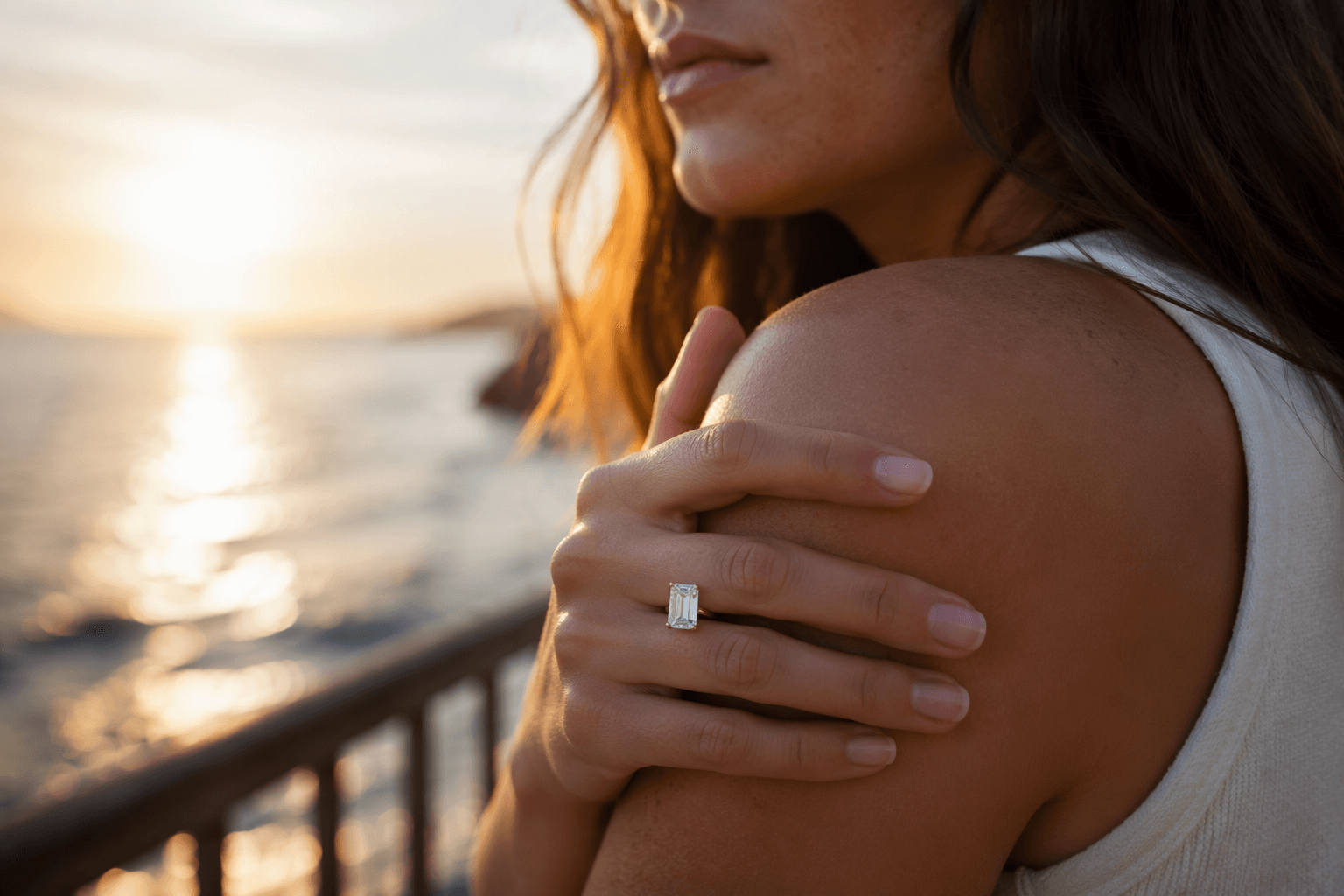
That context matters for Quince. A $2,900 center-stone-driven ring is not just cheaper than a natural-diamond equivalent would be; it reflects a market where shoppers are increasingly comfortable trading mined-diamond legacy for size, clarity and design clarity. The value proposition is especially strong when the stone is cut to look crisp rather than flashy, because the emerald cut amplifies the clean, almost architectural effect of a larger lab-grown diamond.
Certification and the small details that separate a bargain from a buy
The fine print is where lab-grown jewelry has become more institutionalized. The Gemological Institute of America says laboratory-grown diamonds are laser-inscribed with the term “Laboratory-Grown” and a report number, a small but important marker that helps distinguish the stone from a natural diamond once it leaves the showroom. On August 26, 2025, GIA announced revised evaluation services for D-to-Z laboratory-grown diamonds, set to launch on October 1, 2025, another sign that the category is being handled with greater standardization.
That matters because a big lab-grown stone can look excellent and still leave buyers uneasy if the paperwork is thin or the grading language is vague. Quince’s use of a colorless 3.05-carat stone with VS1 clarity in the review is reassuring on paper, especially for an emerald cut, where clarity tends to show more readily than in a brilliant-cut diamond. If the eye is going to rest on a long, open table, the quality of the stone has to hold up without the help of extra sparkle.
The verdict on value versus compromise
Quince’s ring is a genuine market-disrupting buy if the question is carat weight per dollar. The combination of a three-carat lab-grown center stone, an emerald cut that looks composed rather than busy, and a simple comfort-fit gold band makes the price feel disciplined rather than inflated. Even Quince’s own pricing structure, where the more elaborate 3-carat pavé cathedral version rises only to $3,200, suggests that the brand is selling a clear hierarchy: stone first, setting second.
The compromise is not in the diamond, but in the jewelry architecture around it. A minimal band gives the ring a clean, modern profile, yet it will not satisfy someone who wants the weight, ornament and bespoke feel of a traditional luxury setting. For shoppers who want a large, orderly, high-clarity look without paying for unnecessary metalwork, Quince is very much on the money; for shoppers who want the setting to carry as much drama as the center stone, the restraint will read exactly as intended.
This article was produced by Prism’s automated news system from verified source data, official records, and press releases, then run through automated quality and moderation checks before publishing. The system is built and supervised by the people who set the standards it runs under. Read our full AI policy.
Did this article answer your question?