The Knot says couples are shopping together for engagement rings
Couples are shopping together, and the average ring now costs $5,200, making budget and comparison the first real design decisions.
The most useful change in engagement-ring shopping is also the least old-fashioned: couples are choosing rings together. The Knot’s ring-shopping guide treats that shift as a practical advantage, because it puts the biggest decisions, budget, taste, and retailer selection, in the open before money is spent. Its numbers make the case clearly: 71% of proposers set a budget, more than half say the economy affected it, and many shoppers are now using the process to compare styles rather than chase a single secret choice.
Start with a budget that fits your life, not a rule of thumb
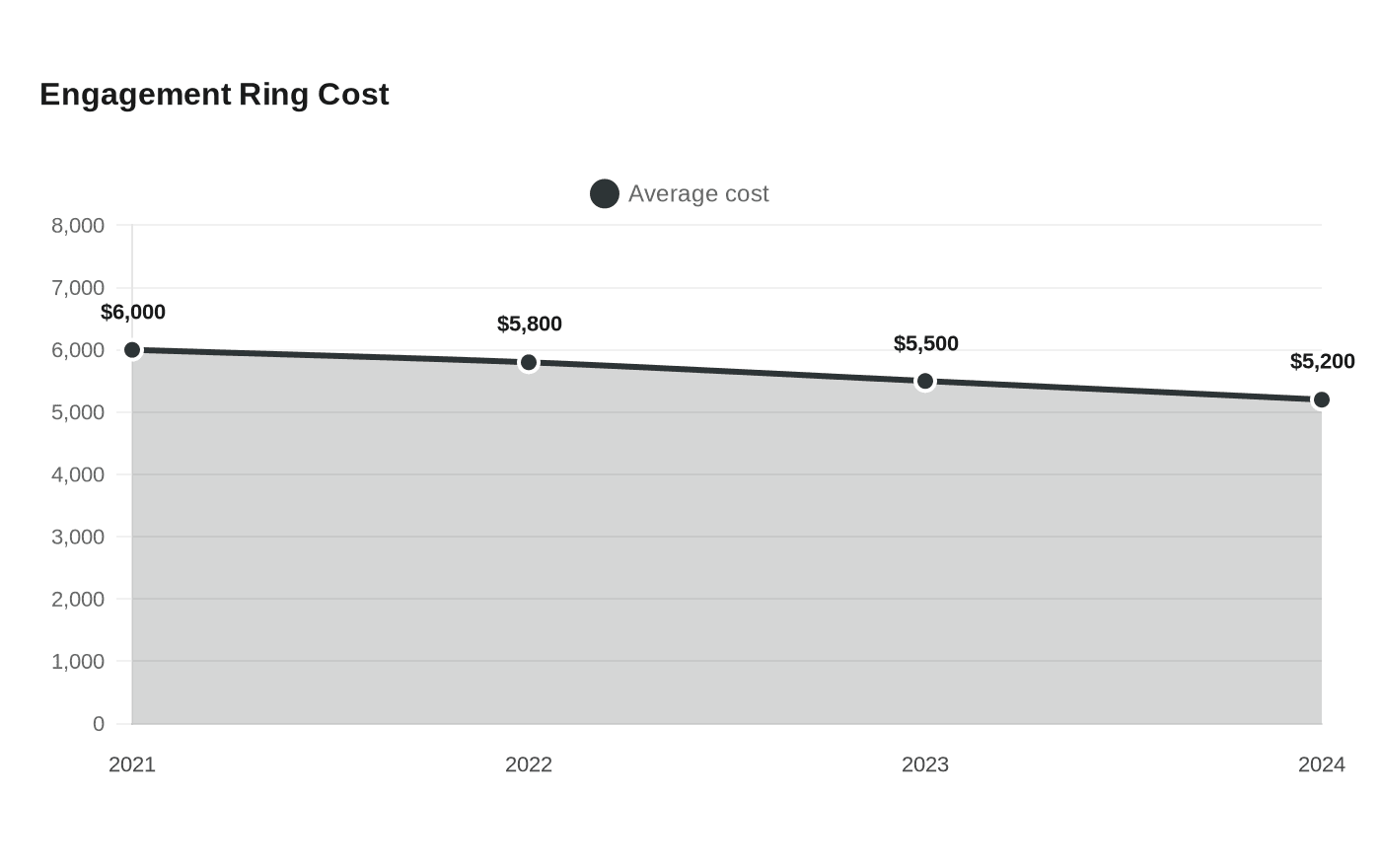
The smartest first decision is not carat weight or color, but a ceiling you can defend. The Knot’s 2024 Jewelry and Engagement Study puts the nationwide average engagement-ring cost at $5,200, down from $5,500 in 2023, $5,800 in 2022, and $6,000 in 2021. That decline matters because it shows how quickly taste and spending habits can change, and because the middle of the market is much broader than the old marketing script suggests.
The spread is wide enough to quiet almost any anxiety. The Knot says 64% of respondents spent less than $6,000, 33% spent less than $3,000, 8% spent $10,000 to $14,999, and just 5% said their budget was over $15,000. Jewelers Mutual’s 2024 Engagement Ring Trends Study places the common value range at $2,500 to $5,000, which tells you the practical center of the market sits well below the old mythology of an automatically extravagant purchase.
Kristi Kroll of HauteCarat cuts through the most persistent myth: the traditional two- to three-months’ salary rule is outdated. A better test is whether the ring fits your current finances without forcing you into a choice that feels impressive for a moment and regrettable later. If the budget is clear before you look at settings or stones, every other decision becomes easier to compare.

Use inspiration to define your taste, not to copy a fantasy
The Knot says 31% of proposees spent more than a year researching ring preferences before the proposal, which explains why the best shoppers arrive with a visual vocabulary. Social media is useful here, but only if you treat it like a mood board rather than a prescription. Save the rings that recur, then notice what you actually respond to: a low-set bezel that looks sleek and secure, a prong setting that exposes more of the stone, a plain band, a pavé band, or a center stone that sits high enough to read as dramatic from across a room.
That kind of note-taking matters because the market is already full of distinct preferences. Jewelers Mutual found white gold was the most popular metal at 35%, rose gold followed at 33%, and yellow gold has increased in popularity by 15% over the past three years. If you have been assuming that yellow gold is a niche choice, the data says otherwise; it is very much back in the conversation, especially for shoppers who want warmth against the skin and a more deliberate, vintage-facing look.
Stone choices are shifting too. Jewelers Mutual reported that 68% of settings included mined diamonds and 18% included lab-grown diamonds, while average center-stone carat weight fell between 1 and 2 carats. The Knot’s own average carat weight was 1.7 in 2024, compared with 1.5 in 2021, a reminder that “average” does not mean fixed. It means the market is still negotiating what feels substantial, wearable, and financially sensible at the same time.
Treat try-ons as the real design meeting
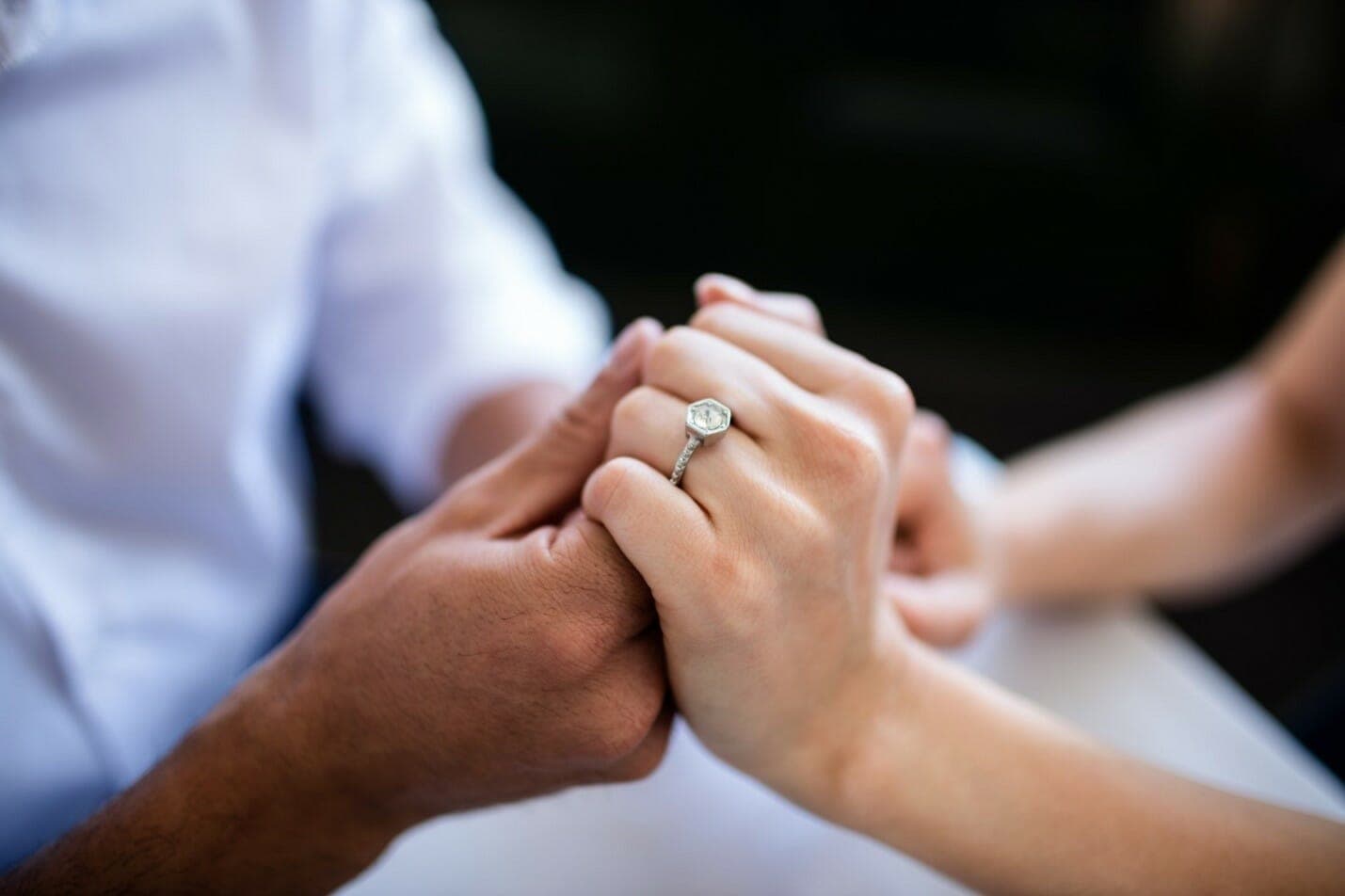
Ring shopping has moved away from the old top-secret model for a reason: the hand changes everything. A style that looks perfect in a photo can feel too bulky, too delicate, too high, or too flat once it sits on a finger and catches the light. Shopping together is not a compromise on romance; it is often the fastest way to discover whether you prefer a low, practical profile or a more sculptural ring that rises with presence.
That is why comparison shopping matters so much. Try similar rings at multiple retailers, not just one, because metal color, setting height, prong shape, and stone proportion can look surprisingly different from house to house. Tiffany & Co.’s in-store and virtual appointment services point to the same reality: this has become a consultation-driven purchase, one where you benefit from seeing a ring in person, then checking whether another showroom interprets the same idea with better balance or cleaner finishing.
Before you go, bring a short list of must-haves and deal-breakers:
- The metal color you return to most often
- Whether you want a solitaire, side stones, or a more ornate setting
- Whether you prefer the security of a bezel or the light-catching openness of prongs
- The maximum height you want above the finger
- Your budget ceiling, written down, not estimated from memory
That list keeps the appointment focused. It also prevents the classic trap of falling for a ring that is beautiful but wrong in daily life, where comfort, cleaning, and durability matter as much as sparkle.
Know the history, then shop the market you actually have
Today’s engagement-ring norm still carries the weight of a campaign. De Beers’ “A Diamond Is Forever” slogan was conceived in 1947 by copywriter Frances Gerety for N. W. Ayer & Son, and Sotheby’s says the campaign helped transform public expectations and standardize the solitaire diamond as the cultural default. That history is worth knowing because it explains why so many people still picture one particular ring before they have ever tried one on. The point is not to reject that heritage, but to recognize it as advertising that became tradition.
Once you understand that, the modern buyer’s advantage becomes obvious. The Federal Trade Commission’s Jewelry Guides require truthful descriptions of gemstones, metals, treatments, origin, and other material facts, and the guides were revised in 2010 to account for changes in platinum manufacturing and alloys. In practice, that means you are entitled to clarity, not sales patter. If one jeweler cannot explain the difference between mined and lab-grown stones, or cannot tell you exactly what metal and treatment you are buying, keep looking.
The best engagement-ring purchase is not the one made fastest or most secretly. It is the one shaped by a realistic budget, a studied eye, and enough comparison to make the final choice feel personal, intentional, and worth wearing every day.
This article was produced by Prism’s automated news system from verified source data, official records, and press releases, then run through automated quality and moderation checks before publishing. The system is built and supervised by the people who set the standards it runs under. Read our full AI policy.
Did this article answer your question?