Why antique engagement rings are winning buyers and celebrities
Antique engagement rings are rising because they feel singular, carry visible craftsmanship, and can hold value better than mass-made lookalikes.

Devon Lee Carlson’s June 2026 engagement to Duke Nicholson drew attention to a vintage-leaning three-stone ring with a center stone estimated as an old mine or old European cut of roughly 3 carats. Antique engagement rings have moved from niche romance to market logic. Buyers are rediscovering stones and settings that look hand-made rather than factory-perfect, and the appeal is not only aesthetic. A true period ring offers scarcity, recognizable craft, and a paper trail of style that modern lookalikes often cannot match.
Why the category suddenly feels urgent
The renewed appetite for antique rings has been amplified by celebrity engagements that made old cuts look newly desirable.
Taylor Swift and Travis Kelce’s August 26, 2025 engagement pushed the conversation further. Swift’s ring was estimated as an antique old mine cut or antique elongated cushion cut, with estimates placing it around 8 carats and closer to 10 carats. Jared Jewelers put the ring’s value at roughly $250,000 to $500,000.
What makes an antique ring authentic
Authenticity begins with construction. A genuine antique ring usually shows the logic of its era in the mount, the prongs, the gallery, and the wear patterns, not just in the center stone. Hallmarks, hand-finishing, and period-appropriate proportions matter, because a modern setting around an old stone is not the same thing as an intact period piece.
The strongest signs are often visible at a glance: softer symmetry, handmade detail, and a profile that looks built for the stone rather than engineered around a modern retail template. Buyers should also separate antique stones from vintage-inspired settings. A new ring may borrow the language of the past, but it will not carry the same scarcity, nor the same resale defensibility, as a genuinely older piece.
Why old cuts feel different on the hand
Old mine cuts are among the earliest diamond cuts, associated with the 18th and 19th centuries and with Georgian and Victorian jewelry. They were historically hand-cut, and they were designed to sparkle in candlelight rather than under today’s bright showroom LEDs. That history shows up in the stone itself: chunky flashes, broader facets, a softer kind of fire, and a look that feels more intimate than a modern round brilliant.
Old cuts tend to read as individual, because no two were made to the same machine-perfect standard.

Stone or setting: where the long-term value really lives
In an antique ring, the stone usually carries the most enduring value, especially if it is an old mine cut or another distinctive period cut that would be expensive, or impossible, to reproduce exactly today. A well-preserved old cut brings character, but it also brings a visual signature that survives changing tastes. If you are comparing an antique stone to a new diamond with a vintage-style mount, the older stone is more likely to feel defensible over time because it has both material and historical specificity.
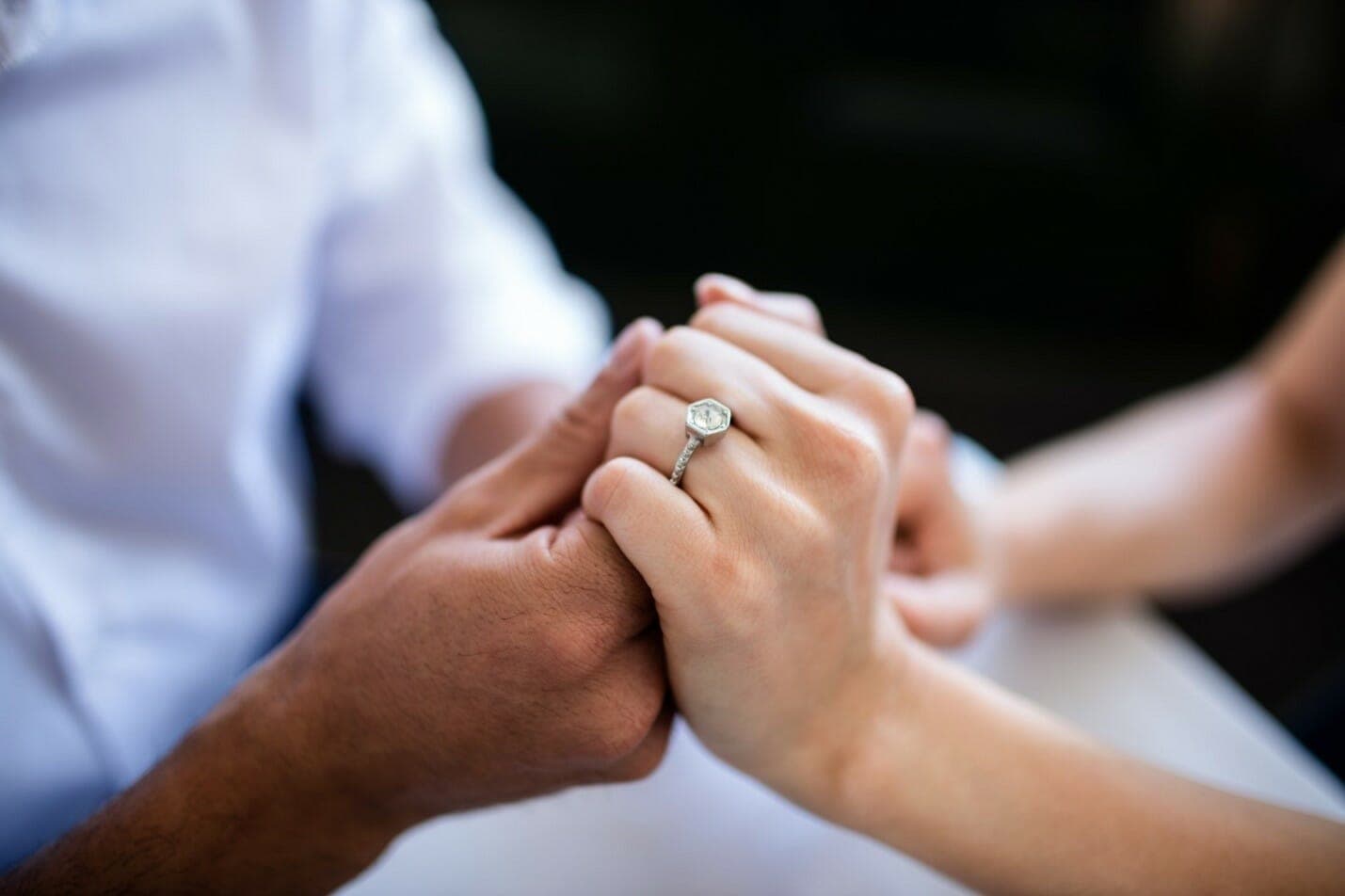
The setting matters just as much when it is part of the original story. Distinctive three-stone or trilogy designs, clean antique bezels, and finely made prong settings can all support value if they are period-appropriate and well preserved. A bezel, which surrounds the stone in a continuous rim of metal, can protect an older diamond and lend a modern, architectural feel; prongs expose more of the stone and often make the setting feel lighter. In the antique market, either can be right, but only when it suits the age and character of the diamond.
Why buyers are turning away from mass-market sameness
The bigger shift is cultural as much as gemological. Search interest in vintage-style engagement rings and old mine cuts has risen sharply in 2026, reflecting a broader taste for individuality and authenticity. That is the opposite of the mass-market engagement ring, where the same proportions, same polish, and same mounting details are repeated until the ring becomes interchangeable.
Antique rings resist that sameness by definition. They are finite, and the best examples carry visible handwork in the gallery, the shoulders, and the stone’s cut. Even when a ring has been refreshed or resized, its character comes from the fact that it was made in a different era, for a different set of tastes, with fewer standardized tools and less pressure to look identical to everything else in the case.
How to buy one with confidence
The smartest antique purchase is the one that can explain itself in detail. Look for a stone cut that matches the period, a setting that feels structurally honest, and documentation or seller expertise that can distinguish original construction from later alterations. An old mine cut in a faithful period mount will usually carry more conviction than a heavily reworked ring that only borrows antique language.
Pay close attention to condition. Wear is part of the appeal, but damage to prongs, thinning shanks, or compromised settings can affect both longevity and value. A ring with strong bones, clear provenance, and a distinctive cut will usually age better in the market than a pristine but generic modern replica.
This article was produced by Prism’s automated news system from verified source data, official records, and press releases, then run through automated quality and moderation checks before publishing. The system is built and supervised by the people who set the standards it runs under. Read our full AI policy.
Did this article answer your question?