Why engagement rings are worn on the left hand
The left-hand ring finger became tradition through Roman law, a vein myth, and diamond marketing, but it is still a convention, not a rule. Modern couples still choose the hand that fits their culture and life.

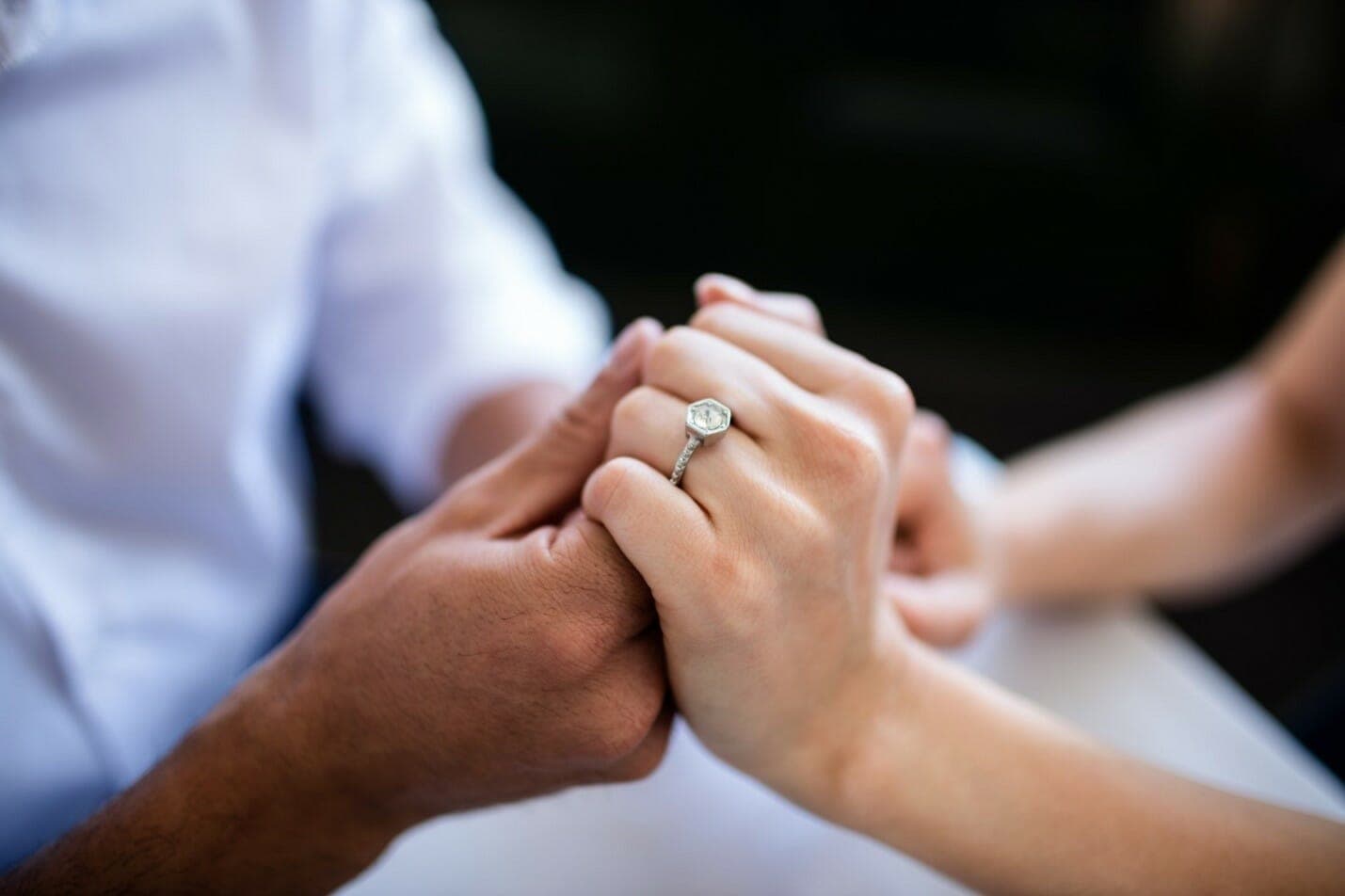
In the 5th century, the Roman writer Macrobius placed the betrothal ring on the fourth finger of the left hand because people believed a vein ran straight from that finger to the heart. The left hand won this custom through Roman law, that vein myth, and centuries of jewelry marketing, but it is still a convention, not a command. If your culture, work, or the way you plan to wear your bands points elsewhere, engagement-ring etiquette already has room for that choice.
Why the left hand became the default
The earliest concrete evidence of engagement rings comes from ancient Rome, where the ring was part of a legal agreement to marry. Some Roman couples wore a plain iron betrothal ring indoors and swapped to a gold band outdoors, a split that hints at how practical and symbolic the piece already was. By the 4th century AD, some bands carried interior inscriptions, including brief terms of endearment such as “honey.”
The left-hand custom hardened into romance through a story, not anatomy. Ring placement later became part of marriage ceremony traditions in the 12th century Catholic Church, which helped fix the idea that where the ring sits carries meaning as well as ornament.
Do you actually have to wear it there?
No. Some traditions place the engagement ring on the right hand instead, especially where the left hand is considered unlucky. Ring placement can also signal relationship status in some traditions, including the Claddagh ring, where how the ring is worn changes its message.
Some follow family custom, some prefer the hand that feels more natural in daily wear, and some move the ring to make room for a wedding band or a stack later on.
Before diamonds, there were sapphires and rubies
The diamond engagement ring was not the original default. Sapphires and rubies were common in medieval engagement rings before diamonds became more common in the 15th century. The first written record of a diamond engagement ring dates to 1477, when Dr. Moroltinger advised the future Holy Roman Emperor Maximilian to give Mary of Burgundy a diamond betrothal ring.
Maximilian I commissioned a ring set with small diamonds in the shape of an M for his betrothal to Mary of Burgundy, who was duchess of Burgundy from 1477 to 1482. Their marriage had major Habsburg political consequences because it tied Burgundy to the Habsburgs. The diamond carried the right symbolism for a betrothal because it suggested durability and fortitude, qualities that matched a stone known to resist fire and steel.
How the solitaire became the modern shorthand
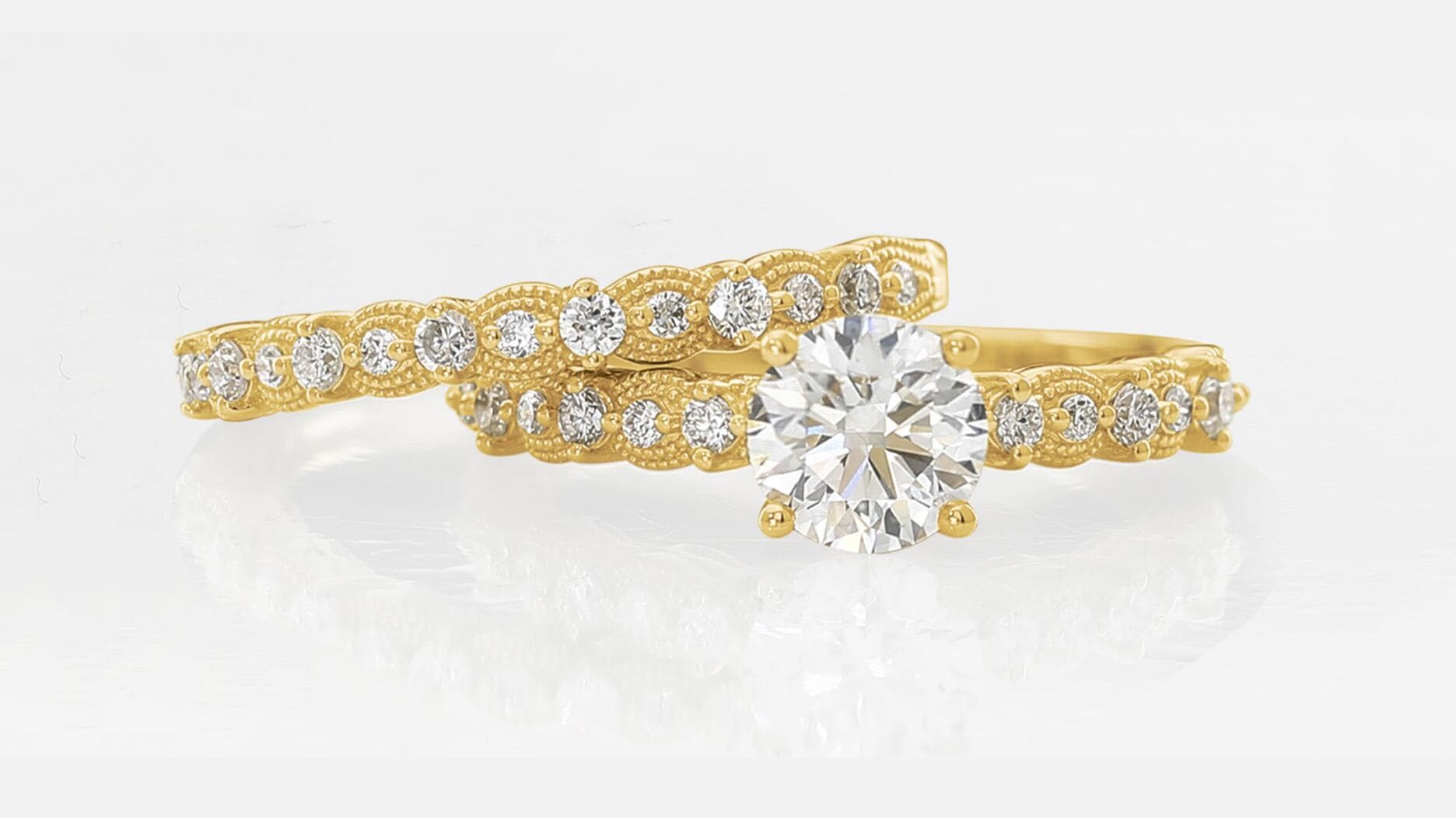
The modern engagement ring look took shape as diamonds became easier to obtain and better to see. Discoveries of Brazilian diamonds in the 18th century helped expand supply, and 19th-century industrial wealth plus new African diamond sources made the stones more accessible. As cutting and polishing improved, brilliance became a selling point, and the solitaire began to feel both refined and legible.
Tiffany & Co. crystallized that image in 1886 with its six-prong setting. By lifting the stone high and letting in more light, the setting made faceted diamonds appear brighter and more prominent and established the classic engagement-ring silhouette.
Marketing made the diamond feel inevitable
The 20th century tightened the connection between commitment and diamonds. Copywriter Frances Gerety first coined the slogan “A Diamond is Forever” in 1947. De Beers says it invested an additional $20 million in 2023 to revive the campaign in the United States and China.
De Beers says engagement and wedding rings still matter, but diamonds are increasingly bought and worn for broader occasions. A diamond is no longer reserved only for proposals and anniversaries, and the category now includes more everyday, more personal forms of dress.
What the left hand means now
On the left hand or elsewhere, a ring can signal status, inheritance, sentiment, and even become a legal and financial question after a breakup.
This article was produced by Prism’s automated news system from verified source data, official records, and press releases, then run through automated quality and moderation checks before publishing. The system is built and supervised by the people who set the standards it runs under. Read our full AI policy.
Did this article answer your question?