AdaLioryn’s sacred fine jewelry blends talismans, heritage and sculptural form
AdaLioryn turns fine jewelry into private symbols, pairing talismanic forms and lost-wax craft with prices from $5,200 to $34,000.

AdaLioryn has built its identity around the idea that fine jewelry can carry both beauty and belief. Based in Los Angeles, the line founded by Evangeline AdaLioryn calls itself Sacred Fine Jewelry, a phrase that feels less like branding than a thesis: these are objects meant to be worn daily, but also read as personal symbols. The result is a collection that looks sculptural at first glance, then reveals a softer register of meaning rooted in memory, ritual and inheritance.
That tension, between the modern and the mystical, is what gives the brand its charge. AdaLioryn draws on Minnesota heritage, translating something deeply personal into pieces that feel polished enough for a collector and intimate enough to become a private talisman. In a crowded fine-jewelry market, that emotional specificity is part of the proposition. The jewelry is not only decorative; it is meant to stand for something.
The language of talismans
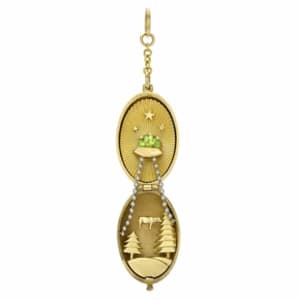
The debut collection, The Genie’s Gift, arrived in September 2025 as a kind of manifesto. AdaLioryn describes it as an exploration of unseen forces, magic, nature, comets, stars and mystery, and those themes are legible in the line’s shapes and surfaces. Rather than relying on literal iconography, the pieces suggest an atmosphere, one that is celestial, sensual and slightly otherworldly.
That ambiguity is central to the brand’s appeal. Talisman jewelry works best when it leaves room for projection, and AdaLioryn understands that instinct well. A rope bracelet or pearl pendant can read as minimal from afar, yet the brand’s sculptural handling gives each object a sense of charge, as if the form were carrying a story just beneath the surface.
Craft that feels handmade, not merely handcrafted
AdaLioryn’s visual language is matched by a clear commitment to process. The brand uses lost-wax casting and hand-carved design methods, a combination that gives the jewelry its weight, irregularity and depth of line. Lost-wax casting is especially well suited to pieces with organic contours and relief-like surfaces, because it preserves the maker’s gestures in metal rather than smoothing them away.
That matters here because the brand’s aesthetic depends on touch. A hand-carved approach lends the jewelry a sense of movement and immediacy that mass-production rarely captures, while lost-wax casting allows those forms to be rendered in precious metal without losing their sculptural intent. In a category where polish can sometimes flatten personality, AdaLioryn’s surfaces retain the visible evidence of making.
JCK has noted how quickly the company has drawn attention for this expressive, hand-carved approach, placing it within a broader 2026 appetite for sculptural and statement-making jewelry. That context helps explain the line’s momentum: buyers are looking for pieces that feel authored, not generic, and AdaLioryn’s craftsmanship gives the brand a distinct voice.
The collection architecture
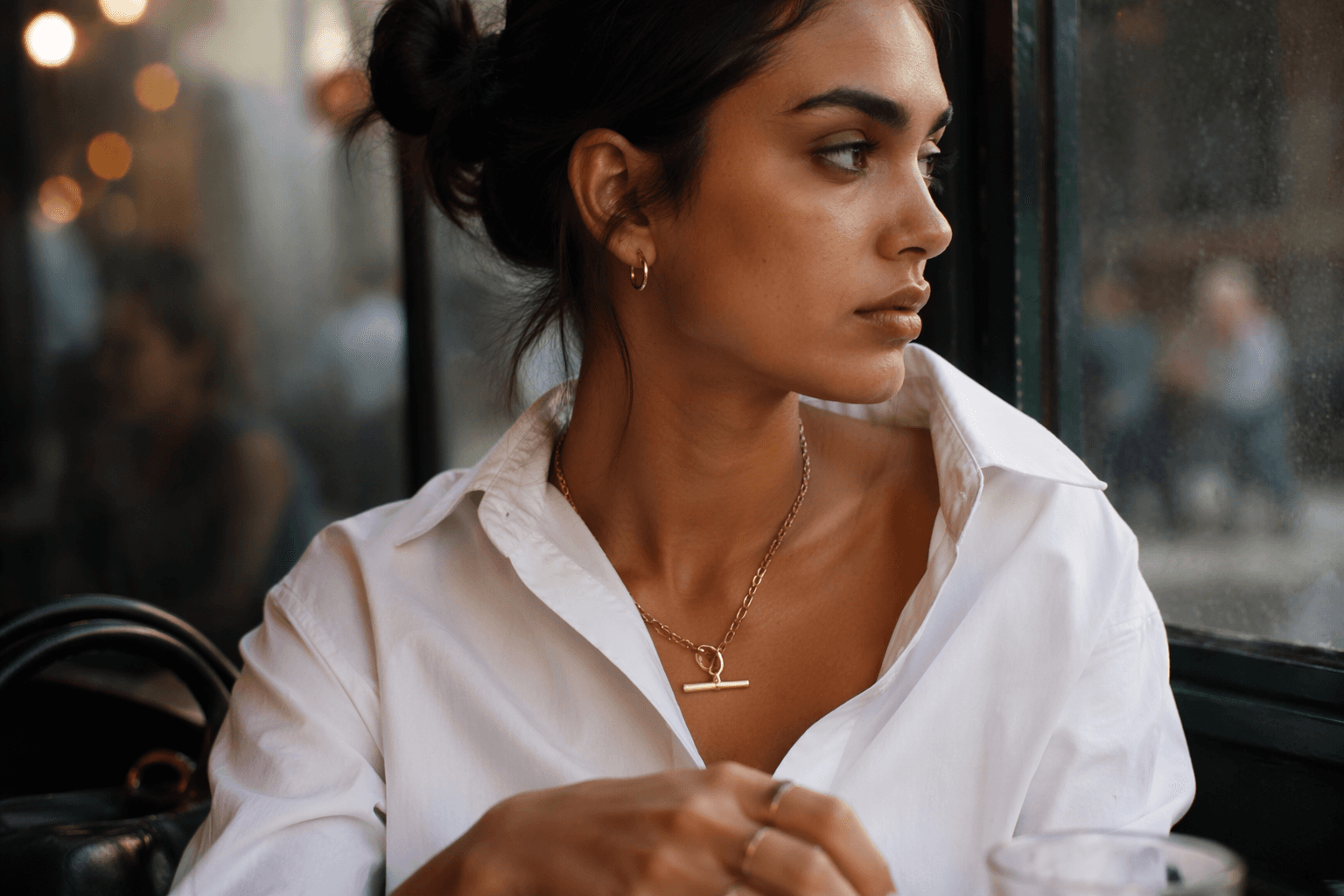
The current assortment is concise but readable. AdaLioryn offers rings, earrings, necklaces, bracelets and pearl pendants, and the hero styles make the brand’s point with unusual clarity. The Genie’s Rope Bracelet is priced at $6,750, while Goddess Tear Pearl Earrings sit at $7,900. On the brand’s own site, Pearl Pendant is listed at $5,200, Goddess Tears Blush Pearls at $7,500 and Heaven’s Eye at $34,000.
That price range, from $5,200 to $34,000, positions AdaLioryn firmly in the upper tier of contemporary fine jewelry. The entry point is still serious luxury, but not inaccessible by couture standards, while the top end suggests a made-to-order or collector-level sensibility. What the pricing reveals is a brand that is not chasing volume; it is building an architecture of objects designed to feel rare, layered and highly specific.
Pearls play an especially important role in that architecture. In less considered hands, pearls can skew classic or expected, but AdaLioryn uses them as a means of softening sculptural forms and introducing luminosity. The effect is not antique, exactly, but it does evoke heirloom jewelry that has been recast for a more contemporary wearer.
Why the pieces read as modern heirlooms
The strongest argument for AdaLioryn is that the jewelry is built to be lived with, not merely collected. Custom and bespoke work remain part of the practice, and the brand explicitly frames heirloom-making as one of its core ingredients. That emphasis shifts the conversation away from trend and toward continuity, which is precisely where talismanic jewelry gains power.
There is also a material logic to that positioning. Pieces with substantial gold work, sculptural settings and pearl accents tend to age well visually because they do not depend on a single season’s silhouette. Instead, they rely on form, proportion and craft. AdaLioryn’s rope bracelets and pearl earrings feel designed to travel between contexts, from daily wear to special occasion, without losing their identity.
From fashion visibility to a fuller vocabulary
The brand first entered wider view when Hunter Schafer wore Evangeline AdaLioryn jewelry to the 2021 Met Gala, introducing the label’s oversized, gemstone-forward sensibility to a fashion audience. That moment mattered because it framed the brand not simply as a maker of pretty objects, but as a designer with a strong sculptural point of view. The jewelry’s scale and drama translated immediately on a red carpet built for image-making.
What followed has been a more layered evolution. The Met Gala brought visibility, but the current collection gives that visibility structure. AdaLioryn now speaks in a more complete language of motifs, technique and price tiers, one that can satisfy both the collector looking for a singular statement and the client seeking a piece that will become part of a personal archive.
That is why the line resonates now. AdaLioryn understands that the modern luxury buyer is not only shopping for material value, but for narrative resonance, craftsmanship and a sense of private symbolism. In that register, its sacred fine jewelry feels less like a trend than a persuasive model for what contemporary heirloom design can be.
This article was produced by Prism’s automated news system from verified source data, official records, and press releases, then run through automated quality and moderation checks before publishing. The system is built and supervised by the people who set the standards it runs under. Read our full AI policy.
Did this article answer your question?