Art Jewelry Forum Spotlights Studio Makers Fusing Sustainability, Innovation, and Wearability
AJF's April 2026 On Offer edition spotlights studio makers using tumbaga, recycled silver, and bio-plastic to make pieces that are both material innovations and genuine everyday wearables.
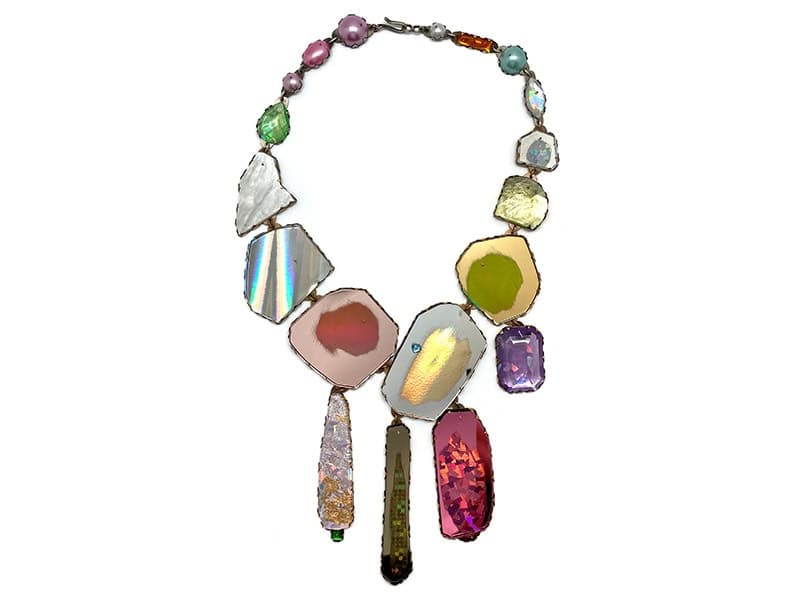
The jewelry that earns permanent residency on your body is rarely the flashiest piece you own. It's the one that survives the commute, holds its finish through a long week, and still feels considered when you glance down at it on a Tuesday. Art Jewelry Forum's April 2026 "On Offer" installment understands this implicitly. The latest edition of its bi-monthly gallery showcase, published April 6, gathers new and recent works from member galleries across four continents, each piece presented with full materials disclosure, retail pricing, gallery contacts, and curatorial notes. What distinguishes this particular installment is a coherent material intelligence: the galleries have converged, perhaps independently, on a shared conviction that the most compelling studio jewelry right now lives at the intersection of ancestral metallurgy, ecological responsibility, and genuinely surprising polymers.
Art Jewelry Forum has spent nearly three decades building the institutional scaffolding for exactly this kind of attention. Founded in 1997 as a nonprofit advocate for the contemporary art jewelry field, AJF promoted the work of 200 artists through its On Offer series alone in 2025. The April 2026 installment continues that pace, moving through rings, earrings, and brooches as form categories while pushing hard on the question of what a material actually means when a maker chooses it with intention.
Tumbaga: The Alloy with a 4,000-Year Wearability Record
Tumbaga is not a new material. Pre-Columbian goldsmiths across Mesoamerica and South America worked this gold-copper alloy for millennia, prizing its lower melting point, which made it more workable at the forge, and the warm surface it develops through depletion gilding, a process that dissolves surface copper to leave a gold-rich skin. What the galleries in this April installment are doing with tumbaga is something more contemporary: treating it as a material with provenance rather than simply as a budget alternative to high-karat gold. The metalwork here uses tumbaga's natural warmth, its textural depth, and its layered surface history as a design statement in its own right.
For daily wear, tumbaga carries practical advantages worth understanding. The gold-rich outer surface polishes readily and develops a gentle patina under regular wear. The copper content means it benefits from occasional buffing and should be kept away from prolonged water exposure, but for a ring worn through an ordinary day at a desk or in a studio, it performs with quiet reliability. These are not preservation pieces. They are working jewelry with a metallurgical argument behind them.
Recycled Silver: Familiar Metal, Renewed Conscience
Alongside tumbaga, this On Offer edition highlights studio pieces worked in recycled silver, a material that has moved decisively from marketing claim to standard practice among serious studio jewelers. Recycled sterling or fine silver, sourced from reclaimed industrial or post-consumer streams, is metallurgically identical to newly mined silver. The distinction is entirely in provenance, and in what that provenance signals about a maker's studio practice.
What the studio context adds to recycled silver is intention. These are not factory chains stamped out at volume. The metalwork showcased by AJF member galleries is small-batch, often hand-fabricated, and the recycled sourcing forms part of a larger material philosophy that also shapes surface treatment, form vocabulary, and closure design. That last point deserves practical attention before purchase: a well-fitted box clasp, a locking ear post, or a screw-back nut separates a piece you'll wear daily from one that generates anxiety on a crowded elevator. Sterling silver itself is durable and accessible in price, which makes thoughtfully constructed recycled-silver pieces among the strongest value propositions in the studio market.
PLA and Bio-Plastic Earrings: The Polymer Argument for Daily Wear
The most unexpected material thread in this installment, and arguably the most exciting for anyone building a wearable everyday collection, is the presence of PLA and bio-plastic in earrings designed for genuine daily rotation. PLA, or polylactic acid, is a biopolymer derived from plant starches such as corn or sugarcane. It entered studio jewelry largely through 3D-printing technology, but the most interesting makers are now working it by hand as well as through additive fabrication, exploiting its capacity to hold saturated color, mimic organic textures, and produce forms that would require prohibitive labor hours in metal.

Bio-plastics more broadly, including materials derived from seaweed, cellulose, and agricultural byproducts, are appearing in earrings with a specific advantage for daily wear: they are extraordinarily light. A heavy earring at 8 a.m. is a liability by noon. A PLA or bio-plastic piece weighing just a few grams can be worn for twelve hours without discomfort, which is not a small thing if you actually intend to wear your jewelry rather than just own it. For wearers with metal sensitivities, this category merits serious consideration: properly finished PLA posts in contact with ear piercings carry none of the nickel-reactivity concerns that plague silver-plated or base-metal pieces. Pricing for PLA studio earrings in the AJF gallery network has historically been accessible, sometimes under US$100, making them among the most compelling entry points into studio jewelry for new collectors.
Brooches and the Gemstone as Cultural Act
The sharpest curatorial thread in the April installment is how certain brooches reposition gemstone selection as a cultural choice rather than a purely commercial transaction. In conventional fine jewelry, stone selection is usually a function of market value and trend. The studio practice represented by AJF's member galleries challenges this directly. The brooches highlighted in this edition incorporate stones chosen for geographic origin, mythological resonance, or relationship to the maker's material heritage, placing the gem as a carrier of meaning rather than a marker of expenditure.
A stone selected because it reflects a maker's specific cultural inheritance is a fundamentally different object from the same stone chosen because it trends favorably this season. For daily wear, brooches do require practical consideration: a locking C-catch or a bar-pin closure protects both the piece and your clothing. A brooch that functions at the collar, on a lapel, or pinned to a bag strap earns its keep in a working wardrobe far more readily than one confined to the gallery wall.
The Practical Roundup: Where to Focus
Across the rings, earrings, and brooches in this April On Offer edition, several categories stand out for readers deciding where to direct their attention and budget:
- Best for sensitive ears: PLA and bio-plastic earrings with silver or titanium posts. The lightest option in the edit, and the safest for reactive skin.
- Best under $500: Recycled sterling silver and PLA pieces represent genuine studio craft at accessible price points. The AJF gallery network consistently surfaces handmade work in this range that carries the material seriousness of far more expensive studio jewelry.
- Best stackable ring: Tumbaga bands, with their surface warmth and slightly irregular handmade character, layer naturally alongside sterling or gold-filled stacks without competing. No two sit identically, which is precisely the point.
- Best cultural statement piece: The gemstone brooches represent the most considered investment in the edition. Knowing why a maker chose a particular stone, and from which tradition, enriches the wearing of it in ways that trend-driven gemstone choices rarely do.
The April 2026 On Offer installment is not simply a product listing. It is a set of arguments about what materials mean when they are chosen carefully, and what jewelry can do when it is made to be worn rather than admired behind glass.
This article was produced by Prism’s automated news system from verified source data, official records, and press releases, then run through automated quality and moderation checks before publishing. The system is built and supervised by the people who set the standards it runs under. Read our full AI policy.
Did this article answer your question?