Bag Bijoux turns a $2.1 million bag charm into wearable art
Bag Bijoux is turning handbag candy into serious high jewelry, led by a $2.1 million diamond charm that shifts from bag accessory to pendant or pin.
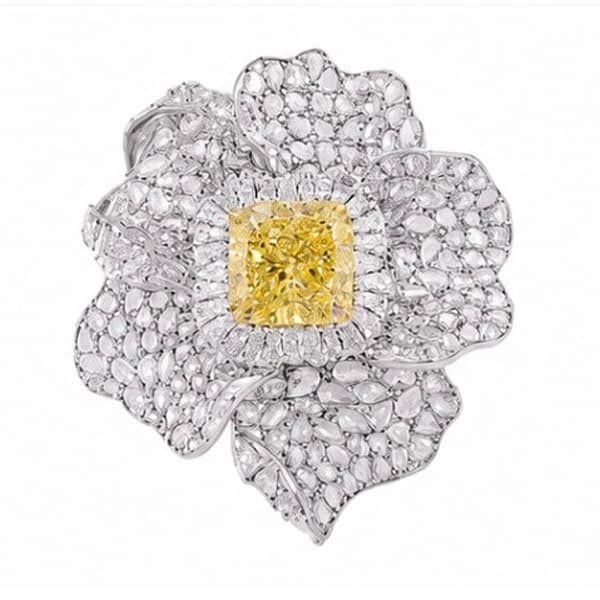
A diamond bag charm that can leave the handbag and become a pendant or pin changes the object’s meaning instantly. Bag Bijoux has built its name on that idea, and its $2.1 million Gilded Bloom Haute Bag Bijoux pushes it to the far edge of luxury with a center stone large enough to read like a standalone jewel, not just an accessory.
From vanity accessory to convertible jewel
Ashna Mehta started Bag Bijoux with a practical problem that many Hermès owners understand: how do you personalize a bag without hurting its resale value? She and her sister, Aria Mehta, began looking for a way to add identity without permanently altering the bag itself, and that restraint is the real hook of the brand. Instead of stitching on something permanent or chasing a throwaway trend, Bag Bijoux builds pieces that detach, travel, and recast themselves as jewelry.
That convertibility matters because it separates the line from the fluffy, novelty bag charms that made the category visible in the first place. A detachable jewel can sit on a Birkin one night, then move to a chain or lapel the next day. In luxury terms, that is not just decoration, it is portability of value, and that is why the idea has drawn attention well beyond the usual bag-charm crowd.
The charm that turned into a headline object
The piece that crystallized the concept is Gilded Bloom Haute Bag Bijoux, a one-of-a-kind design priced at $2.1 million. Mehta unveiled it at the 2026 Couture show in Las Vegas, where she placed it on one of her mother’s brightly colored Birkins and entered it in the haute couture category. It won top honors at the Couture Design Awards, which is the sort of recognition that moves a jewel from social media spectacle into the language of serious craftsmanship.
The construction reads like high jewelry first and bag ornament second. At the center sits a 36.89-carat natural fancy intense yellow cushion-cut diamond. Around it, the design uses 6.65 carats total weight of kite-shape GH/VVS-VS diamonds, while the petals are built with 34.9 carats total weight of rose-cut diamonds. Those details matter because they place the object in the territory of fine-jewelry grading and stone selection, not costume embellishment.
- Center stone: 36.89-carat natural fancy intense yellow cushion-cut diamond
- Surrounding stones: 6.65 carats total weight of kite-shape GH/VVS-VS diamonds
- Petal structure: 34.9 carats total weight of rose-cut diamonds
- Format: converts from bag charm into pendant or pin
Why the Bag Bijoux idea took off so quickly
Bag Bijoux first caught fire after it appeared at the Ambani wedding in 2024, where a diamond-encrusted rose-gold AM charm and an evil-eye jewel on a croc Kelly clutch drew attention online. That moment gave the brand a visual shorthand: high-gloss personalization for bags that already function as status markers. Once that image traveled, the idea spread quickly among collectors who already think of handbags as rotating assets rather than simple accessories.
The client list reinforced the impression that this was more than a one-off stunt. Vogue Singapore has linked the brand to Kylie Jenner, Mindy Kaling, Nita Ambani, and Isha Ambani, names that sit at the intersection of celebrity, family wealth, and highly curated public dressing. In that company, a bag charm stops being playful and starts acting like a signature.
Provenance is part of the pitch
Mehta is based between Dubai, New York, and London, but her family background is the deeper context. She comes from the Rosy Blue diamond family, and JCK identified Dilip Mehta, Rosy Blue’s CEO, as her grandfather. That lineage gives Bag Bijoux immediate credibility in stones, sourcing, and market access, especially when the pieces are asking buyers to accept bag charms at fine-jewelry price points.
Mehta has said her family supports the business and helps source stones, which is important in a category where provenance can be easy to obscure. Rosy Blue’s public stance emphasizes responsibility, ethical sourcing, and community upliftment, and those claims fit the way Bag Bijoux presents itself as a more elevated, gem-led proposition. The ethical question for buyers is straightforward: if a piece is going to command a seven-figure price, the sourcing story should be as precise as the setting.
Status theater or a real category?
Right now, jewelry-bag hybrids live at the extreme top end of luxury, where visibility matters as much as wearability. The audience is still ultra-small, and the first read of a $2.1 million charm is theatrical, especially when it is debuted on a Birkin and framed as couture. But convertibility gives the category a harder argument than pure spectacle: a jewel that can move from bag to body has a functional logic that novelty charms never had.
That function is what could eventually make the trend relevant beyond a tiny circle of collectors. A modular piece with a serious center stone, high-clarity side stones, and a clear way to wear it in more than one context is easier to justify than a one-note ornament. For now, Bag Bijoux belongs to the rarefied world where beauty, branding, and portable value overlap, but the strongest case for its future is not the price tag, it is the fact that the jewel refuses to stay attached to one object.
This article was produced by Prism’s automated news system from verified source data, official records, and press releases, then run through automated quality and moderation checks before publishing. The system is built and supervised by the people who set the standards it runs under. Read our full AI policy.
Did this article answer your question?