Bustle spotlights everyday jewelry, from tennis bracelets to colored stones
Tennis bracelets, studs, colored stones, and vintage-inspired pieces are winning 2026 because they finish an outfit without demanding attention. The smartest everyday jewelry now earns its keep through versatility, memory, and ease.
Everyday jewelry is having a very practical kind of glamour
The most compelling jewelry in 2026 is not the loudest piece in the room. It is the bracelet, ring, or pair of earrings that slips into daily life and makes everything else look more considered. Bustle’s 2026 coverage captures that shift neatly: while the year’s bigger jewelry mood leans maximal and statement-making, the pieces people actually reach for day after day are the ones that finish an outfit with almost no effort.
That tension matters. A jewelry box can contain all the drama in the world, but the pieces with the highest cost-per-wear are usually the ones that move easily from a work shirt to a dinner jacket, from weekend denim to something more polished. In that sense, everyday jewelry is less about restraint than about editing. The goal is to choose pieces with enough character to read as intentional, but enough ease to disappear into the rhythm of getting dressed.
The tennis bracelet still sets the standard
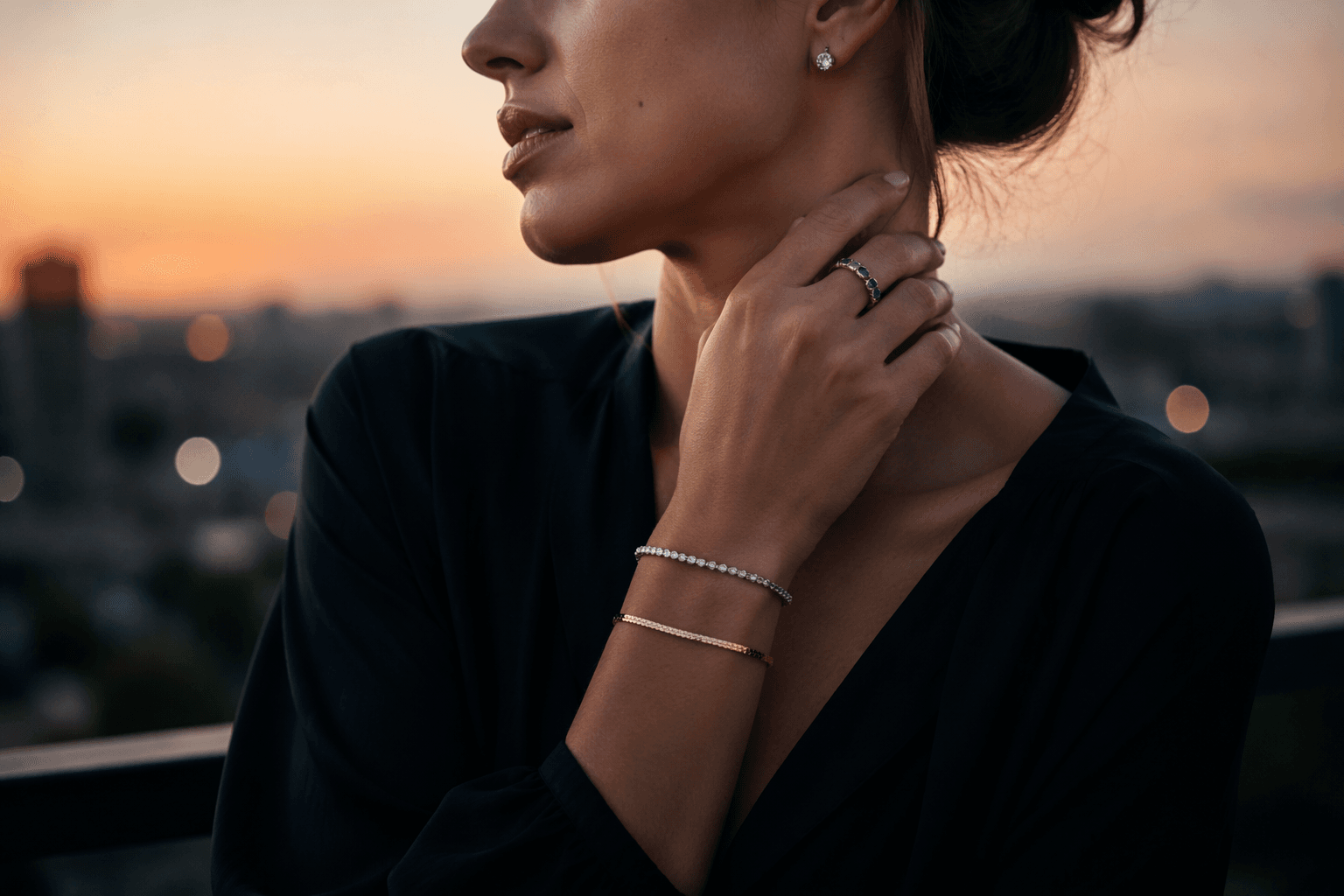
If there is one everyday piece that has crossed from classic into cultural shorthand, it is the tennis bracelet. Its modern legend is tied to Chris Evert, who unintentionally turned a diamond line bracelet into sports-fashion lore when hers came off during the 1978 US Open. That story still gives the style its charge: it is refined, but not precious in a brittle way. It belongs on a wrist that actually moves through the day.
That’s why the tennis bracelet remains one of the rare jewelry staples that feels equally suited to a blazer sleeve and a sweatshirt cuff. Sotheby’s has noted that the style has stayed popular with celebrities for decades, which helps explain its durability in the market. It is one of the few diamond pieces that reads as everyday infrastructure rather than special-occasion excess, especially when the setting is clean and the line of stones is tightly articulated.
For daily wear, the best tennis bracelets are the ones that do not feel costume-like. A well-made version has a fluid, evenly graduated rhythm and sits flat against the wrist, which makes it comfortable enough to wear without thinking. That is the point: it should look as if it has always belonged there.
Simple studs and small-scale sparkle do the quiet work
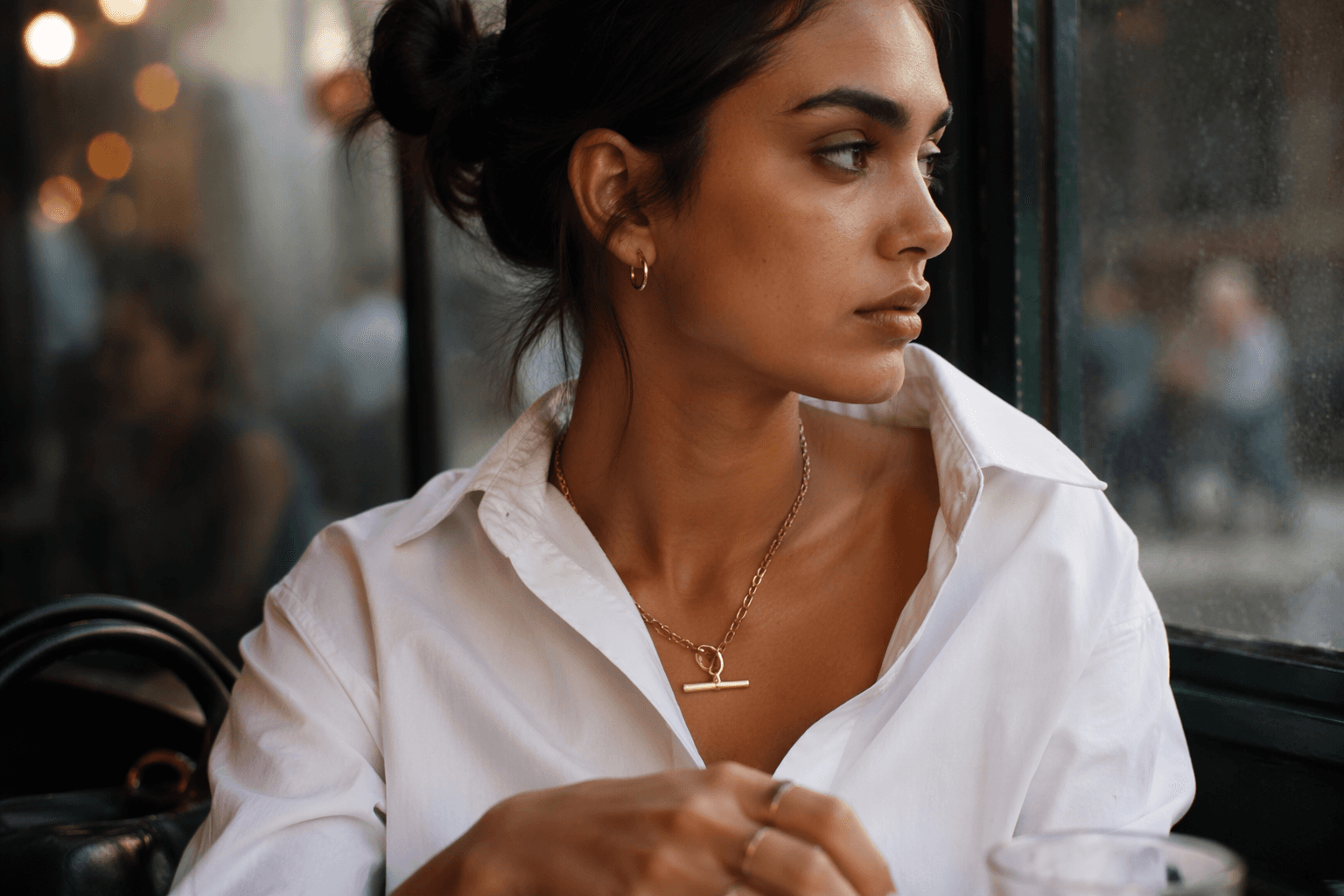
Alongside the tennis bracelet, simple studs remain the purest expression of low-effort polish. They are the jewelry equivalent of a perfectly tailored hem, the kind of detail that registers most when it is missing. Bustle places them in the same everyday category as tennis bracelets because they solve a familiar problem: how to make an outfit feel complete without adding visible effort.
Studs are also where material quality matters most. A clean bezel or a restrained prong setting changes the entire mood of the piece. Bezel settings tend to feel more modern and secure, with a smooth edge that protects the stone and reduces snagging, while prong settings expose more of the gem and let in more light. For everyday use, that difference is not just technical. It determines whether the earring feels streamlined and durable or more delicate and decorative.
The smartest studs are not necessarily the largest. They are the ones that hold their shape in the ear, sit close to the lobe, and echo the rest of your jewelry rather than competing with it. Worn with a tennis bracelet or a slim ring, they create that elusive effect luxury always promises but rarely achieves: ease that still looks edited.
Colored gemstones are making everyday dressing feel more personal
Colored stones are where everyday jewelry gets more expressive. Statista projects worldwide jewelry revenue at US$408.64 billion in 2026, and within that enormous market, colored gemstones are drawing more attention from buyers. The appeal is easy to understand. A sapphire, emerald, tourmaline, garnet, or spinel does something a colorless stone often does not: it introduces identity. It can feel like a mood, a memory, or a private code.
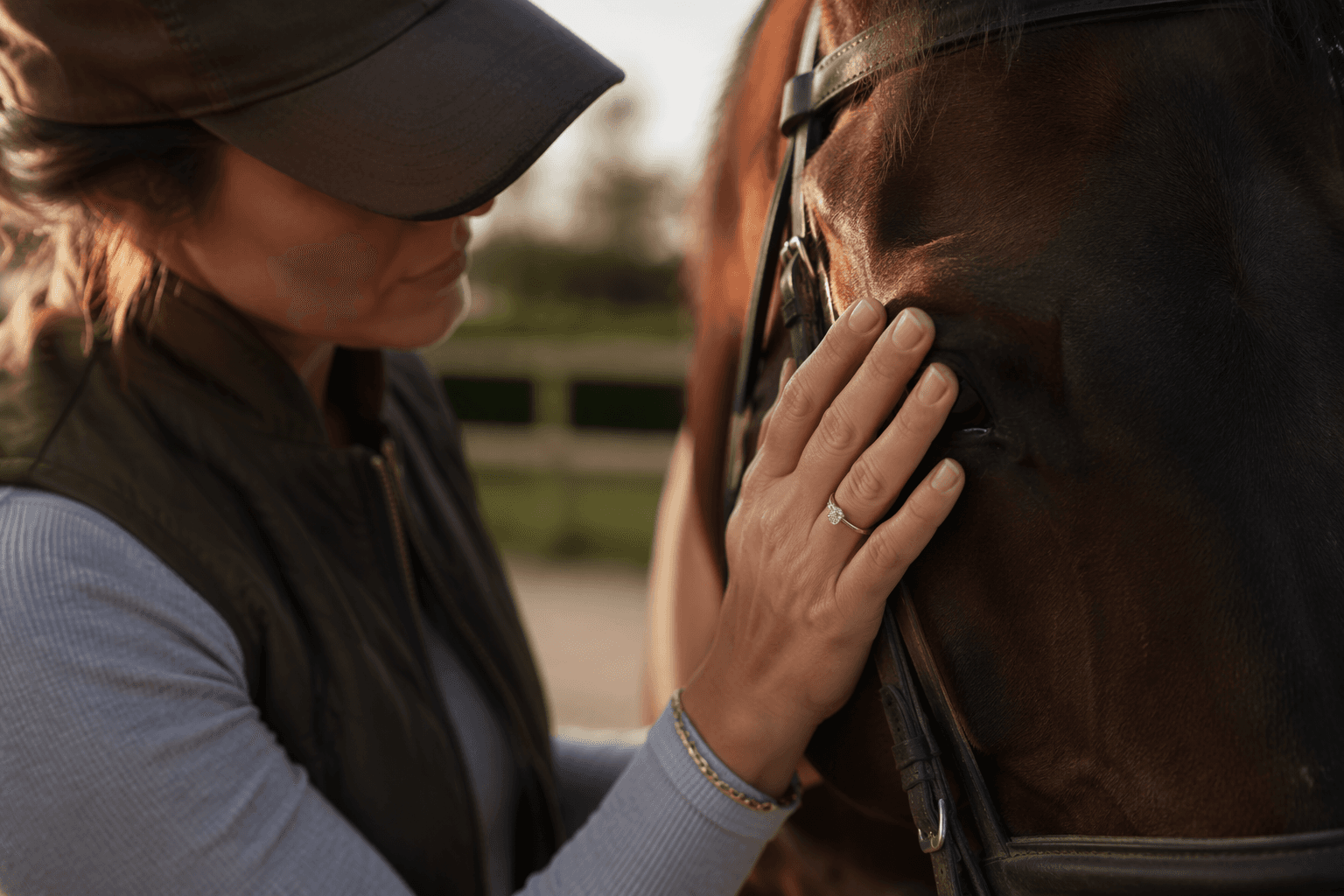
That shift also reflects a broader appetite for purchases that feel more personal and less generic. Sotheby’s has pointed to a new generation of gemstone collectors becoming increasingly active in haute joaillerie, and that enthusiasm filters down into everyday jewelry too. A colored stone in a pendant, ring, or pair of studs gives the wearer a way to make a familiar silhouette feel specific.
For daily wear, the key is balance. A bright stone does not need a complicated setting to make an impact. In fact, a simple mount often lets the color do the talking. That is what makes colored gemstones so useful in rotation: they offer individuality without the kind of visual weight that limits wear. One well-chosen stone can anchor an entire jewelry wardrobe.
Vintage-inspired pieces are the most convincing answer to fast fashion fatigue
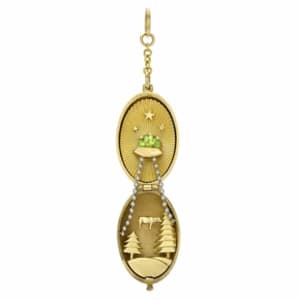
Vintage-inspired jewelry has become persuasive because it offers something many current trends cannot: a sense of continuity. Trade commentary keeps returning to the same reasons consumers are drawn to it, namely craftsmanship, longevity, and emotional connection. Independent jewelers see the category as especially effective because it makes luxury feel more relatable and wearable, which may be the most useful definition of everyday jewelry right now.
What makes vintage-inspired designs work is not nostalgia alone. It is the feeling that a piece has survived fashion’s speed. An engraved detail, an old-world silhouette, a milgrain edge, or a softly faceted stone can make a ring or pendant feel as though it carries a story before it ever becomes your own. In a market that can often feel overdeveloped and overproduced, that matters.
This is also why vintage cycles back so reliably. It does not need to look antique to carry the authority of something remembered. The best examples avoid costume and land instead in that middle space between heirloom and current, where jewelry feels collected rather than newly acquired. That makes vintage-inspired pieces especially strong as accents: one ring, one pendant, one pair of earrings, enough to change the tone of everything around them.
The everyday rule for 2026: buy for repetition, not just for impact
The smartest jewelry in this market is the piece that can be repeated without fatigue. Tennis bracelets win because they are beautifully engineered and historically loaded without feeling formal. Studs earn their keep because they disappear into daily life while sharpening it. Colored gemstones justify themselves when they bring personality to a familiar form. Vintage-inspired pieces last because they carry story, texture, and a kind of emotional permanence.
Bustle’s larger 2026 trend picture makes the point even clearer: the year belongs to both maximalism and restraint, but the pieces that will stay in rotation are the ones that bridge those worlds. Jewelry does not need to be understated to be wearable. It needs to have enough conviction to feel like part of a life, not merely part of a look.
This article was produced by Prism’s automated news system from verified source data, official records, and press releases, then run through automated quality and moderation checks before publishing. The system is built and supervised by the people who set the standards it runs under. Read our full AI policy.
Did this article answer your question?