City Streets Inspire Everyday Jewelry Trends: Mix Metals, Add Personal Touches
Street-tested and city-worn: the smartest everyday jewelry moves of 2026 come down to three shifts — free metal mixing, one strategic chunky piece, and something personal.
Walk almost any major city right now and a pattern emerges: the people who look most put together are not wearing the most jewelry. They are wearing the right jewelry, layered with intention, anchored by one bold choice, and quietly personalized in a way that makes the whole stack feel like it belongs to someone specific. The signals from street level in 2026 are converging around three practical moves — mixing metals without apology, using one chunky piece as a focal point rather than piling on volume, and reaching for personalized pieces that carry weight beyond aesthetics.
The mixed-metal trend is no longer fringe; it is at the center of 2026 styling. But knowing *how* to execute it without looking like you grabbed from three different jewelry boxes is where most people struggle. The same goes for chunky pieces: the street-level read is not maximalism for its own sake, but selective emphasis. Here is how each of these moves plays out, city by city, and how to build them from everyday components.
New York City: The Sculptural Stack
New York's jewelry uniform in spring 2026 has coalesced around what Bond Eye Jewelry has called "Organic Maximalism" — bold, nature-inspired silhouettes worn against otherwise spare outfits. The street cue is specific: heavy cuffs and oversized hoops with rippled, molten textures treated as architectural investments that elevate a simple white tee. The key is that the outfit stays neutral so the jewelry can do its work.
Build the NYC look from three components:
- Mixed-metal hoops (one gold, one silver, or a two-tone pair) in the ear. Mismatched by design, not accident.
- A slim, graduated chain necklace in your secondary metal — worn short, around 16 inches, so it sits above any collar.
- One chunky focal ring on the index or middle finger, either a wide sculptural band or an oversized signet. Everything else on the hand stays bare or minimal.
The execution detail most people miss: try a 70/30 metal split rather than a 50/50 divide. If your outfit is warm-toned, wear mostly gold with a pop of silver or white gold to add edge. The dominant metal reads as intentional; the accent reads as confident.
London: Refined Contrast, One Edge
London street style in early 2026, particularly around East London's Brick Lane market weekends, runs quieter than New York but sharper. Chunky gold cuffs, thick vintage-inspired chains, and single statement earrings are replacing delicate matching sets. The Londoner's edit is about one disruptive choice dropped into an otherwise composed look — a chunky bracelet against a tailored sleeve, a single bold earring paired with a near-invisible stud on the other side.
Build the London look from three components:
- A vintage-inspired thick chain necklace in yellow gold, worn over a crew-neck or tucked into a coat collar.
- A mixed-metal or two-tone ring that does the bridging work between any gold and silver elsewhere on the body. Two-tone pieces train your eye to see mixed metals as cohesive rather than mismatched.
- A single sculptural earring or an asymmetric pair — one larger, one smaller — rather than a matched set.
The execution note for the chunky bracelet: wear it on the wrist opposite your watch or phone hand so it does not compete with tech hardware, and make sure the clasp is a box or lobster claw style rather than a spring ring. Pieces worn constantly need hardware that can withstand the daily mechanics of a sleeve, a bag strap, a desk edge.
Paris: The Sentimental Pendant
Paris delivers the clearest personalization signal of any city right now. The statement pendant has emerged as the lead note of 2026, specifically designed to be worn as a protective or sentimental totem. These long-line pieces were a staple on the runways of Michael Kors, Tory Burch, and Hermès, styled unexpectedly over turtlenecks and structured blazers rather than open necklines. The Parisian move is to let one meaningful piece do all the talking.
Build the Paris look from three components:
- A long pendant necklace (28 to 32 inches) carrying something personal: a locket with a photo, an initial, coordinates of a meaningful place, or a birthstone set simply in gold or silver. Engraved initials, meaningful dates, birthstones, and symbolic shapes transform jewelry into deeply personal keepsakes.
- Thin stacking rings in two or three metals — worn on the same hand, different fingers. Keep them low-profile so they do not compete with the pendant's story.
- Small, tight hoops or classic studs in the ear. Nothing that asks for attention; the pendant earns it.
The execution challenge with a long pendant is proportion: it should land at or below the sternum, and the chain should be fine enough that the pendant itself draws the eye rather than the links. If you want to layer a shorter necklace over it, keep the upper chain at 16 to 18 inches so the two pieces occupy distinct visual registers and do not tangle.
Tokyo: The Experimental Layer
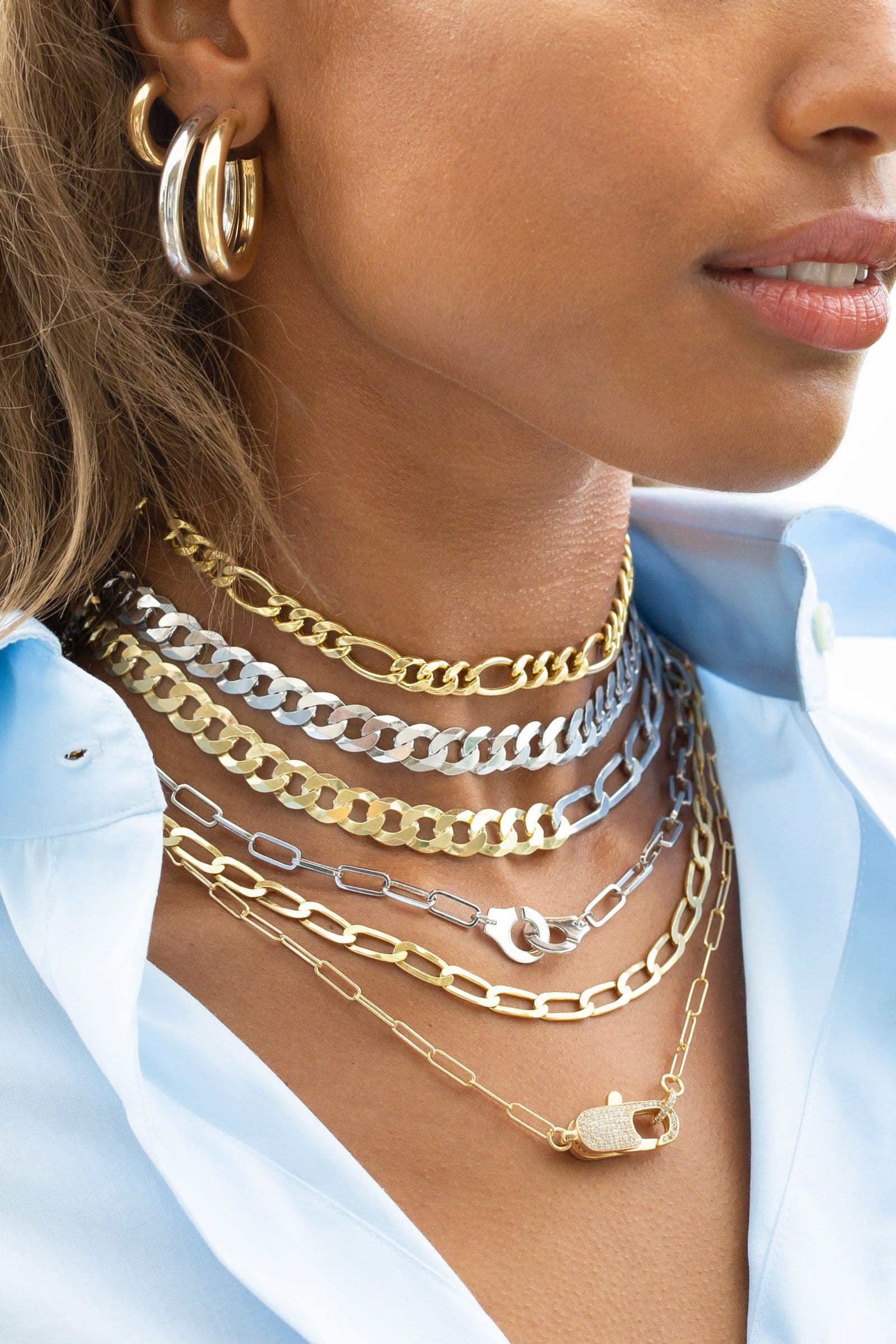
Tokyo street style, observed particularly around Harajuku and Shimokitazawa on market Sundays, has been doing mixed metals longer than anywhere else, and the 2026 version is its most wearable: necklace layering is where metal mixing really shines. Wearing multiple chains in different metals creates depth and dimension. The trick is varying the lengths so each chain has its own space: a short gold choker, a medium-length silver chain, and a longer rose gold pendant necklace create distinct layers that do not compete.
Build the Tokyo look from three components:
- A gold or silver choker (14 to 16 inches) as the top layer — this anchors everything below it.
- A medium-length chain (20 to 22 inches) in the contrasting metal, plain or lightly textured.
- A longer charm or pendant piece (26 to 28 inches) in rose gold or a two-tone finish that picks up both metals above it.
The key to keeping this from looking chaotic: let one metal lead, repeat the other in a smaller way, then use the connector piece — whether pearls, a two-tone chain, or a charm — across pieces so the mix reads designed.
The Hardware Question Nobody Talks About
Across all four city looks, one practical issue separates the pieces people actually wear daily from the ones that live in a drawer: clasp and hardware quality. A necklace with a spring-ring clasp is a frustration you feel every morning. A lobster claw or toggle clasp on a bracelet you wear constantly is a small investment in not losing the piece during a commute or a gym bag grab. When buying everyday jewelry, check whether the clasp material matches the chain metal — mixed hardware (a silver clasp on a gold chain) accelerates corrosion at the join, shortening the life of a piece you intend to wear every day.
Metal compatibility matters for long wear too. Durable, long-wear metals like stainless steel serve as a sustainable alternative to short-lived fast-fashion pieces and hold up against daily contact with water, perfume, and skin. For precious metals, 14K gold outperforms 10K in tarnish resistance; vermeil pieces need a thick enough gold layer (at least 2.5 microns) to survive the friction of everyday wear without exposing the base metal underneath.
Personalization as Daily Practice
The locket, the initial ring, the coordinate-engraved bracelet: personalized pieces are surging, especially birthstone pendants, stacking rings, and charm bracelets. People want jewelry with intention: something symbolic, sentimental, and truly theirs. This is not a nostalgia trend. It reflects a shift in how people think about the objects they put on every morning. A piece that carries meaning is also a piece you are less likely to leave on a nightstand.
The subtler 2026 interpretation of personalization moves beyond block initials. Instead of overt charms or initials, symbols become subtler, encoded within form or engraving: lovers' knots, secret messages, numerology, or abstract shapes that carry personal weight all play into the narrative. Stack a ring inscribed with coordinates beside a pendant that hints at a birthstone color. Wear worn gold beside polished newness. The story is yours; the styling just has to let it breathe.
The cities are running the same experiment from different angles, and they are all arriving at the same conclusion: the most compelling everyday jewelry is specific, intentional, and built to last the day without a second thought.
This article was produced by Prism’s automated news system from verified source data, official records, and press releases, then run through automated quality and moderation checks before publishing. The system is built and supervised by the people who set the standards it runs under. Read our full AI policy.
Did this article answer your question?