Cultus Artem’s River of Heaven necklace pairs salt-and-pepper diamonds, Tahitian pearls
Salt-and-pepper diamonds and Tahitian pearls gave Cultus Artem’s River of Heaven a rugged, lunar shimmer. The piece turned asymmetry into quiet luxury.
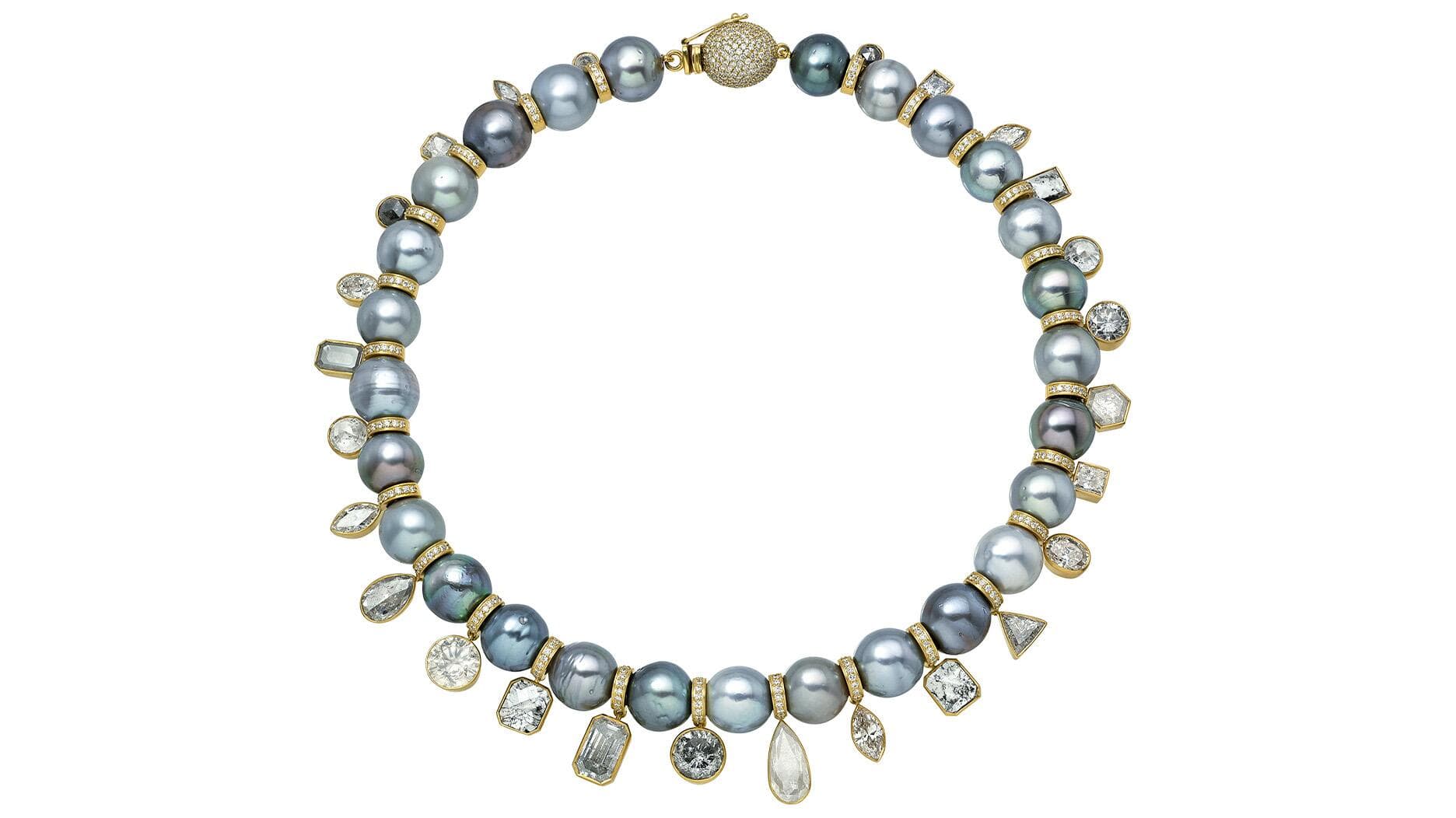
Cultus Artem’s River of Heaven necklace made its case for a new kind of statement jewelry: less polished symmetry, more natural irregularity. Shown in Las Vegas at Couture as part of the brand’s Through Paradox collection, the necklace combined 26 salt-and-pepper diamond charms totaling more than 39 carats with Tahitian pearls, all set in 18-karat yellow gold and finished with 3 carats of white diamond pavé at the bail and clasp. The price is on application, which keeps the piece in the realm of private-client fine jewelry, but its design language points well beyond the showcase case.
Holly Tupper, Cultus Artem’s founder and designer, has built the necklace around stones that do not try to look uniform. She said she has always been fascinated by the more unusual diamond and called salt-and-pepper stones “a miniature history lesson,” a useful phrase for a piece whose appeal lies in visible carbon inclusions and the sense that each stone carries its own internal map. The charms were chosen to differ from one another while still working as a single composition, and that balance between mismatch and harmony is what gives the necklace its pull.
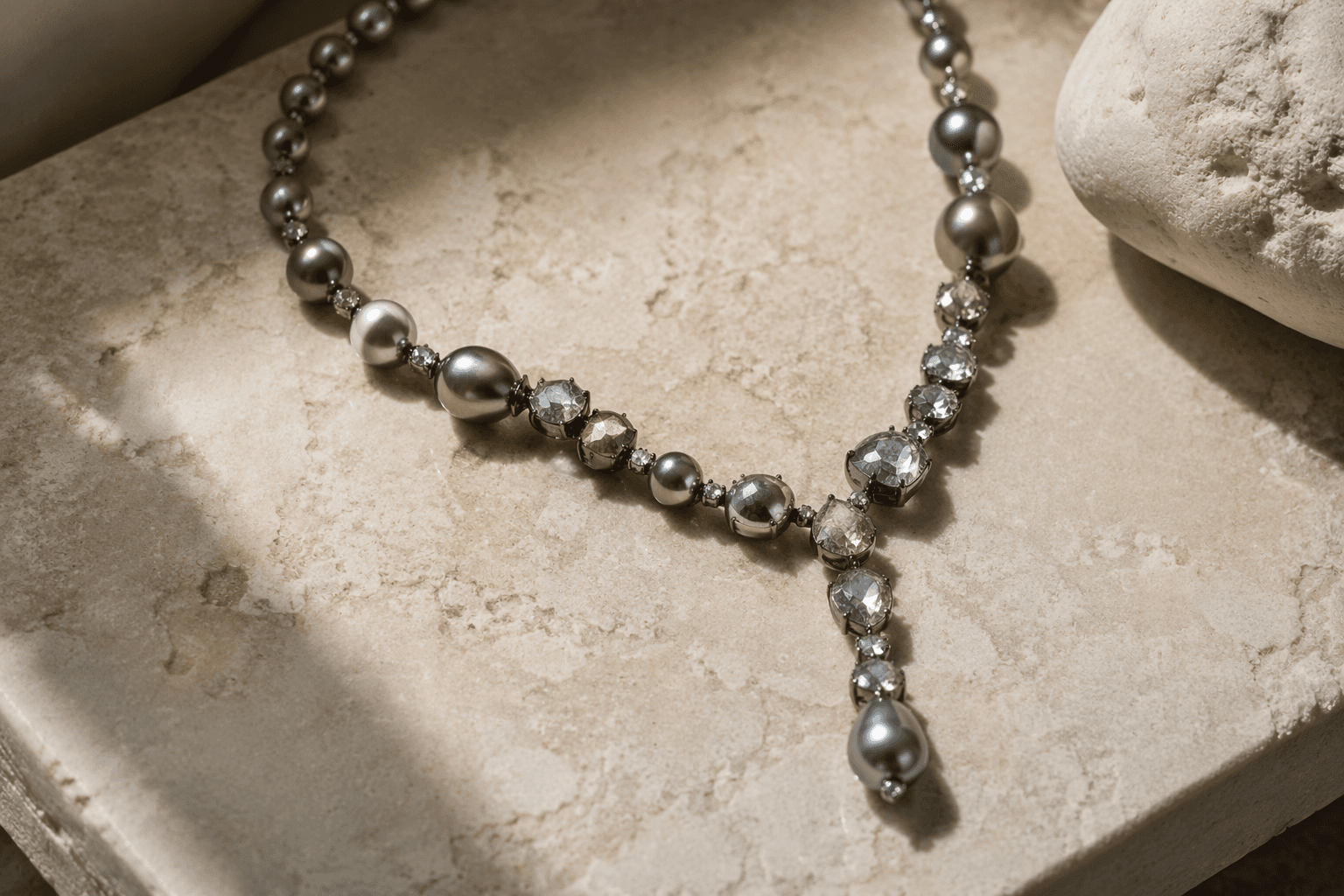
The story behind the title sharpens the effect. River of Heaven references the Chinese folktale of the Cowherd and the Weaver Girl, whose reunion across the Milky Way is echoed here by salt-and-pepper diamonds cascading through silver-toned Tahitian pearls. That visual idea lands neatly in one of jewelry’s most wearable current directions: organic luxury that does not depend on perfect regularity. The same attitude could translate easily into a single diamond pendant on a short chain, a pearl strand with uneven spacing, or a layered-necklace look that lets dark, speckled stones sit beside lustrous pearls instead of trying to match them.
Cultus Artem itself has an international backstory that fits the piece’s hybrid character. Originally established in Singapore in the 1990s, the house was rebranded in the United States in 2015 and is now based in San Antonio, Texas. Tupper studied art and sculpture at Tulane University, worked as a Wall Street broker, then lived in Singapore, where she learned beading and metalsmithing and began building the artisan-driven practice that became Cultus Artem. At Couture’s Design Atelier, the curated section for emerging designers and brands, that pedigree mattered: WWD has noted that rising gold prices and a more competitive luxury market are forcing new jewelry names to distinguish themselves. Cultus Artem answered with craft, narrative, and a handmade leather jewelry box from a small workshop in Bangladesh, details that make the necklace feel considered from the stones to the storage.
This article was produced by Prism’s automated news system from verified source data, official records, and press releases, then run through automated quality and moderation checks before publishing. The system is built and supervised by the people who set the standards it runs under. Read our full AI policy.
Know something we missed? Have a correction or additional information?
Submit a Tip