Diamonds Built for Daily Wear: Pendants, Studs, and Chains That Last
Not all diamonds are made for the occasion jewelry box. These seven pieces prove a 10-on-the-Mohs-scale stone belongs in your daily rotation.
Why Diamonds Are the Workhorse Stone
The argument for diamonds in everyday jewelry begins with physics. At 10 on the Mohs hardness scale, diamond is the hardest natural substance known, which means a pendant worn through a morning commute, a gym session, and a dinner out is not the reckless proposition it might seem with, say, a tanzanite or an emerald. Combine that structural integrity with diamond's unmatched refractive index and you get a stone that performs beautifully under fluorescent office lighting and candlelight alike. April may be diamond's official birthstone month, but the case for wearing one every day is entirely year-round.
The seven pieces highlighted in National Jeweler's April style column make exactly that argument: that diamonds belong not only in velvet boxes reserved for evenings out, but in the daily rotation alongside your worn-in gold chain and your most comfortable cashmere. Each piece illustrates a different facet of what everyday diamond jewelry can look like, from a $3,850 entry point to an investment-grade earring set priced at $48,525.
The Pendant as Daily Anchor
The pendant is arguably the most forgiving jewelry format for daily wear. It sits flat, moves with the body, and doesn't require a partner to put on. The three necklaces in this selection span wildly different design vocabularies, which is precisely the point.
Chris Ploof's "Yanone" pendant ($6,750, shown with handmade gold chain) is the most technically unusual of the group. Hand-forged from Damascus steel and 18-karat yellow gold in Ploof's Massachusetts studio, it takes its name and silhouette from the traditional Japanese arrowhead. The "yanone" form has been refined over centuries into something aerodynamic and elemental, and Ploof's version sets two horizontal marquise diamonds into the gold element of the piece. The result is a pendant that carries the visual drama of a statement piece while being flat enough and secure enough to wear without a second thought. Damascus steel, produced by folding and forging layered metals at high temperatures, is extraordinarily dense and durable, which makes this pendant as technically suited for daily wear as it is aesthetically singular.
Common Era's "Artemis Goddess of Wild Things" necklace in 14-karat yellow gold ($5,000) takes a completely different approach. The piece centers on a one-inch diameter coin medallion featuring an ethically sourced 1.5mm round-cut diamond, suspended on an 18-inch rolo chain. Common Era's design philosophy centers on ancient myth and materials that endure: their solid 14-karat gold pieces are built to "not tarnish, fade, or degrade." The Artemis necklace wears like a talisman, low-profile enough to layer under a shirt collar and substantial enough to carry meaning worn alone.
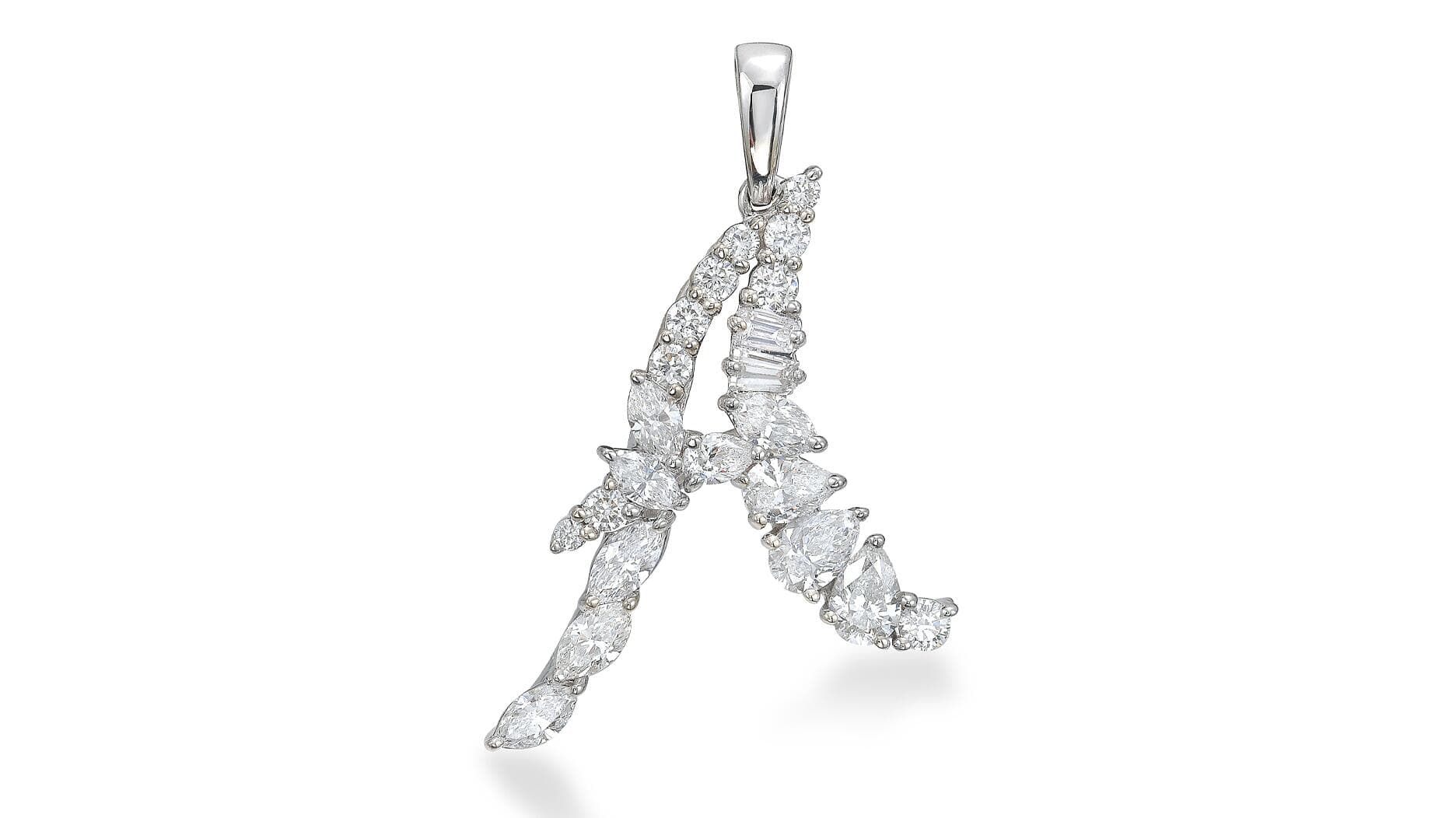
Isabel Delgado's diamond "A" initial pendant in 14-karat white gold ($15,000) represents the category's most personal expression. Initial pendants have a long tradition in fine jewelry precisely because they answer a question that most jewelry cannot: whose is this, and why does it matter? At this price point, the construction and diamond selection are expected to reflect genuine craftsmanship, and the white gold setting offers a crisp, cool contrast to the warmth of a yellow gold layering chain.
Drop Earrings That Read as Wearable
A.I. Jewels' marquise- and round-cut diamond drop earrings in 18-karat white gold ($48,525) are the selection's most elevated offering, and their placement in a guide framed around daily wear makes a deliberate statement. The combination of marquise and round cuts in a drop format creates movement without bulk; the white gold setting keeps the diamonds at center stage without visual competition. Drop earrings at this price point are not impulse purchases, but they are, in the right hands, pieces designed for regular use rather than for the occasion drawer.
Necklaces Built for Layering
Lauren K's scattered diamond "Remi" heart necklace in 18-karat yellow gold ($8,340) occupies the sweet spot between sentimental and sophisticated. A heart silhouette in fine jewelry can tip easily into the saccharine, but the scattered diamond treatment, which distributes stones across the surface rather than outlining the form, reads as thoroughly modern. The 18-karat yellow gold setting, richer in gold content than 14-karat alloys, lends the piece a warmth that works particularly well with layered necklace combinations.
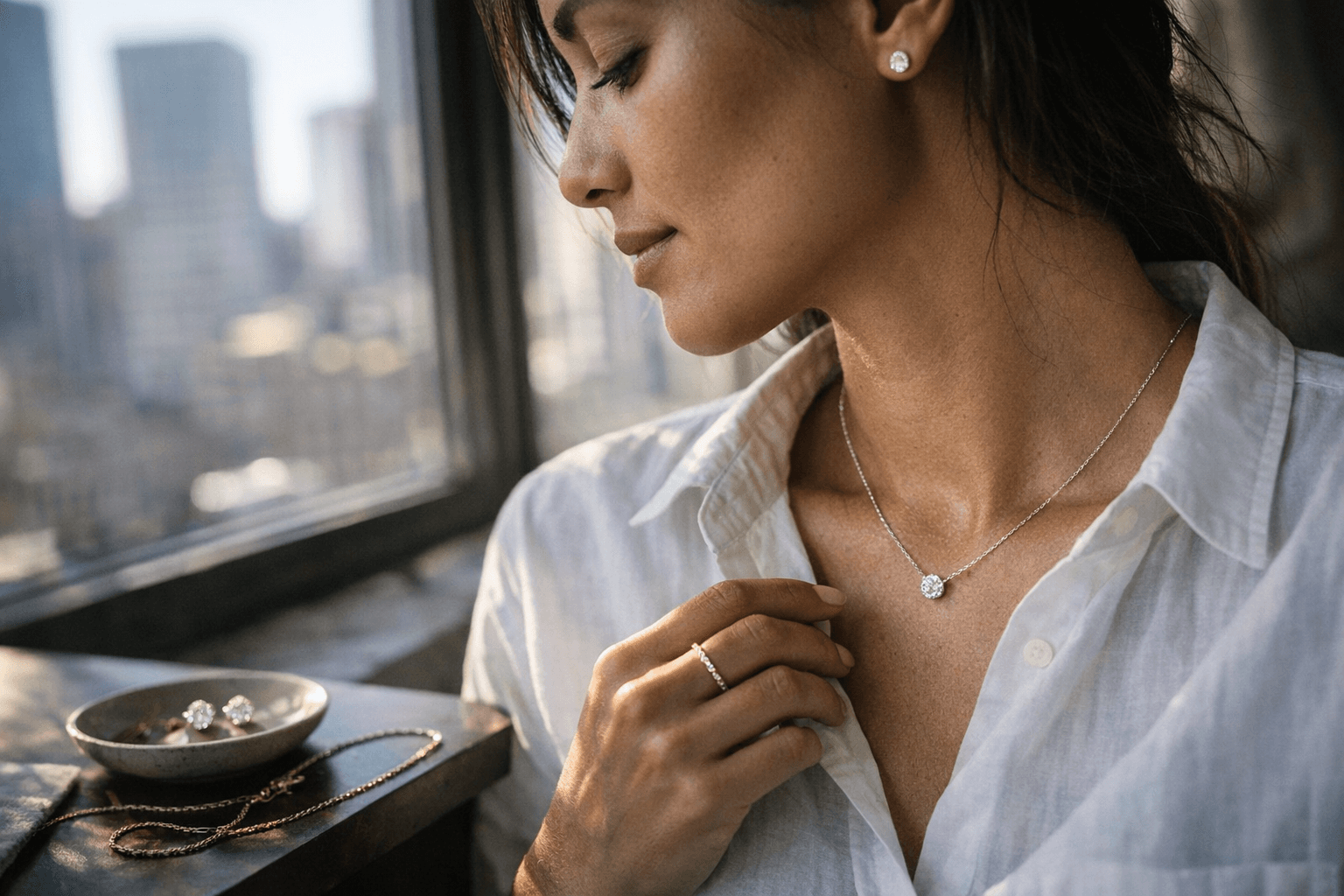
Jemma Wynne's "Forme" diamond oval silhouette choker in 18-karat yellow gold ($16,800) operates from a brand philosophy of what Jemma Wynne calls "casual luxury, where everyday pieces are reimagined for the modern woman with contemporary, one-of-a-kind silhouettes and exquisite materials." The Forme choker lives within that ethos precisely: a diamond-set oval silhouette that wears close to the throat, with the clean geometry that makes it compatible with a relaxed neckline as readily as a tailored collar.
A Ring in the Mix
Vivaan's "Sky" baguette diamond ring in 18-karat yellow gold ($3,850) is the one non-necklace in the collection, and it functions as an important reminder that everyday diamond wear extends beyond the décolletage. Baguette-cut diamonds, with their step-cut faceting and rectangular geometry, produce a more architectural flash than round brilliants: less fire, more mirror. In a yellow gold setting, the contrast between the warm metal and the icy, linear stones is particularly sharp. At $3,850, this is the lowest price point in the selection and a natural entry piece for someone building out a daily diamond wardrobe.
What to Look for When Buying to Wear Every Day
The construction details that distinguish occasional jewelry from daily-wear pieces are specific and worth understanding before purchasing.
- Setting profile: Bezel settings, in which a rim of metal wraps completely around the diamond's girdle, offer the most protection for active wear. Prong settings allow more light to reach the stone but leave the diamond's edges exposed. For marquise and pear cuts, whose pointed ends are structurally vulnerable, a V-prong or partial bezel at the tips is worth seeking out.
- Metal alloy: 14-karat gold contains 58.3 percent pure gold and 41.7 percent alloy metals, which makes it harder and more scratch-resistant than 18-karat gold. 18-karat gold (75 percent pure gold) is richer in color and more prestigious, but softer. For rings and bracelets, 14-karat is frequently the better daily-wear choice; for pendants and earrings with minimal surface contact, the difference is less critical.
- Chain construction: For layered necklaces, link construction determines longevity. Rolo chains and cable chains withstand daily movement better than delicate box chains. A handmade gold chain, like the one shown with Ploof's Yanone pendant, carries both durability and artisanal value that a mass-produced chain cannot replicate.
- Price tier reality: This selection spans from $3,850 to $48,525. That range reflects not just stone size and quality, but construction complexity, brand positioning, and the labor embedded in hand-forged or custom work. A more useful frame for daily-wear investment is to ask whether the construction matches the commitment: a $15,000 initial pendant should be built to survive decades, not seasons.
The most durable piece of jewelry is the one you actually wear. At 10 on the Mohs scale, diamonds can handle the life you live in them.
This article was produced by Prism’s automated news system from verified source data, official records, and press releases, then run through automated quality and moderation checks before publishing. The system is built and supervised by the people who set the standards it runs under. Read our full AI policy.
Did this article answer your question?