Divorce jewelry gains traction as women buy diamonds for themselves
Women are claiming diamonds for themselves, turning divorce jewelry into a marker of independence, recovery, and fresh starts. The best pieces read as personal heirlooms, not a passing meme.

The newest diamond purchase is not waiting for anyone else’s permission. Divorce jewelry has moved from private symbolism into a visible category, with women buying stones for themselves to mark independence, recovery, and major life transitions. What makes the trend notable is not the breakup, but the shift in what a diamond can signify: less a promise from someone else, more a record of what a woman chose for herself.
A diamond, claimed on your own terms
Natural Diamonds has framed divorce jewelry as part of a broader rethinking of the stone’s cultural role. In this reading, diamonds are no longer anchored primarily to romance and proposal culture; they are being reclaimed as markers of self-love, healing, and personal achievement. That matters because it changes the emotional contract of fine jewelry. A ring, bracelet, or pendant can now stand for a new chapter without borrowing its meaning from marriage.
Emily Ratajkowski helped push the idea into the mainstream by repurposing the diamonds from her old toi et moi engagement ring into new pieces designed with Alison Lou, the line founded by Alison Chemla. The symbolic logic is elegant: the stones remain, but their meaning changes completely. Rachel Zoe debuted a divorce ring in late 2025, and Brooks Nader is among the other high-profile names attached to the category, which gives the trend a red-carpet visibility it did not have a few years ago.
Why the ritual feels bigger than a ring
The trend is not only about divorce. It sits beside piercing parties, self-purchase culture, and a broader appetite for jewelry as a personal milestone marker. Alysa Teichman, founder of Wildlike and an owner of Ylang 23 in Dallas, has seen women gather for piercing parties to commemorate birthdays, bachelorettes, and divorces. She calls it a collective action and a way of saying, “I’ll get pierced, I’ll do what I want.”
That line captures the mood precisely: jewelry is functioning less like a gift waiting to be bestowed and more like a ritual women initiate themselves. A new piercing, a ring, or a diamond pendant can all operate as evidence of agency. In that sense, divorce jewelry is part of a larger emotional vocabulary in which women are dressing for a transition, not just celebrating a relationship.
The numbers behind the shift
The market context is as striking as the cultural one. De Beers’ June 2026 Diamond Report says non-bridal occasions account for three-quarters of overall U.S. natural diamond demand, a reminder that the engagement ring no longer defines the category. The same report says average U.S. spend on natural diamond jewelry rose 25% in 2025 to $4,063, while gifting represented 44% of sales and self-purchases accounted for 31%.
Those figures suggest a market in which the romantic occasion still matters, but it no longer dominates. Self-purchase is not a niche behavior on the edges of the fine-jewelry world; it is now part of its commercial center. De Beers also says natural diamonds remain the most desired luxury jewelry product, which helps explain why the category can absorb new meanings without losing its status.
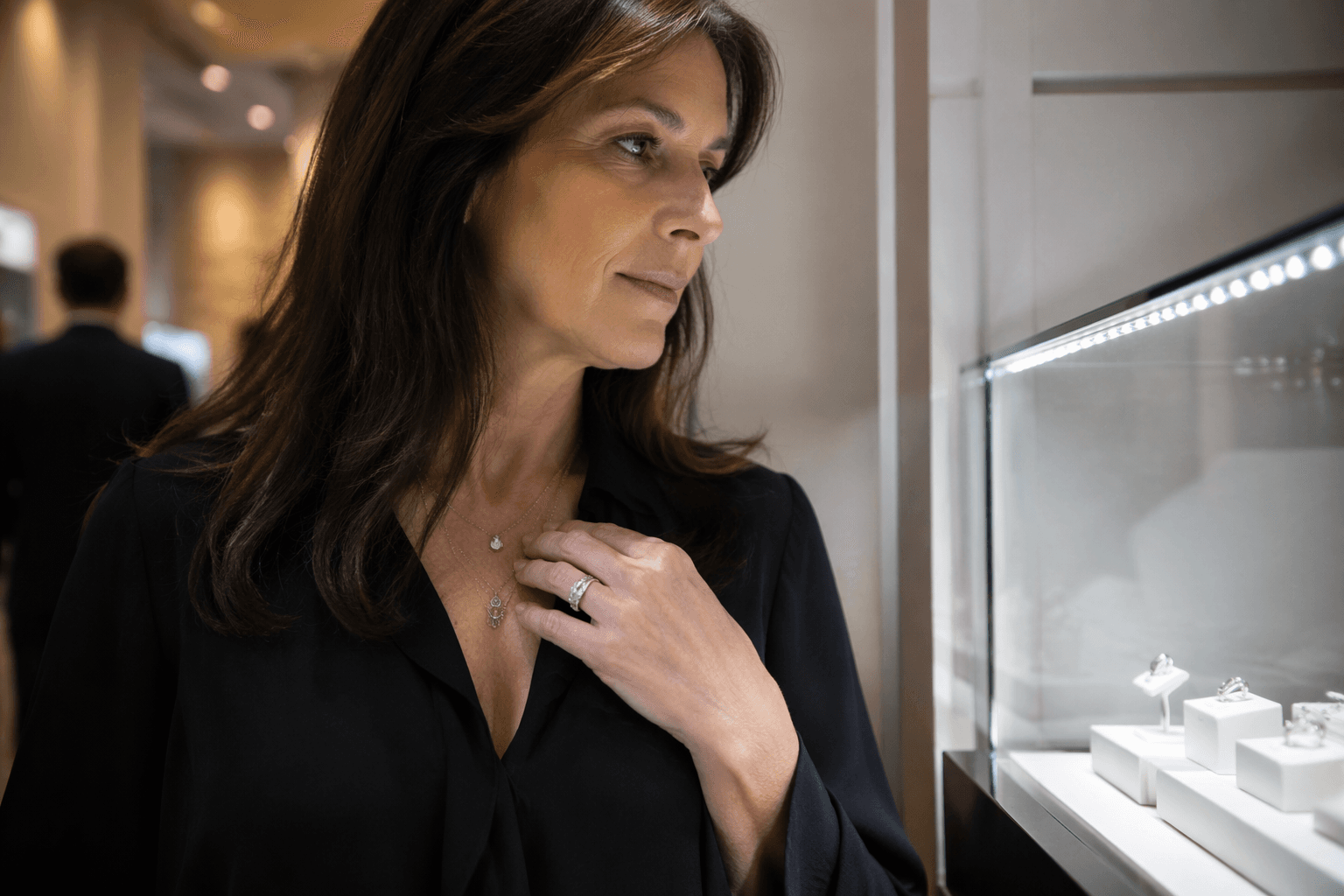
A separate BriteCo survey underscores how normalized this has become. It found that 80% of U.S. adults buy fine jewelry for themselves, and 86% of millennials ages 30 to 44 reported a self-purchase. That is a decisive shift in how jewelry enters the wardrobe: not as a reward granted by someone else, but as a private purchase tied to taste, timing, and self-definition.
What makes a self-bought piece feel lasting
The difference between meaningful self-gifting and trend-chasing often comes down to construction. A piece that is meant to carry a life transition should be able to live with the wearer, not just photograph well for a season. A bezel setting, which wraps metal around the stone, offers more protection than a delicate prong setting and often feels right for daily wear. Prongs let in more light and can make a diamond appear more open and airy, but they ask for more care.
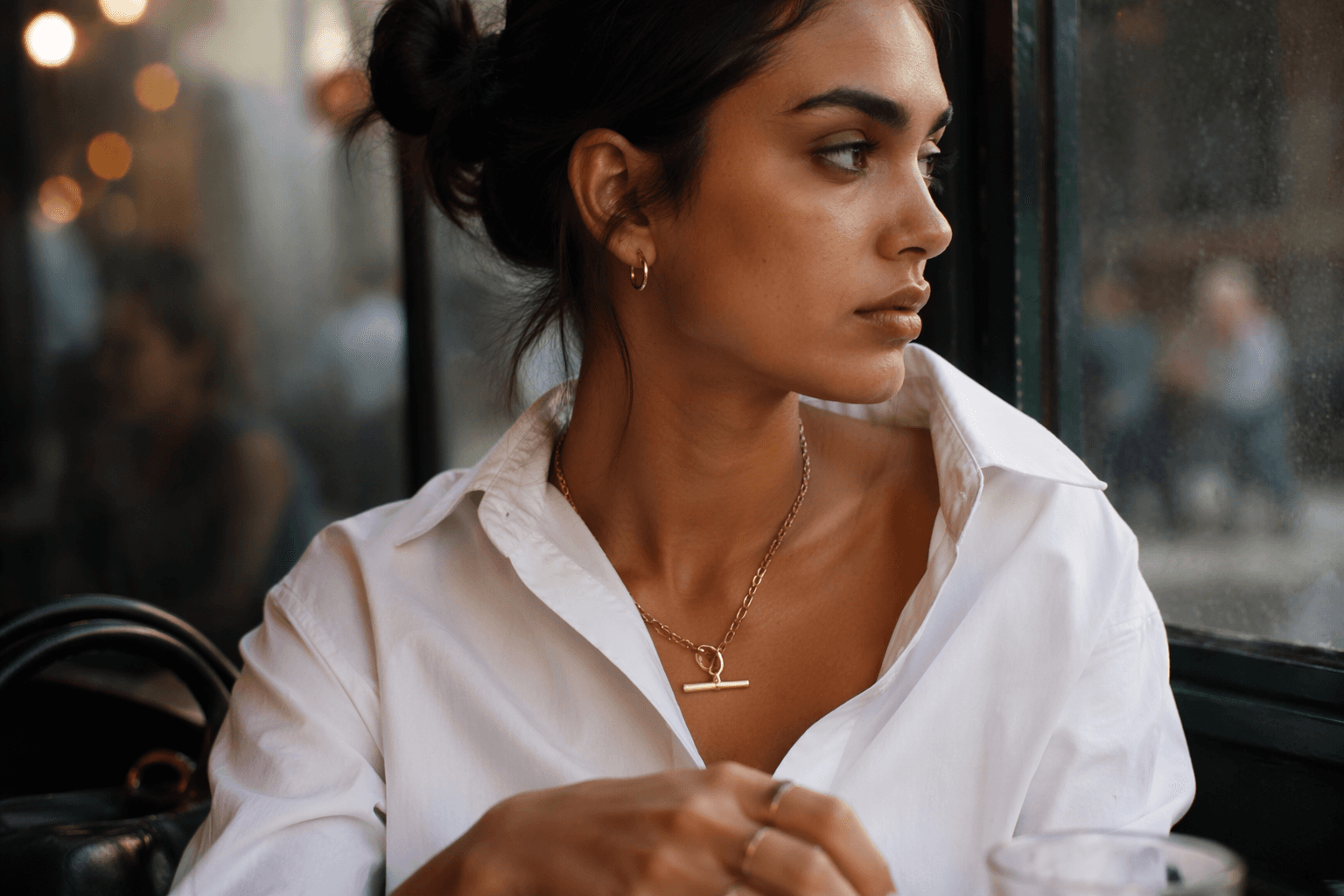
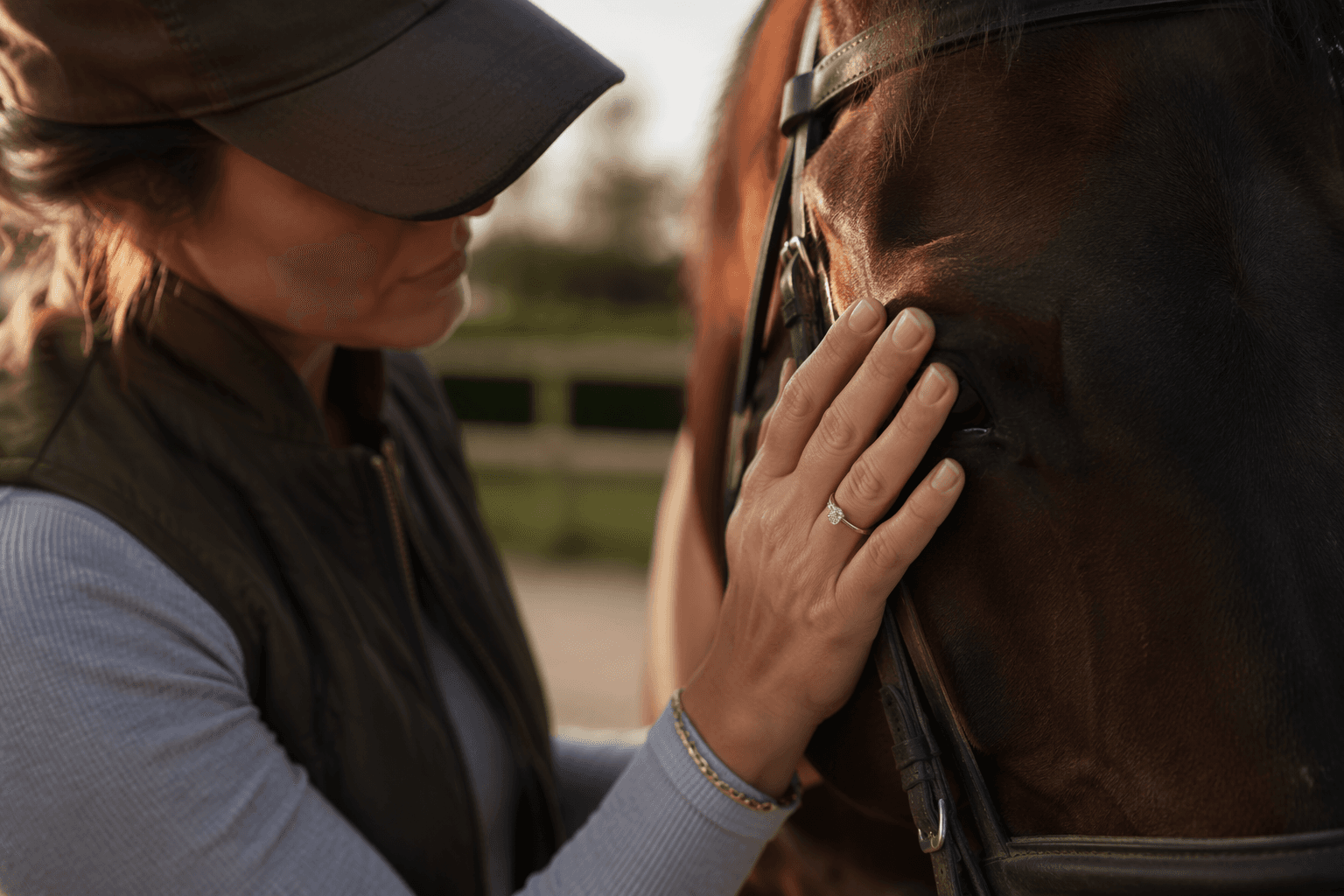
- Choose a form you would wear after the story fades into the background. A slim diamond ring, a pendant on a solid chain, or small huggie hoops can hold meaning without shouting it.
- Favor durable metals such as 18-karat gold or platinum if the piece is meant to be worn often. These materials give a self-purchased jewel the physical weight of a keepsake.
- Let the symbolism be yours, not literal. A ring built around your own birthday stone, a repurposed family diamond, or a reset solitaire often ages better than an overt slogan or novelty motif.
- Think about scale. A piece that sits close to the body usually feels more intimate, which is useful when the jewelry is meant to mark a private transition rather than announce a public event.
The strongest divorce jewelry is not defined by the word divorce at all. It is defined by proportion, craftsmanship, and memory. A well-made diamond ring, pendant, or bracelet can absorb a difficult chapter and still read beautifully years later, which is exactly why this trend has outlived its own headline.
This article was produced by Prism’s automated news system from verified source data, official records, and press releases, then run through automated quality and moderation checks before publishing. The system is built and supervised by the people who set the standards it runs under. Read our full AI policy.
Did this article answer your question?