Gen Z and Millennials Drive Growing Interest in Luxury Jewelry Auctions
Phillips reported a 56% surge in Gen Z and millennial jewelry auction clients over five years, as Napoleon's brooch sold for 29 times its estimate.
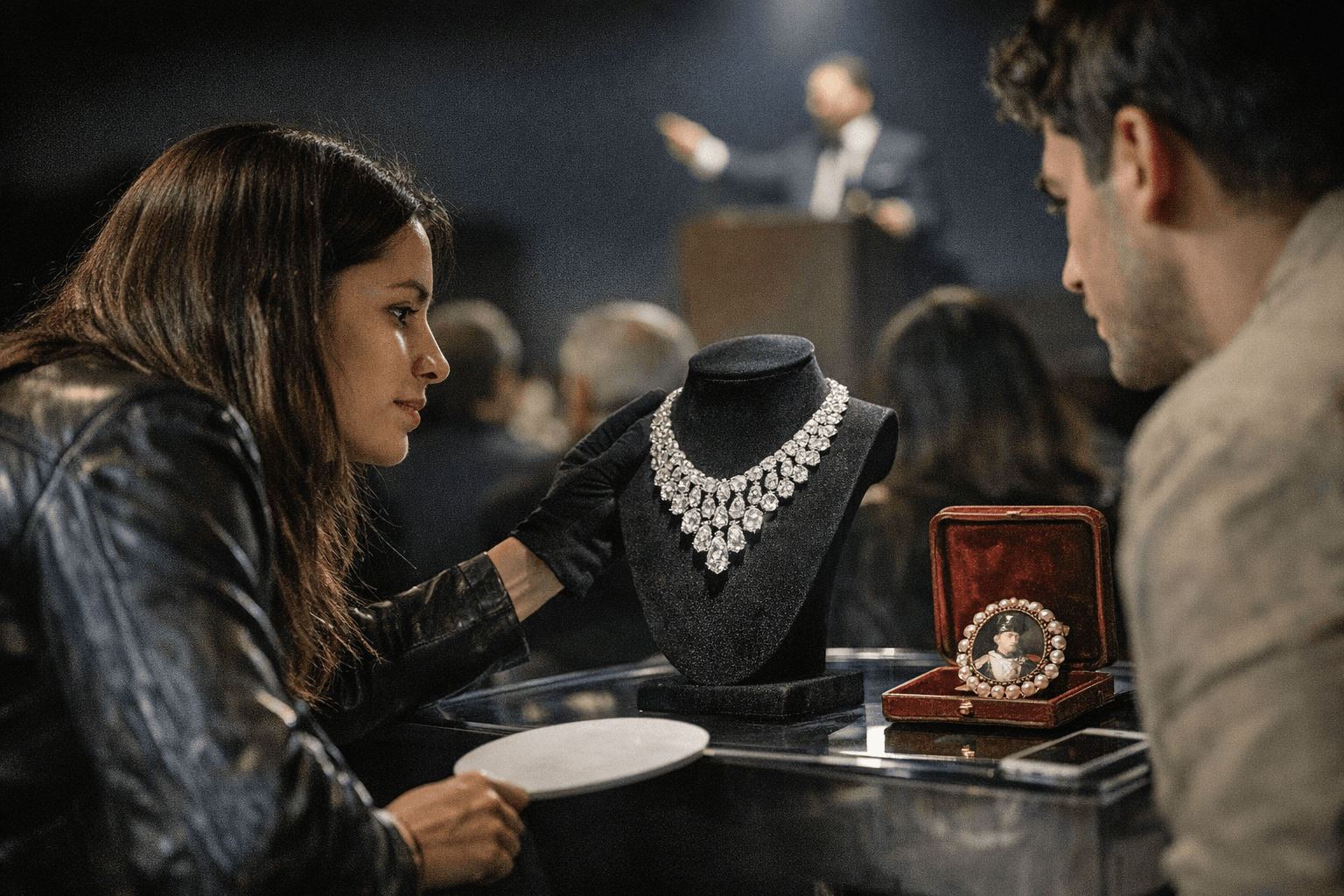
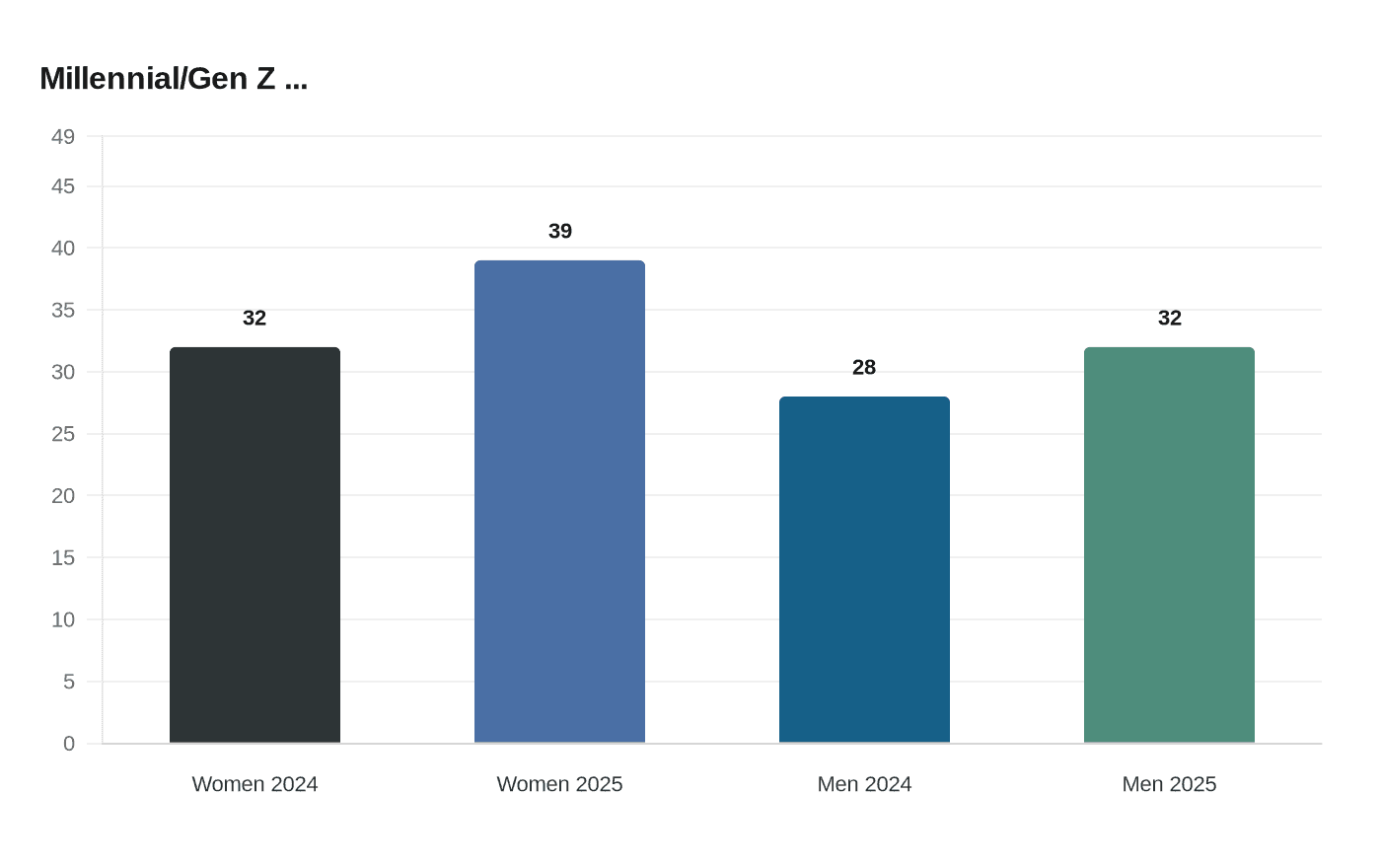
The numbers arriving from the major auction houses tell a story that would have seemed improbable a decade ago: younger buyers, not inherited-wealth octogenarians, are among the most aggressive bidders in the room. At Phillips, Gen Z and millennial clients grew 56% over the last five years, according to Benoit Repellin, the house's worldwide head of jewelry. At Christie's, 39% of female bidders and buyers in 2025 were millennials or Gen Zs, up from 32% the year before; among men, that figure climbed to 32% from 28%. Josh Pullan, head of global luxury at Sotheby's, reported that a third of its clients purchasing watches, handbags and spirits are now under 40.
The appetite extends well beyond entry-level lots. Sotheby's sold Napoleon's diamond brooch for $4.4 million, roughly 29 times its pre-sale estimate. In Geneva, Christie's sold the Shah Jahan, a 30.6-carat carved cabochon emerald of extraordinary historical weight, for $830,000, eightfold its estimate. Phillips placed Tiffany's 42.7-carat Vanderbilt Kashmir sapphire for $3.6 million, three times what the house had projected. These are not the results of cautious, first-time collectors testing the water.
The profile of younger bidders, as Uni Kim, head of Sale, High Jewelry at Sotheby's Asia, described them, skews toward entrepreneurs, professionals in specialized fields, and next-generation members of established families. What draws them is specific: narrative, rarity, and craft. "Jewellery featuring compelling storytelling, exceptional craftsmanship or notable celebrity provenance attracts significant interest from young collectors who tend to appreciate modern aesthetics paired with uniqueness and artistic intent," Kim said. A piece tied to Napoleon or the Mughal court carries exactly the kind of layered provenance that resonates with buyers who have grown up consuming heritage content through social media.
The pink diamond market offers perhaps the clearest illustration of how scarcity and generational demand intersect. Since Australia's Argyle Mine closed in 2020, once the world's primary source for natural pink diamonds, supply has contracted sharply. At the Holiday Fine Jewelry Signature Auction on December 3, a 6.17-carat oval fancy pink diamond with VVS2 clarity, set in a halo of full-cut diamonds with additional stones along the band, carried a pre-sale estimate of $1.8 million and sold for $2.2 million.
Analysts and auction-house executives point to a convergence of forces behind the shift. "While cultural and economic factors like social media trends and inflation accelerate participation, the underlying drivers, economic clout, digital fluency and values-based consumption, point to a lasting generational shift in luxury jewellery auctions," said Ng, writing in JewelleryNet. The investment framing matters here: younger buyers, shaped by volatile markets and inflationary pressure, increasingly view rare jewelry as a tangible store of value rather than a pure luxury expenditure.
Auction houses have responded with deliberate structural changes. Uni Kim described the core challenge plainly: "The main challenge lies in sustaining attention in a fast-paced digital environment, which we address by offering fresh, visually led content (videos, articles) and seamless online access to information." Sotheby's has found that social media posts with an authentic, conversational tone generate the strongest viewer engagement, a notable departure from the formal register that once defined the category.
Looking ahead, Yuen of Christie's predicted that millennials and Gen Zs will push the market toward stronger demand for rare gems and vintage signed pieces, deeper engagement in online and hybrid auction formats, and more concentrated bidding during live luxury weeks in Hong Kong and New York. Ethical sourcing and sustainability, Yuen noted, will carry increasing weight in purchasing decisions, reflecting the values-based consumption patterns that define both generations. Jewelry, Yuen concluded, is expected to remain one of the fastest-growing entry points for new collectors into the broader luxury market, a category that, by every current measure, is performing well above its own estimates.
Know something we missed? Have a correction or additional information?
Submit a Tip