ICA GemLab Upgrades Testing Protocols to Better Authenticate Colored Stones
ICA GemLab has upgraded its testing protocols to sharpen authentication of colored stones, treatments, and origin claims — raising the bar for what "verified" really means.
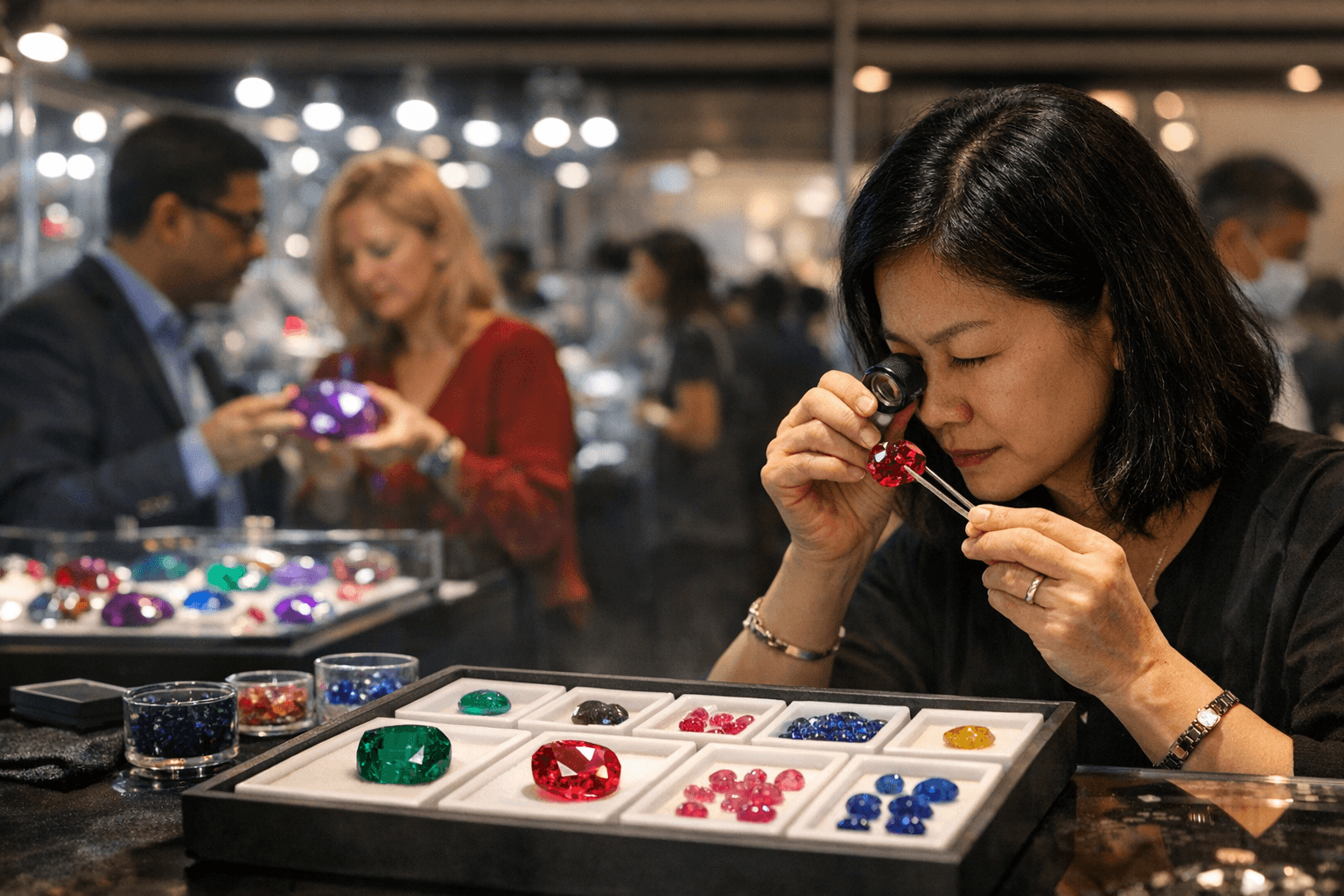
Authentication in the colored stone market has always been a high-stakes game. A ruby declared "Burmese, no heat" commands a dramatically different price than one of undisclosed origin with evidence of glass filling. The difference between those two stones, on paper, can be tens of thousands of dollars — and for decades, that gap has been bridged, or exploited, by the quality of the laboratory report attached to them. ICA GemLab's recent upgrade to its testing protocols and instruments signals a meaningful tightening of that process, with direct consequences for everyone from wholesale dealers to the buyer selecting a sapphire engagement ring.
Why Laboratory Authentication Matters for Colored Stones
Colored stones present a far more complex authentication challenge than diamonds. While diamond grading has been systematized through decades of standardized nomenclature and instrument calibration, the colored stone world encompasses rubies, sapphires, emeralds, spinels, tourmalines, and dozens of other varieties — each with its own treatment landscape, origin variables, and value implications. A Mozambican ruby and a Burmese ruby can look nearly identical to the naked eye, yet the latter may carry a significant premium based on geographic origin alone. Treatments like heat enhancement, beryllium diffusion, fracture filling, and lead glass impregnation further complicate the picture, since some are widely accepted by the trade while others dramatically diminish a stone's market value.
This is the environment in which ICA GemLab operates. As the laboratory arm of the International Coloured Gemstone Association, it serves a global trade that depends on credible, defensible documentation. The upgraded testing protocols announced in March 2026 are designed to make that documentation more reliable across the board.
What the Upgraded Protocols Target
The three pillars of ICA GemLab's enhanced framework are colored stone authentication, treatment identification, and origin determination. Each of these represents a distinct technical challenge, and improvements in one area do not automatically translate to the others.
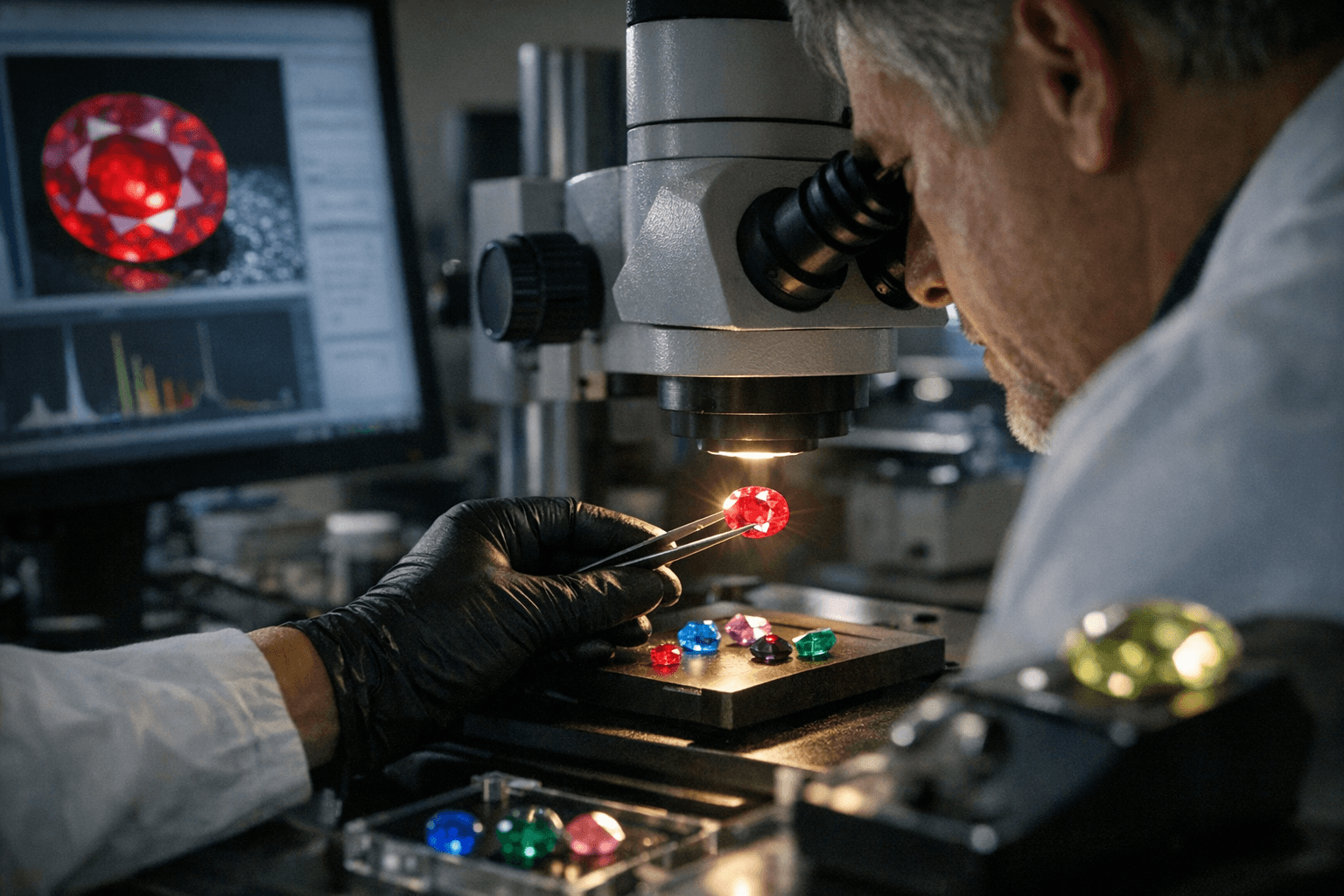
Treatment identification, for instance, requires instruments sensitive enough to detect trace chemical signatures left by heating, coating, or filling processes. Fracture-filled rubies, for example, may contain residues of lead glass that fluoresce distinctively under certain lighting conditions and register through specific spectroscopic analyses. Beryllium-diffused sapphires, which became a major trade controversy in the early 2000s, require laser ablation inductively coupled plasma mass spectrometry to detect reliably — a method that reads trace element concentrations at the parts-per-billion level. Upgrading instruments in this context means either acquiring more sensitive equipment, recalibrating existing systems against updated reference databases, or both.
Origin determination is arguably the most contested area in gemological science. Determining whether a sapphire formed in Kashmir, Sri Lanka, or Madagascar involves comparing its chemical fingerprint and inclusion landscape against a reference database built from specimens of known provenance. The reliability of any origin call is only as good as the reference collection behind it. As new deposits are discovered and mining operations shift, laboratories must continuously update their comparative data. ICA GemLab's protocol upgrades suggest this calibration work is ongoing and that the lab is investing in keeping its reference framework current.
How This Affects the Buying Experience
For retailers and consumers, the practical meaning of these upgrades comes down to a single question: can the report attached to this stone be trusted? A colored stone accompanied by a certificate from a reputable laboratory carries an implicit promise that trained gemologists, working with calibrated instruments and current reference data, have evaluated it against the highest available standards. When a laboratory upgrades its protocols, it is essentially acknowledging that previous methods had limitations — and committing to a higher threshold going forward.
This matters acutely at the retail level. A consumer purchasing a treated emerald, for instance, deserves to know the nature and extent of that treatment, not because treatment is inherently disqualifying, but because it affects long-term care requirements, durability, and resale value. Cedar oil or resin filling in emeralds is a standard, accepted practice, but the degree of filling varies widely, and a report that characterizes it precisely allows both the retailer and the buyer to price and insure the stone appropriately.
For retailers sourcing colored stones from international suppliers, a laboratory upgrade also strengthens their own due diligence. When a vendor claims a stone is "natural, unheated Padparadscha sapphire of Sri Lankan origin," the retailer needs a laboratory capable of interrogating each element of that claim independently. ICA GemLab's enhanced testing is designed to meet exactly that need.
The Broader Accountability Landscape
ICA GemLab does not operate in isolation. It sits within a competitive landscape that includes the Gübelin Gem Lab, SSEF Swiss Gemmological Institute, and GIA's colored stone services, among others. Each laboratory brings its own methodological strengths, and the colored stone trade often routes its most valuable stones through multiple institutions for corroborating opinions. In that context, a protocol upgrade by any major player raises the floor for the entire industry, since retail buyers and auction houses increasingly expect reports from labs operating at the current state of the art.
The timing is also notable. Consumer awareness around gemstone provenance has grown significantly alongside broader interest in ethical sourcing. Buyers who ask whether their gold is Fairmined or their diamonds are conflict-free are also increasingly asking whether their rubies come from mines with verified labor practices, whether their sapphires were sourced from regions free of environmental violations, and whether any treatments applied to their stones were disclosed at every point in the supply chain. Laboratory authentication is one piece of that accountability structure. It cannot verify labor conditions or environmental compliance on its own, but it can establish the factual foundation — what the stone actually is, where it came from, what was done to it — on which broader ethical claims must rest.
Reading a Colored Stone Report with New Eyes
Understanding what a laboratory report actually says, and what it deliberately does not say, is one of the most useful skills a colored stone buyer can develop. ICA GemLab's upgraded protocols will produce reports that reflect more rigorous analysis, but even the best laboratory report is an opinion, informed by the best available science, not a guarantee. Origin determinations carry inherent uncertainty. Treatment assessments reflect what instrumentation can detect, not an absolute accounting of everything a stone has ever experienced.
- Look for explicit treatment disclosure: a report should state not just whether treatment was detected, but what type and, where possible, the degree.
- Origin statements should be read as probabilistic: "origin consistent with Kashmir" and "Kashmir origin confirmed" are very different claims.
- Check the issue date: a report from a laboratory that has since upgraded its protocols may not reflect current detection capabilities, particularly for treatments identified after the original examination.
- Multiple reports from different laboratories, on high-value stones, provide corroboration that no single institution can offer alone.
The work ICA GemLab is doing with its latest protocol upgrades ultimately serves a market that runs on trust. As instruments grow more sensitive and reference databases grow more comprehensive, the colored stone certificate becomes a more meaningful document. That is good news for every buyer who has ever held a vivid blue sapphire and wondered, precisely, what they were really looking at.
Know something we missed? Have a correction or additional information?
Submit a Tip