Global Gold Jewelry Demand Falls 23% as Spending Hits Record
Gold jewelry spending hit a first-quarter record of US$47 billion, but shoppers bought 23% less by weight as prices pushed pieces lighter and smaller.
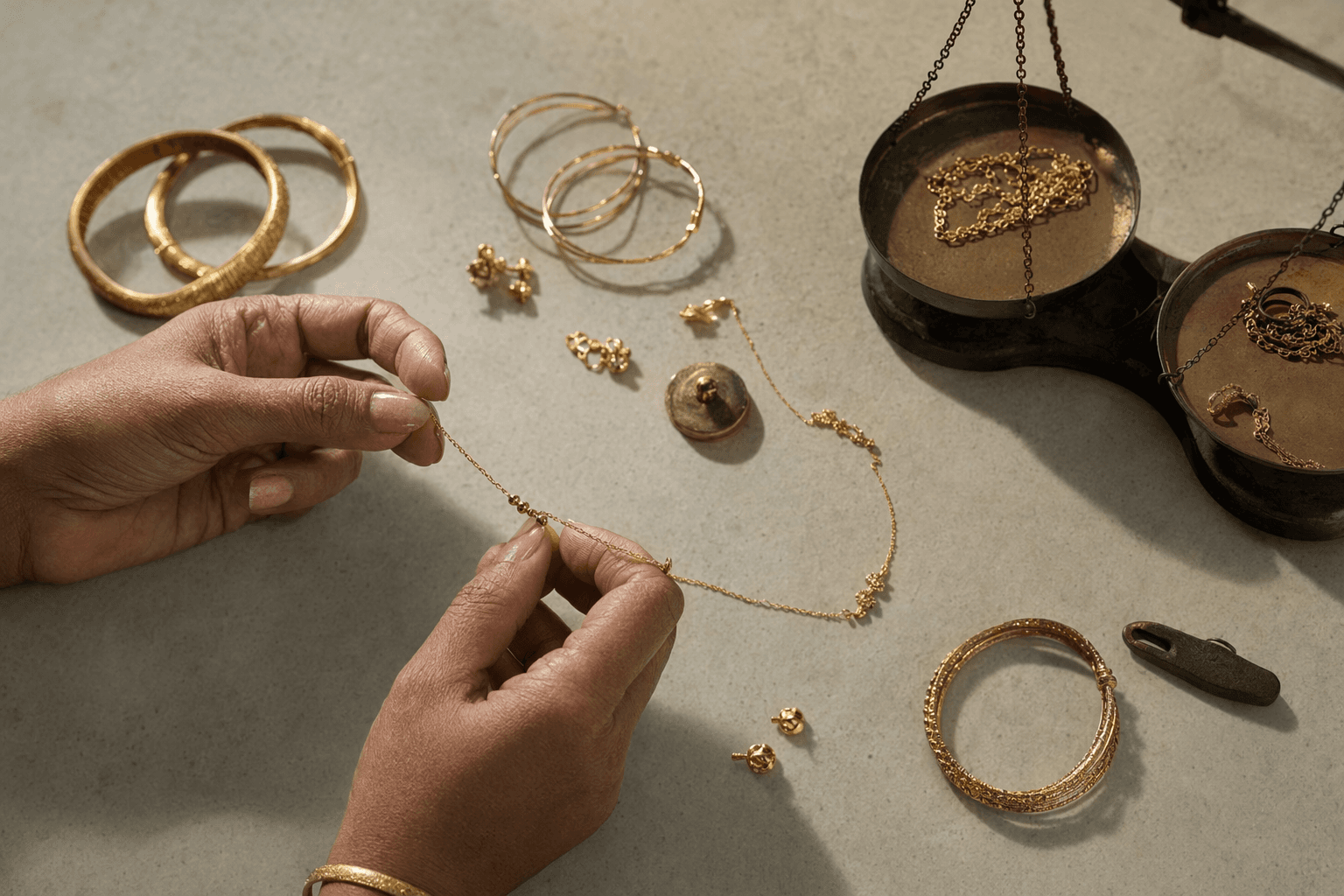
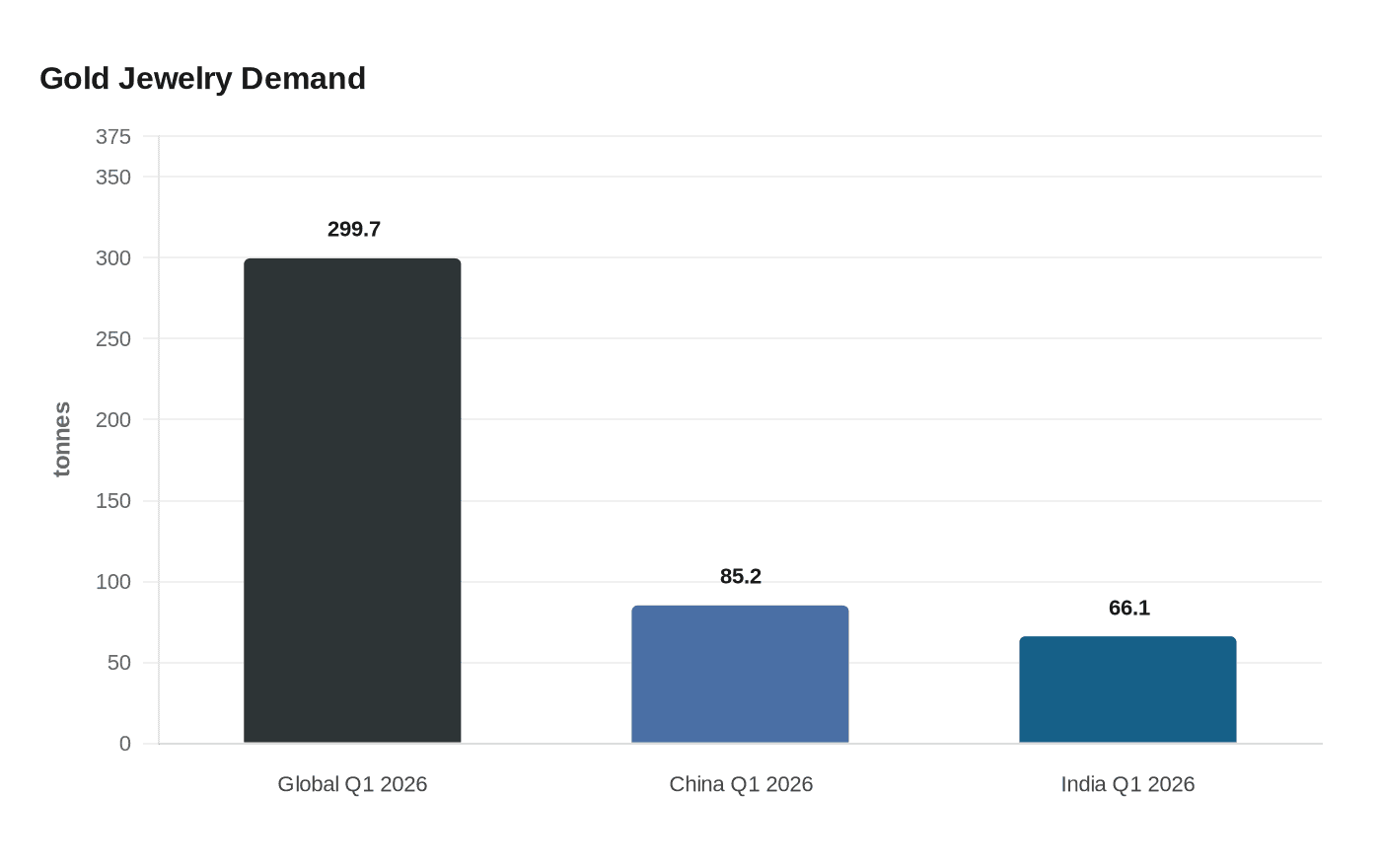
Soaring gold prices are doing what shoppers can feel at the counter: less metal for more money. In the first quarter of 2026, global gold-jewelry demand fell 23% year over year to 299.7 tonnes, the lowest quarterly level since the second quarter of 2020, even as the value of those purchases rose 31% to a record US$47 billion.
That split says everything about the market right now. The World Gold Council’s latest numbers, released April 29, showed the LBMA (PM) gold price hitting a quarterly-average record of US$4,873 an ounce, after touching an all-time high of US$5,405 an ounce in January before easing back. Total gold demand, including OTC, reached 1,231 tonnes, up 2% by volume, while the value of all gold demand surged 74% to a record US$193 billion. In other words, the market was spending more, but on far less metal.
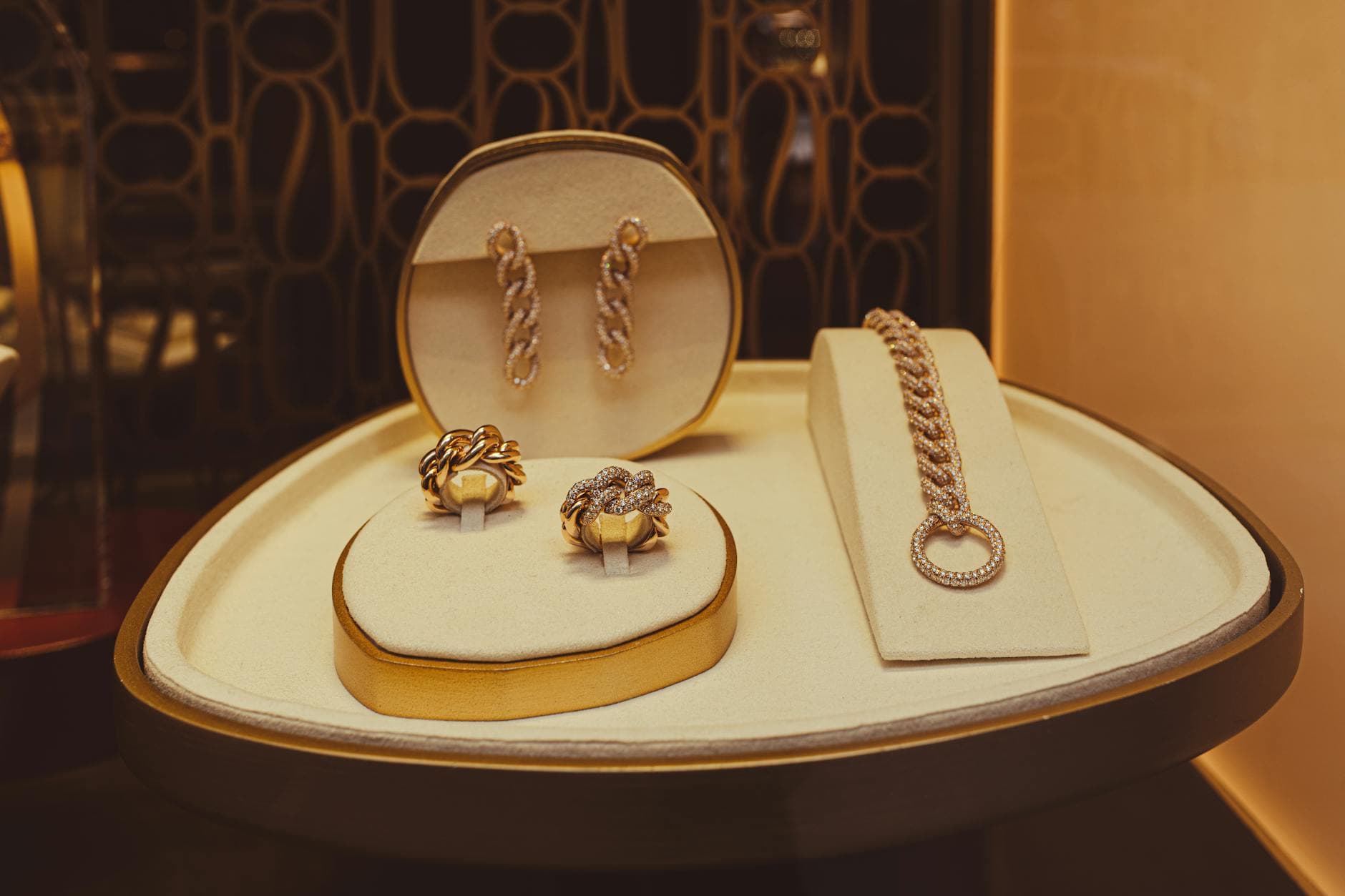
For jewelry buyers, that usually means slimmer chains, smaller centers, lighter bracelets, and more design work per gram. The strongest pieces in this environment are often the ones that make a smaller footprint feel intentional: a well-proportioned bezel, a sharp silhouette, a hollow form finished cleanly, or a link design that carries presence without heavy mass. When gold is this expensive, craftsmanship becomes easier to see and much harder to fake.
The pressure was broad. China’s gold-jewelry demand fell 32% to 85.2 tonnes, India slipped 19% to 66.1 tonnes, and the Middle East declined 23%. Yet Chinese spending on gold jewelry still rose 16% to US$13 billion, a reminder that gold remains deeply cultural even when buyers trade down in weight. The World Gold Council said consumers shifted toward smaller or lighter pieces, while China’s VAT treatment change in late 2025 added another deterrent. Some demand also moved into lower-premium investment products and old-for-new jewelry.
Not every category weakened equally. Hard pure gold jewelry held up comparatively well, especially with younger consumers, while high-end heritage gold jewelry stayed relatively resilient among higher-income buyers. Some of the lost jewelry demand appears to have migrated into bar-and-coin purchases in China and India, where gold can function as a proxy investment.
The lesson for anyone shopping fine jewelry now is simple: judge value by construction, comfort, and wear rate, not just weight. In a market where prices are elevated and tonnage is shrinking, the smartest purchase is the one that still feels substantial on the body, even when it no longer does on the scale.
This article was produced by Prism’s automated news system from verified source data, official records, and press releases, then run through automated quality and moderation checks before publishing. The system is built and supervised by the people who set the standards it runs under. Read our full AI policy.
Did this article answer your question?