Higher-priced jewelry boosts U.S. sales as units decline in May
May rewarded fewer, better buys: necklaces, fashion rings and gold pieces drove sales even as unit volume fell.
Shoppers spent more on fewer pieces in May, and the strongest names in the mix were the kinds of jewelry that earn their place in rotation. Higher-priced purchases lifted U.S. sales even as unit sales fell by a low-double-digit percentage, with necklaces and fashion rings among the best-performing categories and items above $2,500 drawing stronger demand.
That pattern is the clearest sign yet that jewelry buying has shifted from accumulation to selection. Gold jewelry delivered the month’s strongest revenue growth, rising 4.7%, even as unit sales declined, a reminder that buyers are still willing to trade up when a piece offers daily mileage, richer metal content and the kind of longevity that justifies a larger ticket. Finished diamond jewelry moved in the opposite direction, with revenue falling in May and ending a streak of year-over-year gains that began in late 2024.
The year-to-date picture still points upward for the trade. Revenue at specialty jewelers was up 7.6%, showing that premium purchases have remained resilient even as the market has become more selective. Mother’s Day accounted for roughly one-third of May jewelry revenue, and in the week leading into the holiday, diamond jewelry sales rose modestly as higher average spending per item offset lower unit sales. The holiday has become less about volume than about concentration: fewer gifts, more value per box.
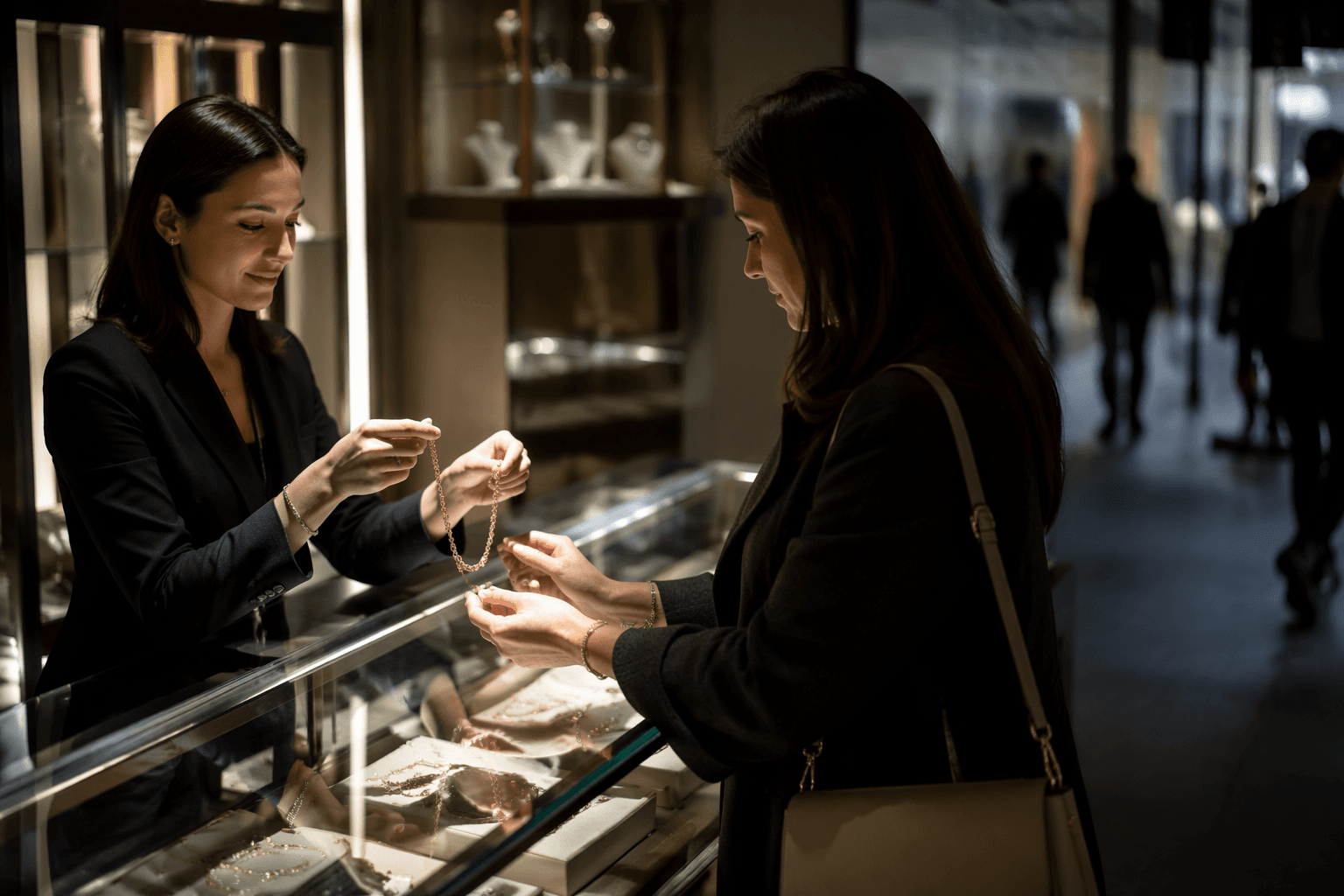
Tenoris, which describes itself as a provider of hard retail data on jewelry and diamond market trends, has been tracking the same premiumization trend for months. Its April 2026 retail sales archive showed U.S. jewelry sales rising as consumers spent more on higher-priced jewelry, with average spending per item jumping a record 21%. That backdrop helps explain why independent jewelers, while still having a solid year, saw momentum cool late in 2025. U.S. independent jewelry-store sales rose 5.6% for the year, but gains slowed to 3% in November and 5.4% in December.
The broader market is still being shaped by higher gold prices, changes in the lab-grown diamond segment and tighter consumer finances. Against that backdrop, the strongest jewelry buys are the ones that feel justified after the sale: pieces worn often, styled easily and built to last. That is the market’s current test of value, and in May, buyers answered it with higher-ticket necklaces, fashion rings and gold jewelry.
This article was produced by Prism’s automated news system from verified source data, official records, and press releases, then run through automated quality and moderation checks before publishing. The system is built and supervised by the people who set the standards it runs under. Read our full AI policy.
Did this article answer your question?