Historic diamond ring found in England sells for £17,000 in London auction
A late-16th-century cluster ring found near Evesham fetched £17,000 in London, its hogback diamonds and rose-cut center still shaping how modern rings wear.
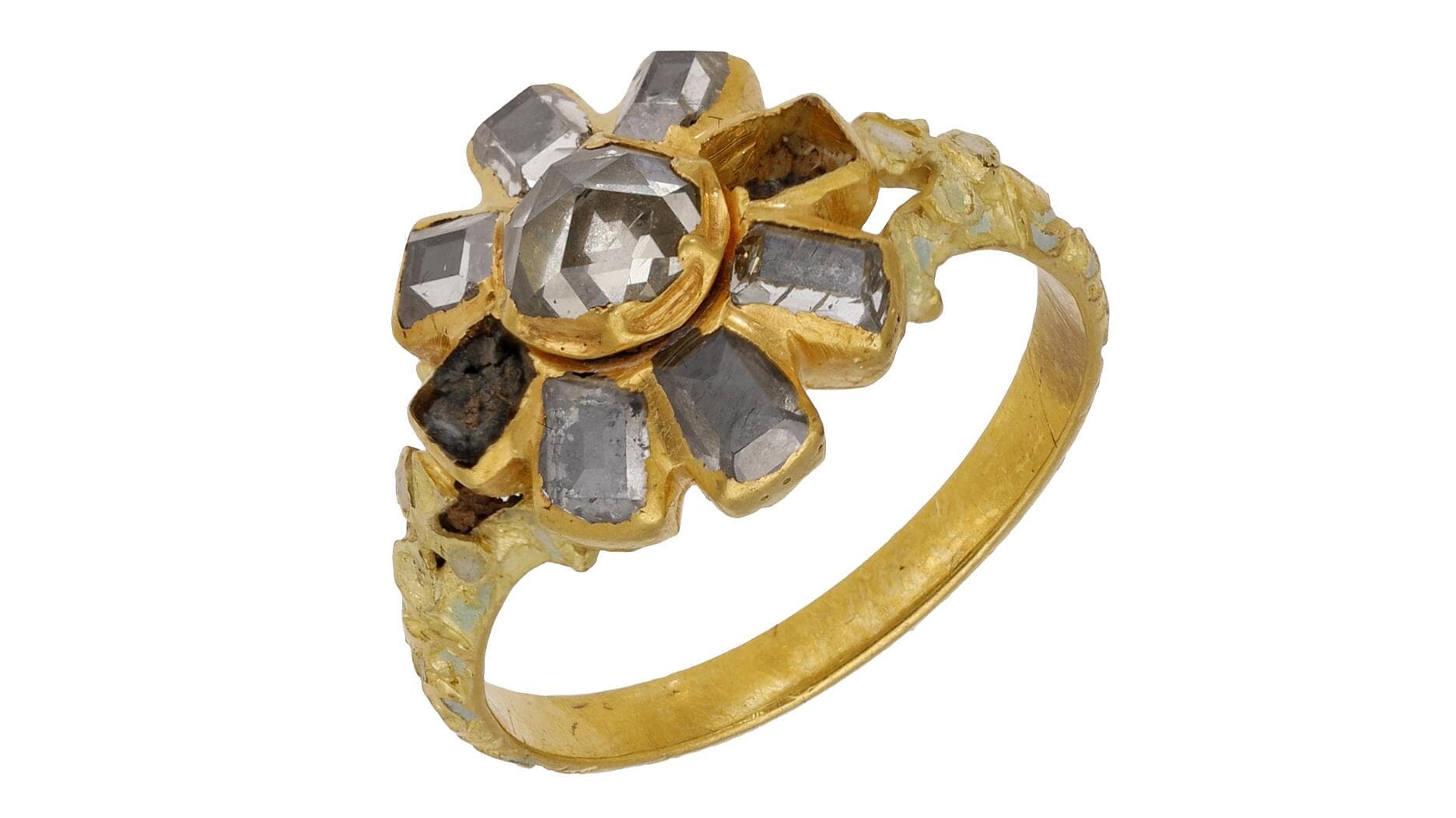
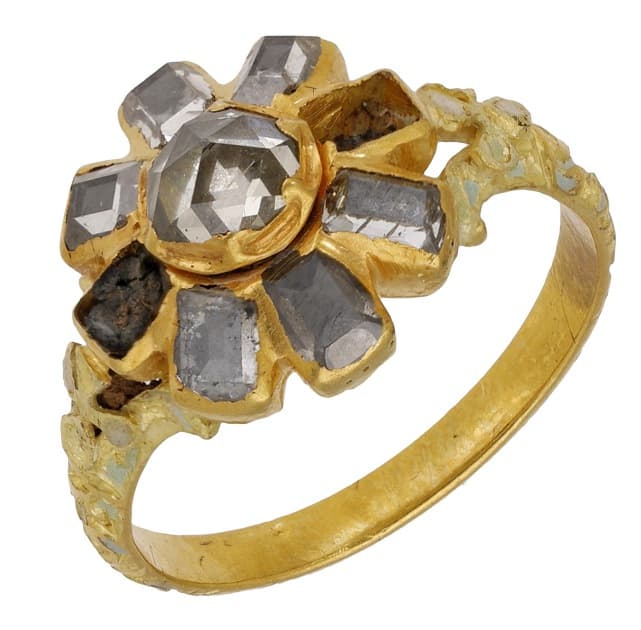
A diamond cluster ring lifted from the earth in Worcestershire brought £17,000 at Noonans Mayfair, where the late-16th to early-17th-century jewel drew a U.K. phone bidder in a live London sale. Found in November 2024 in the parish of Wormington, near Evesham, Gloucestershire, the ring was catalogued as “The Evesham Diamond Ring” and entered the market with a £15,000 to £20,000 estimate.
Its appeal lay in the architecture as much as in the age. The flowerhead bezel holds eight early hogback diamonds around a center rose-cut stone, with turquoise-and-white enamel preserved on the underside. Two missing diamonds had been recovered before the sale, restoring the cluster’s full outline and sharpening the object’s sense of completeness. Stuart Jones, 42, of Solihull, England, found the ring while metal detecting, and one diamond reportedly came loose and fell into his hand as he lifted it from the soil.
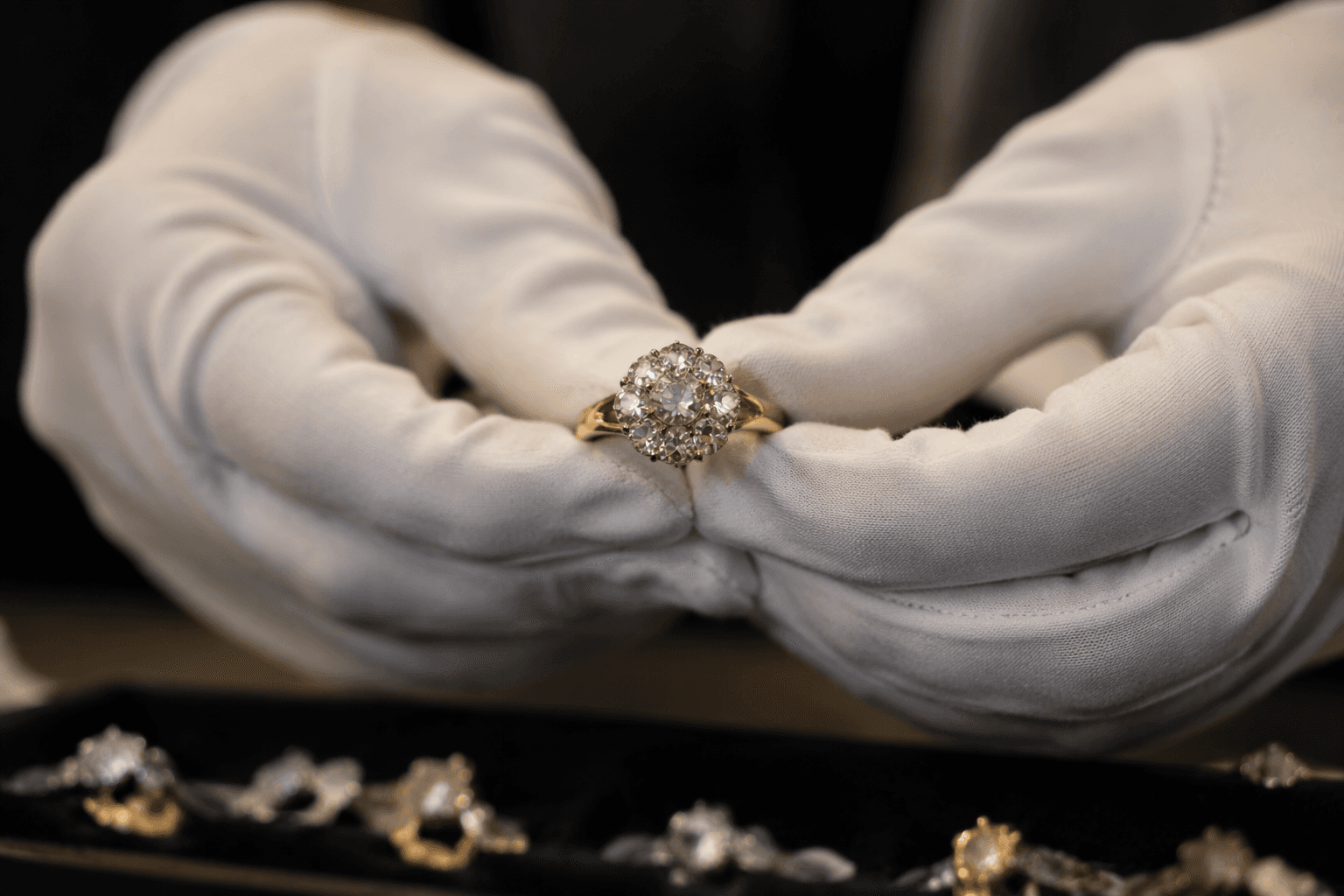
For collectors, the price made sense because the ring sits at the junction of jewelry history and usable form. Rose-cut diamonds first took hold in 16th-century Europe, prized for their low dome and soft, candlelit flash rather than the hard brilliance of later cuts. Hogback stones are even earlier in spirit, an ancestral form of fashioned diamond that came before more regularized cuts such as the baguette. In a ring like this, that means a cluster that reads as jewel-like and intimate rather than large and ostentatious, with each stone set to create one rounded flower rather than a single dominant center.
That same silhouette is what gives antique cluster rings their modern resonance. The low profile makes them practical on the hand, while the bezel-led construction offers protection and a smoother wear than taller prong-set designs. For everyday jewelry buyers, the lesson is not to chase age at any cost, but to look for the qualities this ring embodies: a compact cluster, a center stone framed by smaller stones, an enclosed setting that sits close to the finger, and details such as enamel or mixed-cut stones that give the piece depth from every angle.
Estate rings with rose-cut centers, old-cut halos, and flush, flower-like layouts can deliver a similar effect without the rarity premium attached to an archaeological find. What drove the Evesham ring at auction was not just provenance, but the fact that its design language still feels legible today: small stones assembled into a shape that is both decorative and wearable, then finished with the kind of handwork that survives centuries.
This article was produced by Prism’s automated news system from verified source data, official records, and press releases, then run through automated quality and moderation checks before publishing. The system is built and supervised by the people who set the standards it runs under. Read our full AI policy.
Did this article answer your question?